

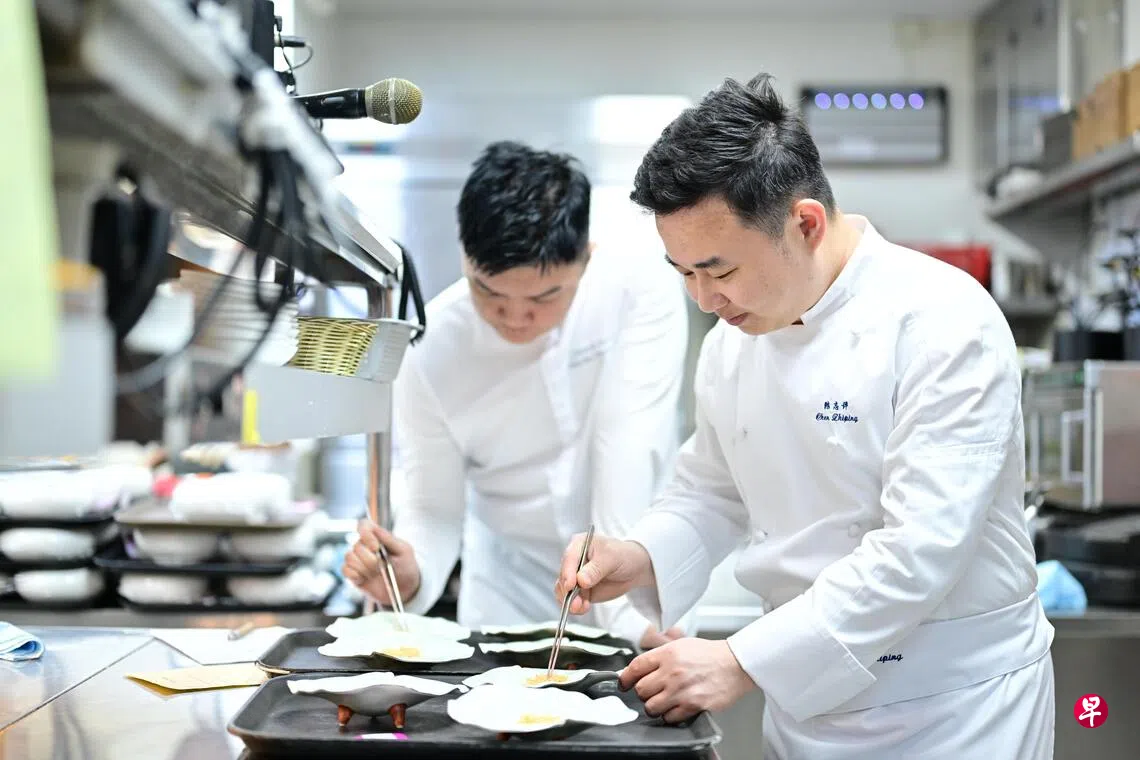
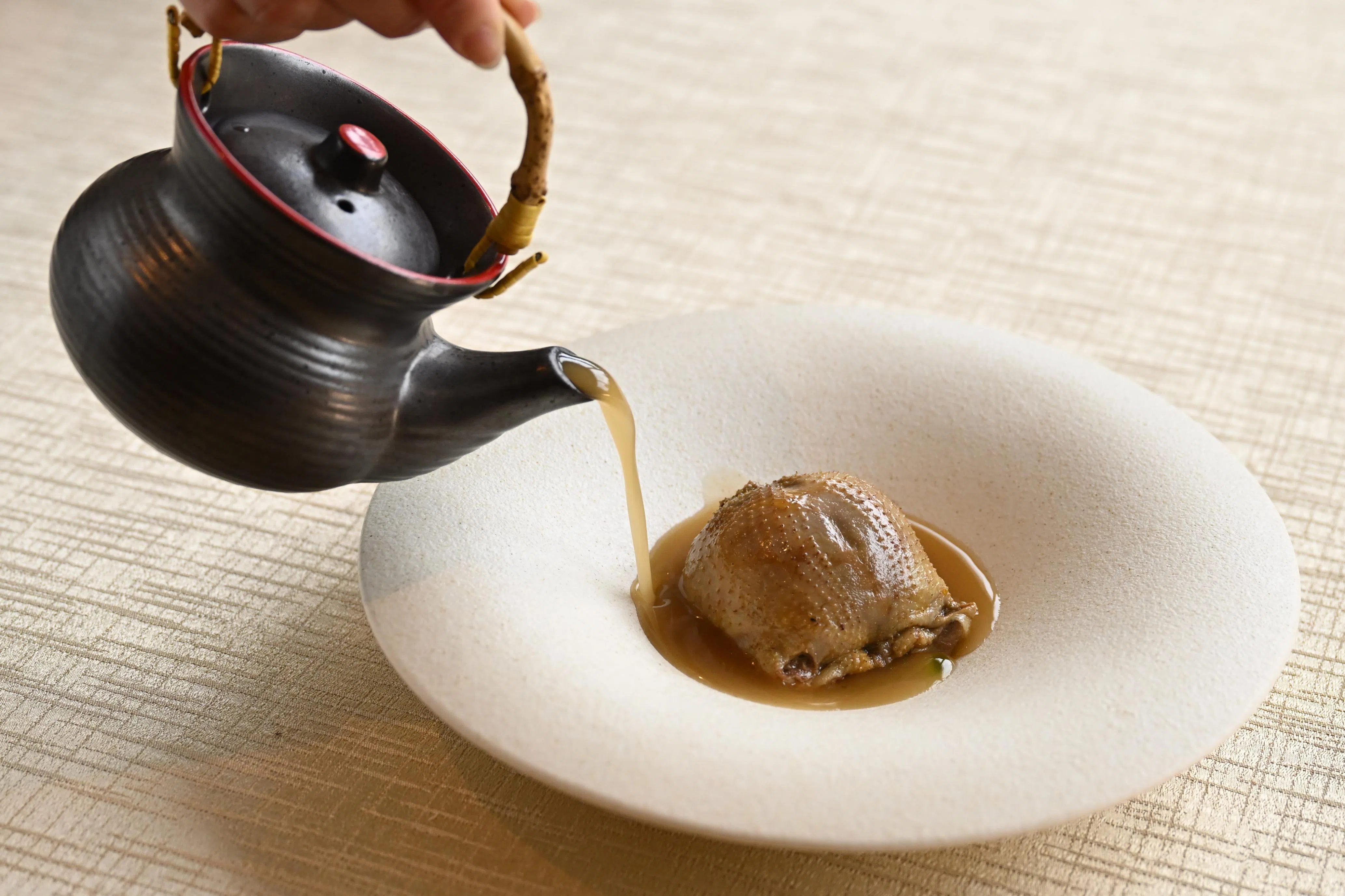
After dinner, the guests leave one by one. In the kitchen of Peach Blossoms, the Chinese restaurant at Parkroyal Collection Marina Bay in Singapore, executive Chinese chef Edward Chong and his team are carefully deboning a pigeon without breaking its skin or severing its tendons. They then stuff it with a prized needle-like bone taken from a bighead carp from Lingnan in southern China.
“Each bighead carp, weighing about three to five kilograms, yields just one such bone,” Chong said.
The dish, “pine crane” pigeon fish needle in herbal broth, was jointly created by Chong and Jeffery Wu, head chef of the one-Michelin-starred Ensue in Shenzhen, during a guest-chef collaboration.
In the past, guest-chef events at Singapore’s hotels and restaurants were almost exclusively the preserve of Hong Kong Cantonese chefs and leading French, Italian and Japanese chefs.
But that is no longer the case. Local hotels and restaurant groups are now investing in leading chefs from China as never before, inviting them to stage collaborative dinners. Guest appearances by these chefs at local Chinese restaurants have evolved from occasional experiments into an industry trend.
While many Chinese restaurants still turn first to Hong Kong chefs for collaborations, Chong was quick to look towards mainland China. If a chef’s culinary philosophy and dishes interest him, he often reaches out directly on social media rather than waiting for a formal introduction.
In July 2024, Chong invited chef Yoda Chen of Shanghai’s Meet The Bund to present classic Fujian cuisine at the restaurant.
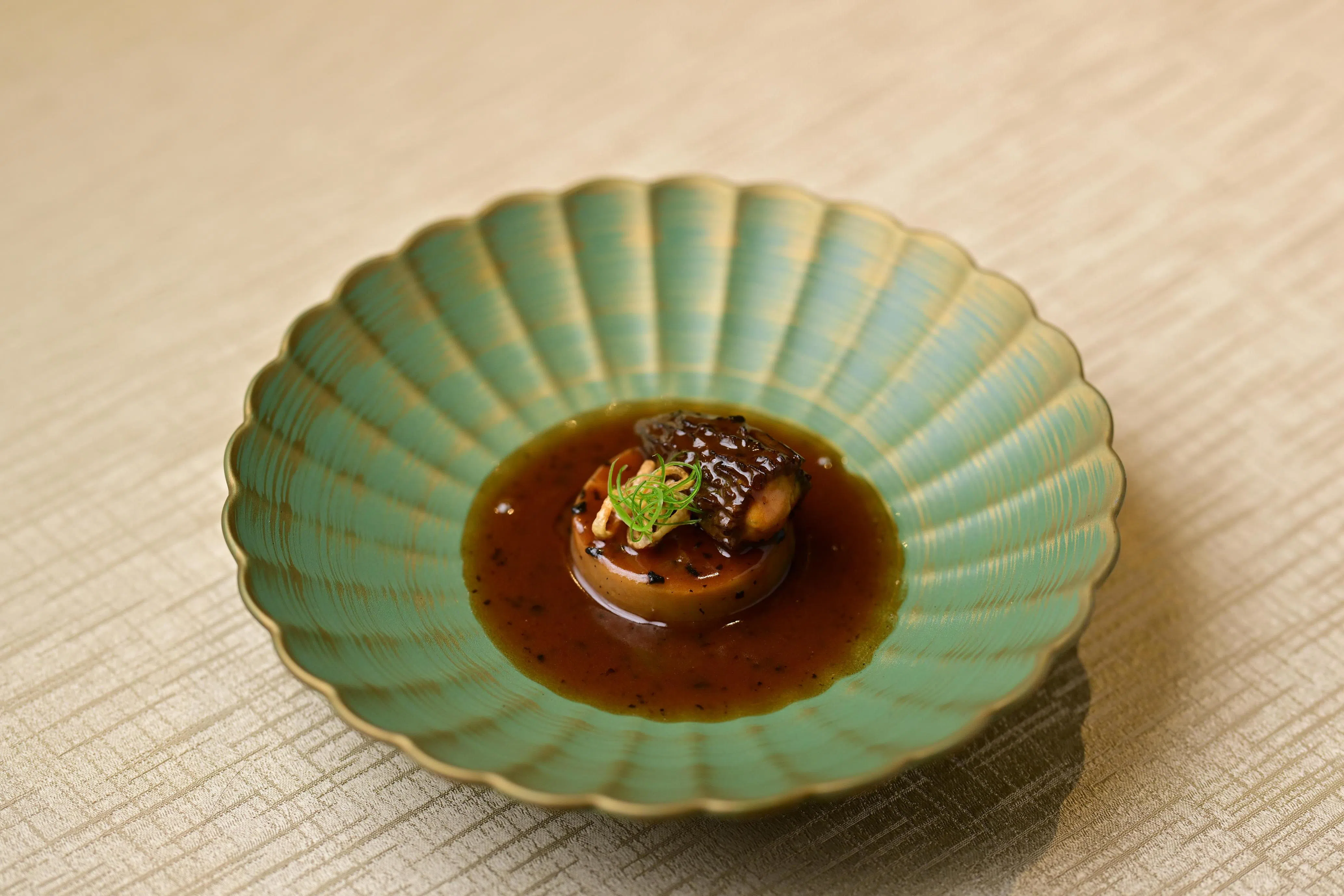
“Besides the celebrated Fujian dish Buddha jumps over the wall,” Chong said, “one of our collaborative dishes was original scallion oil gravy baked lips taro with treasures stuffed morel mushroom. It showed how simplicity and precision can elevate the humblest ingredients. The taro was cooked until smooth and delicate, paired with a richly aromatic meat gravy and stuffed morels.”
Peach Blossoms recently completed a refurbishment and refreshed its menu at the same time. Chong, who has woven Singapore’s diverse food memories into the menu, said: “Our goal has always been to champion Chinese cuisine that represents the flavours of Singapore and this region.
“Working with Chinese chefs from mainland China, we have discovered the subtle differences between China’s regional cuisines. Their ingredients, cooking techniques and traditions have all been deeply inspiring.”
Chefs from China bring fresh perspectives
China’s fine-dining scene has matured rapidly in recent years. This is directly linked to the arrival of the Michelin Guide in several Chinese cities, the continued expansion of the Black Pearl Restaurant Guide, and the emergence in Shenzhen, Shanghai, Hangzhou, Chengdu and Beijing of acclaimed restaurants and chefs combining technical skill with distinctive culinary expression.
For these chefs, Singapore is an ideal first stop for international exposure, helping them test whether their dishes can cross cultural boundaries. Singapore’s multicultural society, mature high-end consumer market and location as a gateway to Southeast Asia also make it an ideal testing ground.
In Singapore, diners’ interest in Chinese cuisine is moving beyond mainstream offerings towards greater refinement and diversity. Hotel restaurants, seeking fresh promotions to stimulate demand and nimble ways to stand out, provide a ready stage.
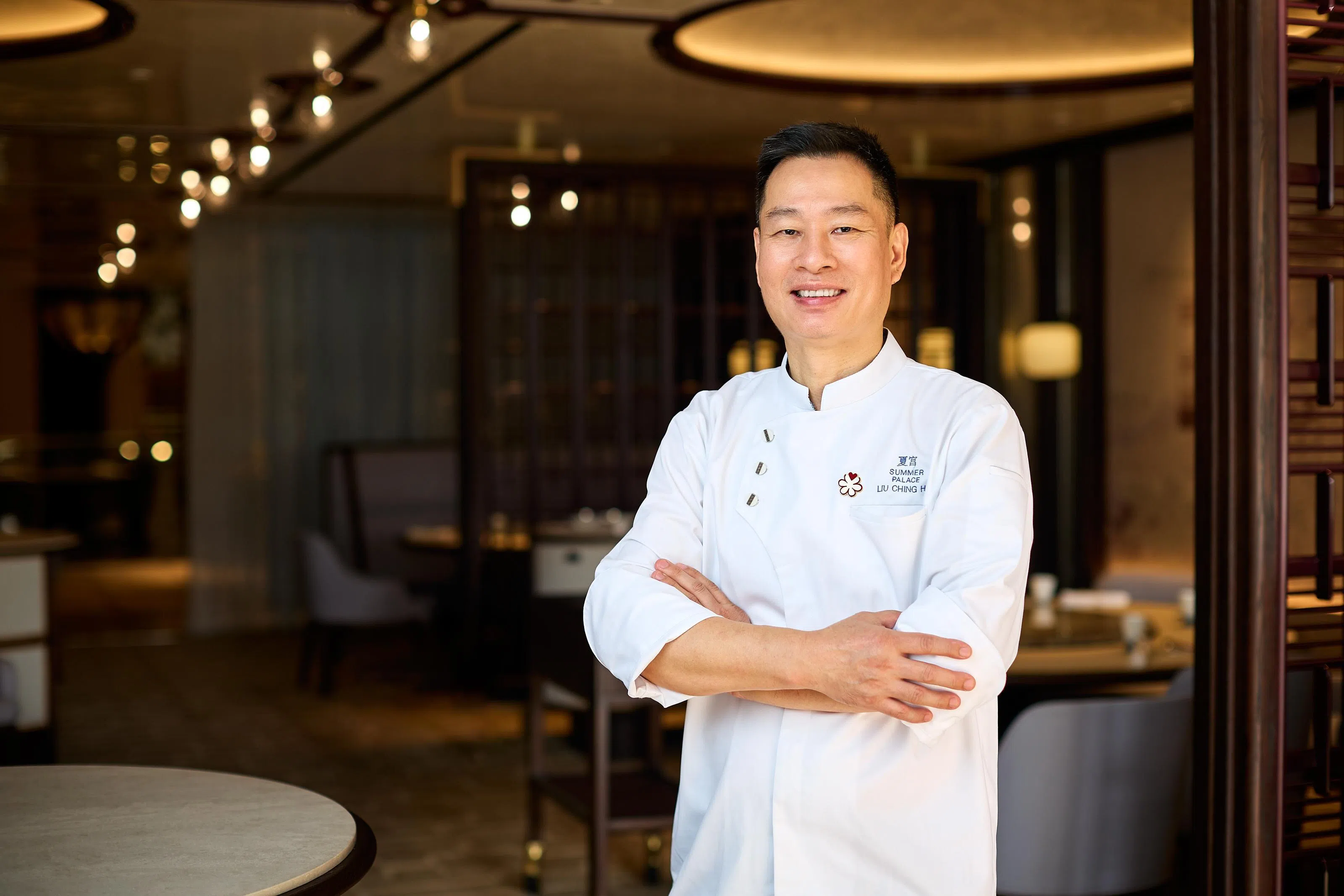
Liu Ching Hai, executive chef of the one-Michelin-starred Chinese restaurant Summer Palace at Conrad Singapore Orchard, observed: “At this stage, more people are curious about the diversity of Chinese cuisine. Chefs from China bring their different perspectives to an international audience, rather than offering just one definition of Chinese food.”
Even Cantonese cuisine, Liu added, has different interpretations shaped by geography, local ingredients, chefs’ family traditions and culinary experience. “We may share common culinary foundations, but there are still new things to discover behind familiar ingredients and techniques.”
Luxury hotels provide a solid platform for this trend through their resources, networks and operational capabilities. An established customer base, professional procurement and logistics teams, the reach of international brands and networks across properties give guest chefs comprehensive support, from importing ingredients and coordinating kitchen operations to marketing.
Collaborative dinners have consequently developed from one-off events into a sustainable dining strategy.
Summer Palace, for instance, hosted chef David Du Guo Jin of the one-Michelin-starred Hokklo at Waldorf Astoria Xiamen in May last year, followed in December by Alan Gan of Wai King Kok at Waldorf Astoria Shanghai on the Bund. It will soon welcome James Wang of Zijin Mansion at Waldorf Astoria Beijing for guest-chef dinners on 19 and 20 November.
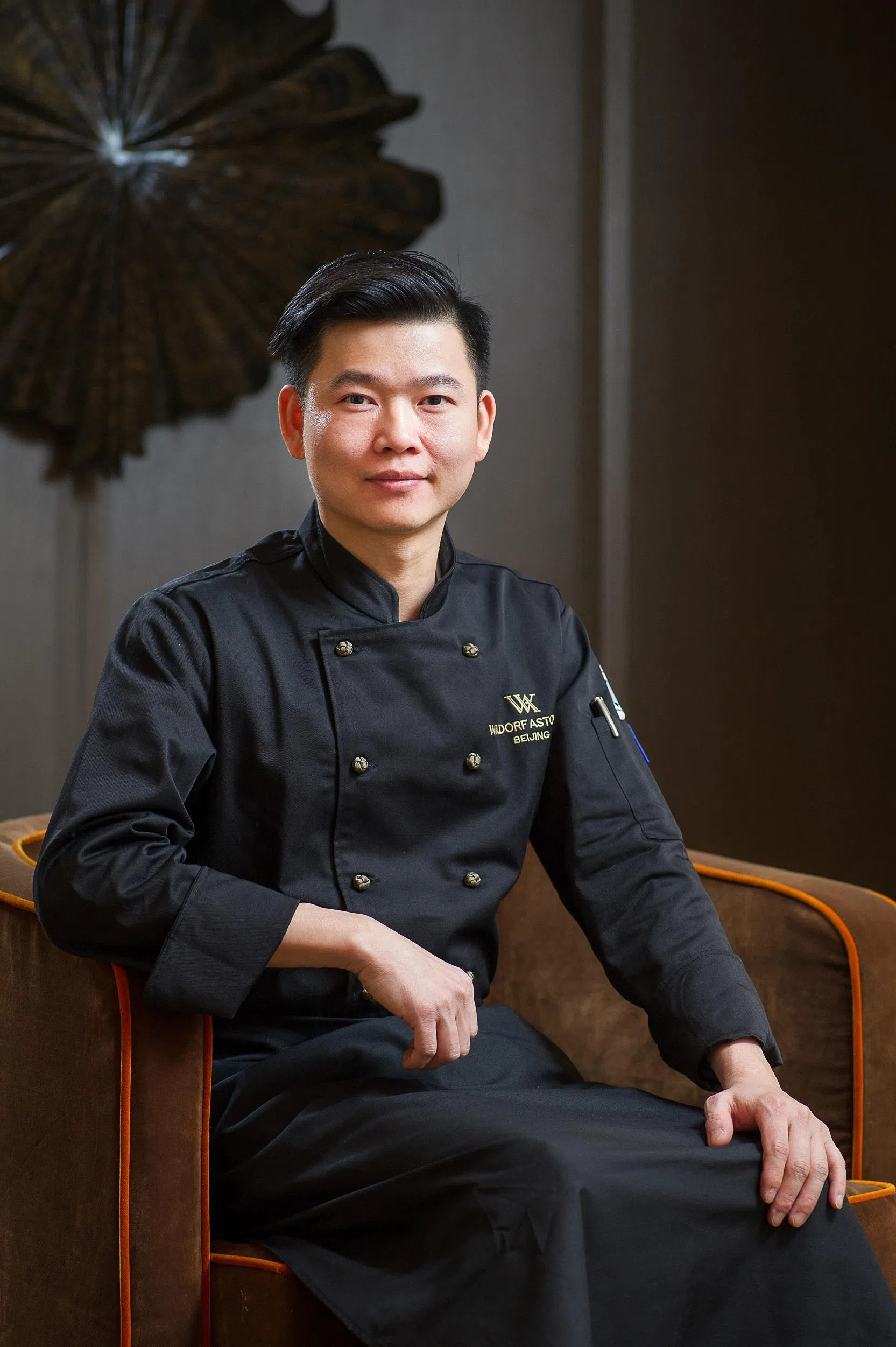
Liu said the four-hands collaboration with Wai King Kok served 70 guests over two days, 75% of whom were first-time diners at Summer Palace. “These collaborations help us attract diners seeking experiences beyond the regular menu, while creating opportunities to engage with existing and new guests.”
A deeper exchange between masters
In Singapore’s fiercely competitive high-end dining scene, Liu believes China’s rapidly rising chefs can help restaurants build a sustainable competitive advantage, provided the events offer something distinctive.
“When you build genuine relationships with leading chefs and restaurants from China and bring them into your kitchen, the collaboration becomes more than just a dinner. We gain new perspectives, and guests get to experience different regional expressions of Chinese cuisine.
“This is particularly meaningful for a restaurant like Summer Palace. We remain rooted in Cantonese cuisine, and working with chefs from different parts of China both deepens our understanding of Chinese food and continually reinforces our own identity. The real advantage also lies in building our culinary credibility and our team’s capabilities.”
In late June this year, Jiang-nan Chun at Four Seasons Hotel Singapore hosted a “six-hands” collaboration led by Executive Chinese Chef Alan Chan, alongside Charles Zhang, executive Chinese chef of Jin Jing Ge at Four Seasons Hotel Suzhou, and Marco Li, head chef of the one-Michelin-starred Yu Yue Heen at Four Seasons Hotel Guangzhou.
Zhang presented soft-boiled egg with sea urchin custard and yellow wine and braised pork belly with fermented red rice and baby broccoli. Li contributed steamed Australian lobster with prawn roe and salted fermented milk and braised rice with fish maw and preserved vegetables, while Chan complemented them with his speciality, double-boiled sea cucumber soup with deer antler mushroom, shiitake mushroom and ham jus.
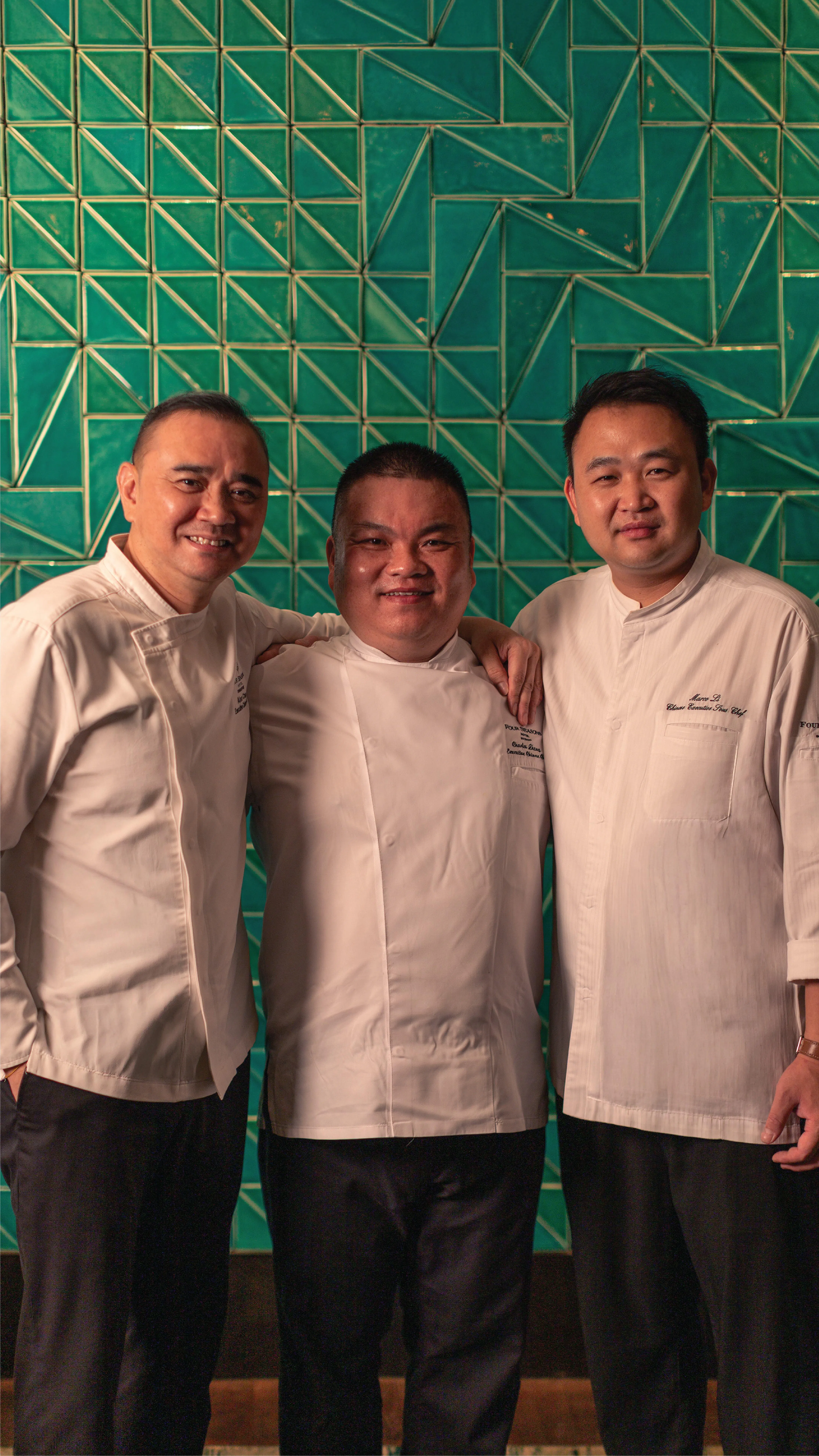
Chan believes that collaborating with leading chefs from different regions in itself helps establish a restaurant’s market position. This year alone, Jiang-nan Chun has held three collaborative dinners, all fully booked soon after they were announced.
“Some guests now come to the restaurant and ask whether we can recreate particular dishes from past collaborative dinners. This shows that diners’ expectations are changing too. They want more diverse Chinese dining experiences,” Chan said.
The enthusiastic response from guests attests to the appeal of such exchanges. For Chan, who has spent more than 30 years in the kitchen, the greatest reward is the depth of the exchange of techniques and ideas between master chefs.
He reflected: “These collaborative dinners have greatly broadened my understanding of Chinese cuisine. Working with these chefs has taught me that innovation in any dish should never be pursued blindly.
“Of course, we need to incorporate some modern techniques and presentation to express the essence of regional cuisines, but we must also retain traditional techniques and ways of interpreting dishes.”
Another welcome discovery was the authentic ingredients and traditionally made sauces the chefs brought from their places of origin.
Chan said: “One example is the 20-year-old preserved radish that Guangzhou chef Marco Li brought. It takes many years of curing for the radish to develop that deep, glossy, black-gold appearance. It brings not just savoury flavour, but also an exceptionally rich, rounded aged aroma and a distinctive, naturally sweet finish.”
Independent restaurants join in
It is not just hotels that are taking part in this trend. Singapore’s independent Chinese restaurants are also participating in these cross-regional exchanges, drawing on more flexible decision-making, closer chef networks and a focus on specific cuisines.
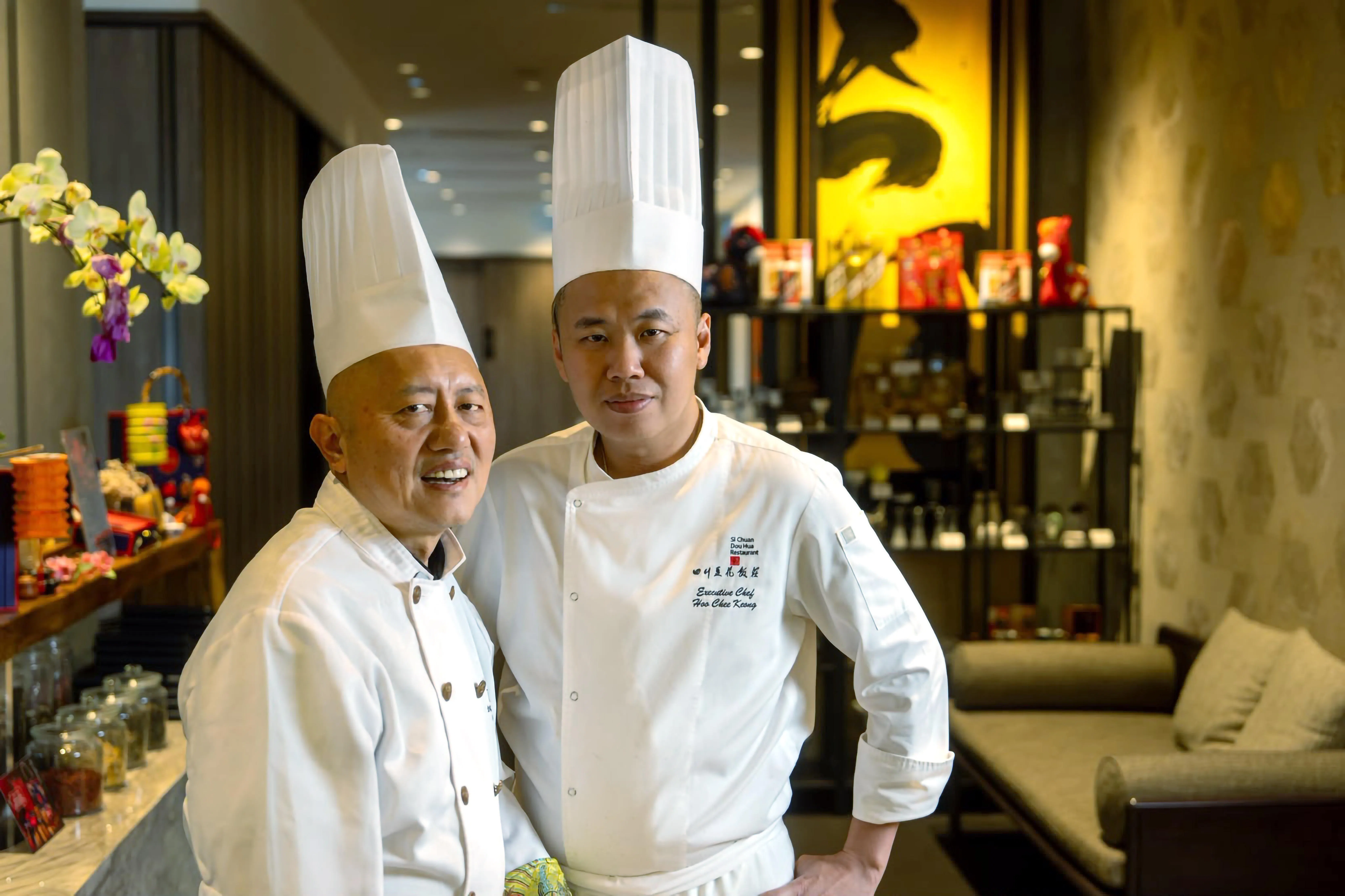
From 1 July to 30 September this year, Si Chuan Dou Hua Restaurant ran a dining promotion themed “Once Upon A Time, From Fujian To Singapore” to celebrate its 30th anniversary and honour its late founder, Dr Wee Cho Yaw.
The restaurant partnered with Fujian cuisine master Chen Zhi Ling, known as a “Chinese Dragon Chef”, to create a commemorative menu inspired by culinary traditions from across Fujian province. A “Fujian Night” dinner on 28 August was fully booked within three days of reservations opening.
A menu highlight was traditional Hokkien Popiah. Food & beverage director Linda Loke said: “Hokkien popiah had special meaning for Dr Wee, who often enjoyed it at family gatherings. Our version differs from the braised-jicama filling commonly found locally. The traditional Hokkien version uses fresh bamboo shoots and dried seaweed, giving it a natural sweetness and crisp texture.”
The oyster omelette familiar to local diners takes the classic form of pan-fried oyster with sweet potato flour in Fujian, made with fresh oysters about the size of a thumb coated in sweet potato starch.
The Kinmen-style braised yellow croaker in soy sauce uses a traditional southern Fujian technique, gently braising the fish over low heat without turning it over. This stems from local fishermen’s belief that turning a fish over symbolises a fishing boat capsizing.
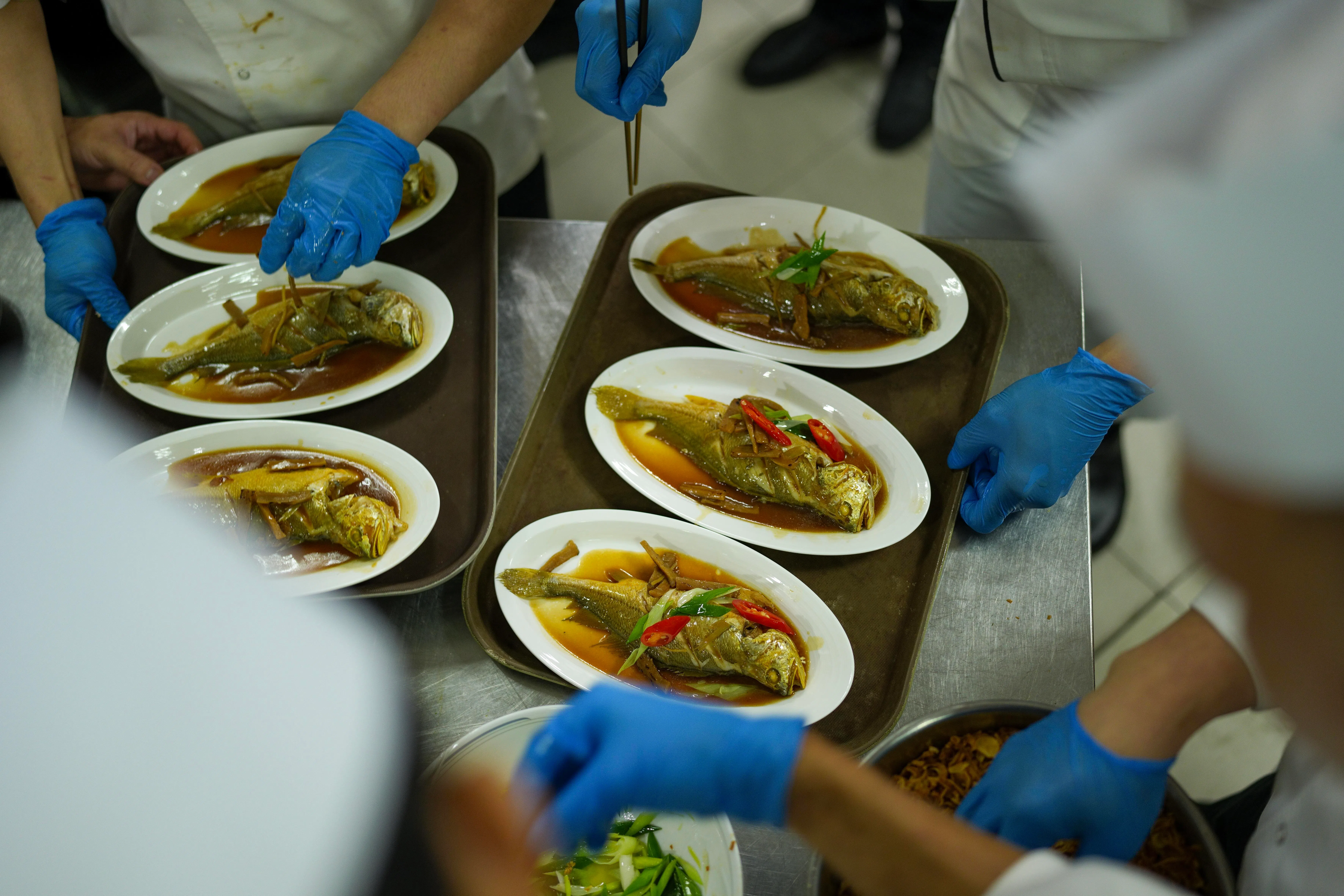
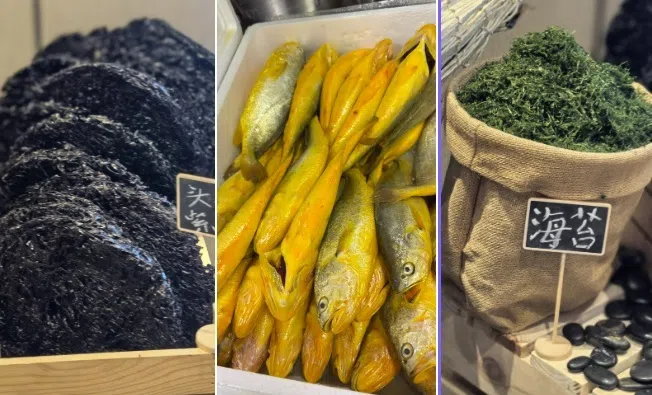
To ensure authentic flavours, the restaurant imported first-harvest seaweed, ‘hu tou’ vermicelli, yellow croaker, dried seaweed, peanut candy and oysters from Xiamen. During the promotion, Chen Zhi Ling visited Singapore three times, staying for five to seven days each time to work closely with the kitchen team.
Loke said: “The response from diners was very encouraging. They commented on the authenticity of the Fujian flavours, saying some dishes reminded them of their grandmothers’ cooking or brought back memories of home. This event was about more than showcasing Fujian cuisine. It was about reconnecting diners with memories and traditions through food.”
Wenzhou Mansion, which opened in Tanjong Pagar only in August last year, is Singapore’s first modern Chinese restaurant specialising in Wenzhou cuisine.
It recently brought the “Supper Club” concept, currently one of the hottest in China’s restaurant scene, to Singapore. After regular service ends, the chef steps away from the daily menu and service routine to improvise exclusive dishes using seasonal ingredients, with no set menu.
The intimate, reservation-only experience accommodates just six to eight guests, starts from $800 per person and must be booked at least two weeks in advance.
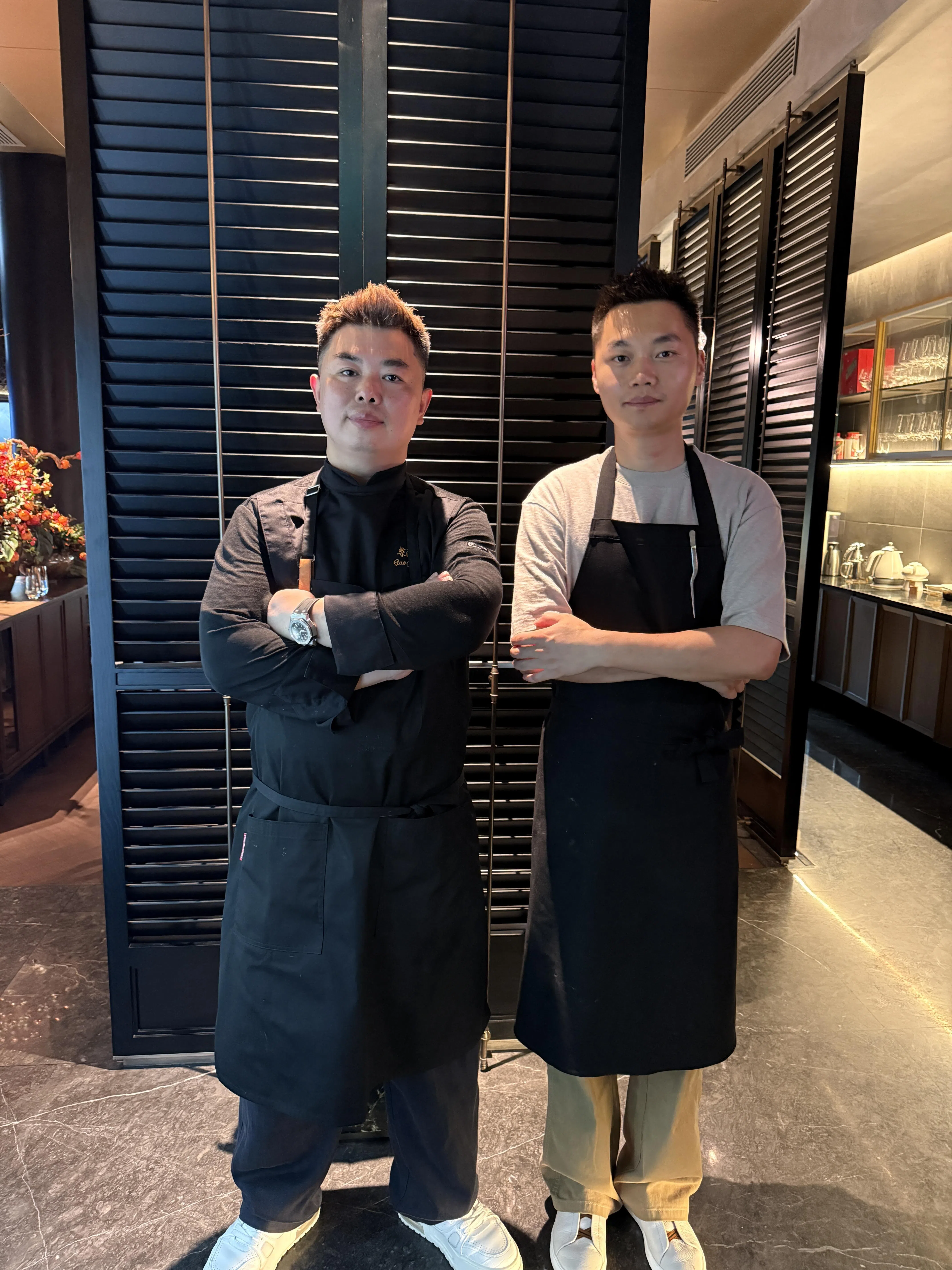
The inaugural event featured two closely watched chefs from China: Justin Yang, founder and head chef of the one-Michelin-starred Fu Man Lou, who recently attracted attention on Tencent Video’s culinary competition The Divine Dish, and Gao Jun, executive chef of the one-Michelin-starred Chai Men Hui. Working together for the first time, they combined their distinctive culinary philosophies with seasonal ingredients to create a series of original dishes.
Yang’s ancestral home is Quanzhou, Fujian. His accolades include being runner-up on The Divine Dish, one Michelin star, one Black Pearl diamond and the Michelin Guide Chengdu Young Chef Award. Gao entered the profession in 1996 and is skilled in Cantonese, Sichuan and Jiangnan cuisines. His restaurant has received one Michelin star and one Black Pearl diamond for several consecutive years.
Deepening appreciation of China’s regional cuisines (sidebar)
Guest-chef dinners in Singapore often lead to collaborations in China, giving local Chinese chefs opportunities to explore the country’s dining scene in depth and spot emerging trends.
Chong, for instance, travelled to Shenzhen in late 2025 for a four-hands collaboration with Ensue’s Jeffery Wu. “I learnt then that sandworms were used in traditional Chinese soups. Afterwards, I began adding them to some soups at the restaurant.
“Another example is the root of the hairy fig, often used in Cantonese soups in China. I later discovered how versatile it was and that it need not be limited to soups, so I also used it to make the sauce for our angelica-smoked duck.”
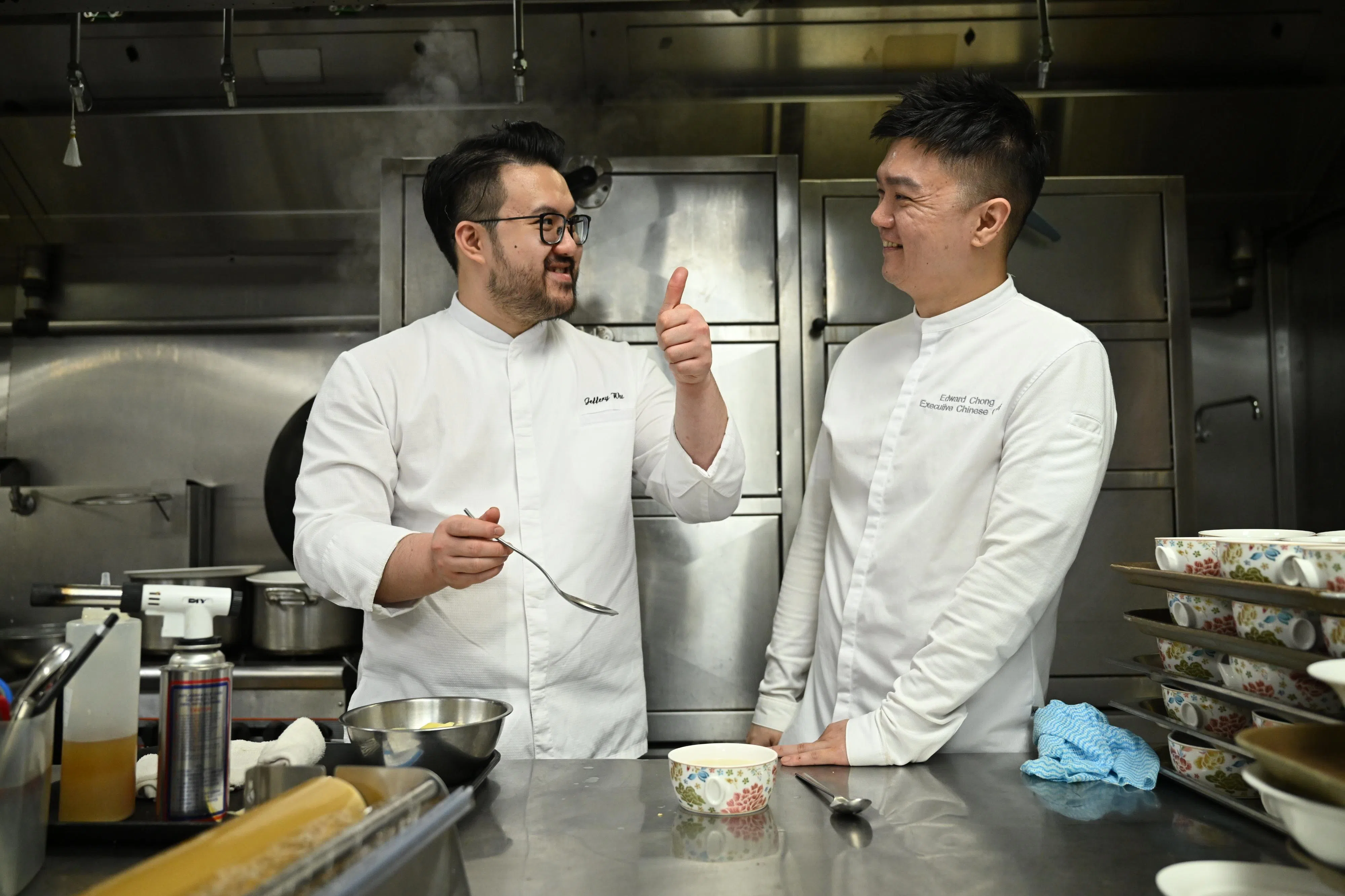
Chong’s efforts to invite chefs from China have also helped him expand his network there. Last month, he travelled to Beijing to collaborate with the three-Michelin-starred Chao Shang Chao. In May this year, he appeared as a guest chef at Hu Bin 28 at Grand Hyatt Hangzhou.
“It was my first visit to Hangzhou, and it was truly eye-opening. One dish that particularly inspired me was Hu Bin 28’s innovative interpretation of lion’s head meatballs. Traditionally made with pork, the dish at Hu Bin 28 uses brown croaker instead, mixed by hand to achieve the right texture and consistency. The result is lighter and more delicate, while retaining the essence of the dish,” he said.
Looking back at the increasingly frequent collaborations between Chinese chefs in recent years, Chong believes they help raise awareness of the rich diversity of China’s regional cuisines, stir curiosity about regional specialities and may even quietly nurture a sense of pride.
“The Chinese food we take for granted deserves its place on the world stage. Some people may see international cuisines as more prestigious and exciting, but through these collaborations, diners are discovering that Chinese fine dining can be just as innovative, expressive and culturally relevant.”
