

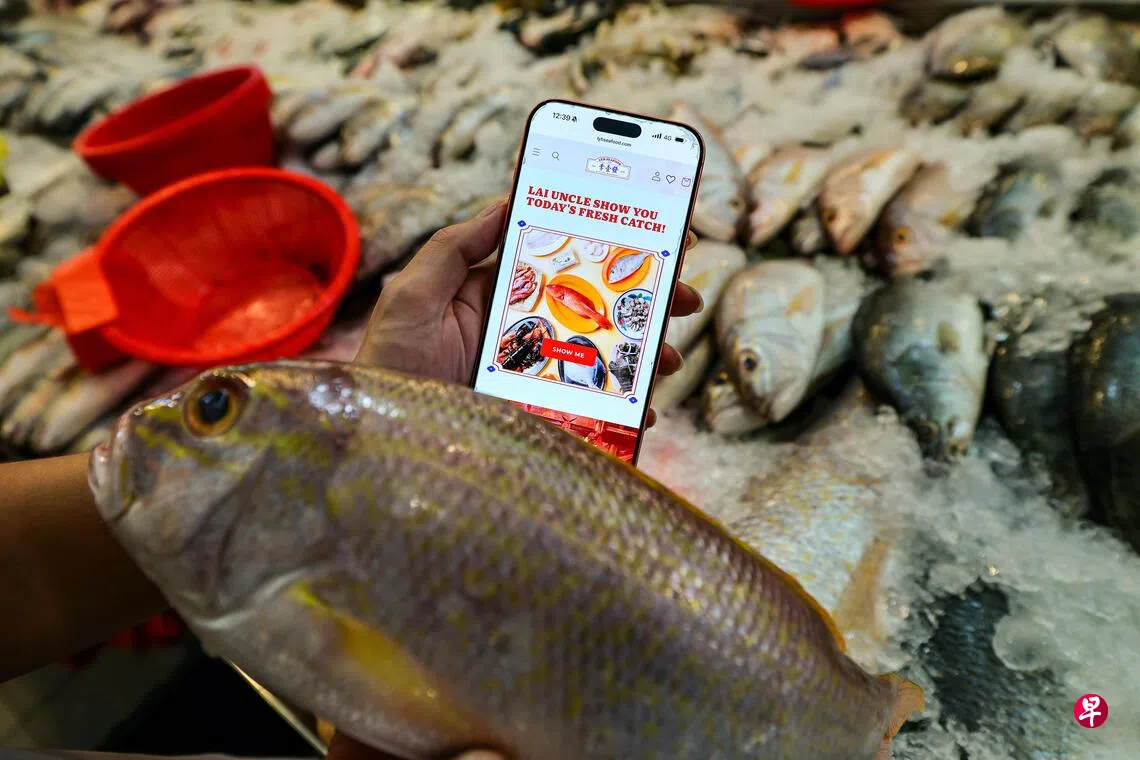
During the COVID-19 pandemic, many businesses turned to e-commerce, including stallholders selling fresh vegetables, seafood and meat. The lively scenes of crabs and fish being sold over livestreams remain vivid memories.
Lianhe Zaobao (LHZB) journalists visited three seafood wholesalers and retailers that ventured into e-commerce at different stages of the pandemic to learn about the opportunities and challenges through their experiences.
Building a website for his father’s fish stall during the pandemic
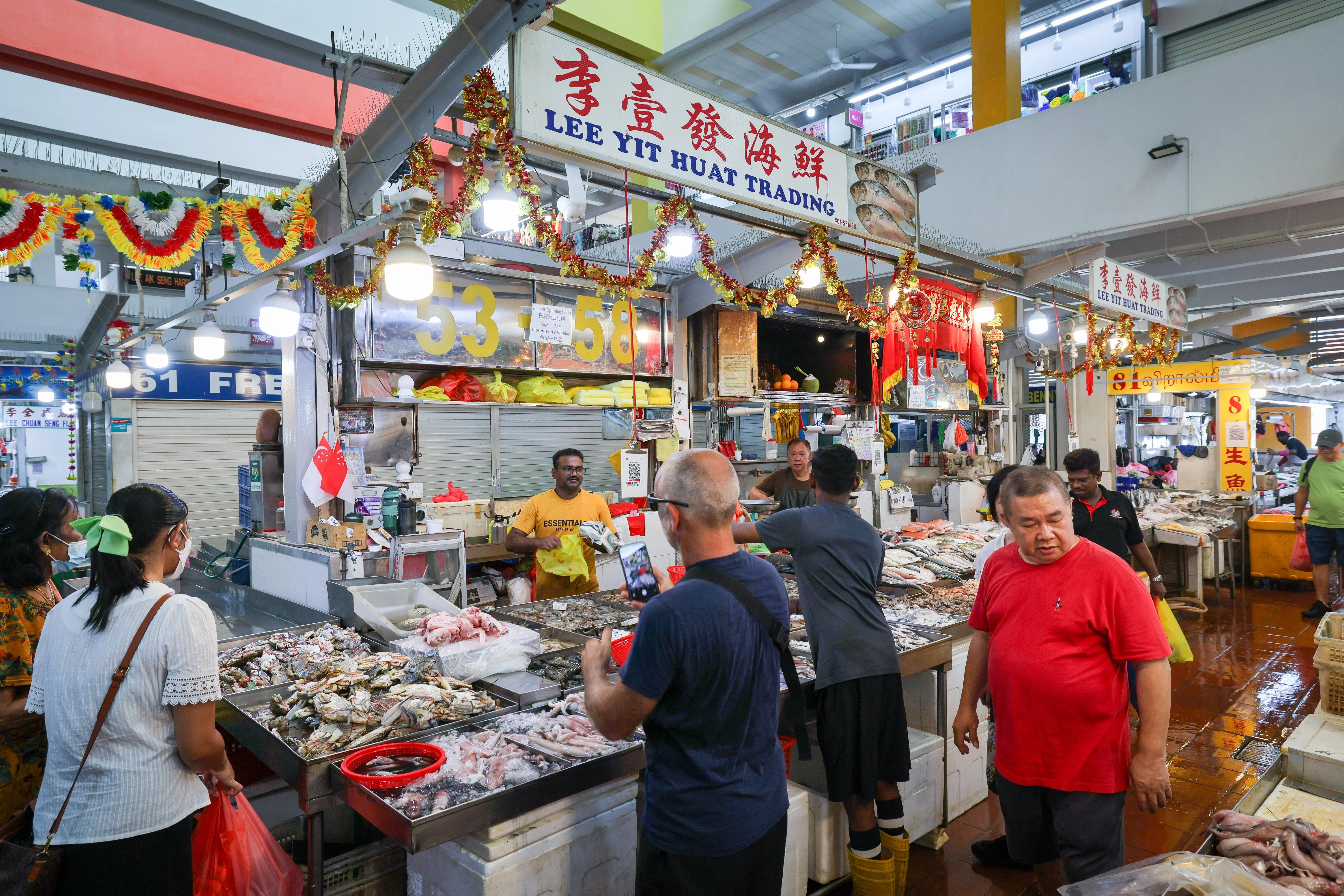
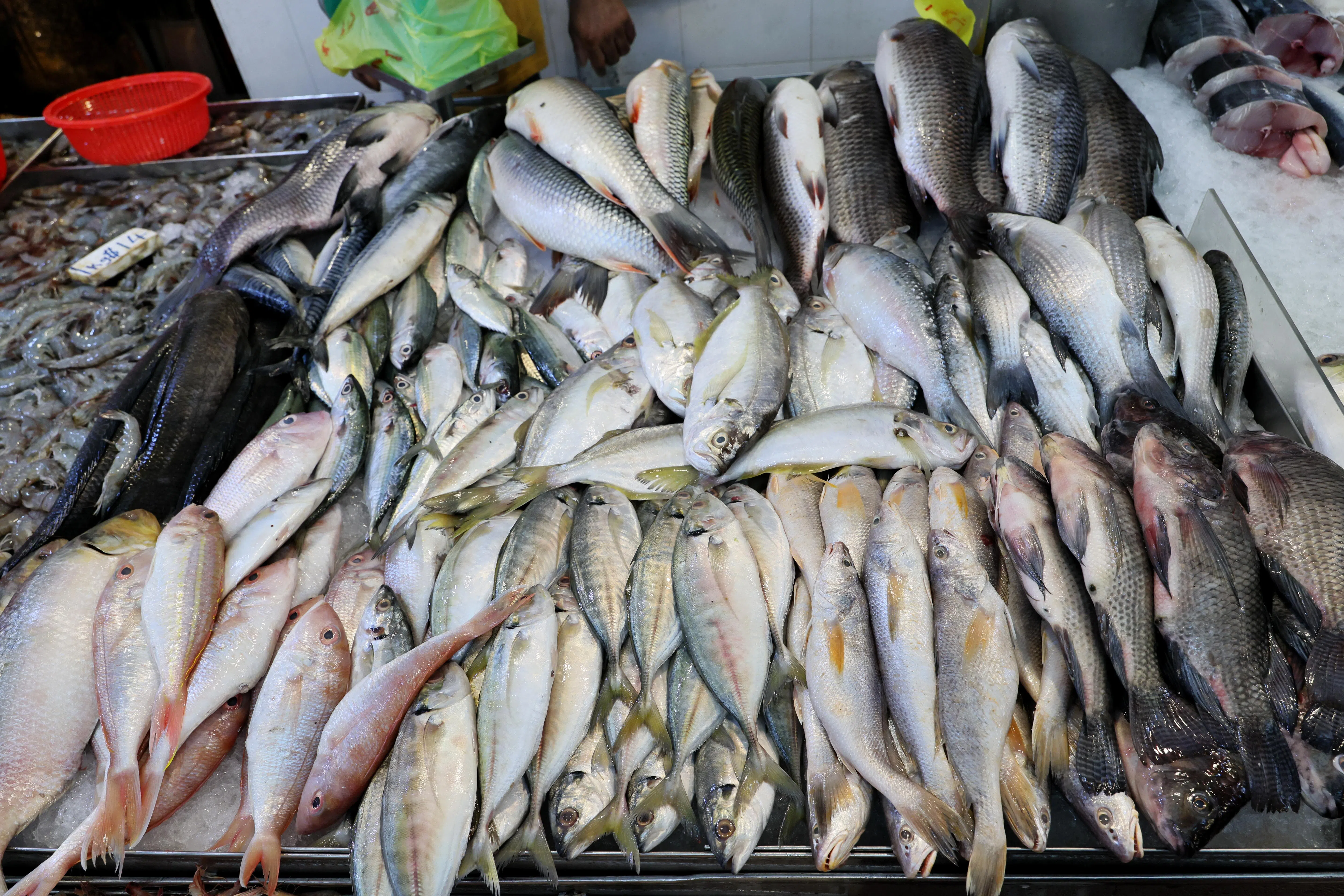
Located in Tekka Market, Lee Yit Huat Trading opens for 12 hours daily, from 7am to 7pm, except on Mondays. Its impressive array of seafood stretches across six adjoining stalls, a sign of the substantial regular clientele behind the business.
When Kino Lee Xin Hao, 25, graduated from the Singapore Hotel and Tourism Education Centre (SHATEC) in 2020, the pandemic left him unable to find work.
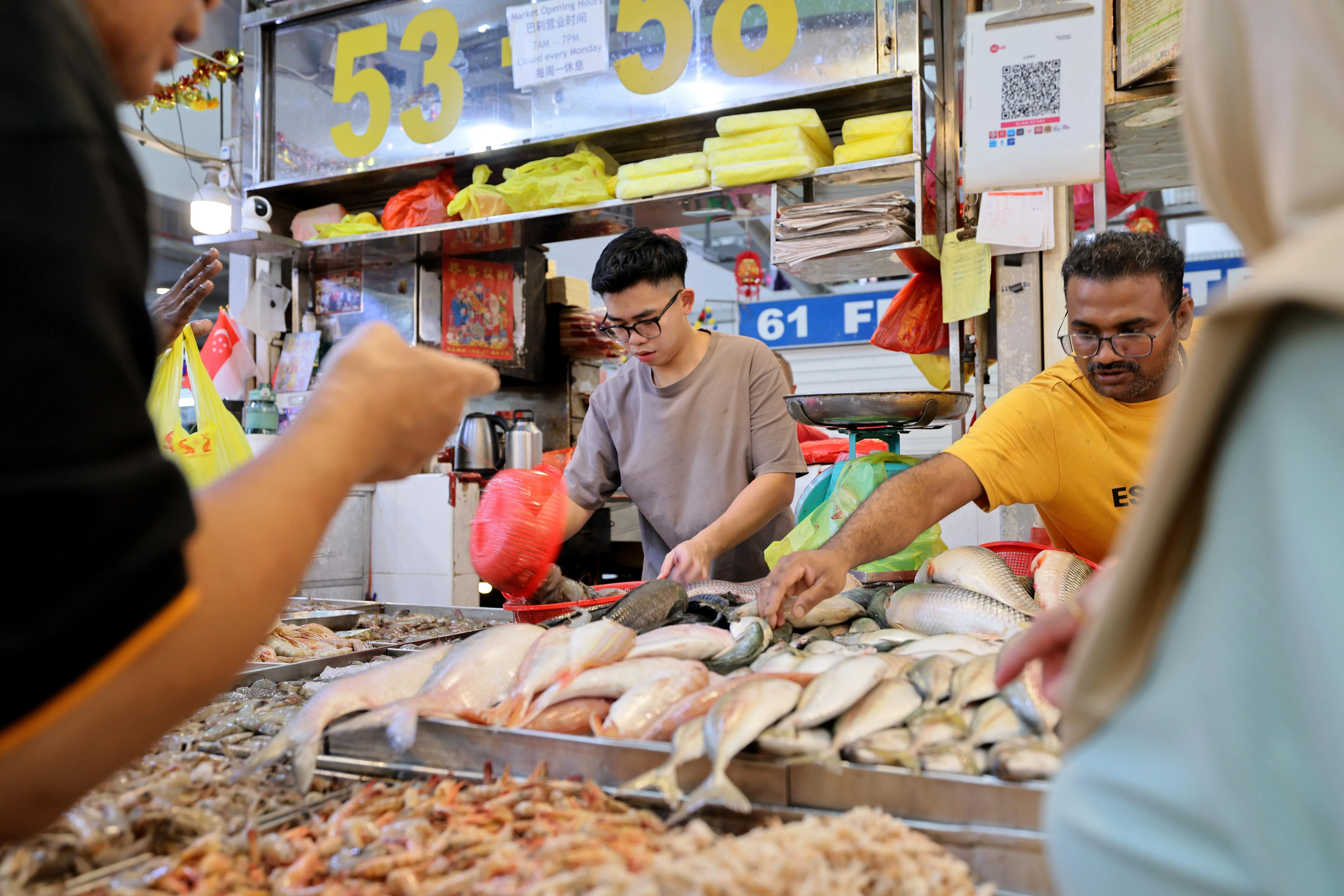
A novice in the field, Lee turned to YouTube to learn how to build a website, photograph seafood and market products online. At the same time, he had to learn the basics of the trade, helping at the stall from 6am to 1pm daily before returning home to work on the website until 1am or 2am.
Adding AI advice and bargaining features
After five or six years of development, Lee Yit Huat Trading’s website is now well established. It has also attracted customers that traditional fishmongers rarely reach, such as fine-dining restaurants, giving Lee a strong sense of satisfaction.
However, as consumers gradually returned to shopping in person, online business fell by 20% from its pandemic peak. Rather than accept the decline as inevitable, Lee examined the shortcomings of the “online wet market” from a young person’s perspective and actively sought improvements.
The website entered a new phase in late October 2026 with two new features powered by artificial intelligence (AI).
To recreate that interaction, he added a question-and-answer section to the website, helping customers find suitable seafood through a series of choices.
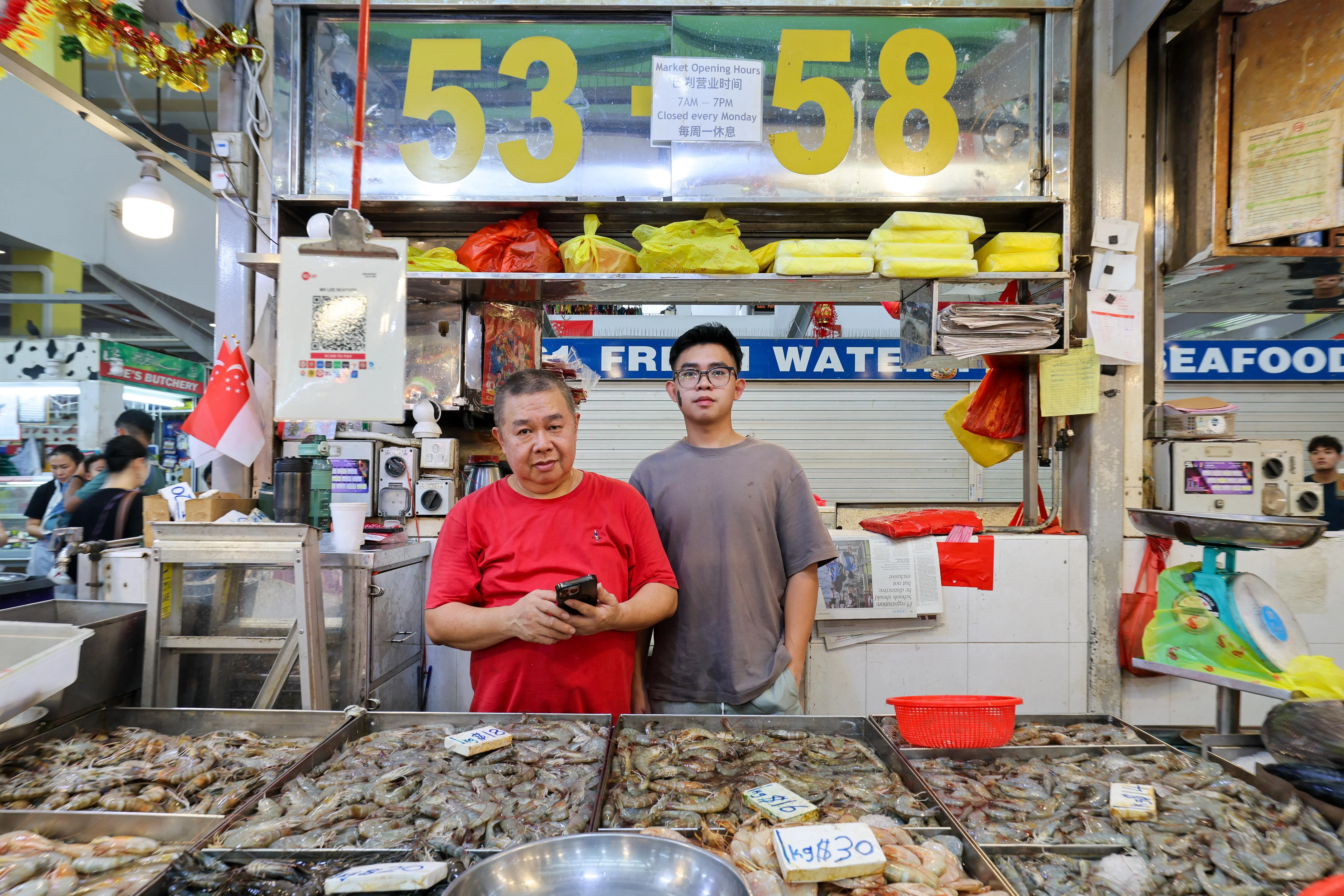
Although his 62-year-old father does not fully understand Lee’s new-generation ideas, Lee readily acknowledges that the website’s launch and gradual growth would not have been possible without the strong backing of Lee Yit Huat Trading.
▲Lee Yit Huat Trading
Address: Tekka Market 665 Buffalo Rd #01-53/58 S210665
Website: lyhseafood.com
Making a name selling crabs on livestream
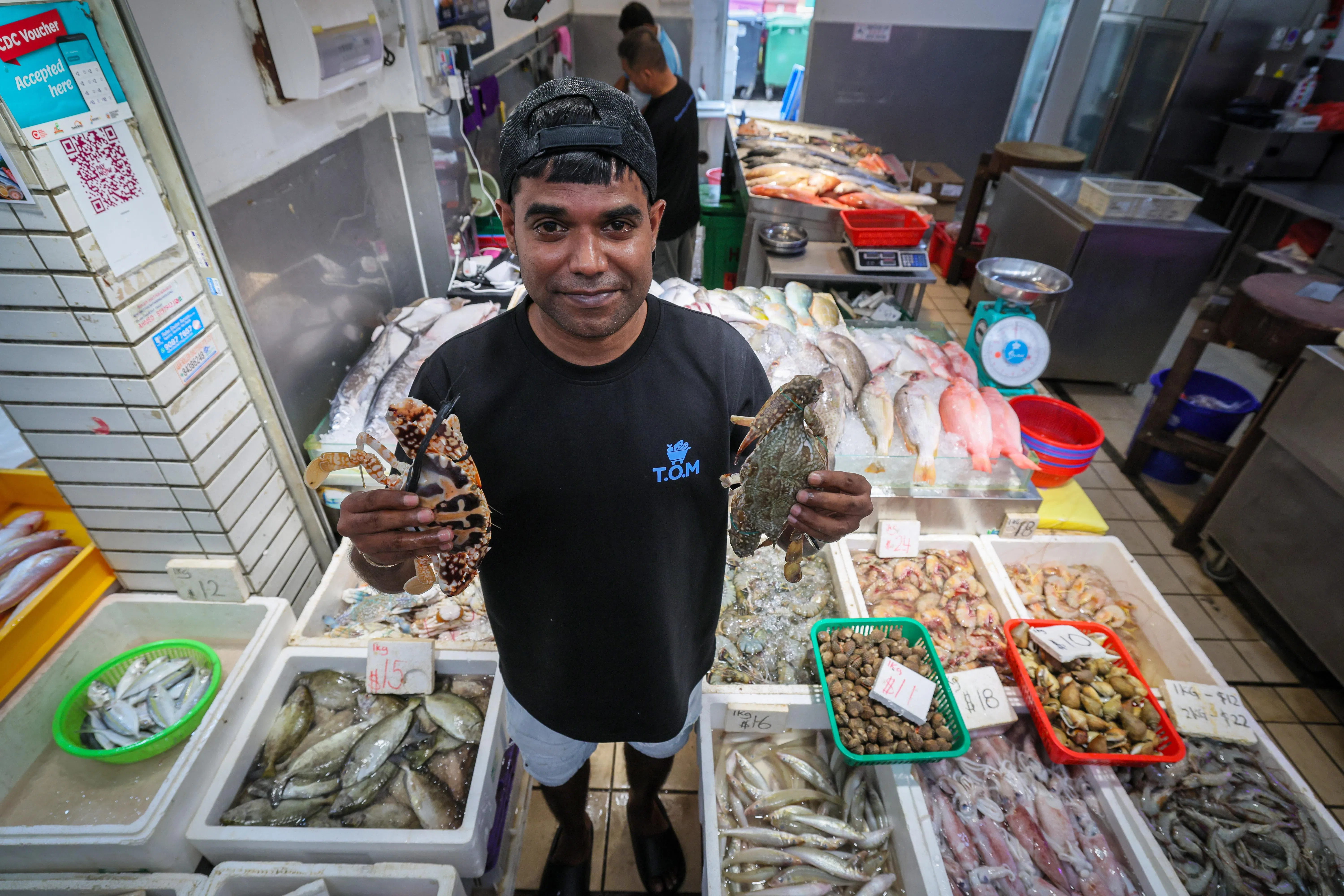
Seven or eight fish stalls line both sides of an aisle at the market in Yishun Street 22. Among the fishmongers, Indian stallholder Andrew Guy Anthony stands out as he greets customers in Mandarin. This is, in fact, his second venture into the seafood trade.
Although only 37, Andrew has more than 20 years of experience in the working world. He also picked up his fluent Mandarin through sales work.
When the pandemic affected his livelihood, Andrew noticed how successful a seafood wholesaler’s livestream was. A keen angler himself, he decided to try something similar.
However, policies changed frequently during the COVID-19 pandemic, and running a physical shop proved far more challenging than expected.
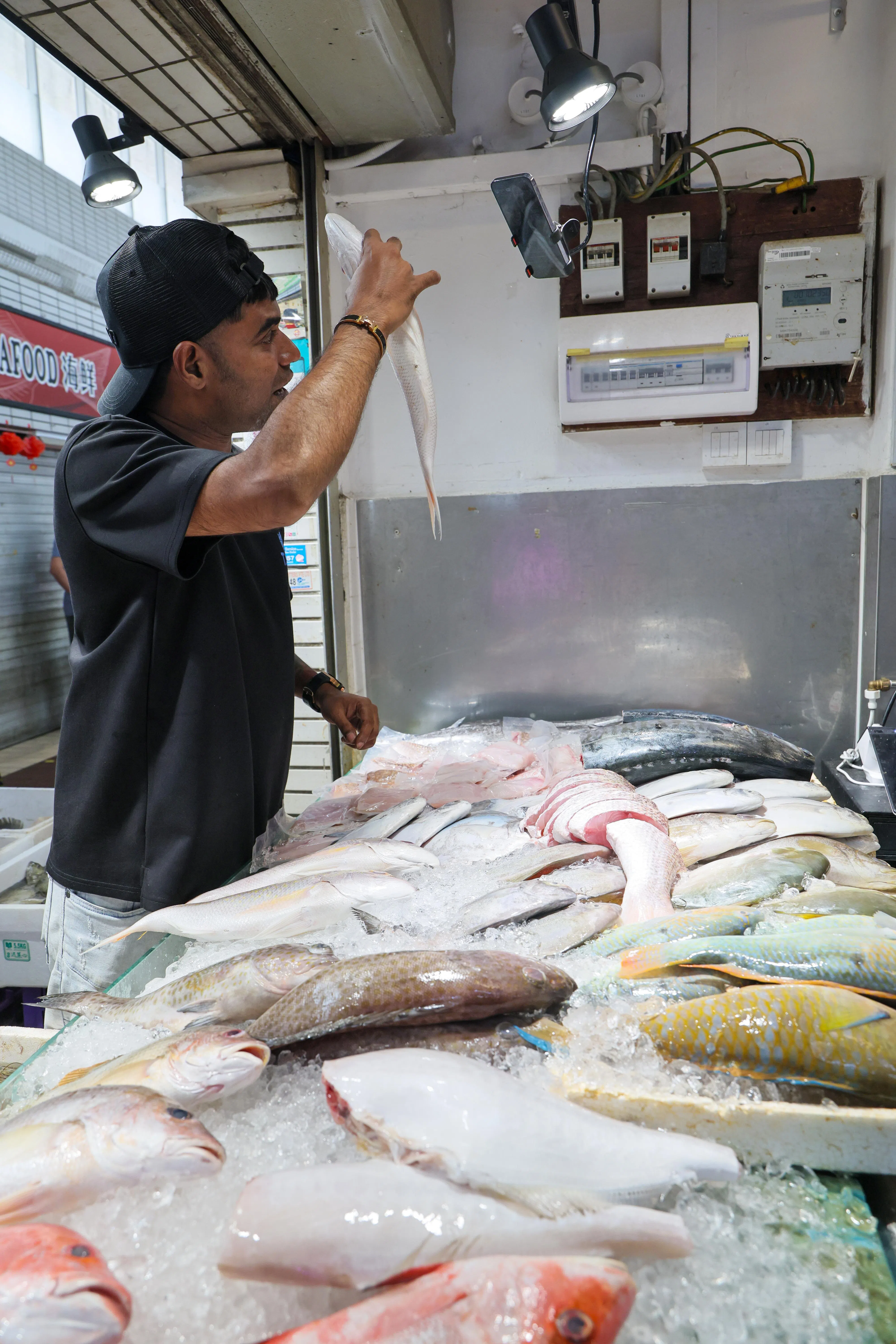
A fresh start at the wet market
Unlike his earlier move from online sales to a physical shop, Andrew is now starting with a market stall and expanding online. He has rebuilt his supply network and stocks a full range of fish, prawns and crabs, serving customers alongside his employees. He also makes time to film short videos for TikTok.

Customers come to the stall, choose for themselves, pay and take their purchases away. For online orders, stallholders have to pack and deliver the goods. Heavy-duty plastic bags, packaging boxes and delivery charges all have to be factored in. There are many hidden costs. — Andrew
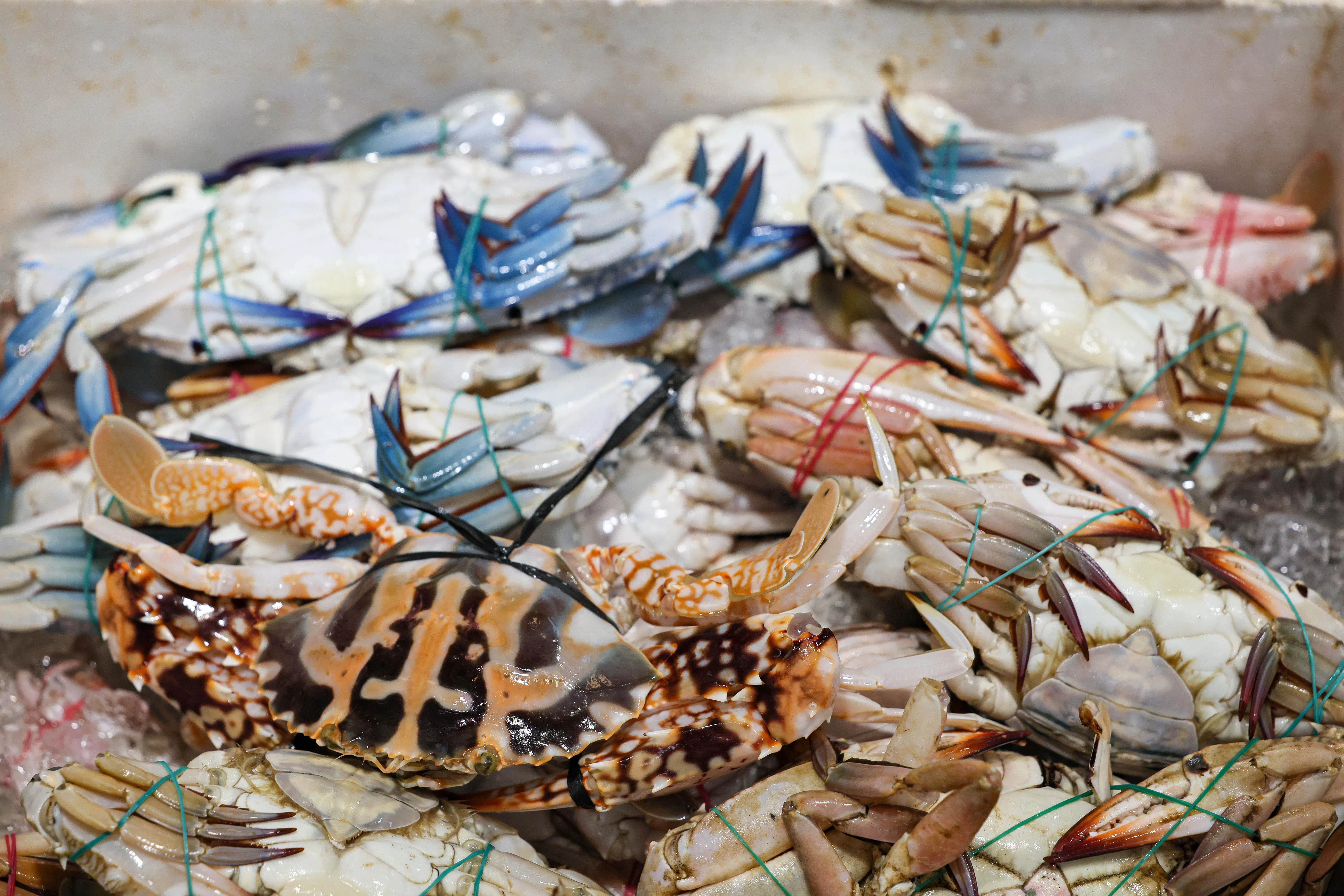
Andrew’s promise is: “Quality guaranteed — if it’s not fresh, you don’t pay.” Salmon and crabs are his bestsellers. After several months, he rented the other half of the stall and formally put up the sign for The Online Market (T.O.M).
Just six months into his fresh start, Andrew is optimistic about the potential of selling both online and offline. But he is in no hurry to expand and will respond as opportunities arise.
▲The Online Market
Address: 294 Yishun St 22 #01-335 S760294
Website: tomtheonlinemarket.com
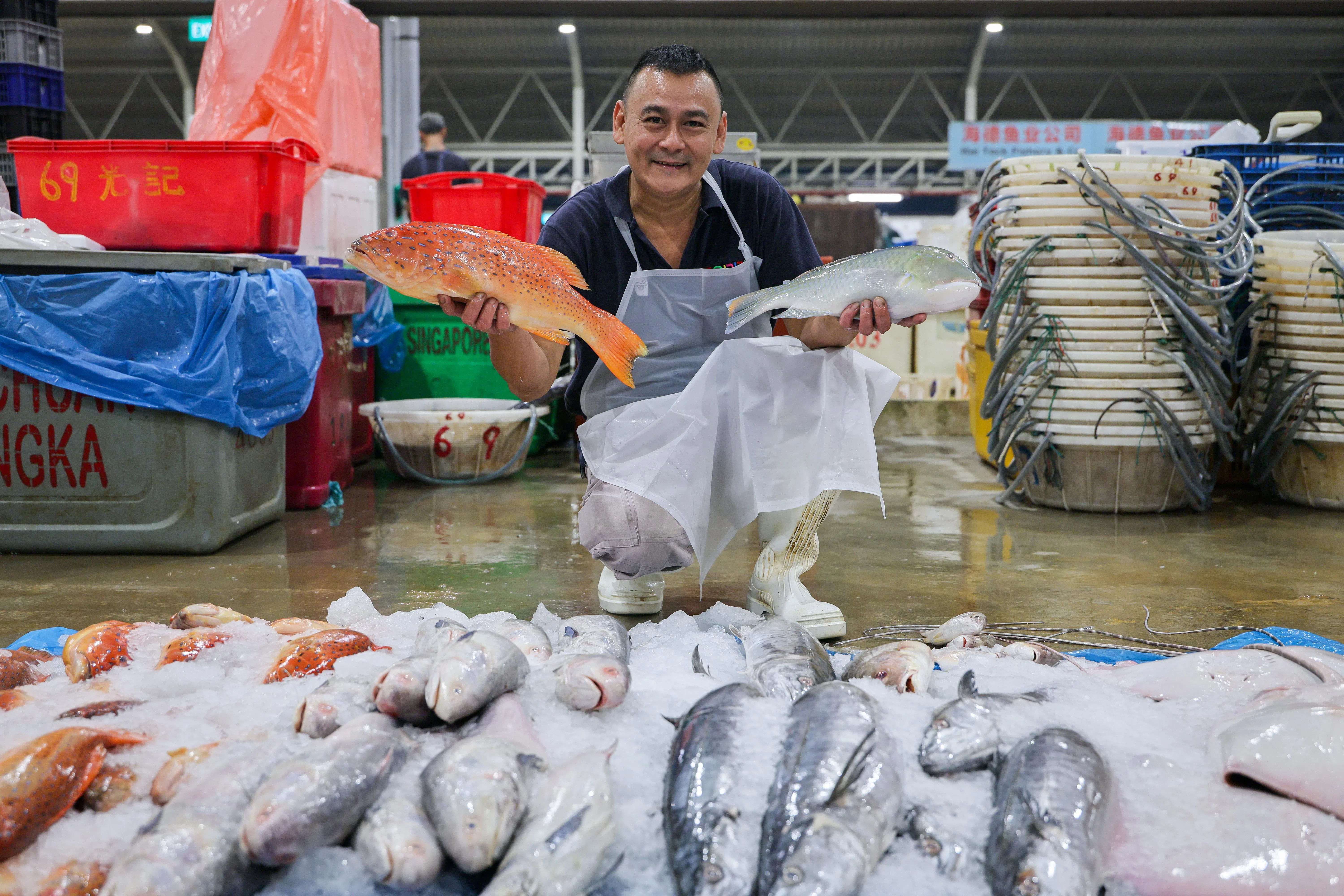
A couple put in extra hours to grow their online shop
Chia Kok Chun, 47, began helping at his aunt’s fish stall in his 20s. After gaining years of experience, he founded Heng Leong Fish Merchant at Jurong Fishery Port in 2019.
Chia did not rush into e-commerce when he first started the business, waiting until late 2020 to set up a website. He later began selling on e-commerce platform Shopee as well.
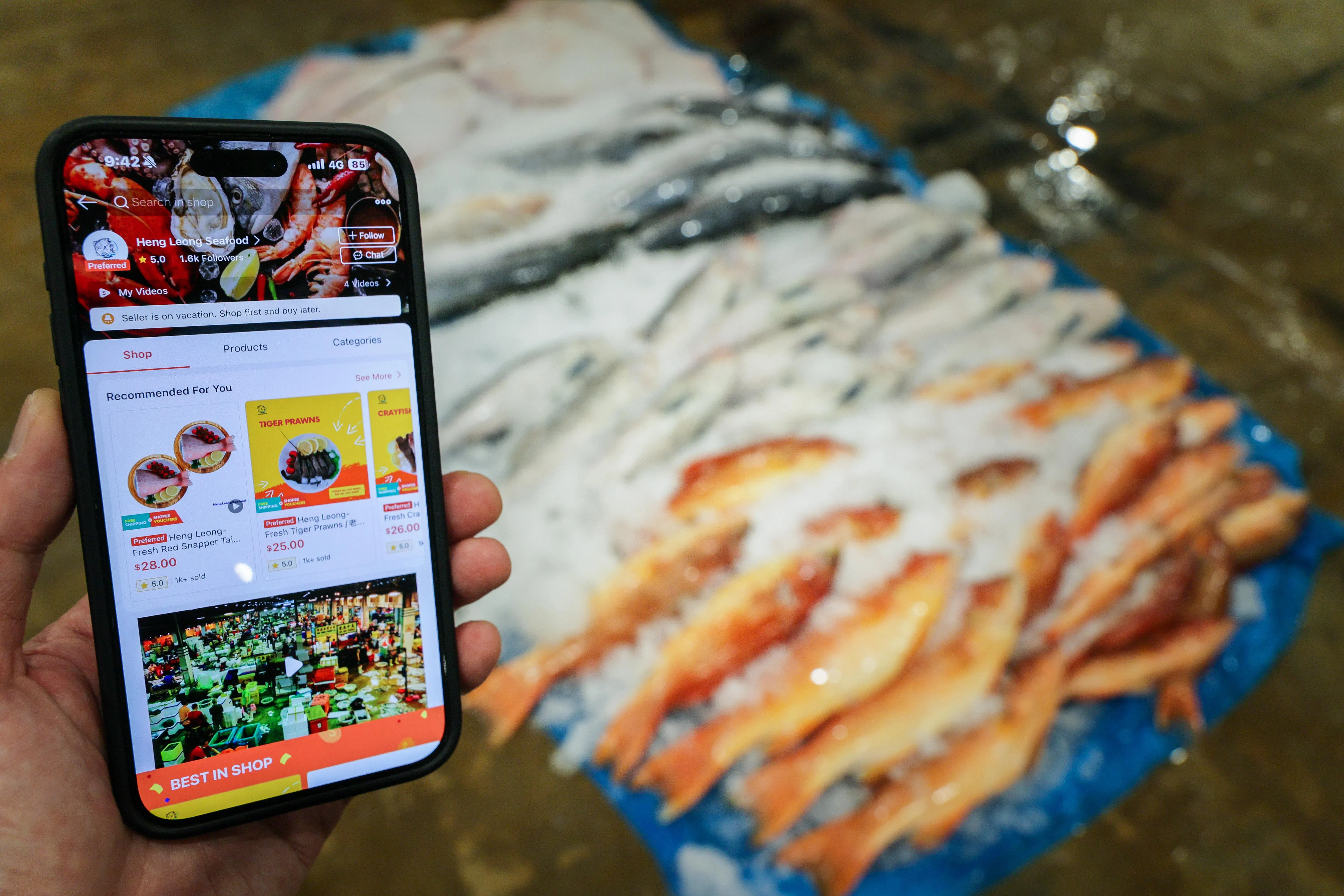
From setting up the online shop to running it, his wife Teoh Yu Mei, 47, has been the indispensable force behind the scenes. She uploads photographs and information, receives orders and liaises with customers.
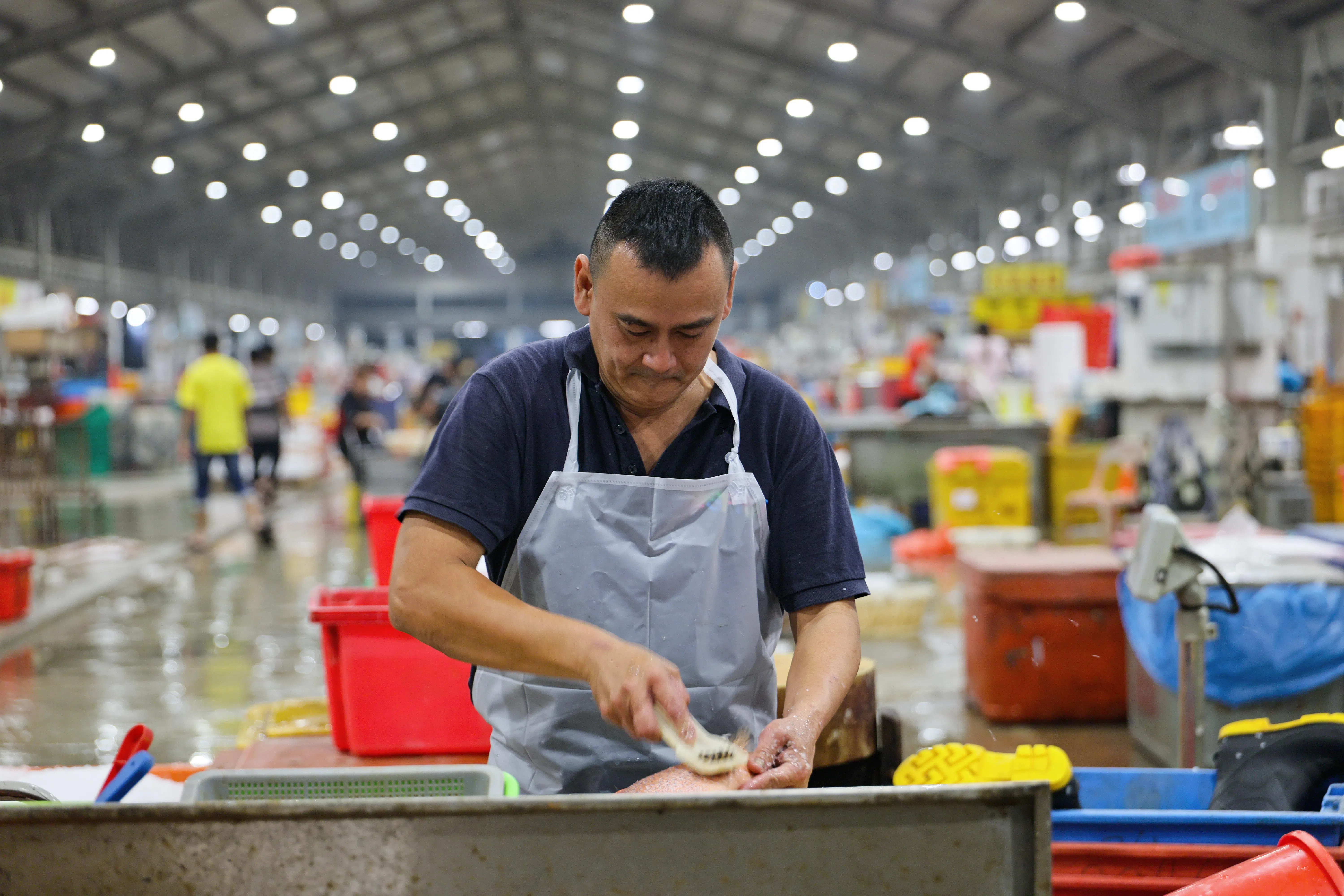
Online sales have also greatly increased Chia’s workload and working hours. He usually starts at the stall at 11pm, serving customers such as wet market vendors and food businesses collecting their orders.
Is the time and effort the couple put into their online business worth it? Chia said, “We take good care of our customers. If they ask for deboning or slicing, there’s no extra charge. We deliver orders of any size. I still remember the smallest order was $4.80 worth of tiny prawns.
▲Heng Leong Fish Merchant
Address: Jurong Fishery Port Stall 34 S619742
Website: hengleongseafood.com
A growing online market brings opportunities and challenges
All three business owners interviewed pointed to the many hidden costs of running an online business that consumers do not see, as well as the need to process orders, respond to enquiries and arrange deliveries.
Even so, younger fishmongers remain optimistic about the growth of e-commerce and are willing to invest resources in it. Besides the three interviewed here, other fishmongers selling both online and offline that have appeared in media reports include Tankfully Fresh, Quan Shui Wet Market and FishMart.
Citing Euromonitor International data, Agriculture and Agri-Food Canada said online retail sales of processed meat, seafood and meat substitutes in Singapore rose from US$4.4 million (about S$5.64 million) in 2018 to US$8.7 million (about S$11.14 million) in 2023.
The growth of e-commerce is closely linked to changing consumer habits. As the pool of digitally savvy young consumers grows, online shopping has become part of everyday life.
As the market continues to expand, however, competition is bound to intensify. Consumers are also demanding faster deliveries, moving from next-day delivery towards more immediate services. RedMart, part of e-commerce platform Lazada, launched RedMart Now in 2026, offering fresh grocery deliveries within 30 to 60 minutes.
