

On the Kyoto subway, I discovered that teamLab had arrived in the city. I was surprised, and a little disoriented. A month before the pandemic broke out, I had visited teamLab Borderless in Tokyo, where it felt entirely at home. It made perfect sense for teamLab to be in Tokyo, a city that already feels 50 years ahead of anywhere else on Earth. But Kyoto? I know Kyoto has its modern side. Kyoto Station and Shijo Kawaramachi are so commercialised that you could forget you were in a thousand-year-old capital. Still, I had no desire to experience teamLab in Kyoto. I secretly hoped my travelling companion had not spotted the poster, knowing I would struggle to say no. But my companion, even more curious about our surroundings than I was, noticed it anyway. Eyes sparkling like a child’s, my companion excitedly insisted we go.
I have visited Kyoto so many times — well, not that many, really — that I no longer return for its temples, shrines and gardens, though I do revisit Honen-in every time. Nor do I necessarily come for the cherry blossoms, autumn leaves or snow; moss is actually more to my liking. Sometimes, I simply want to wander through everyday local life. Yet a place’s character is inseparable from its heritage. Everything we sense as we roam Kyoto’s streets and lanes has been shaped by the landscape and culture around us. We need not revisit its temples, shrines and gardens, but they must still be there. Otherwise, what would distinguish Kyoto from any other Japanese city? Why would I keep returning? Even so, I had never imagined this ancient capital having anything to do with teamLab.
But on reflection, once we have spent the day savouring Kyoto’s old-world pleasures, what is there to do in the evening apart from eating, drinking and shopping, unless we go to see illuminated autumn foliage or other night-time displays at temples and shrines during their evening openings? Why not experience some modern digital art at teamLab? Embracing the modern does not mean turning away from tradition. Standing amid these digital art installations, watching technology conjure flowers into bloom and send them falling, perhaps the emotions stirring within us are little different from those our ancestors felt hundreds or thousands of years ago as they witnessed the seasons changing in nature. I had gone to teamLab Biovortex Kyoto merely to indulge my companion, but enjoyed it far more than I expected. It also gave me a new appreciation of this interdisciplinary art collective. I had always known there was no wall between art and science; only on this visit did I truly understand it.
The international interdisciplinary art collective teamLab has created several permanent venues in Tokyo and Osaka, including teamLab Borderless at Azabudai Hills in Tokyo, teamLab Planets in Tokyo’s Toyosu district and teamLab Botanical Garden at Nagai Botanical Garden in Osaka. It has now established a presence in Kyoto, officially opening on 7 October 2025. Its largest venue in Japan to date, it is in south-eastern Kyoto, just over a ten-minute walk from Kyoto Station. Covering roughly 10,000 square metres across four floors, the venue provides neither a map nor a set route through its more than 50 works. Seeing everything takes the better part of a day.
Centred on the theme of how life comes into being, teamLab Biovortex Kyoto draws visitors into a story of life in motion and the cycles of the universe. Unlike other venues focused on the magic of light and shadow, it introduces elements such as air and water in an attempt to break down physical boundaries. Many works have no fixed physical form and change as visitors interact with them. More than digital spectacles that dazzle the senses and stir the imagination, they offer the wondrous experience of realising that we, too, are part of the art.
Must-see highlights
The permanent exhibition features four major new works making their Japanese debut: Massless Amorphous Sculpture (《无质量也无定形的雕塑》), Morphing Continuum (《流变的连续体》), Massless Suns and Dark Suns (《无质量的明暗太阳》) and Traces of Life (《生命的轨迹》). Alongside these are other signature teamLab works, including Megaliths in the Eternal Existence of the Open Universe (《无垠宇宙的永恒存在中的巨石》), Transient Abstract Life and Return (《短暂而抽象的生命与回归》) and Nirvana: Fleeting Flowers (《涅槃:转瞬之花》). Together, these more than 50 interactive digital art installations add a layer of reflection on human culture to the dazzling effects we experienced at teamLab Borderless in Tokyo six years ago.
Highlight 1: Massless Amorphous Sculpture
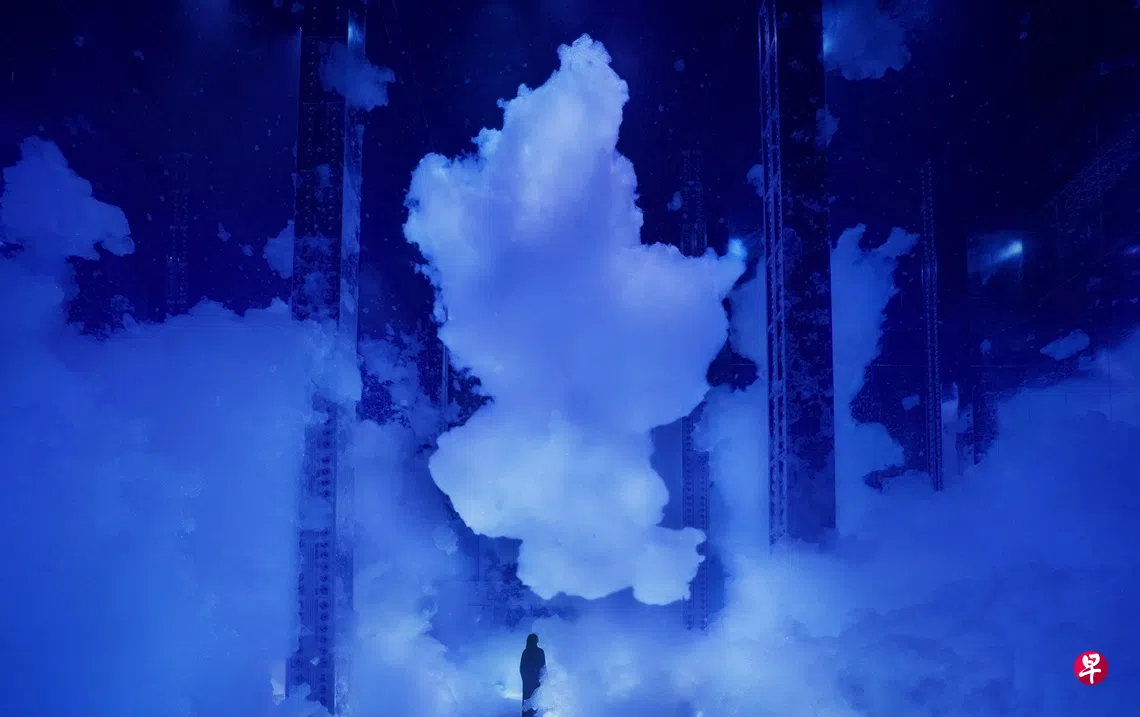
This was undoubtedly my favourite work at teamLab Biovortex Kyoto. My companion and I were already spellbound as we watched from behind a glass wall. On the other side, countless enormous masses of foam, formed from soap, air and water, drifted through the gallery like weightless sculptures suspended in mid-air, creating a dreamlike, poetic scene. The visitors among them all became children again, reaching out to swat at the foam. It burst at their touch, only to re-form and surround the delighted visitors once more.
Highlight 2: Morphing Continuum
This work feels like a “living sculpture”. The gallery is filled with luminous spheres whose arrangement changes with the movement of air and visitors. At times they gather; at others they separate, their boundaries blurred and their forms unstable. They challenge our understanding of physical objects, making us feel as though we have entered the primordial chaos of the universe.
Highlight 3: Massless Suns and Dark Suns
This work consists of countless luminous and dark spheres. As you approach or touch a luminous sphere, it suddenly flashes, triggering the surrounding spheres to light up one after another, as though light were travelling through space. Look closely, and spheres made of darkness also emerge. Yet neither the luminous nor the dark spheres physically exist: they are composed entirely of light. Their existence depends on visitors’ awareness and perception, inviting questions about the nature of existence.
Highlight 4: Traces of Life
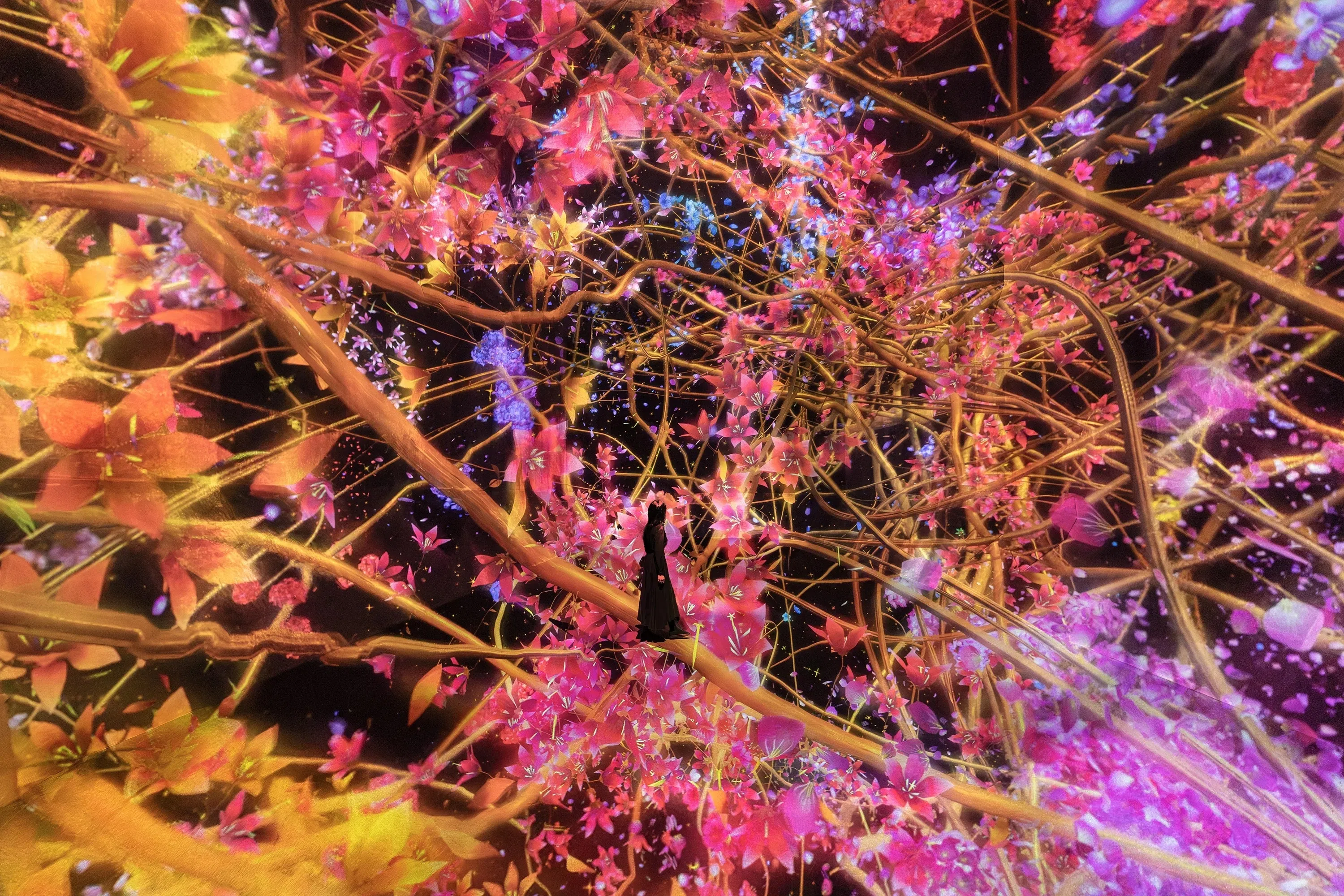
The space of this work merges with its visitors and changes as they move. Their footsteps leave traces that linger briefly, connecting into the paths people have taken and gathering into a vast presence. If nobody enters, the space remains empty, with no images at all. In other words, the world of this work comes into being only through “human presence”.
Highlight 5: Megaliths in the Eternal Existence of the Open Universe
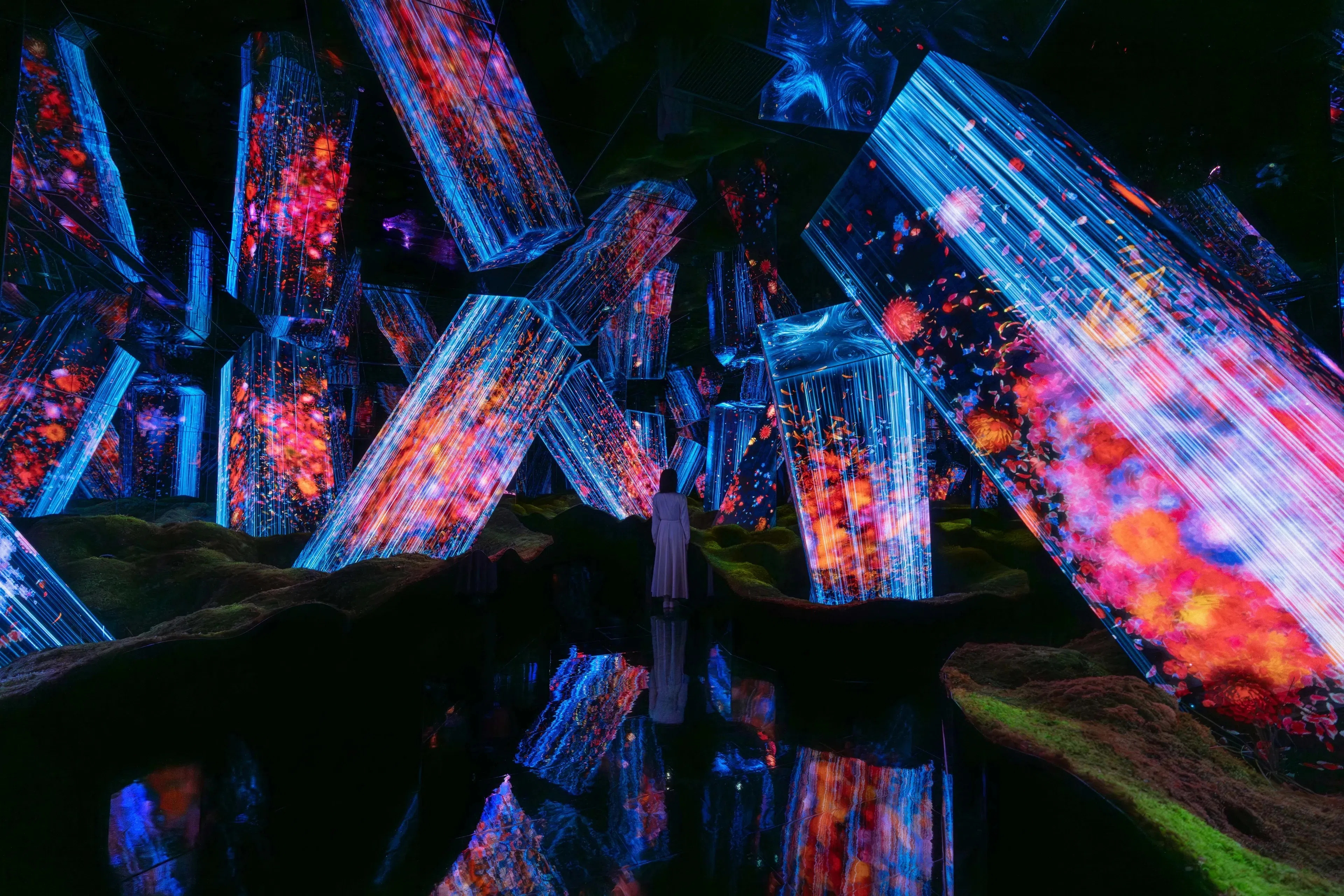
Towering megaliths lean at different angles, their surfaces alive with ever-changing light and shadow. Living moss covers the uneven ground, enveloping cold technology in gentle greenery. This is more than a dialogue between the artificial and the natural. It seems that only within Kyoto’s cultural landscape would such tiny, quiet moss be so valued and cherished. It fascinates me even more than cherry blossoms and autumn leaves.
Highlight 6: Transient Abstract Life and Return
This was another interactive work at teamLab Biovortex Kyoto that left a deep impression on me. The gallery makes clever use of one-way mirrors. Standing outside, we are “observers”, watching through the glass as others, wearing plastic wellington boots, walk through a pool of golden liquid resembling molten lava. Each step leaves flowing traces that gather and disperse like eddies. Once inside, we go from being “observers” to being “the observed” and “part of the work”.
Highlight 7: Nirvana: Fleeting Flowers
This work is a visual epic of the cycle of life. Images of all things in the world form and dissolve on the walls through countless flowers. They bud, bloom, wither and fall in an endless cycle of life and death, while viewers linger amid repeated cycles of formation, existence, decay and emptiness. Reach out and touch the wall, and the flowers instantly scatter, symbolising life’s fragility and brevity. These images are not pre-recorded but generated by a computer program, changing in response to visitors’ interactions. This means that the scene before you at this very moment is unique in the entire universe.
