


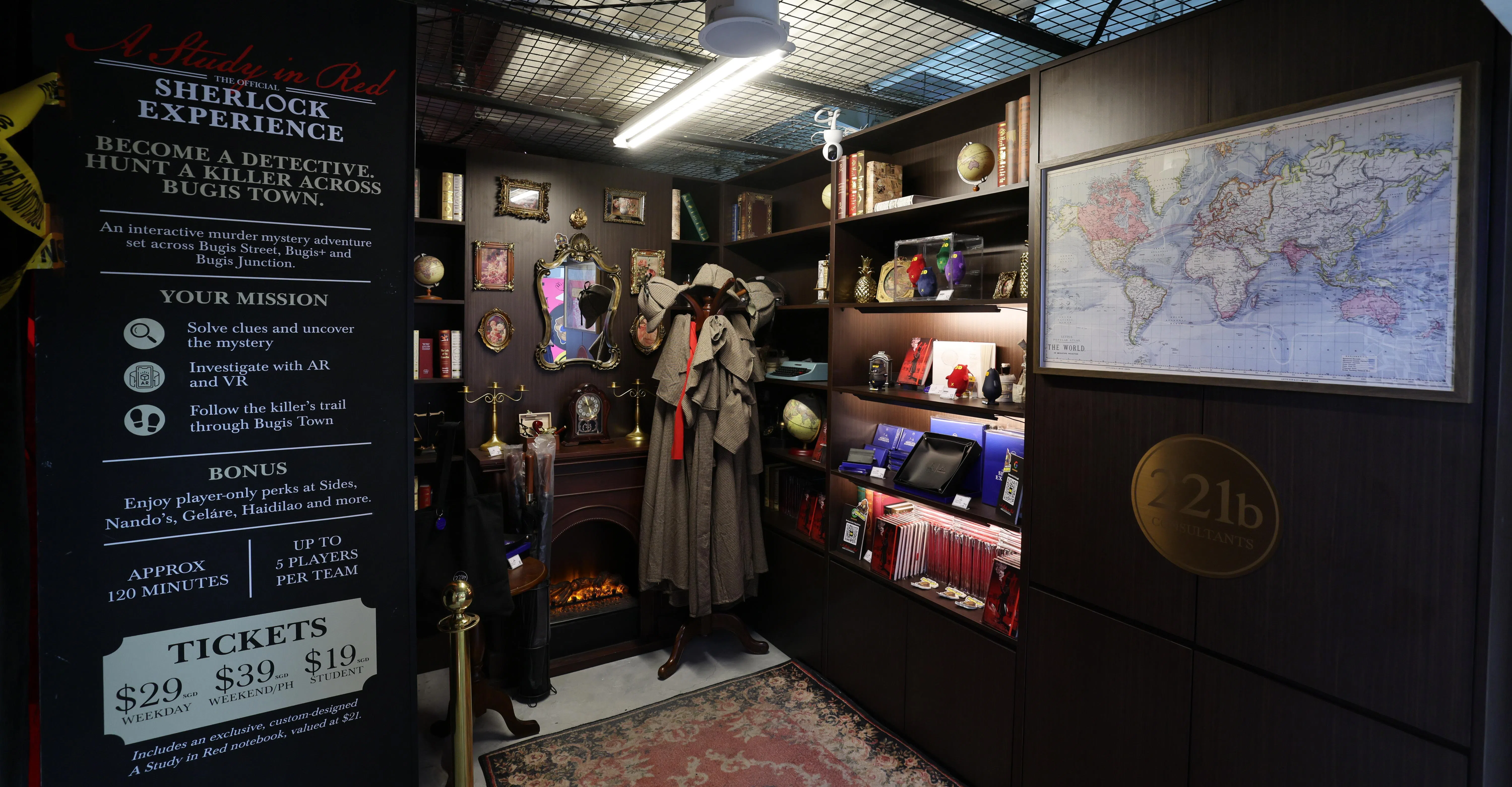
British detective Sherlock Holmes has “headed south” to Singapore, “relocating” his famous detective agency from 221B Baker Street in London to unit 221B at Bugis Street Market.
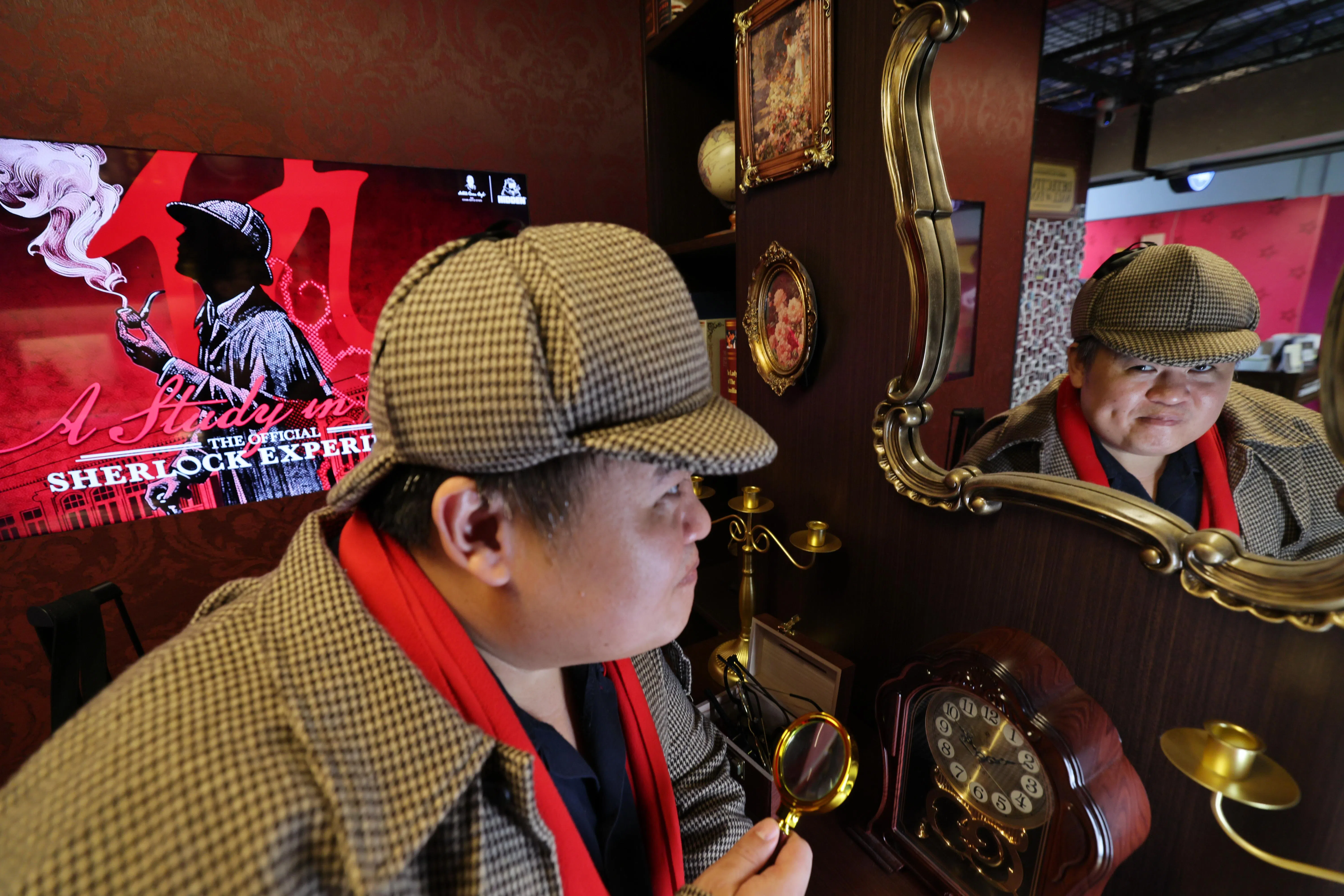
Local immersive mystery game company Hidden has secured an official licence from the estate of Sherlock Holmes creator Sir Arthur Conan Doyle to create the world’s first immersive Sherlock Holmes-themed mystery game in Bugis, A Study In Red: The Official Sherlock Holmes Experience. The game gives the Holmes narrative a distinctive Southeast Asian setting: a Chinese man is murdered in a room hung with red lanterns, with the Chinese character for “nine” left on the wall in blood. The game takes about two hours, with up to five players forming a team of assistant detectives at Holmes’s agency. They explore the streets and alleys of Bugis, using their phones to communicate with agency members and obtain new clues. These appear at 16 locations across Bugis through formats including virtual reality and augmented reality, leading players step by step towards a startling revelation.
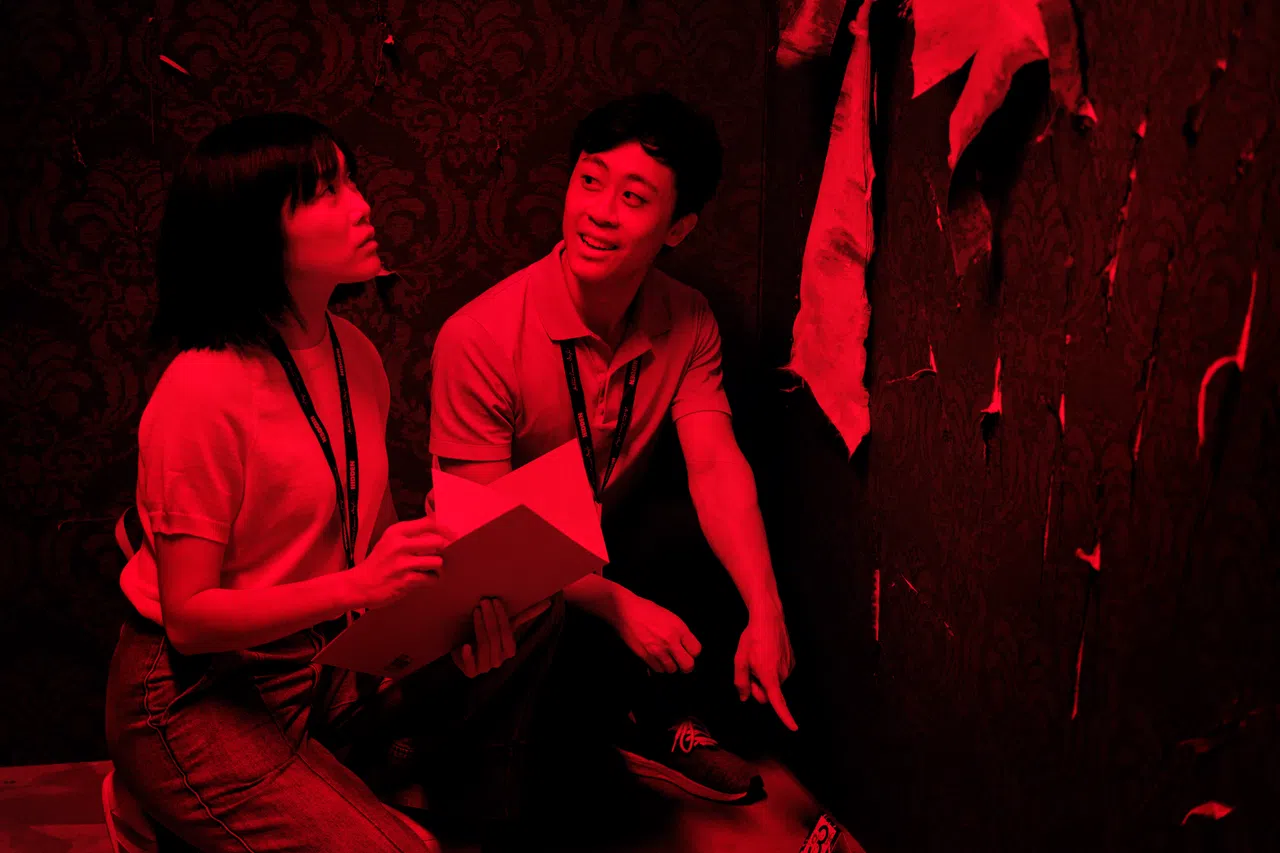
Before securing the Sherlock Holmes licence, Hidden founder Lim Yee Hung, 40, obtained a licence from US toy company Hasbro to launch immersive Monopoly games at Jewel Changi Airport, Chinatown, Katong-Joo Chiat, Holland Village, Suntec City and various locations along the Singapore River. He said the Sherlock Holmes game has drawn more than 1,000 players a month since its launch on 21 August 2026. Over the last four years, Hidden’s immersive games have attracted a total of 120,000 players.
Players span a wide range of ages
Lim said Sherlock Holmes players span a wide range of ages, from dating couples and families to old schoolmates having a reunion and close friends celebrating before a wedding. The game gives them a reason to gather. “Movie watching used to be a communal activity. Now, when movies are watched on phones and laptops, it becomes a solitary activity. [Our immersive games] are the new ‘movies’. We let IP characters and stories come alive, and participants feel like they have stepped into a movie or a story.” Lim, who has two children aged three and seven, adds: “Kids growing up in the digital age are ‘caged’ but they don’t know it. Deep down, they crave communication. Evolutionarily, we are not wired to be alone. We are communal animals. We are pulling them out into the real world with these immersive activities, so they can get some relief from isolation and stress.”
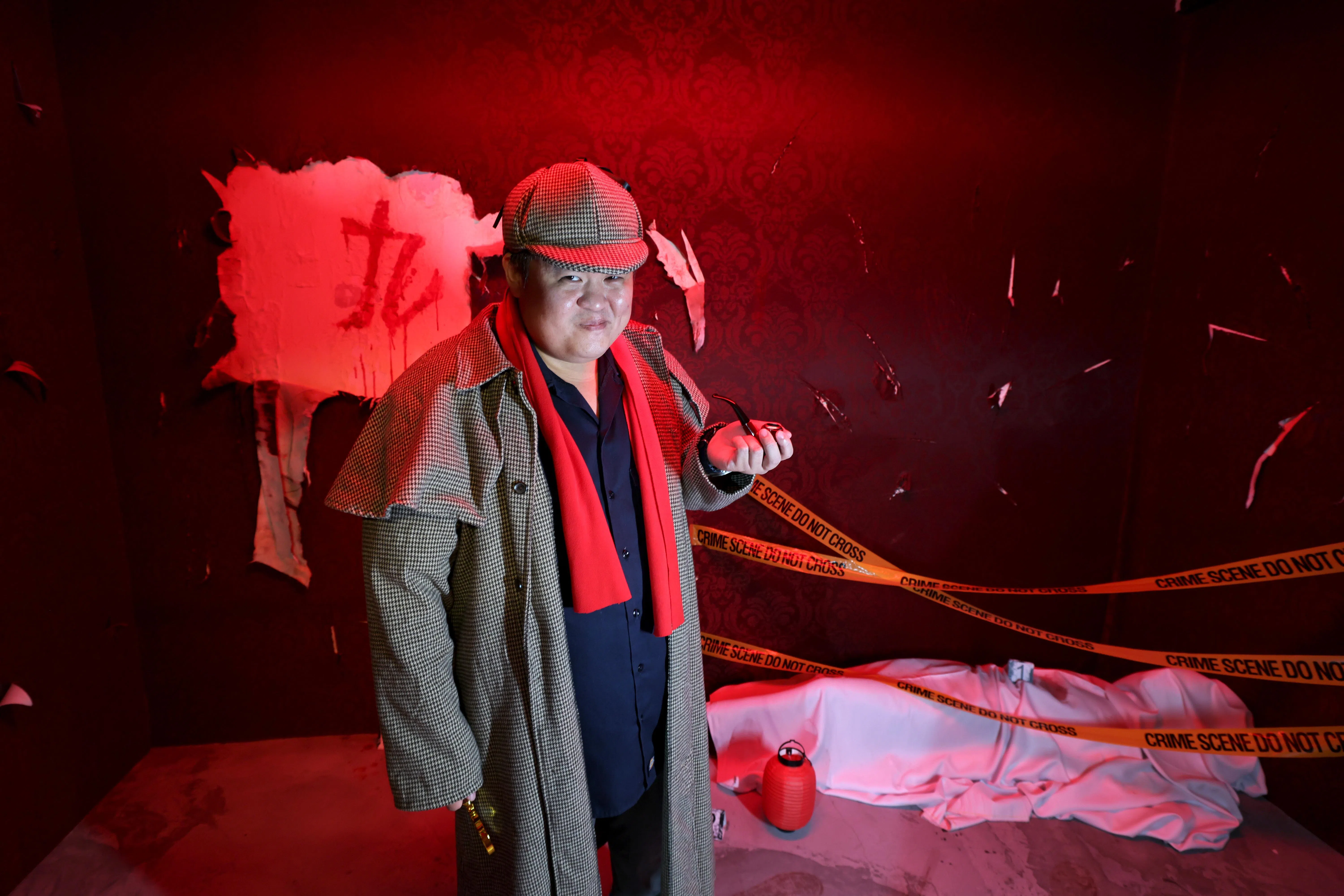
Lim pointed out that script murder games, a popular form of mystery role-playing game, must be completed within a time limit, leaving participants so focused on finishing that the competitive pressure gets in the way of interaction. Escape rooms, meanwhile, hire actors to play characters, which he felt can seem artificial. “The immersive experience would help participants ‘talk’ with real people and engage with the real world.” He noticed something interesting: players are in no hurry to solve the case within two hours. “They take the opportunity to explore Bugis properly, stopping for lunch and dinner as they play. The longest anyone has taken is nine hours!”
Hidden plans to launch more Sherlock Holmes mystery games. Lim revealed that the National Museum of Singapore will launch a family version in December, written by local English-language poet Joshua Ip. The team is also developing ideas for an LGBTQ version set along Desker Road in Little India, and plans to work with other local writers to support home-grown creative work. Hidden’s agreement with the Arthur Conan Doyle estate includes creating an original mystery game in London. Lim said: “In Singapore, we localise Sherlock Holmes story. But back in Holmes’s home, we will modernise the classic tale.” The prospect of Singaporeans interpreting Sherlock Holmes in London is certainly exciting, and something to look forward to.
Lim said mystery content readily attracts fans as it is human nature to be curious about the unknown and to want to solve mysteries, and murder is the ultimate mystery. “The moment we hear of a murder, immediately we need to solve it. This probably appeals to our innate sense of justice. The good guys win and the bad guys get caught.”
Solving mysteries develops critical thinking
Puzzle-solving and mystery-themed games and guided tours abound across Singapore, with many public institutions joining in the “detective work”. In October, the National Library and Archives Board (NLB) launched a six-month, four-part game, A S.U.R.E. Mystery, both online and at 16 libraries islandwide. New clues and tasks are released each week, inviting the public to study images of a murder scene and upload their deductions. NLB Chief Executive Melissa Tam said in a written statement that the activity supports the board’s efforts to develop Singaporeans’ critical thinking in the information age through “Source, Understand, Research, Evaluate”, or S.U.R.E. “Critical thinking is one of the most important skills we can cultivate as a society.”

National Gallery Singapore worked with Hidden to create Framed, a mystery game in which an art-obsessed murderer draws inspiration from paintings in the gallery. Players track down artworks around the gallery to solve the case. Lim said the gallery approached them to attract members of the public and corporate groups who would not normally visit. The strategy appears to have worked; a gallery spokesperson said by email that registrations had increased sevenfold since visitors were allowed to pay for the game using their SG60 Culture Pass credits.
Eugene Tay, 47, founder of local dark tourism operator Haunting Heritage and a Singapore Tourism Board-licensed guide, is holding the Something Strange Festival in the Orchard-Somerset area from today (13 November) to 15 November. Events throughout the weekend include a horror film marathon and an extended paranormal podcast session running from 7pm to 1am. Tay will also take groups beneath Orchard-Somerset’s glittering modern exterior, uncovering little-known strange tales behind places people pass every day.
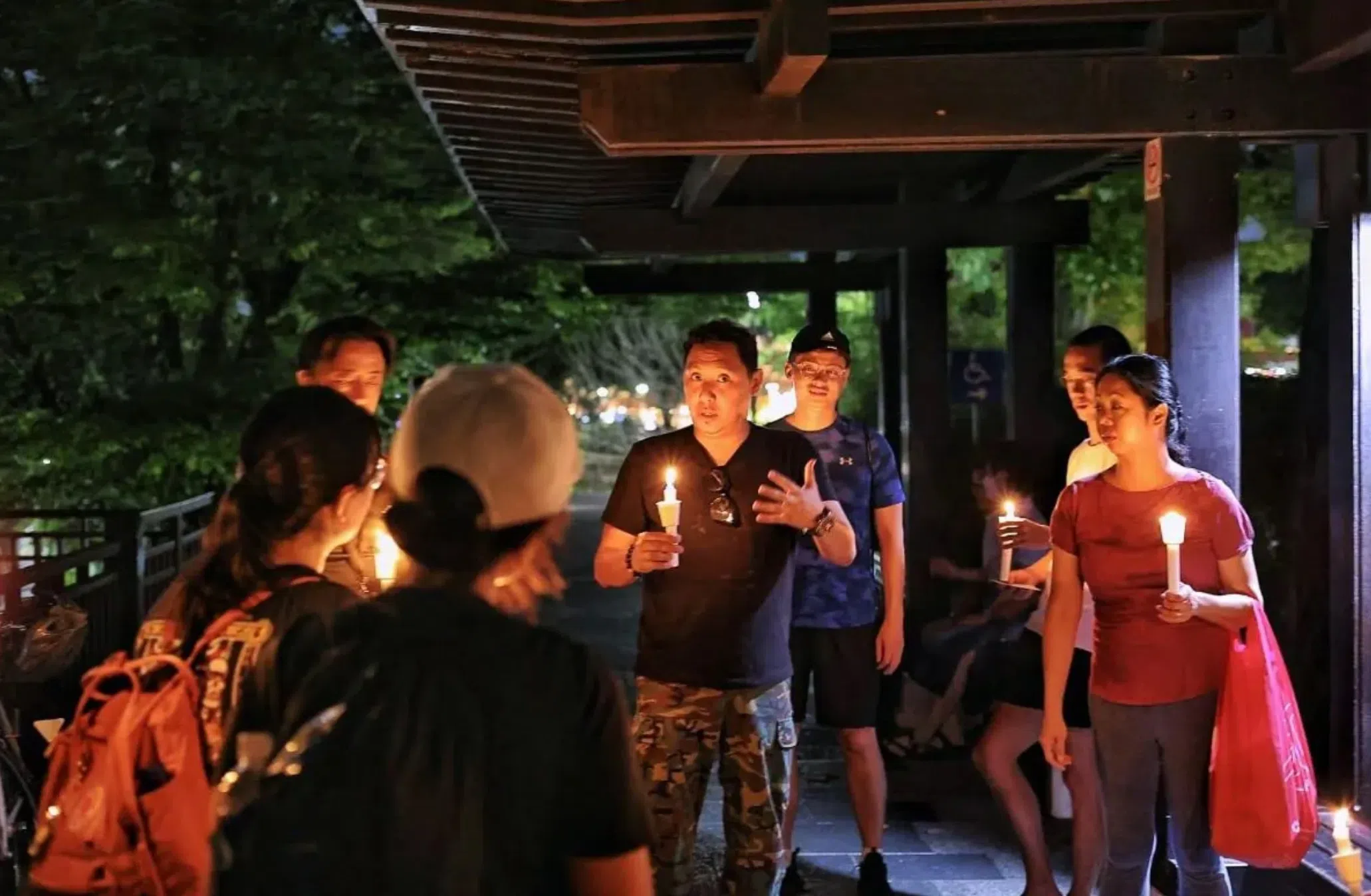
Tay gave the reporter a preview of Shadows of Somerset, recounting mysterious deaths in a since-demolished office building and explaining how sites now occupied by department stores were burial grounds from the 19th century into the 1950s, and even the 1980s. He shared a 1952 Nanyang Siang Pau report about an undecomposed female corpse unearthed at the Tanglin Tie Swah Ting cemetery, and a story of servants seeing their employer inspecting a newly completed Art Deco mansion when he was, in fact, on his deathbed at another home. These supernatural tales of old buildings and places sent a chill through the evening breeze.
Ghost stories are often inseparable from mysteries and detective work. Tay said a guide is also a detective. To put together this tour, he researched history and spoke to many people, trying to find a rational explanation for each supernatural rumour. Has a prime plot behind Somerset remained empty because it is cursed, or because of financing problems? Is an old house abandoned because it is haunted, or because of an unresolved dispute? Participants can also be detectives, using rational thinking to explain the stories and challenge their authenticity. With so much information available online, they can even go home and investigate further.

The Somerset mystery tour was specially designed for the Something Strange Festival and may not run again. Tay, who had previously designed tours of Fort Canning Hill, Old Changi Hospital, Waterloo Street, Pulau Ubin and Sembawang, said: “Ultimately, the supernatural, the suspenseful, the mysterious, and the strange are the packaging, at the core of the tours is heritage. As we invite the public to come unveil and solve the mystery, we are making history come alive into immersive experiences that makes history lively and interesting.”
Detective puzzle books prove a hit
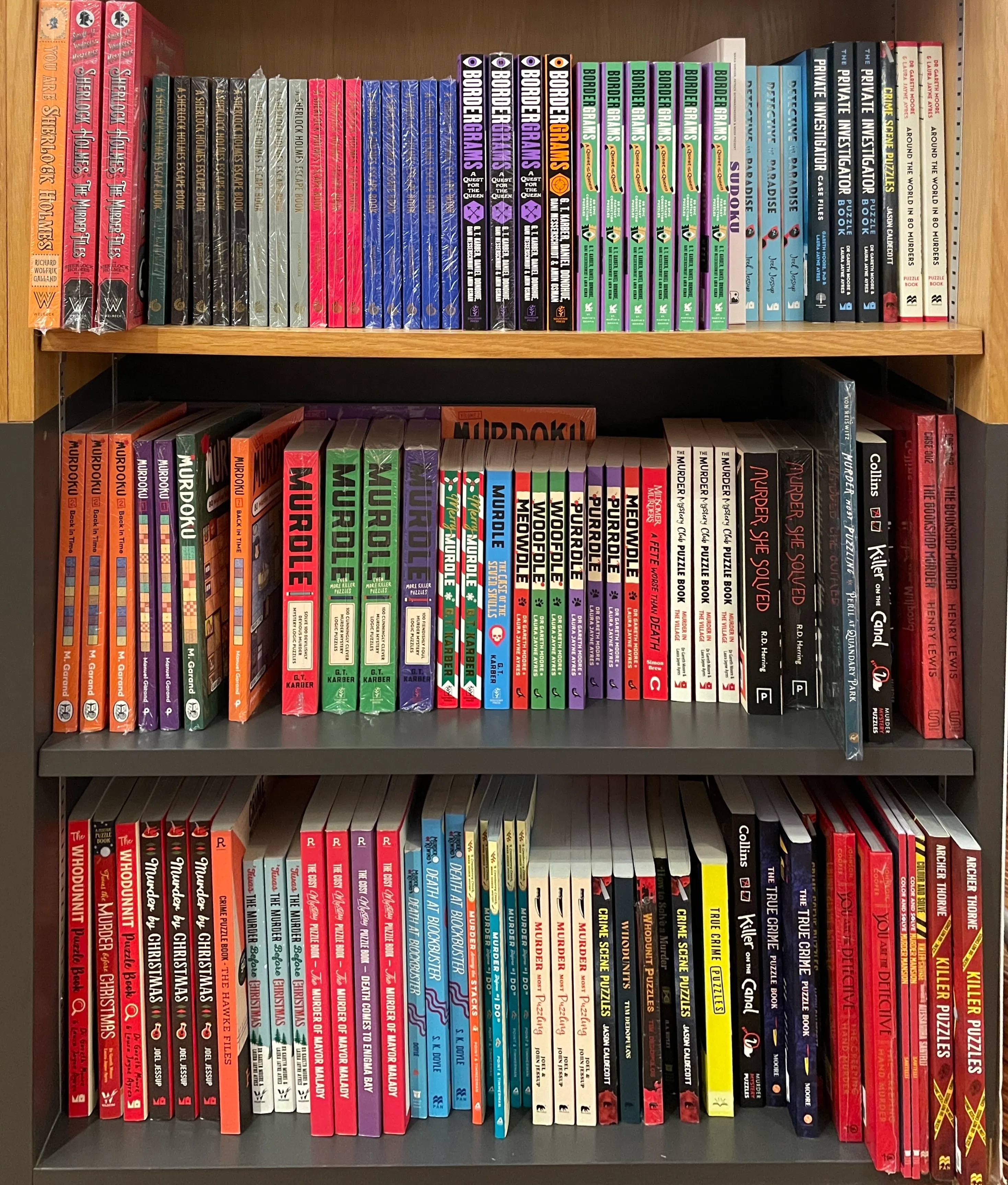
It is not just immersive mystery tours that are popular. Detective puzzle books are also enjoying strong demand, with introverts who prefer not to venture out getting hooked at home. A visit to Kinokuniya at Ngee Ann City found three shelves packed with English-language detective puzzle books. Alongside Sherlock Holmes tie-ins and books paying homage to the classic US mystery series Murder, She Wrote, there were titles of every description.
Among the books that sparked the global detective puzzle craze is the Murdle series by US author G. T. Karber. Since its debut in 2023, it has grown over three years to nearly 10 books across various themes, including editions for children, selling four million copies worldwide. Murdle also has a simplified Chinese edition published by China’s CITIC Publishing House, and a traditional Chinese edition published by Taiwan’s Domain Publishing. Each book in the simplified Chinese edition contains 100 standalone cases, combining sudoku-like logic grids with murder puzzles resembling miniature murder mystery role-playing games. With just a pencil, readers can work through the grids, eliminate clues and reach a conclusion.
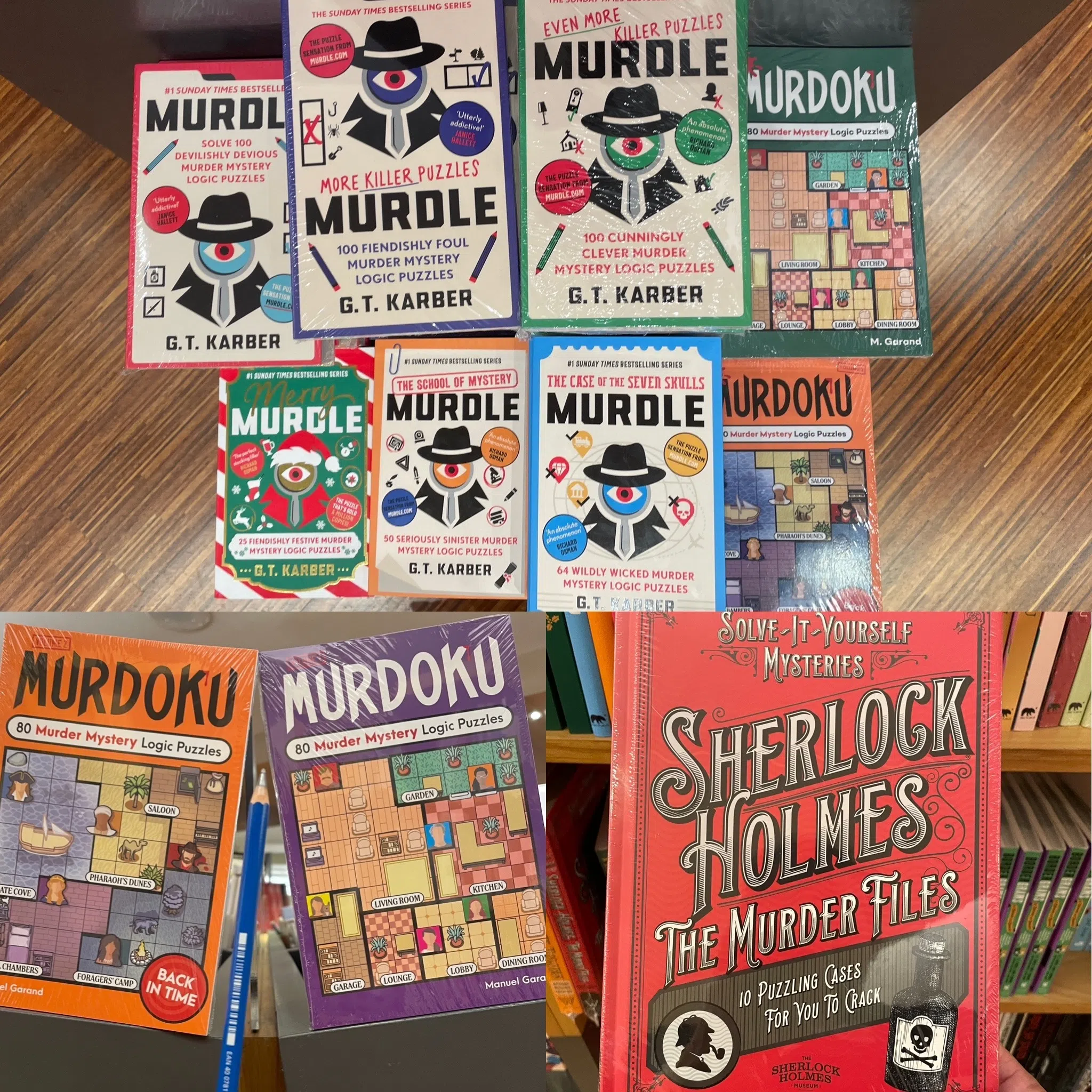

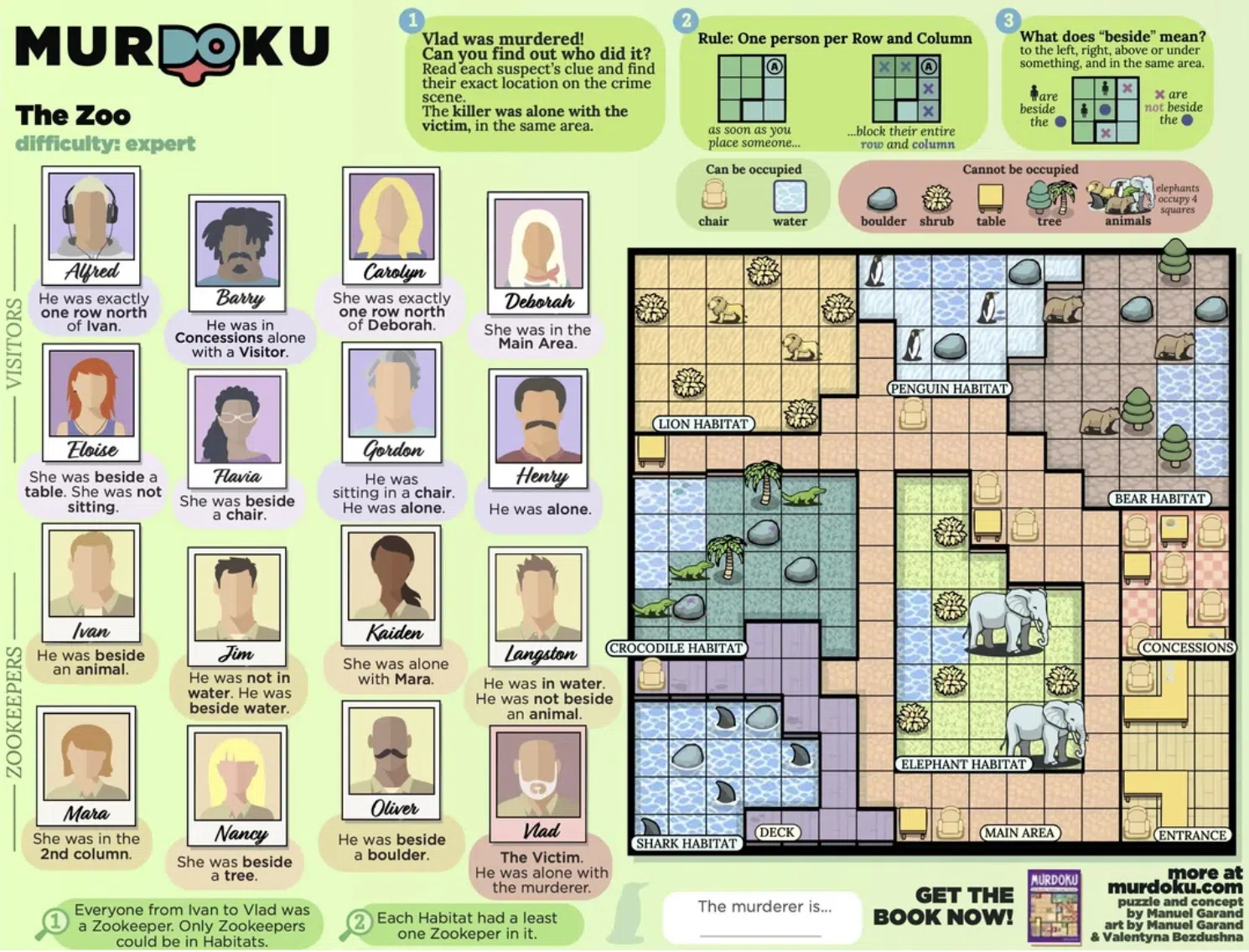
Another subsequent hit is Murdoku by Canadian author Manuel Garand, which also uses sudoku-style logic and elimination to solve cases. Within a year of its launch in 2025, three volumes had been published. Having tried both Murdle and Murdoku, this reporter found the latter more appealing. Murdoku’s design is clean and attractive, with each case presented as a full-colour grid and the difficulty increasing progressively. Once you start, it draws you in and is hard to put down. Murdoku also generously offers a free trial on its official website. Try it and see just how addictive it can be.
A Kinokuniya spokesperson said in an emailed response to queries that Murdle first became a hit online. Its print puzzle books received an excellent response when launched in 2023, with sales surging in the second year. Sales during the 2025/2026 festive season were particularly strong, reaching three times the 2023 figure. Over the past three years, Murdle has ranked high on the non-fiction bestseller list during the November and December festive season. Similar detective puzzle books such as Murdoku, Cluedo Book of Puzzles and Bordergrams are also popular, the spokesperson said. “We expect this trend to grow with the emergence of more new titles.”
Detective fiction has been around for more than a century, but today’s new wave of crime-solving games takes the traditional detective narrative a step further. The Kinokuniya spokesperson said: “Everyone fancies themselves as an amateur detective, so after reading the fiction, a natural extension is to try our hand at solving a murder of our own. It is entertainment and intellectual stimulation plus a dose of personal satisfaction when we successfully solve the crime.”
