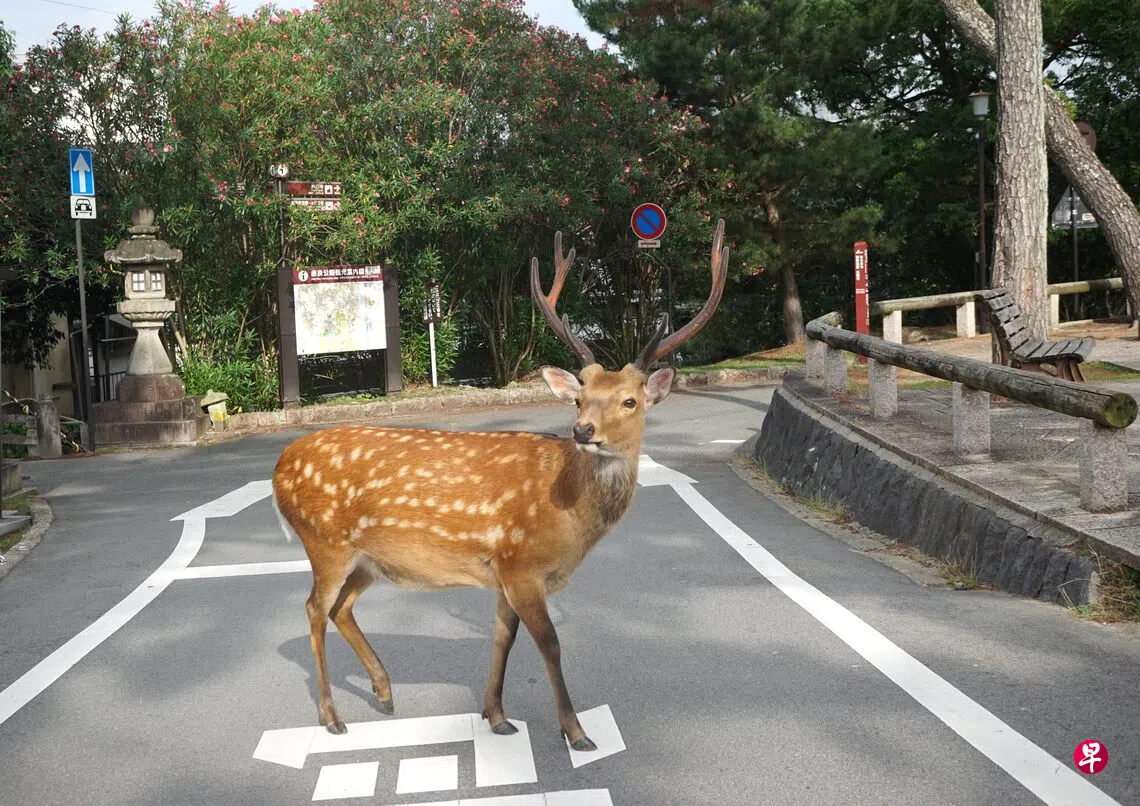
Deer seem to be everywhere in Nara, Japan.
Whether on the open ground and wooded hills of Nara Park or in nearby Naramachi, you need only pay a little attention to spot them. But my most delightful encounters with them came while strolling through Naramachi’s lanes in the early morning.
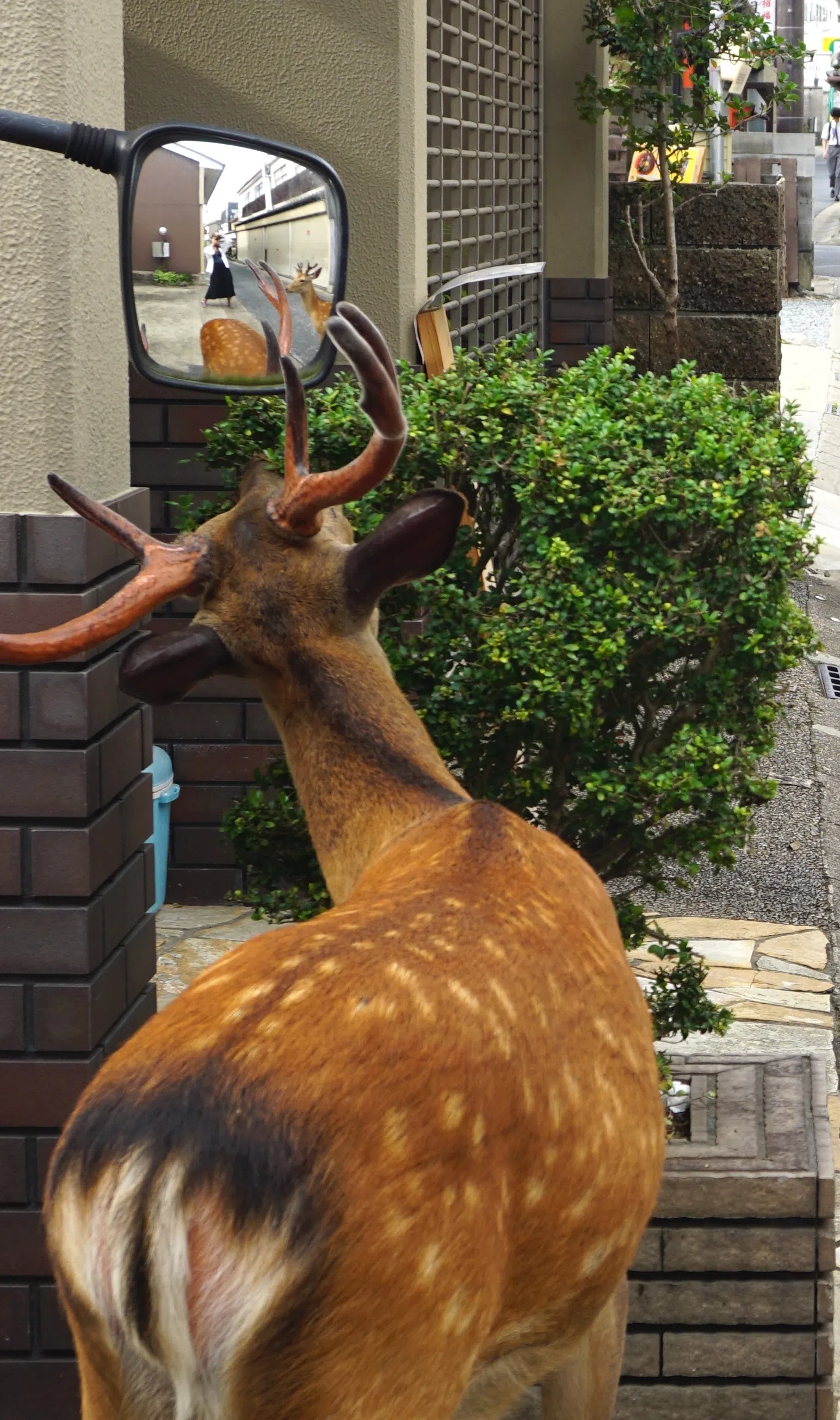
Deer would suddenly poke their heads out of someone’s courtyard, study us curiously for a moment, then casually lower their heads to munch on tender leaves in the shrubs. Fences were no obstacle: they wandered into enclosed courtyards and sauntered out again. Shops with greenery out front also received visits from deer in the morning light.
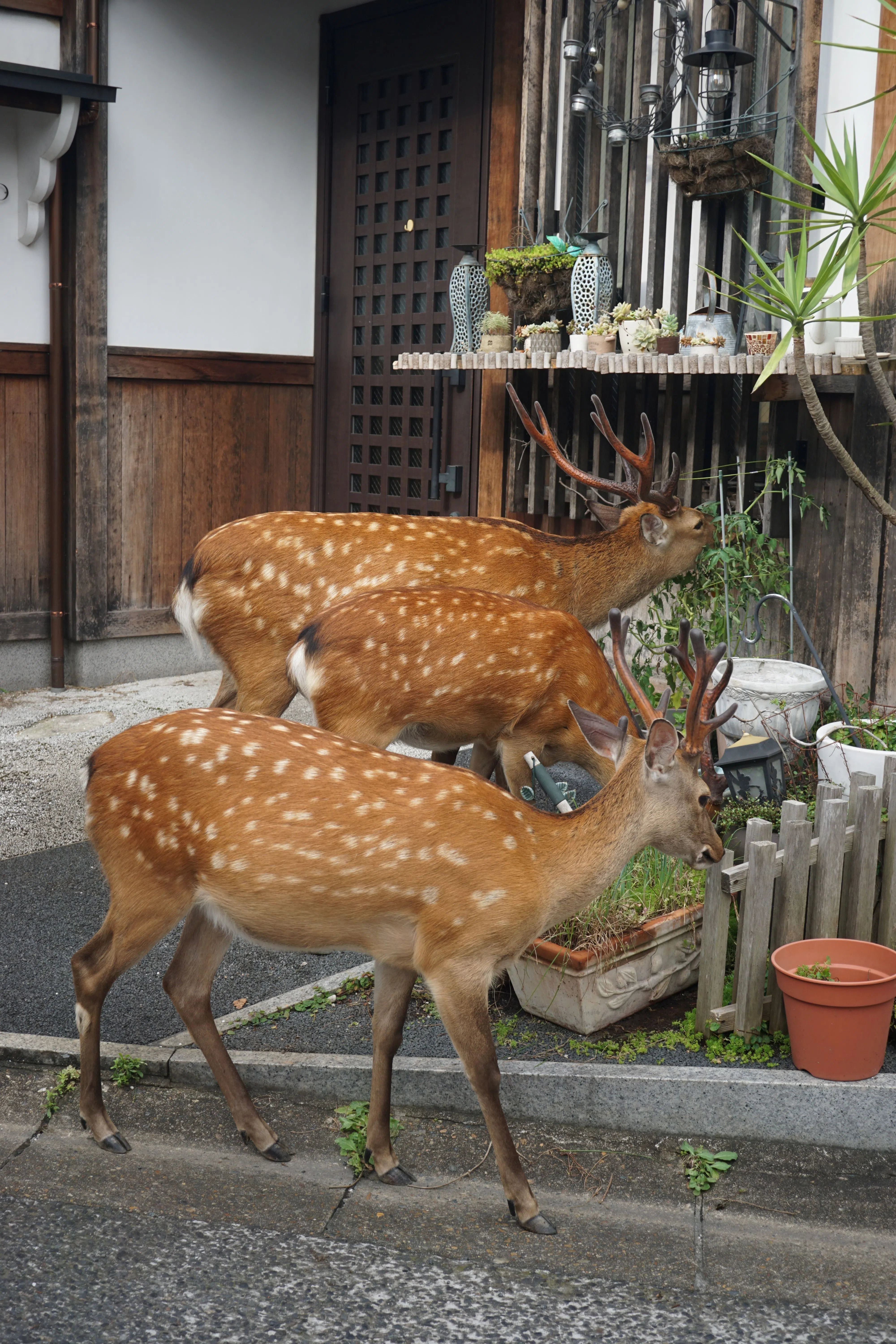
Unlike the deer in Nara Park, which followed tourists around and “bowed” to ask for deer crackers, those in the old neighbourhood merely glanced at passers-by before concentrating on their leaves.
A few pots of plump succulents on a home’s windowsill caught their eye. They ambled over and, with a succession of clatters, sent several small pots tumbling: an echeveria, a Haworthia cooperi… No anxious hands appeared to scoop up the plants. Their owners were probably still asleep.
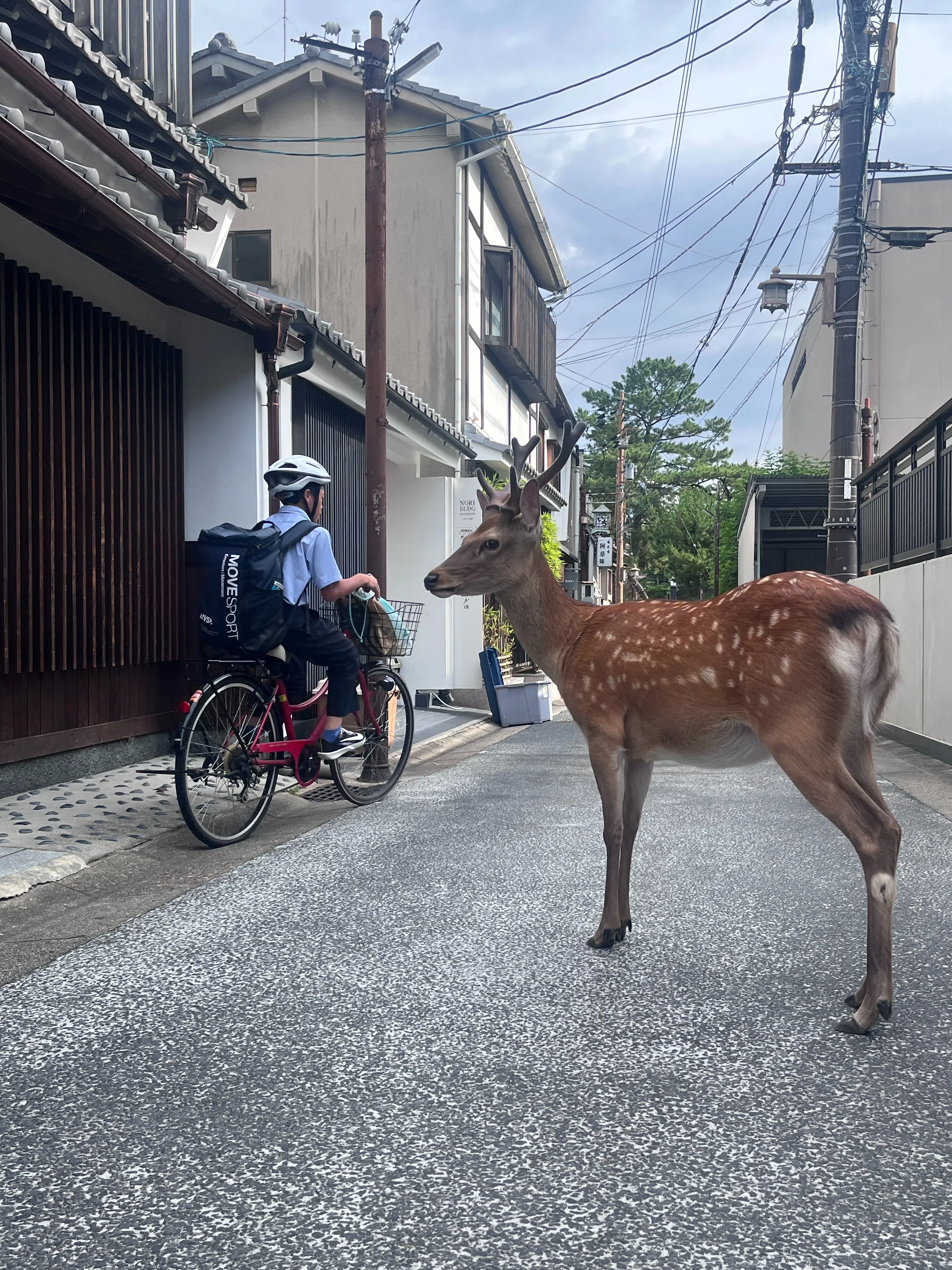
Students and commuters, some on foot and others on bicycles, encountered deer at the entrances to the lanes. “This is my road!” the deer seemed to declare, staring at people from the middle of the lane with complete assurance. People could only stop and wait with them for a while, then lean sideways on their bicycles to edge past. Others raised their cameras for a photograph, as though this were a morning ritual.
Legend has it that during the Nara period, Takemikazuchi, one of the deities enshrined at Kasuga Taisha, arrived from Kashima in Hitachi Province riding a white deer. Since then, deer have been regarded as “messengers of the gods” and protected for generations.
A thousand years later, they now head briskly towards Nara Park with full bellies to meet visitors from around the world.
An overnight temple stay beside a cemetery
As soon as I stepped off the train in Nara, my spirits lifted at the sight of a pair of sika deer gazing gently at us from a “Welcome to Nara Park” poster.
Before long, Noriko arrived at the station with her daughter Nina to pick us up. Nina had striking features and spoke fluent English, yet her every gesture carried a distinctly Japanese courtesy and restraint. As it turned out, she was of mixed heritage.
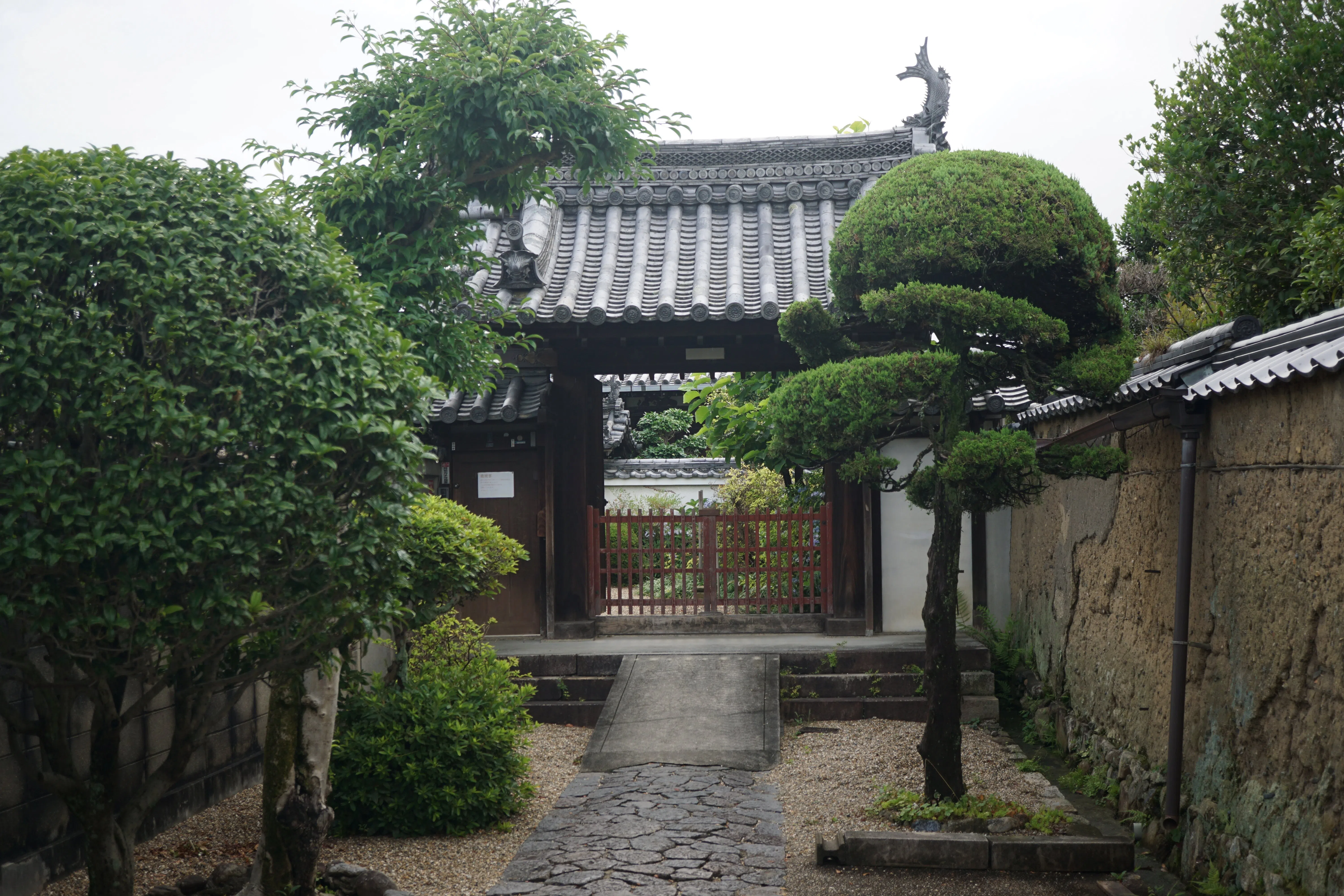
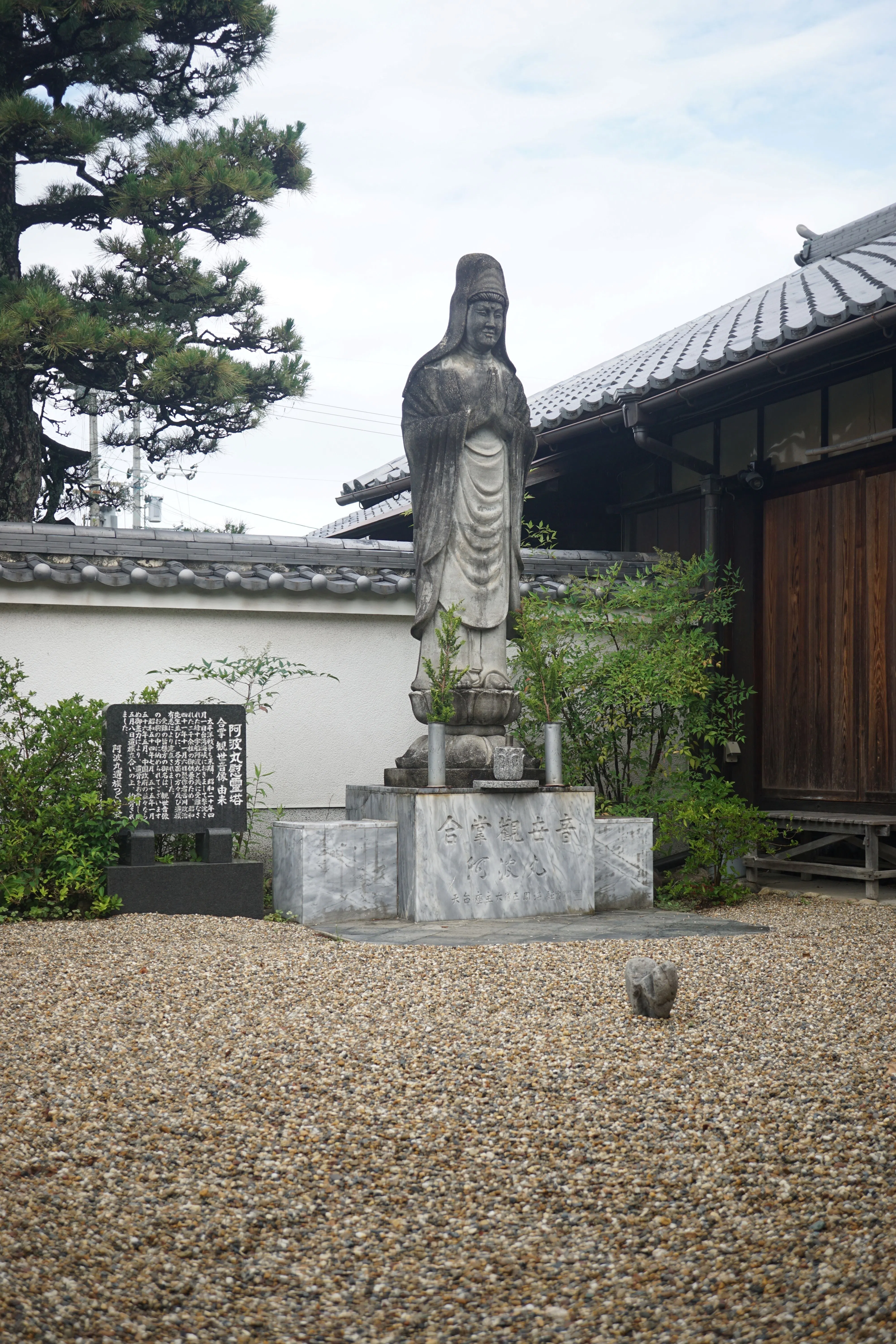
Tucked away in Nishikideracho is Renjoji Temple, said to be about 1,300 years old. After following a path paved with irregular stones into the temple, Noriko opened a vermilion wooden gate inside the entrance, revealing a dry landscape garden. A statue of Kannon stood on a carved stone lotus pedestal amid white gravel. It was so quiet that only birdsong could be heard. The summer heat was a little warm, but as I sipped a welcome drink on the veranda, I felt at peace.
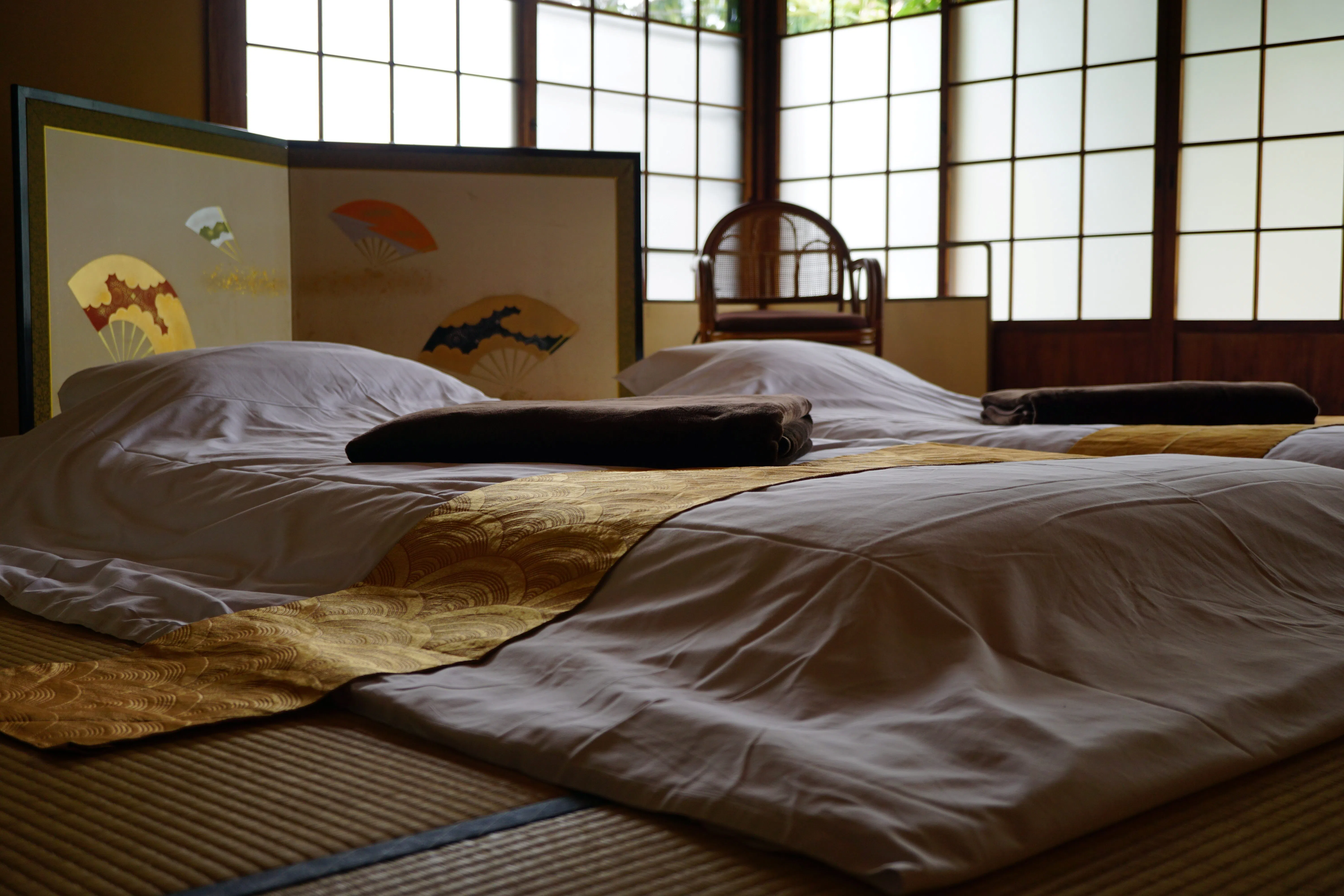
Noriko led us towards the temple lodgings, accompanied by Hanna, an 11-year-old bulldog who followed enthusiastically at a slow pace, her rounded rump swaying. As we passed rows of stone monuments, my heart lurched: the guest quarters stood right beside a cemetery! The bedding on the tatami floor lay just a few steps from the graves outside the shoji doors, all facing the same direction.
Unlike many Chinese people, who are uneasy about graveyards, Japanese temple culture regards cemeteries not as sinister places but as part of ancestral veneration, the preservation of family memories and everyday life. For some, homes located beside ancestral graves enjoy the protection of ancestral spirits, deities and Buddhas.
When I got up to use the toilet in the middle of the night, I instinctively glanced towards the cemetery. In the deep darkness, the stone monuments stood silent. An inexplicable shiver ran through me. Holding my breath, I hurried back to bed, pulled the covers tight and squeezed my eyes shut…
The next day, morning light fell across the temple courtyard, tranquil and still. We were invited to join the morning service. Noriko’s mother, Shimotsuma Keiho, the temple’s head priest, donned black robes and lit incense sticks. A faint fragrance filled the air as the low sound of a wooden fish percussion instrument echoed through the hall. Enshrined at the centre of the main hall was the temple’s principal image, a white wooden standing statue of Amida Nyorai, its skin partly exposed and its lower body dressed in brocaded hakama trousers. It is now on public display every May.
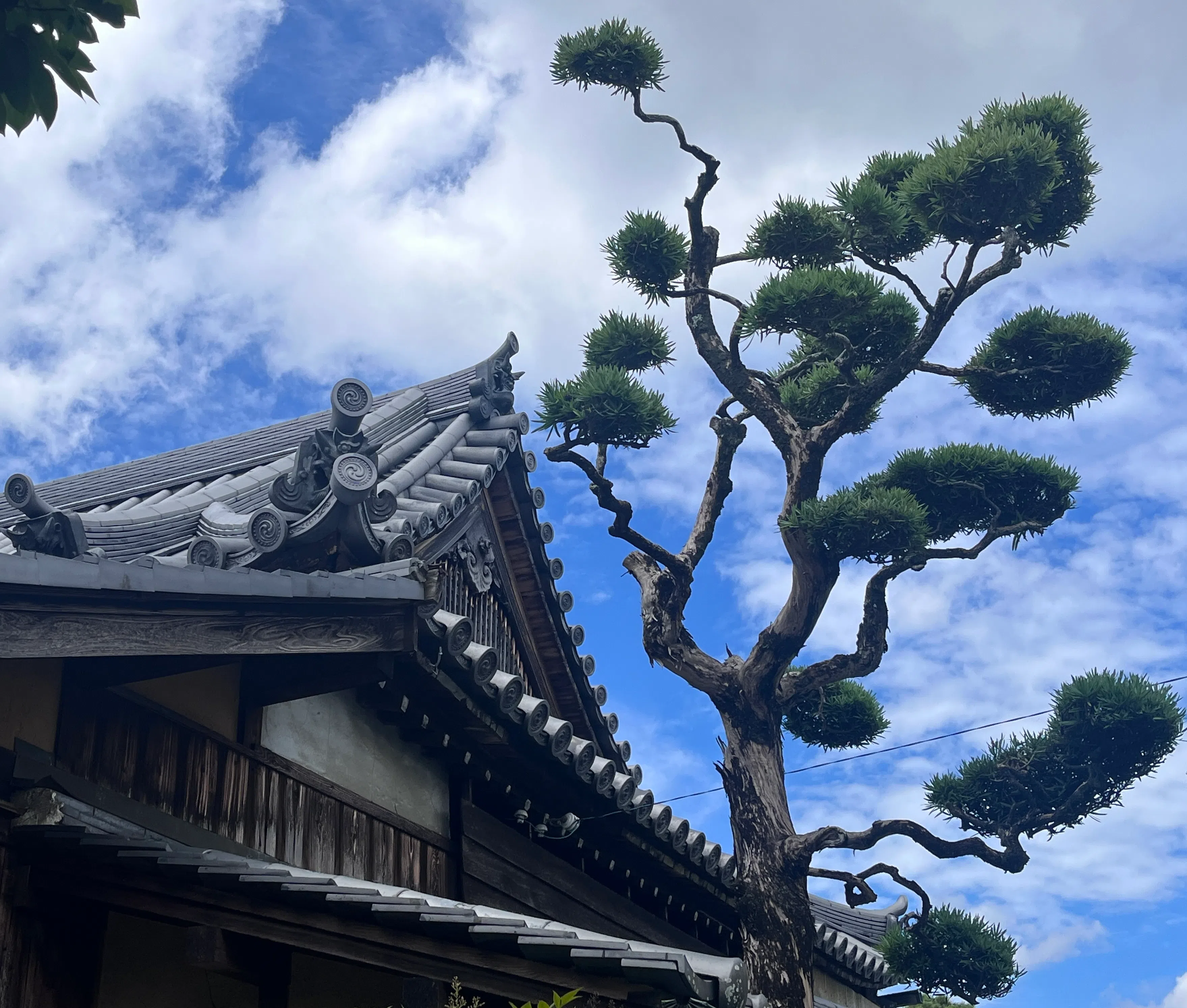
“Namu Amida… Namu Amida…” The head priest chanted what sounded like the Japanese version of “Homage to the Buddha Amitabha”. My thoughts drifted away, then slowly returned to the present, until my mind grew quiet and empty…
After the service, we took a wrong turn and Hanna barked furiously, as though she had forgotten us. A chance glimpse of Noriko’s family working together in a slight flurry to prepare breakfast made me realise that the dog was simply guarding her owners’ private space.
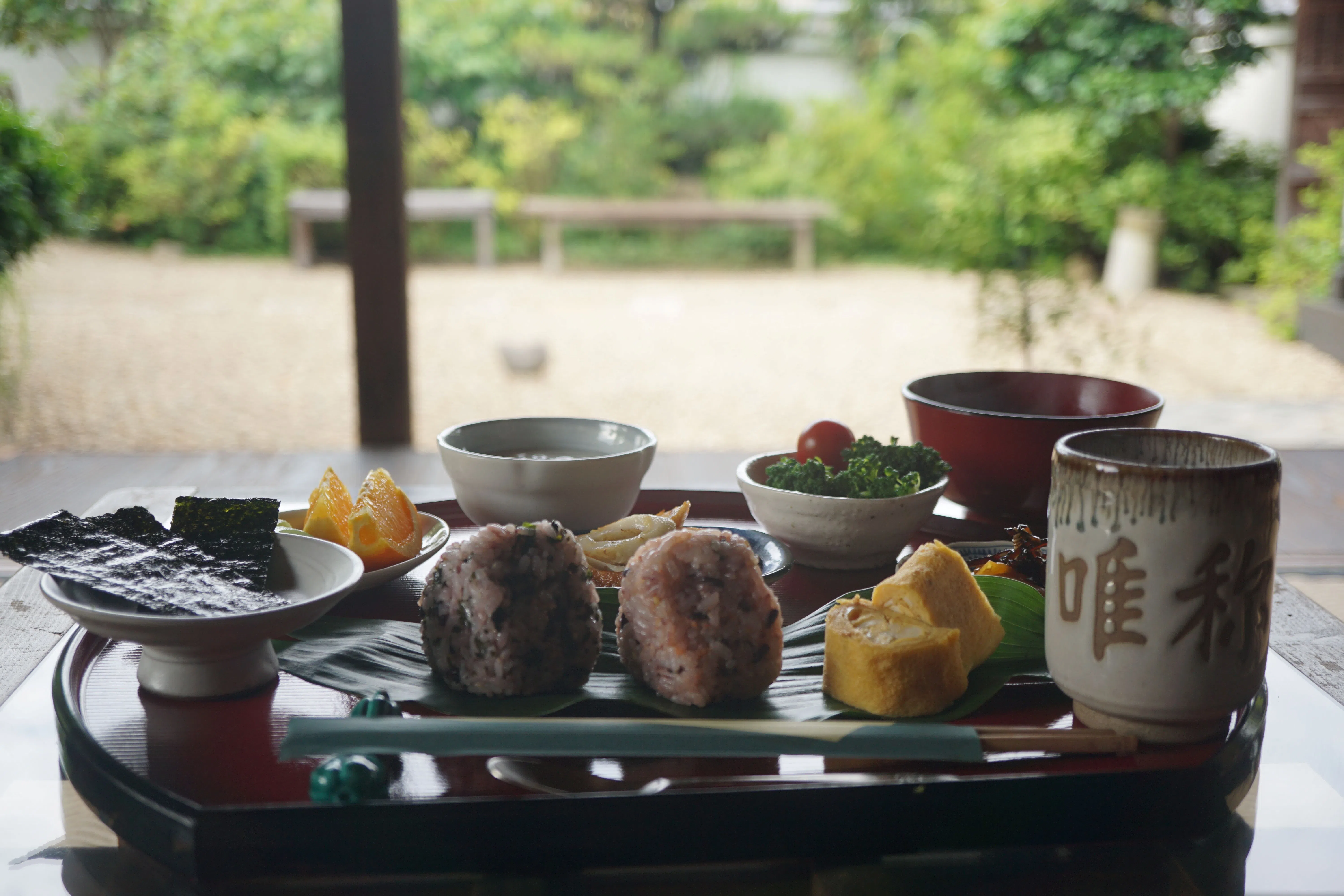
Noriko quickly pointed us towards the dining area. After a short wait, breakfast arrived: plump rice balls, golden tamagoyaki omelettes, miso soup and pickles on red-and-black half-moon trays. My partner and I cradled warm, rustic earthenware cups of tea and gazed at the dry landscape garden. When we turned back, our eyes met. Perhaps we were thinking the same thing; we could not help smiling at each other.
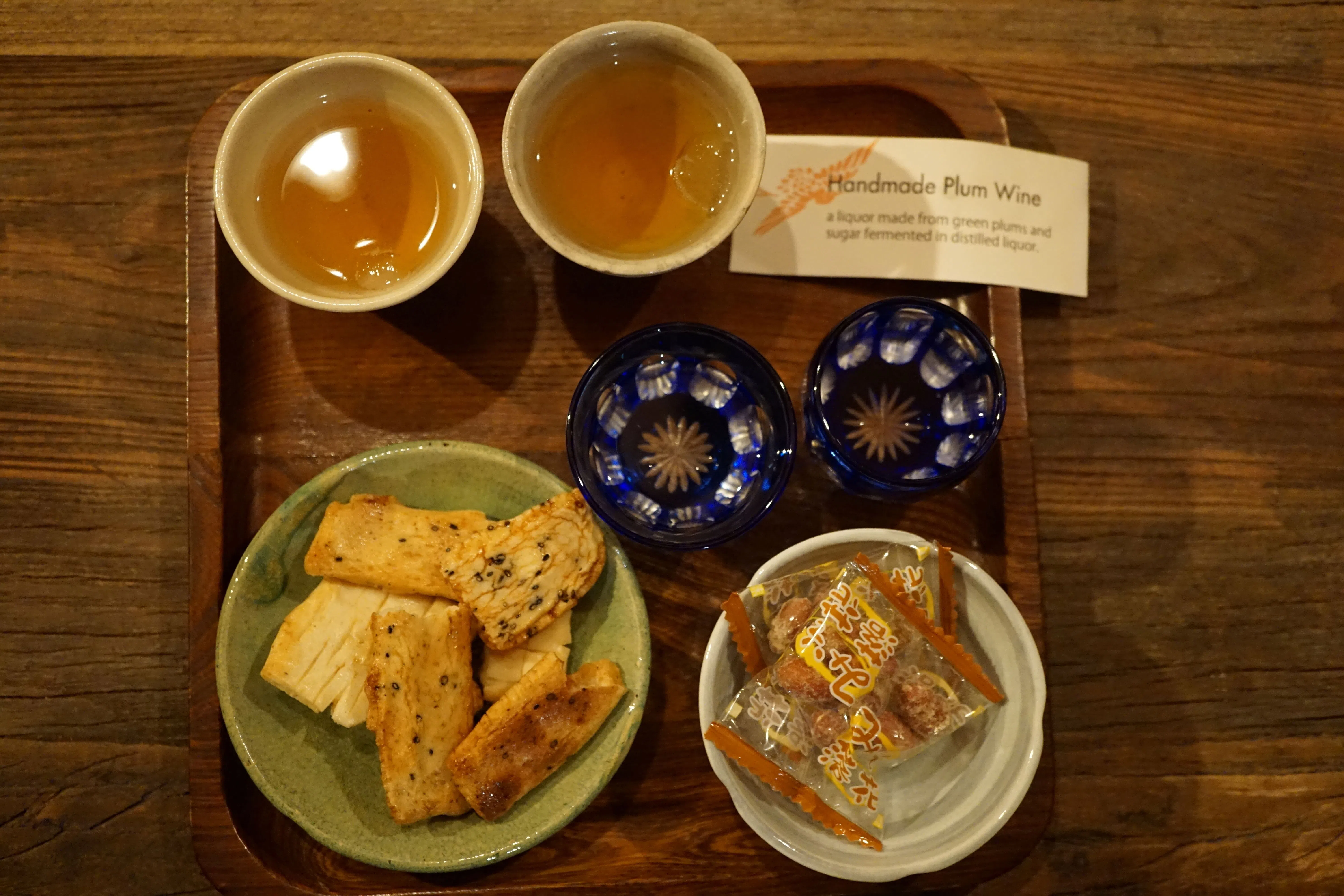
Before we left, Noriko’s family were absorbed in tending the plants in the cemetery. They must know just how much the weeds beside them grow in a day. These seemingly small tasks, like the chanting at morning service, quietly safeguard the soul of this place.
When she learnt we were leaving, Noriko jogged down from the cemetery, washed and dried her hands, then drove us to our next hotel.
Wind chimes and discoveries in old lanes
A summer breeze set the wind chimes tinkling beneath the eaves. On an early-morning walk through peaceful, historic Naramachi, I found myself slowing down without even thinking.
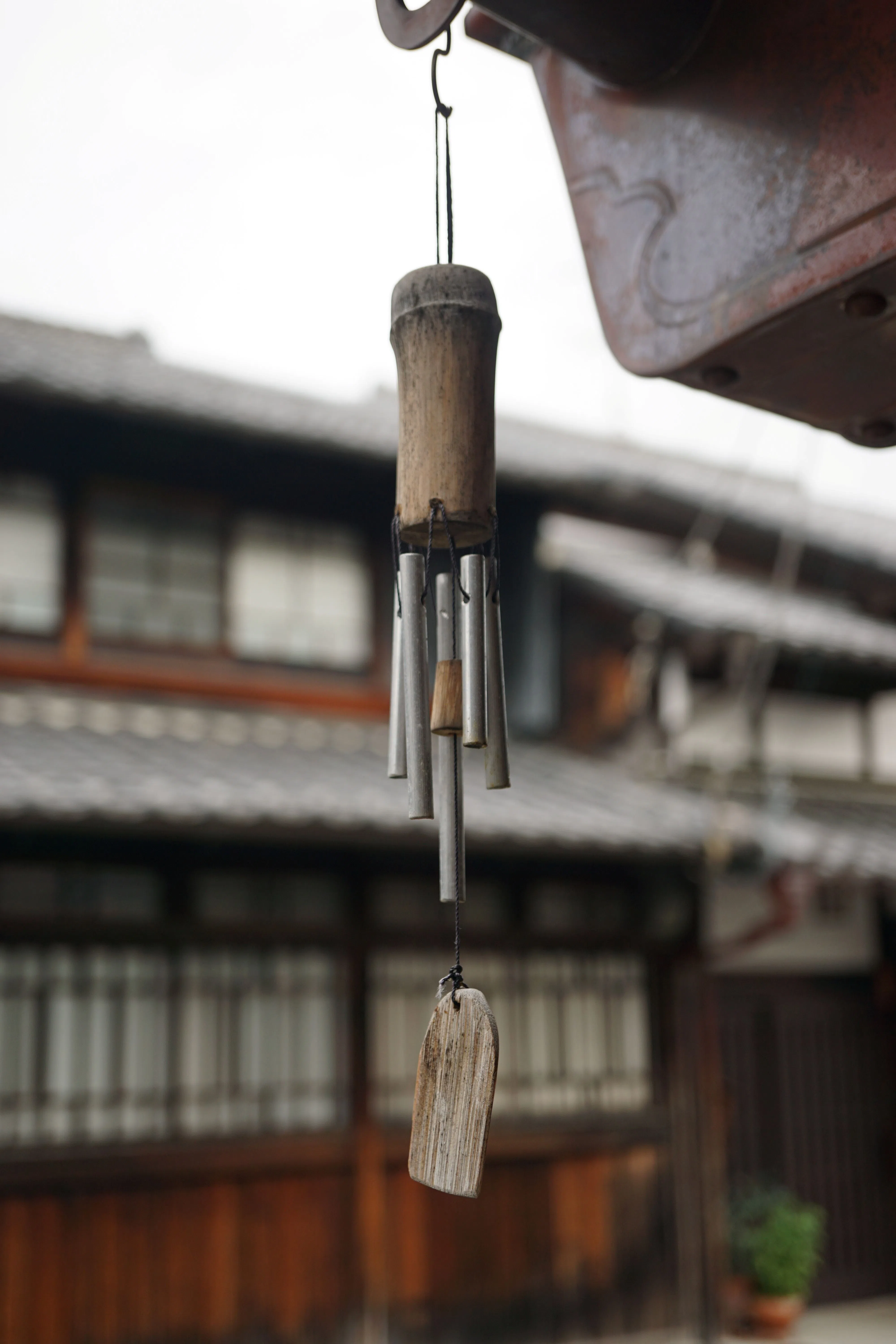
This neighbourhood of traditional townhouses gradually grew out of the former grounds of Gangoji Temple. It still retains many wooden machiya townhouses dating from the Edo period onwards. Once a thriving commercial centre, many former merchants’ homes in this neighbourhood have since converted into museums, craft shops and cafés. Outside some townhouses, information boards record the buildings’ dates and cultural features.
Red fire buckets filled with water stood outside some townhouses. How could a small bucket of water put out a fire? I was puzzled at first. Later, I learnt that Japanese firefighting places emphasis on tackling fires at their earliest stage, using extinguishers, hydrants and hoses, or buckets of water while the flames are still small. In Naramachi, with its narrow lanes and many old buildings, those buckets also remind residents to remain alert to fire risks.
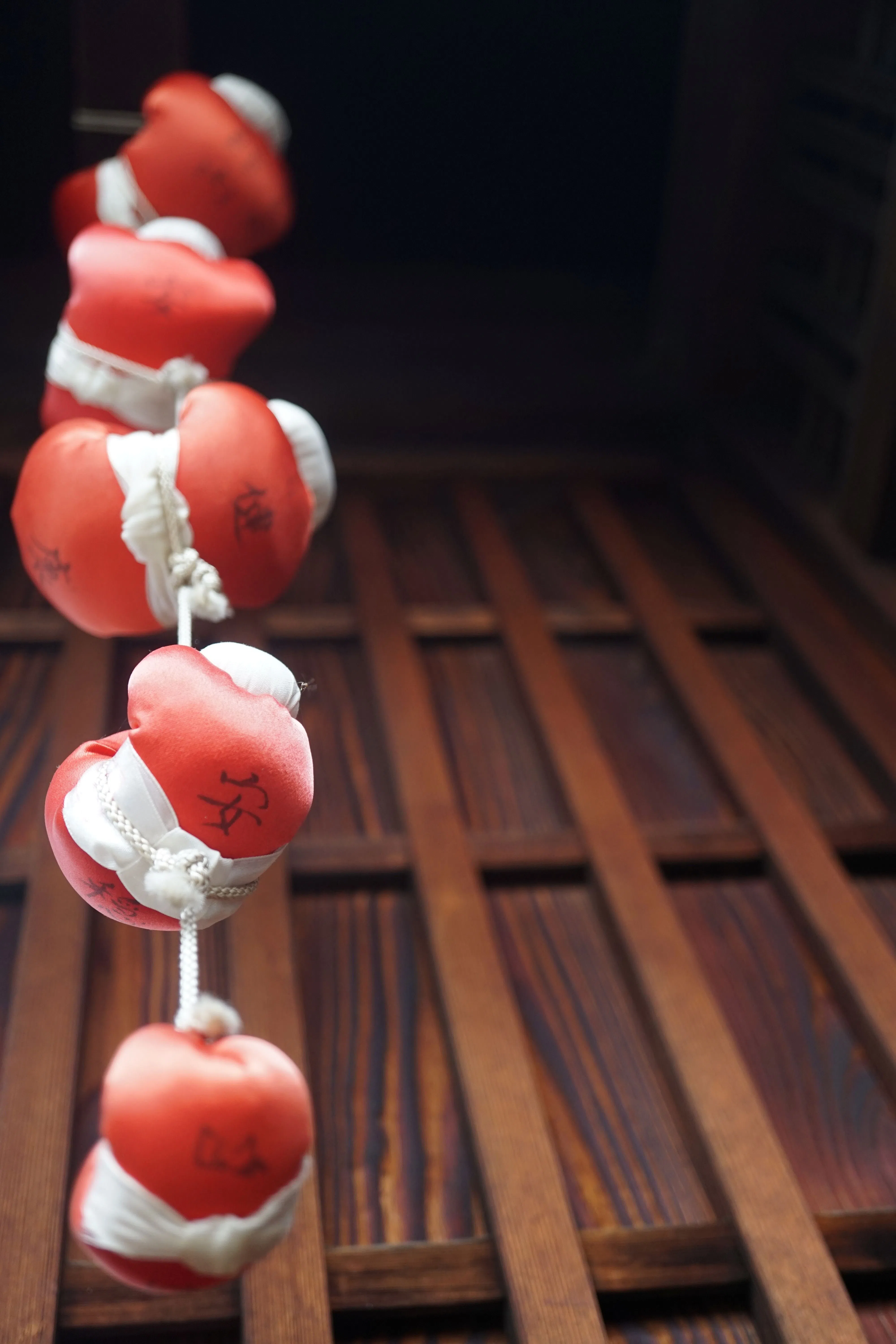
Beneath some eaves hung red cloth dolls of assorted sizes and lengths. They were curled up, their limbs bound tightly together with white thread. These are Naramachi’s traditional protective charms, known as “substitute monkeys”. Folk belief holds that the monkey dolls take on disasters, illness and misfortune on the inhabitants’ behalf, keeping the family safe.
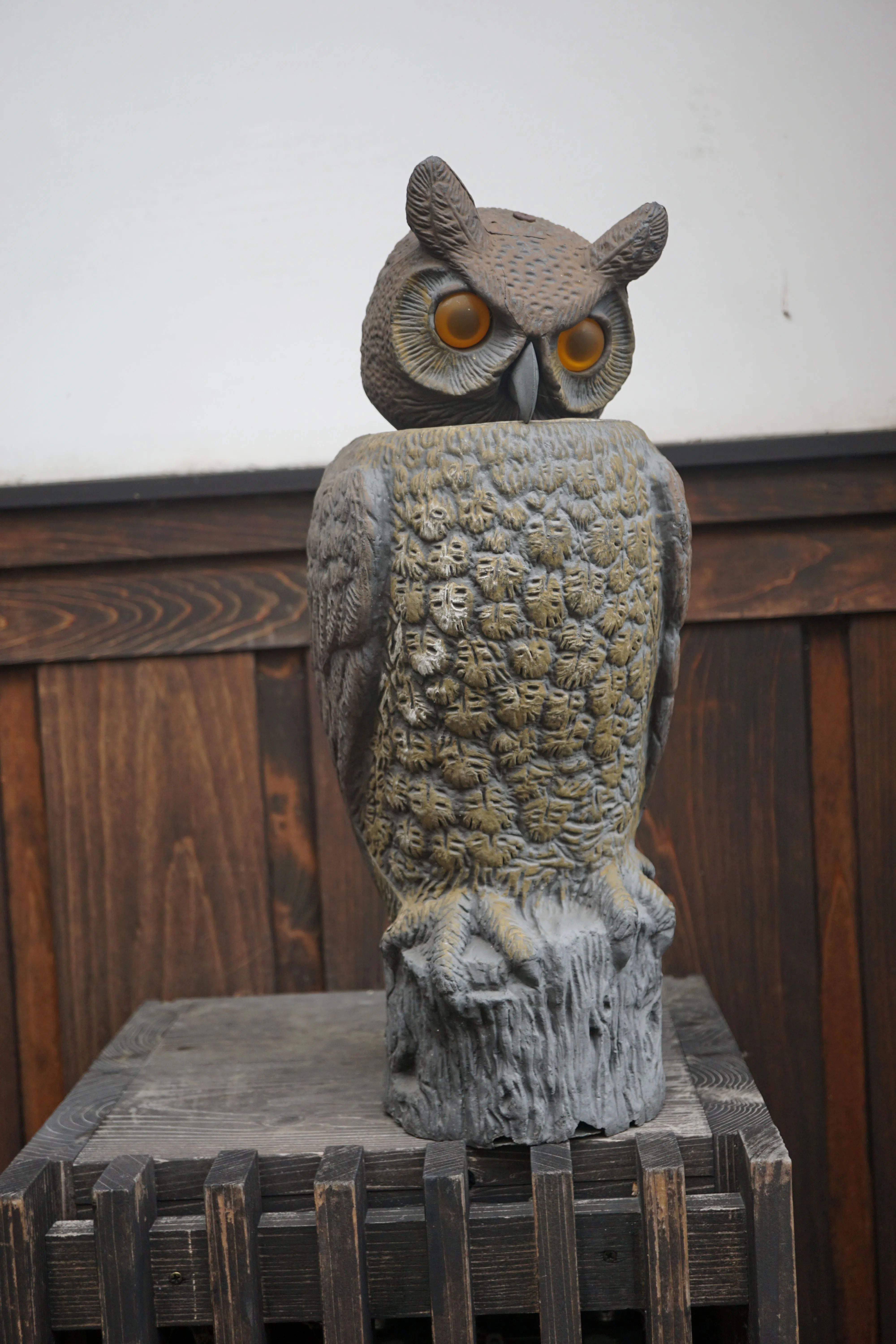
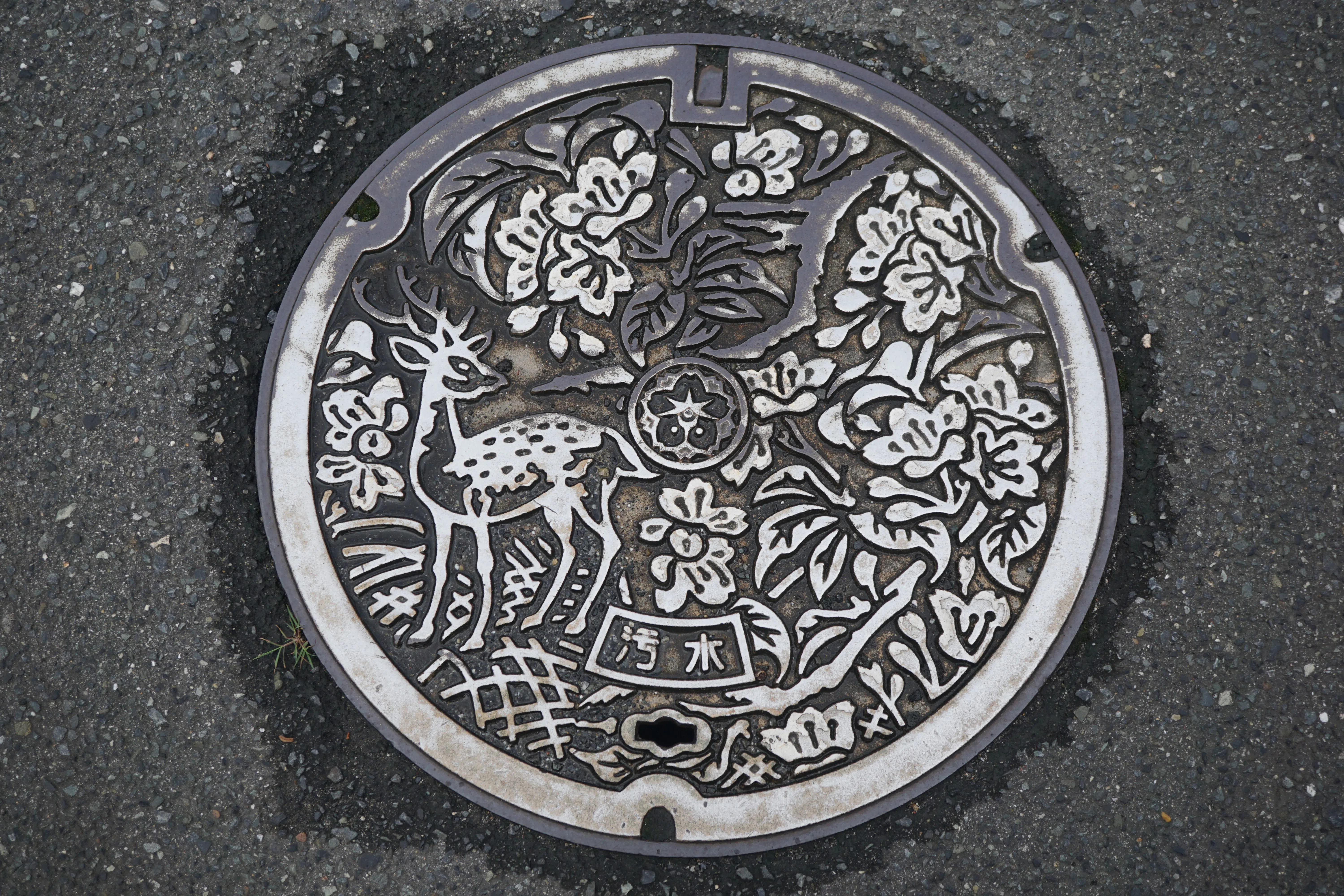
Wooden owl carvings also watch over some townhouses, inviting good fortune and symbolising happiness. Wandering the lanes, I happened to look down and was delighted by what I saw. “Look, even the manhole covers are so beautifully designed!” I told my partner, pointing excitedly at the cover underfoot. Adorned with sika deer around Nara’s city flower, the Nara yaezakura cherry blossom, and a finely rendered city emblem at the centre, these covers were works of art in the road.
By midday, the heat was becoming unbearable. We followed a lane into nearby Gangoji Temple, a UNESCO World Heritage Site, to cool down. Beautiful white lotus flowers greeted us as we entered. The purity of their colour seemed to offer an instant and deeply refreshing coolness. Clear droplets clung to the petals and leaves, while a few small bees buzzed around the flowers’ centres, gathering nectar.
Quiet and unassuming, the temple has its origins in the Asuka period. It was founded in the Asuka region in the sixth century, then moved to Nara when the capital relocated there. As one of Japan’s oldest Buddhist temples, it bore witness to the early development of Buddhism in the country.
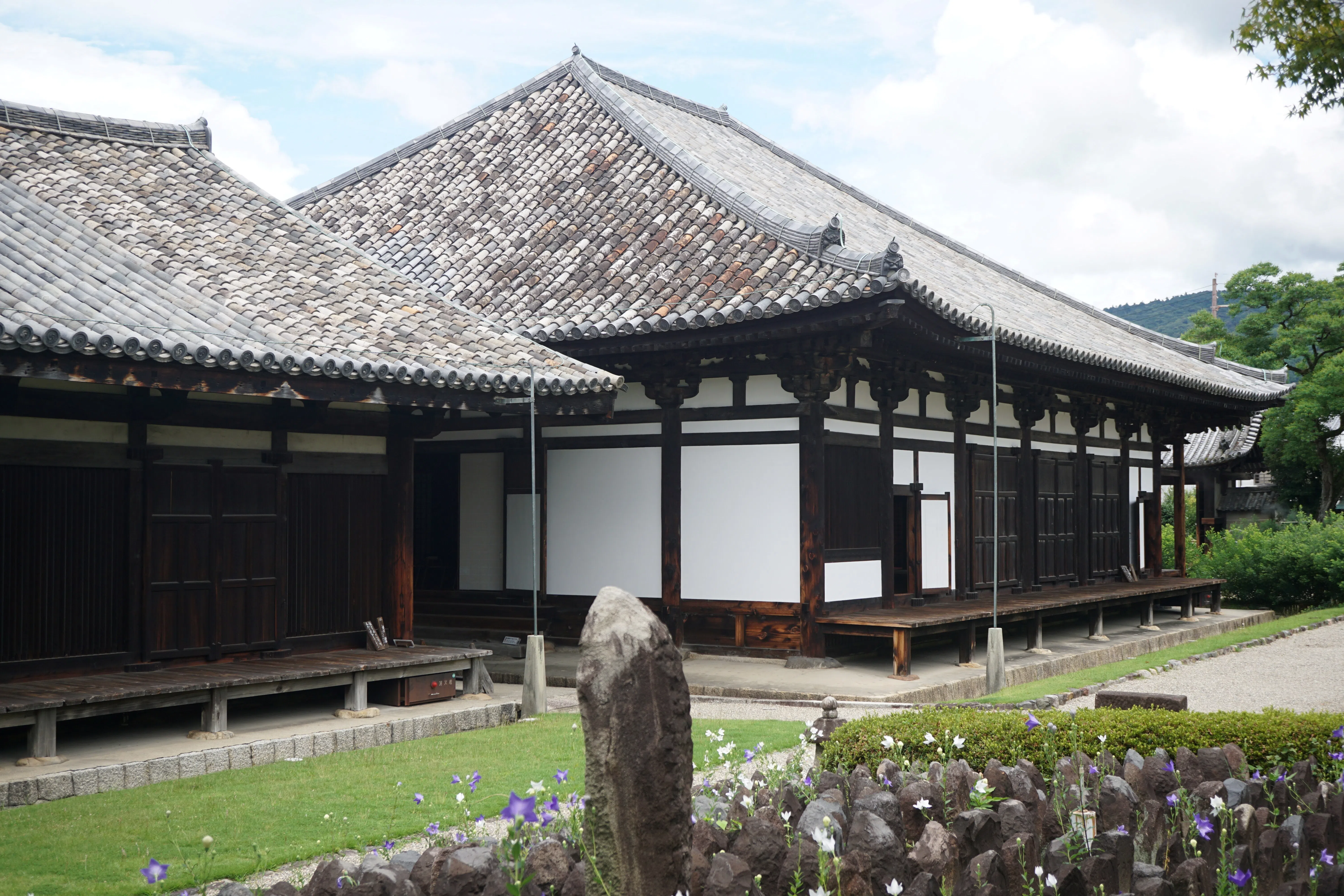
Some ancient roof tiles retain the original designs of Asukadera Temple and tile-making techniques introduced from Baekje. Weathered by about 1,400 years of wind and rain, their patterns worn and mottled, they are among Japan’s oldest surviving temple building materials.
We sat inside a wooden temple building to cool off, watching light and shadow inch across the ground outside. We walked along moss-covered stone paths, admiring the quiet elegance of the garden. The temple’s subtle charms and the accumulated weight of time seemed to speak to us alone.
Ah, I liked this temple.
Sharing shelter with deer at Todaiji
A midday downpour left a cool breeze in its wake as we strolled towards Todaiji Temple. The enormous Great South Gate stood in the sunlight. Inside, two wooden guardian figures glared fiercely, weapons in hand, protecting Buddhist teachings and driving away evil.
Beyond the gate stood Todaiji’s Great Buddha Hall, one of the world’s largest wooden Buddhist halls. Although smaller than its ancient predecessor, the present hall remains imposing. Inside sits the Great Buddha of Nara, 15 metres tall. Its immense bulk brought to mind the giant Buddhas in films that come crashing down on villains.
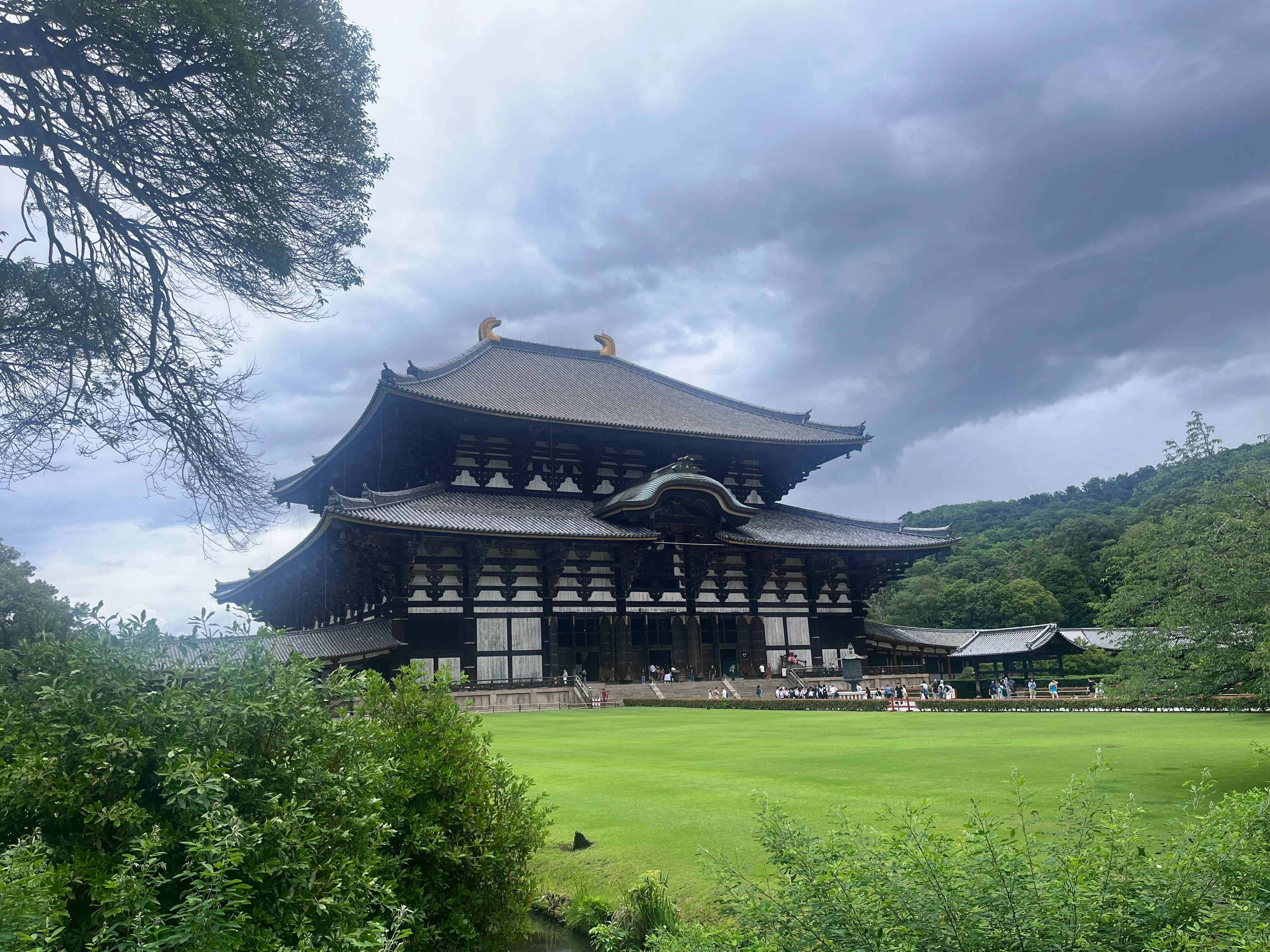
Outside the hall sat a timeworn wooden statue of the venerable Pindola Bharadvaja, known in Japan as Binzuru. It wore a red cloth robe and a red head covering. In Japanese folk belief, it is a healing statue: touching a part of its body, then the corresponding afflicted part of one’s own, is believed to cure illness and pain.
The seated statue’s feet had been rubbed smooth and shiny by generations of worshippers. Following local custom, I stepped forward to touch the slightly cool wooden feet. The instant my fingertips met the polished wood, I felt all the small, simple, heartfelt hopes of those who had come before. A slight jolt ran through me.
A steady stream of visitors passed through the temple. Among those we crossed paths with were several monks in orange robes, speaking softly in Thai. I had no way of knowing whether they were there on an exchange visit or had come specifically to pay respects to the Great Buddha of Nara.
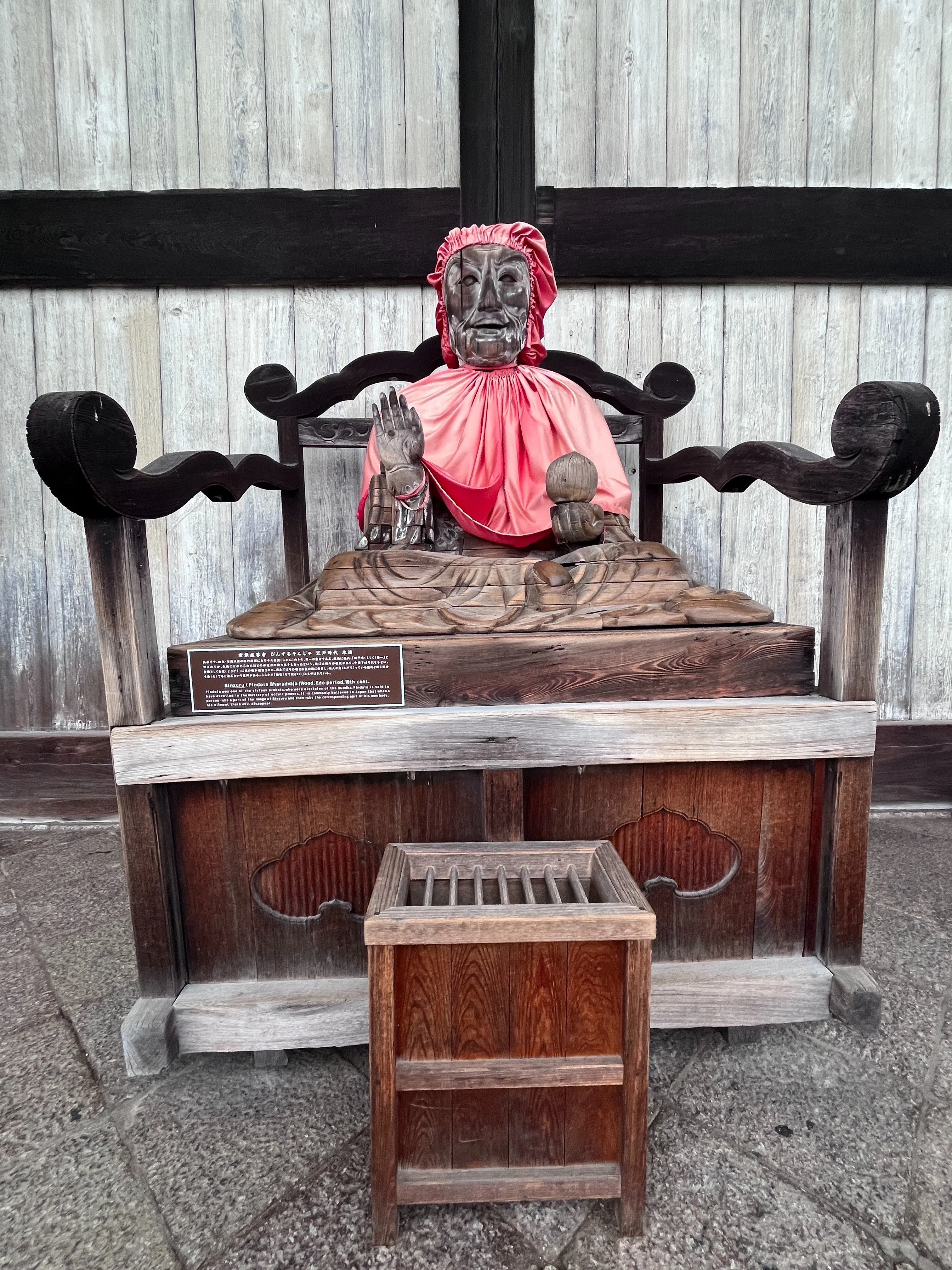
Another downpour sent people and deer crowding beneath the temple’s vast eaves. A doe gently licked her fawn’s ears, head and neck, while a stag turned sideways and devoted himself to licking a wooden pillar. The deer stood close to people, looking docile. Later, I saw visitors pretend to offer food, only to laugh and hide it behind their backs once a deer lowered its head to “bow”. Warnings that Nara’s deer were prone to biting flashed through my mind, and I let out a long sigh.
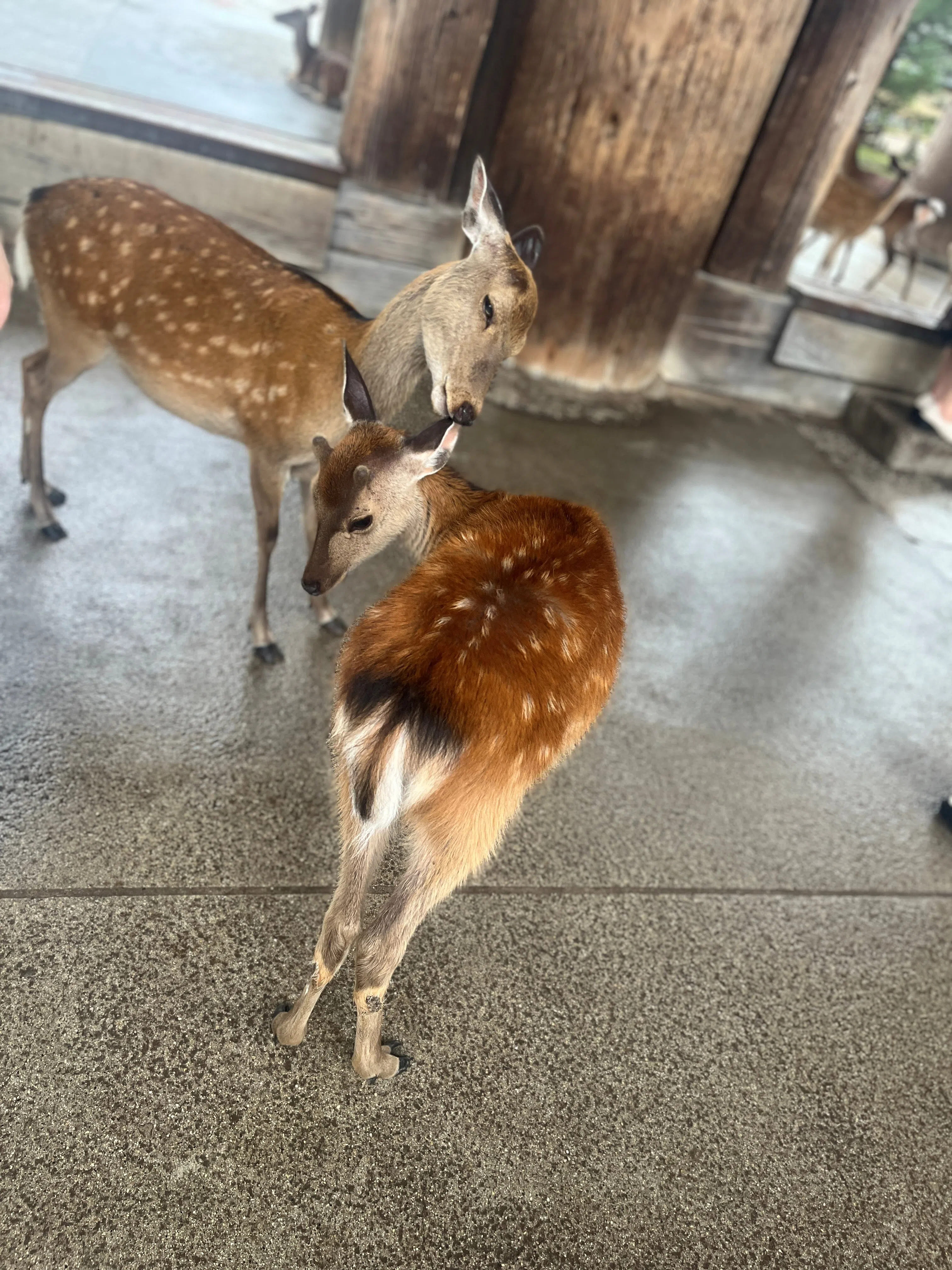
As the rain eased, the visitors gradually dispersed. My partner and I stood in the covered walkway, admiring the lush green lawn. Raindrops fell from the eaves, occasionally carried by the breeze into my hair…
A train full of deer-themed delights
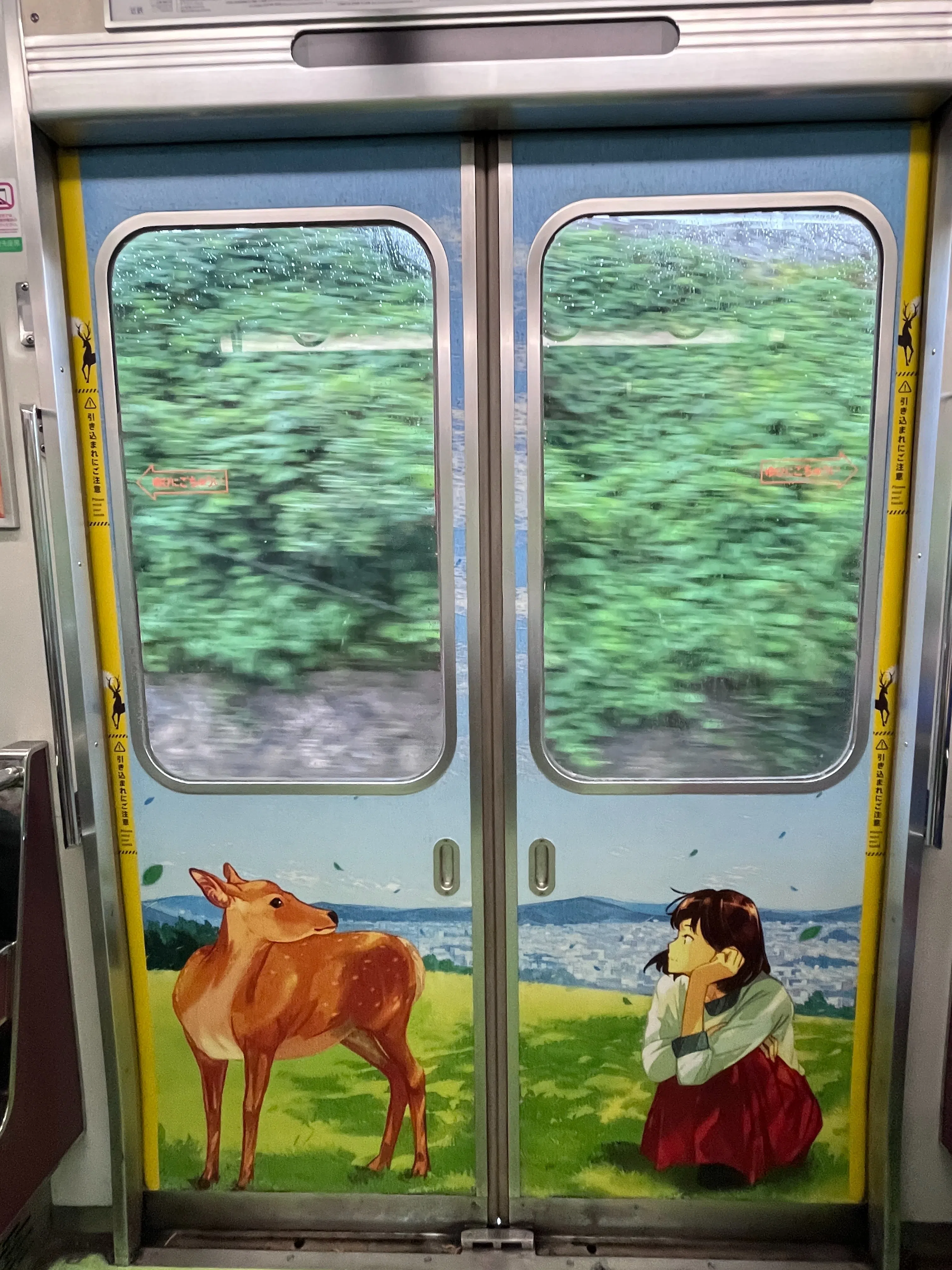
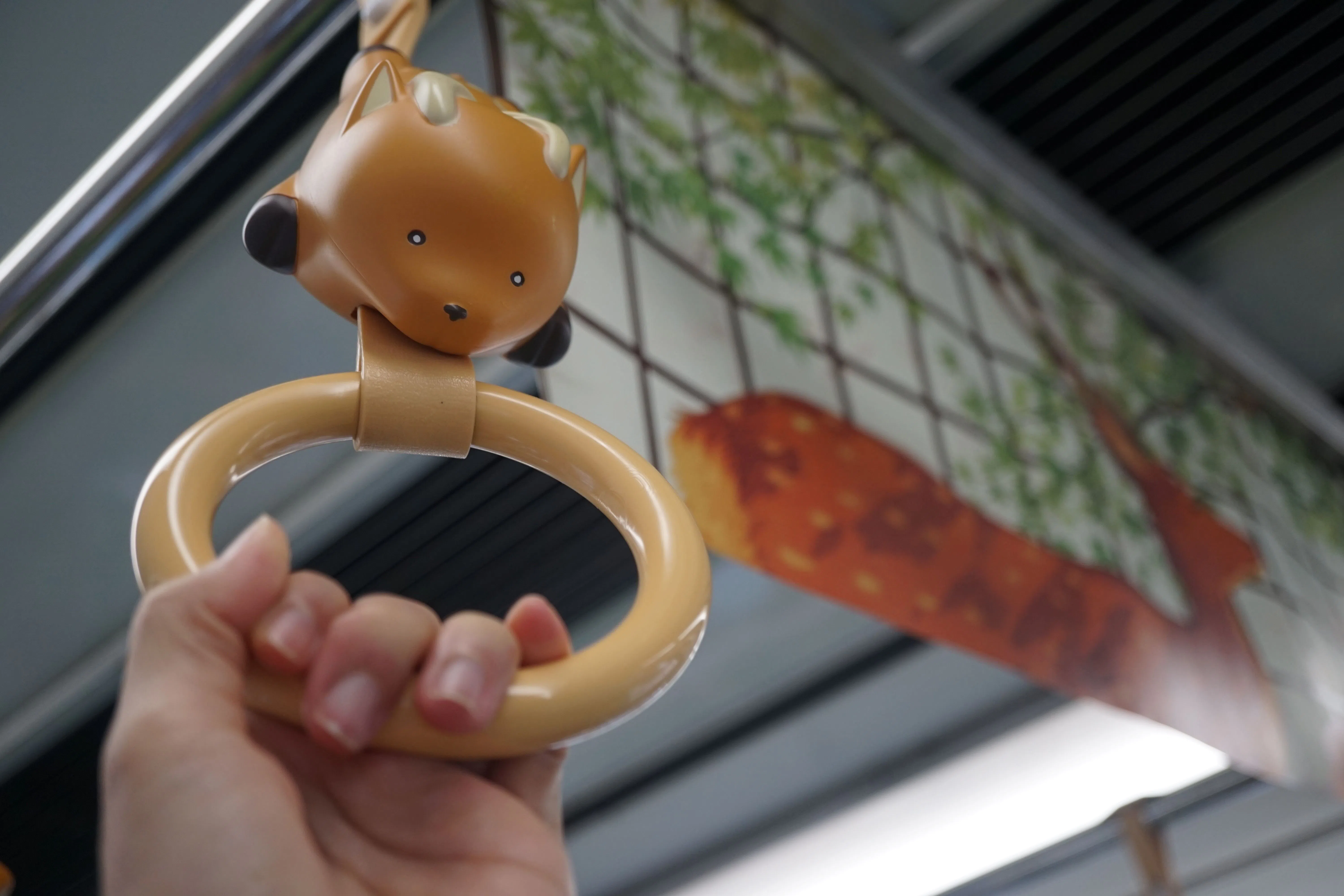
On the day we left, we were lucky enough to encounter the “Nara deer train”, the Narashika Train. Deer appeared everywhere: on its doors, carriage walls, seats and handgrips.
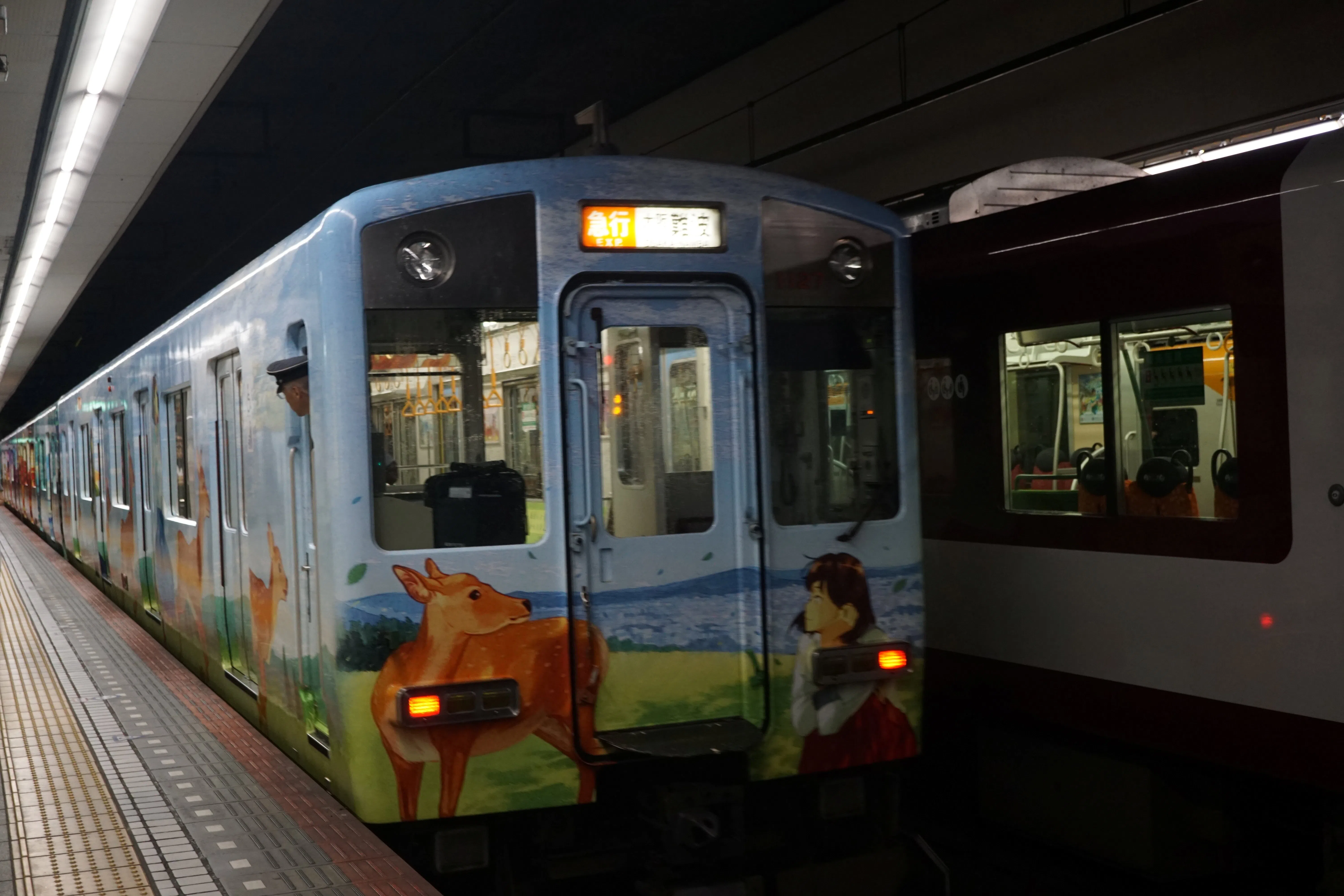
Cartoon-style landscapes inside the carriages showed little deer at ease among Nara’s landmarks. I made a point of standing up to hold a handgrip shaped like a deer-head. It felt like leading a little deer by the hand, filling me with warmth. The seats were upholstered in a spotted pattern resembling deerskin. Even the floor was decorated to look like grass or earth, as though we were still in Nara Park.
Commuter trains come and go on the Kintetsu Nara Line and the connecting Osaka Namba Line, but the deer train is not a frequent sight. Catching it just as we were leaving felt like a parting gift from Nara.
The deer train slowly pulled away, and we bade farewell to Nara amid the passing scenery.
Until we meet again, Nara!