

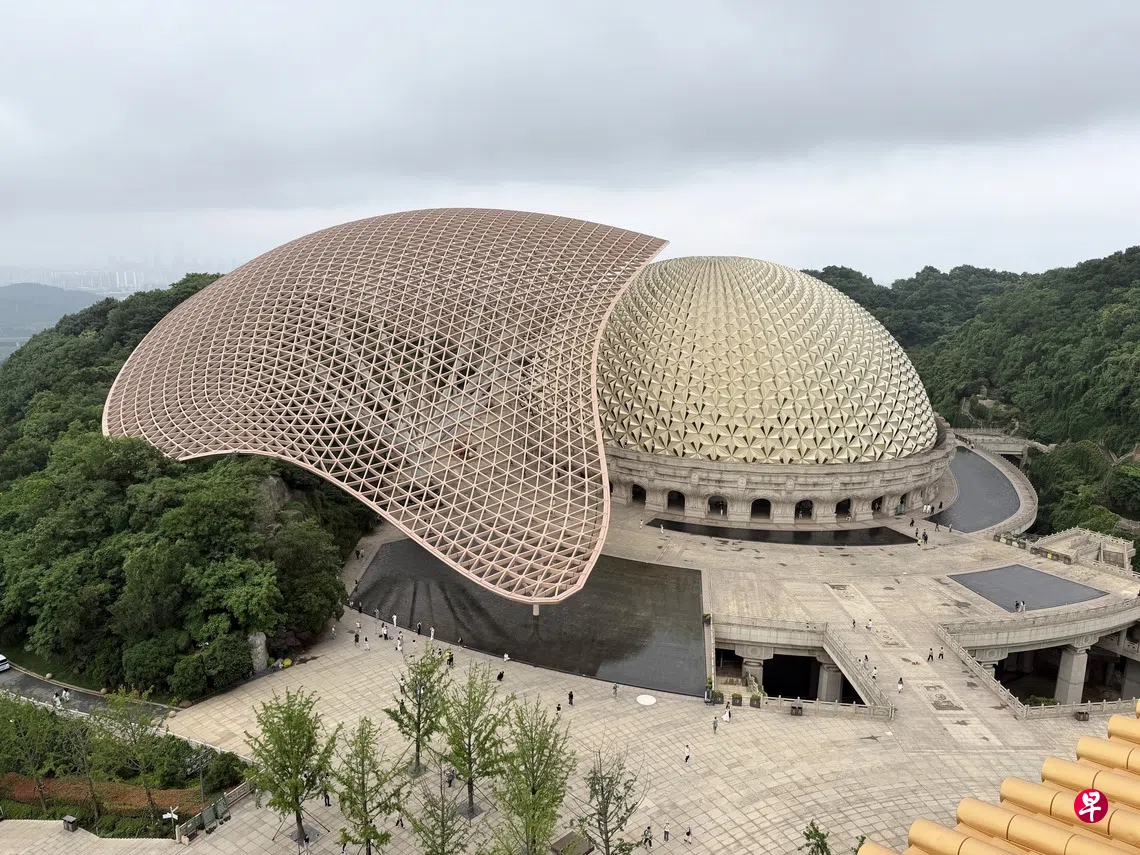
Some people come to Nanjing, China, for its history; others seek its culture. Still others simply want somewhere to quieten the mind amid their busy lives. Nanjing is a city best read slowly.
Shrouded in the misty romance of the six dynasties and the timeless allure of the Qinhuai River, this is a city where a millennium of imperial grandeur and scholarly grace has settled deep into the mountains, waters, temples, pagodas, and ancient walls. On this visit to Nanjing, we followed a route linking “a mountain, a pagoda and a city wall”, from Niushou Mountain and Dabao’en Temple to the Ming city wall. Between mountain and pagoda, ancient city and Buddhist light, we found an encounter with Nanjing that could belong only to this moment. Amid the mountains and pagodas, where the ancient city meets the serene light of the Buddha, we experienced a once-in-a-lifetime encounter that is uniquely Nanjing.
Niushou Mountain: Finding peace in Buddhist light
What first struck me on arriving at Niushou Mountain is not the bustle of a tourist attraction, but a rare tranquillity. A faint fragrance of greenery hangs in the air. Almost without noticing, you slow your steps and set aside the city’s haste and worries.
About 13 kilometres south of Nanjing, Niushou Mountain has long been known for its beautiful scenery. Green throughout the year, with birdsong and fragrant flowers, it is a haven for native plants and wildlife. Its wooded slopes hold not only natural beauty, but also a rich cultural and religious heritage.
As early as the Eastern Jin dynasty, Niushou Mountain was celebrated as the “heavenly gateway”. It was an important Buddhist holy site during the Southern Dynasties and one of the birthplaces of the Oxhead school of Chan Buddhism. Over the centuries, countless writers, artists, monks and pilgrims have paused here to contemplate and practise, enriching the mountain’s cultural flavour.
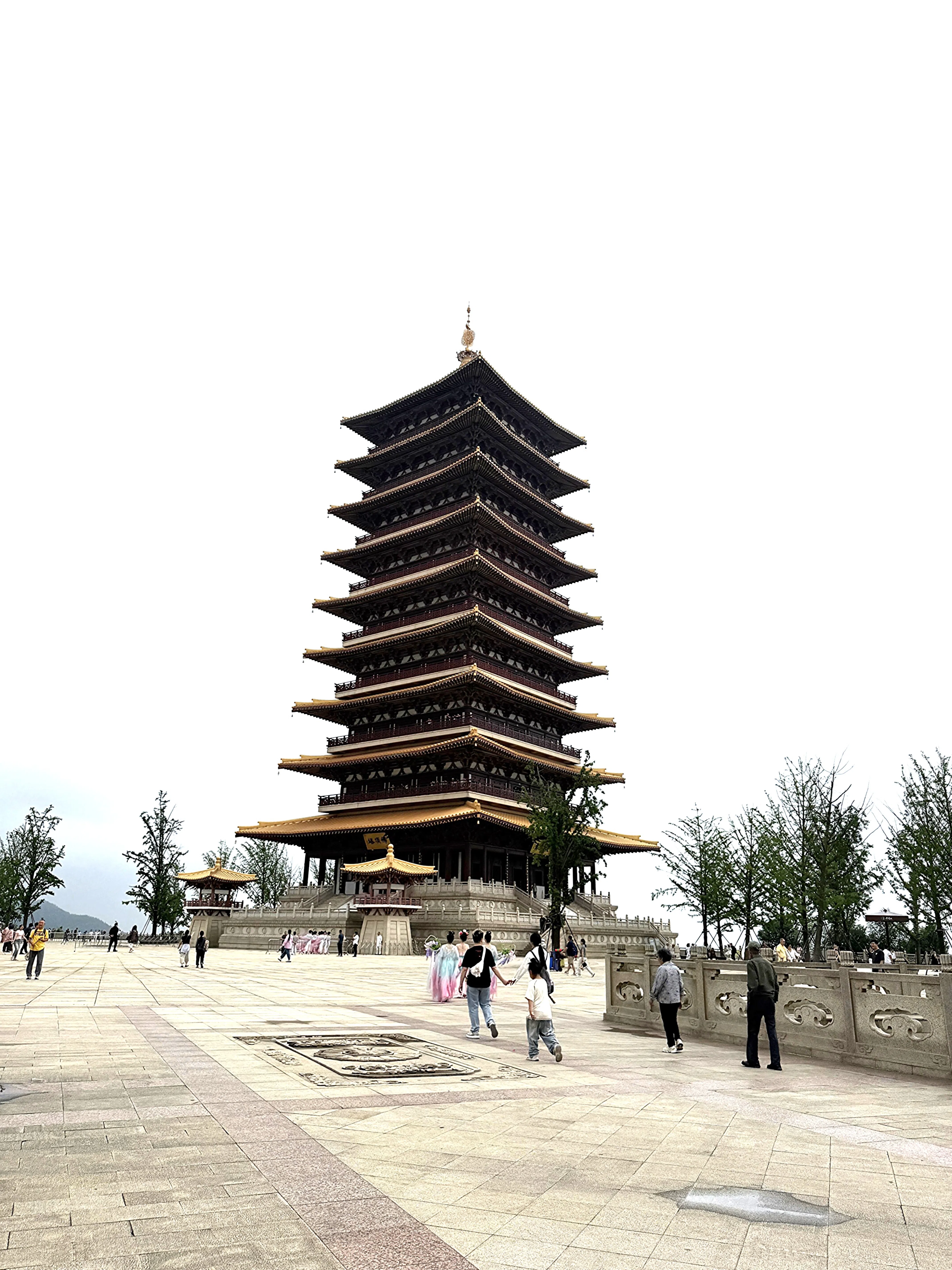
Since the turn of this century, Niushou Mountain has gradually developed a collection of landmarks blending Buddhist culture with modern architecture. They include the solemn Foding Temple, the magnificent Usnisa Palace and the soaring Foding Pagoda, lending the mountain a further sense of sanctity and grandeur.
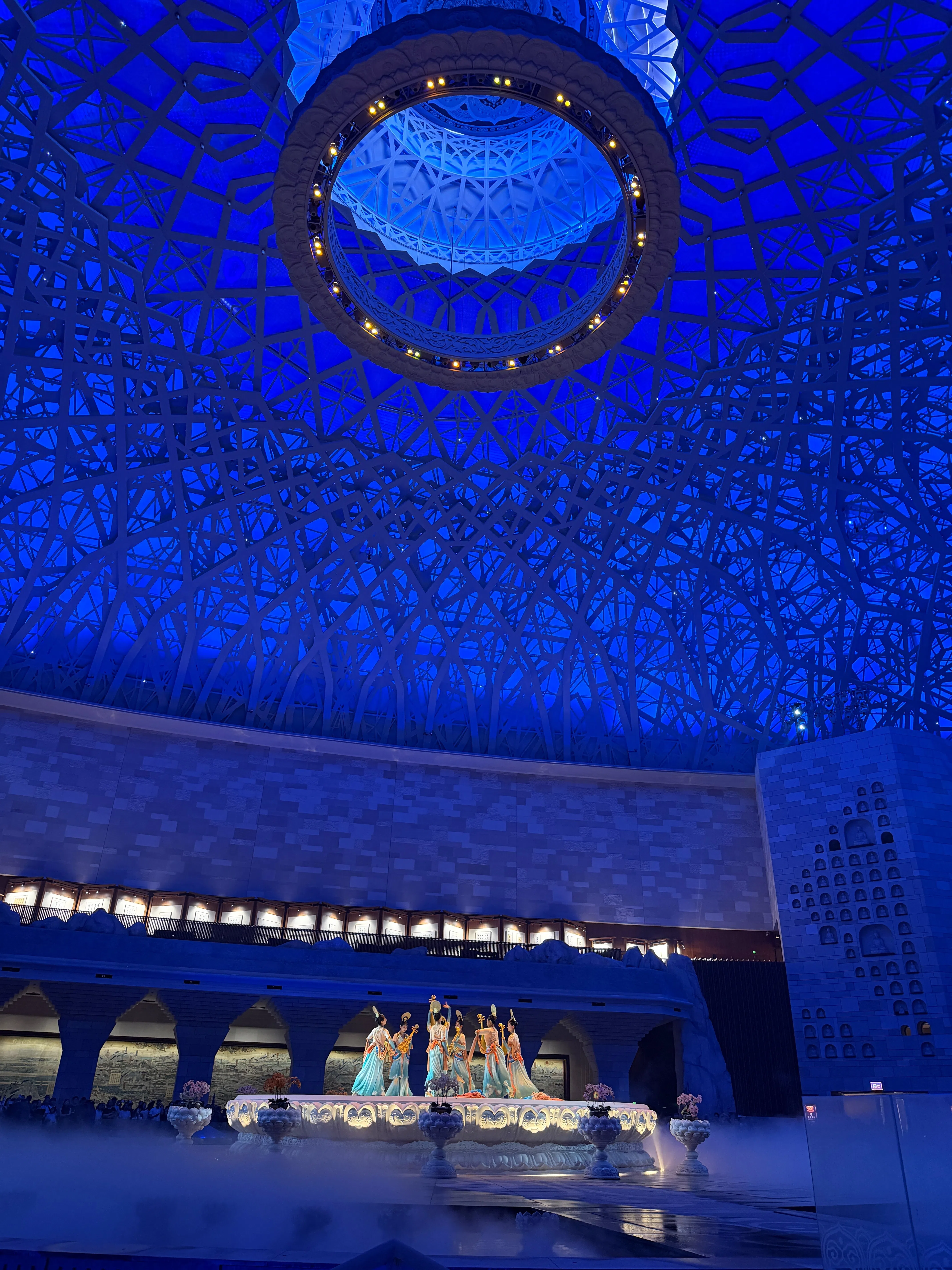
Inside Usnisa Palace, a vast underground sanctuary opens before you. A golden dome, solemn Buddha statues and natural light falling through skylights make the space feel both modern and sacred. In the softly lit, reverent atmosphere, visitors tread lightly, pressing their palms together in silent prayer. Even those who are not Buddhists may find themselves touched by a quiet, steadying force.
The greatest attraction is the relic of Sakyamuni Buddha’s parietal bone enshrined in Usnisa Palace. On 27 October 2015, the relic, unearthed from an underground chamber at the site of Nanjing’s Dabao’en Temple, was ceremonially brought to Niushou Mountain to be enshrined for the long term. Since then, the mountain has become not only an important cultural landmark in Nanjing, but also a destination for devotees and tourists from around the world who come to worship, pray for blessings and seek spiritual peace and fulfilment.
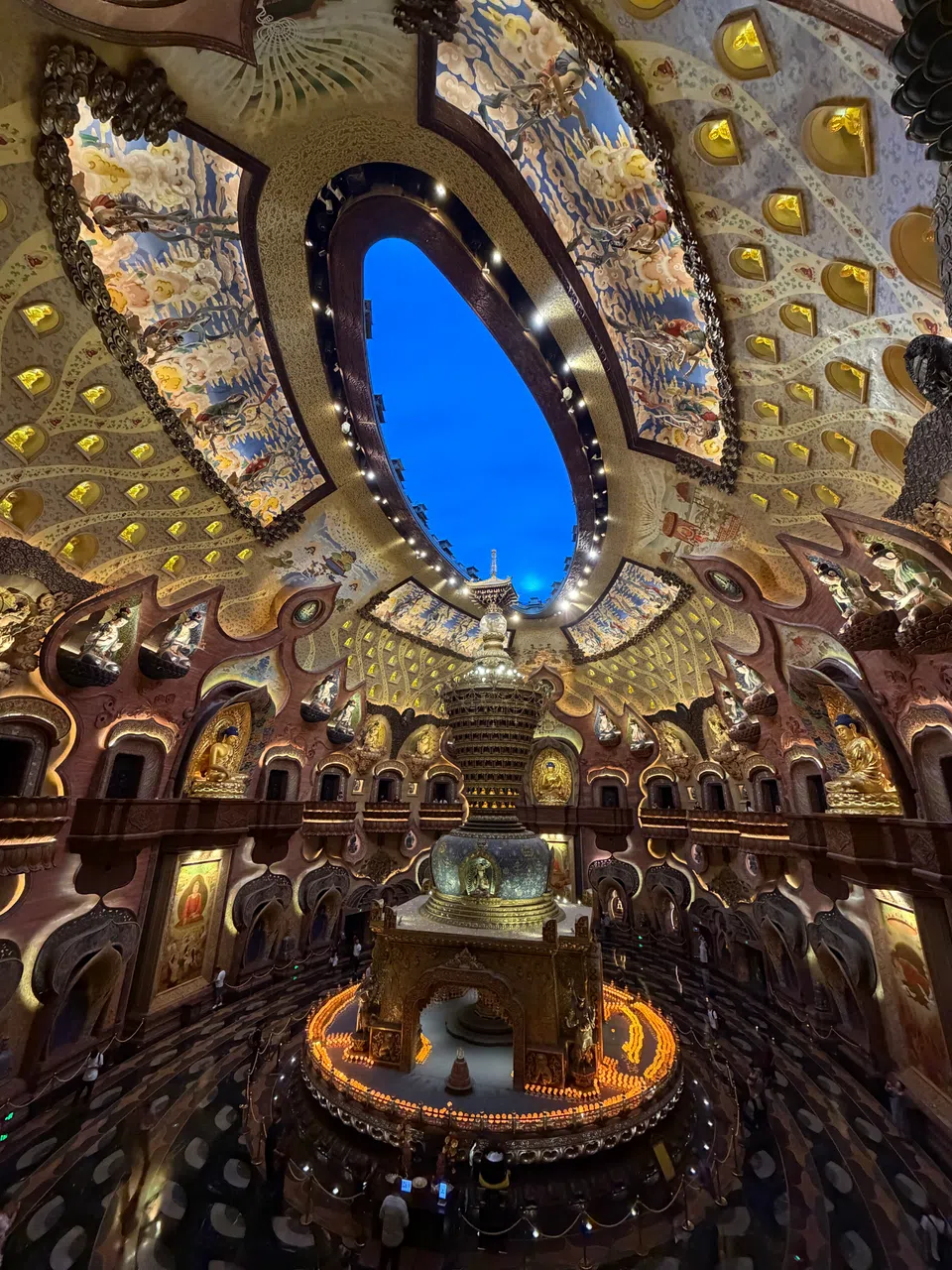
Many devotees make a special journey simply to spend a few quiet moments in worship before the hall where the relic is enshrined, or to silently behold the Buddhist light before them. It is as though, in that moment, they have finally found their way back to themselves.
Standing on Niushou Mountain, looking towards the layers of distant hills and Nanjing’s skyline, you begin to understand why the city always feels both ancient and gentle. It has neither Beijing’s imposing solemnity nor Shanghai’s bustling pace. Nanjing is much like an old soul who has weathered the storms of time yet remains quietly composed, gently weaving the history of the six dynasties, the compassion of Buddhist culture and the tender grace of Jiangnan’s water towns into the fabric of its character.
Perhaps that is why it is so easy to slow down here without even realising it. Some say travel is about leaving everyday life behind. In Nanjing, it feels more like rediscovering, as you walk, the peace you truly need.
Dabao’en Temple: A Buddhist connection spanning a millennium
Dabao’en Temple and Niushou Mountain share a Buddhist connection reaching back a thousand years.
The relic of Sakyamuni Buddha’s parietal bone now enshrined in Usnisa Palace on Niushou Mountain originally lay in an underground chamber at the Dabao’en Temple site in Nanjing. In 2008, archaeologists exploring the underground chamber of Changgan Temple, Dabao’en Temple’s predecessor, discovered an iron casket and a seven-treasure Ashoka stupa that had lain undisturbed for nearly a millennium. The stupa held a sacred object, ceremonially unveiled in 2010 and identified as a relic of Sakyamuni Buddha’s parietal bone. This major discovery caused a sensation in Buddhist and cultural circles, once again drawing the world’s attention to Nanjing as a Buddhist holy site.
In 2015, the relic was ceremonially brought to Niushou Mountain to be enshrined, creating a cultural and spiritual connection between “one mountain and one temple, one pagoda and one palace”. For many devotees, the journey from Dabao’en Temple to Niushou Mountain was more than a change in where the relic was housed. It is more like a bridge that transcends time and space, reconnecting the ancient capital with the profound, far-reaching memory of its Buddhist past.
Dabao’en Temple was built during the Yongle reign of the Ming dynasty. Commissioned by the Yongle Emperor, Zhu Di, to repay his parents’ kindness, it was an important imperial temple of the Ming dynasty. Most famous among them was the Porcelain Tower, once hailed by Westerners as one of the Seven Wonders of the Medieval World. With its soaring silhouette and resonant bells, it was both a major Nanjing landmark and a witness to the development of imperial Buddhist culture during the Ming dynasty.
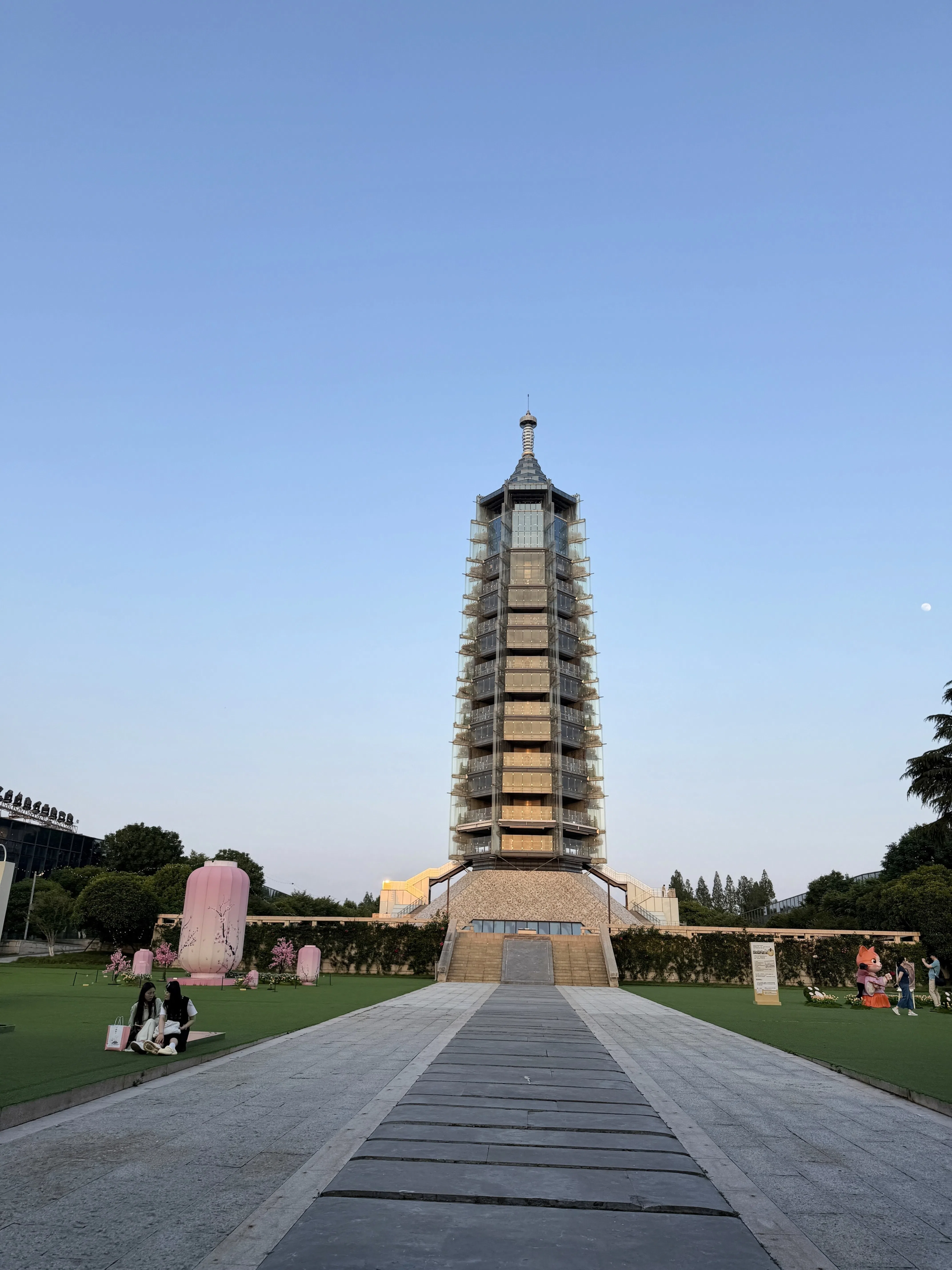
War and the passage of time, however, once consigned Dabao’en Temple to history. The temple I visited is a masterpiece of reconstruction and revival. Walking through the corridors above the ruins, I looked out over layers of yellow earth and the quietly preserved remains of the underground chamber. Artefacts and Buddhist remains excavated from it were displayed nearby, giving me the impression that I had travelled back in time when Buddhist culture flourished.
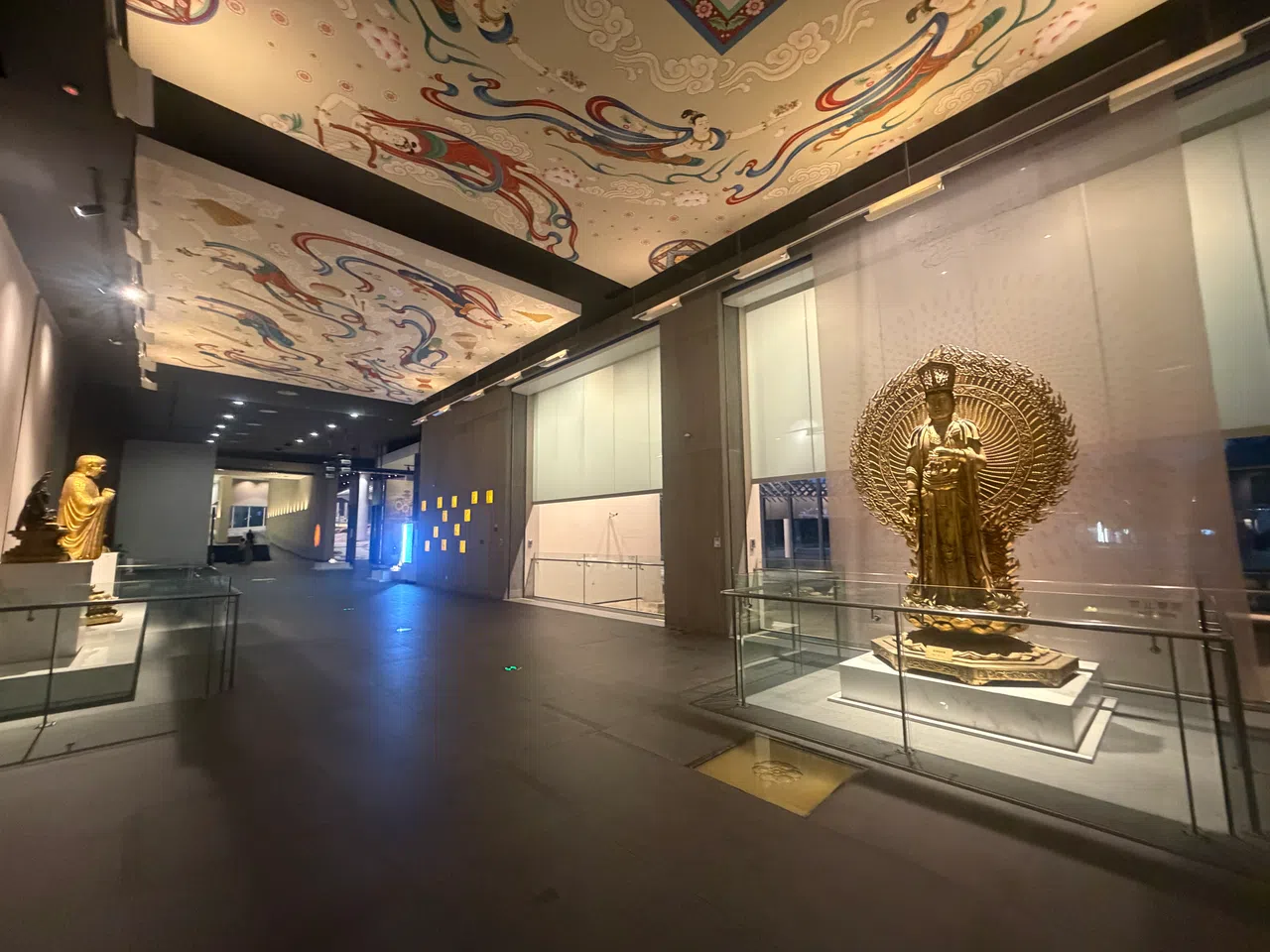
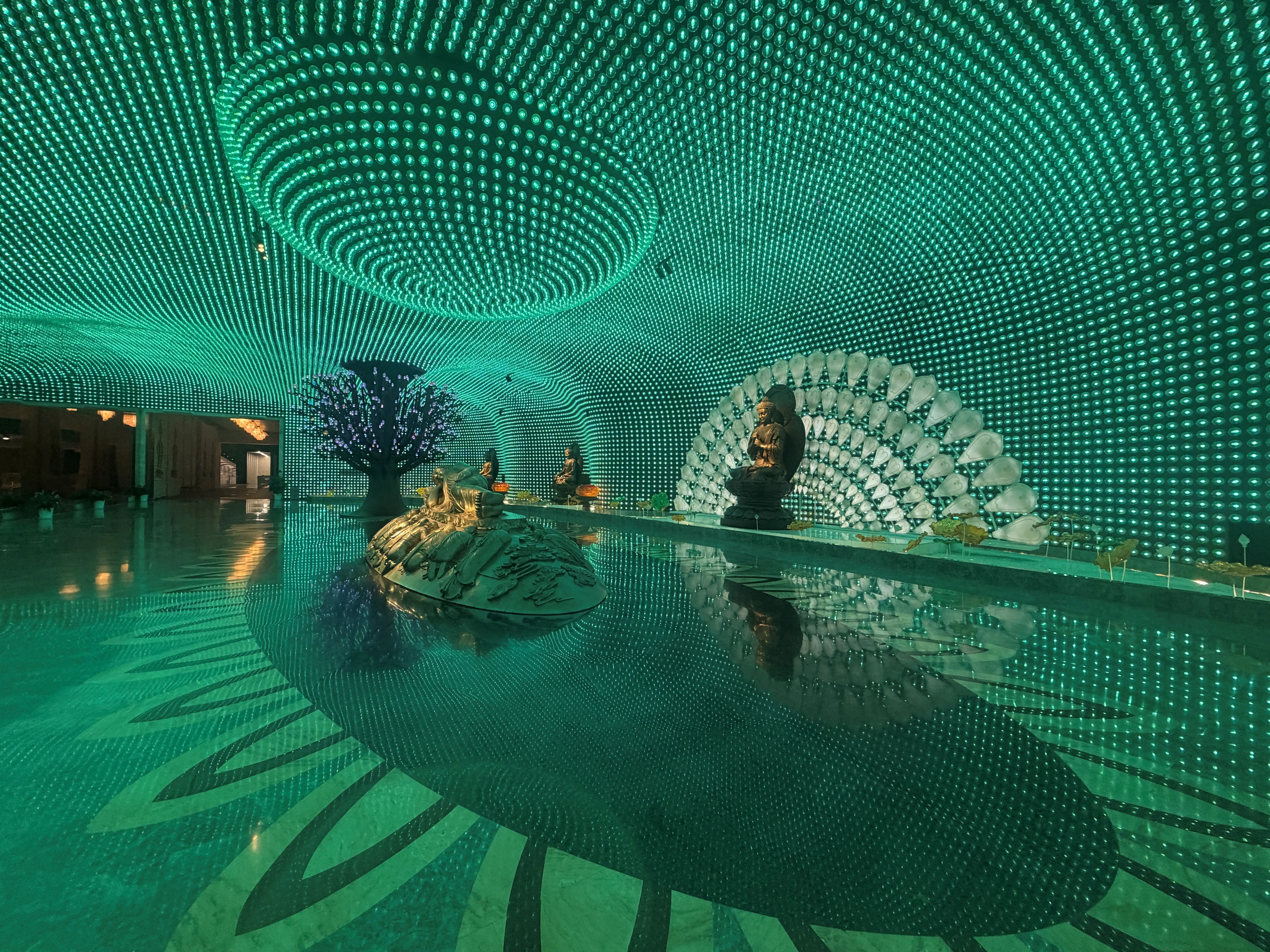
Today, Dabao’en Temple is far more than a Buddhist heritage site. Technology, lighting and projection art breathe modern life into a thousand-year-old spiritual glow. As flowing light and shifting shadows weave together with solemn Buddhist chants, ancient Buddhist culture transforms from a static display into an immersive visual experience.
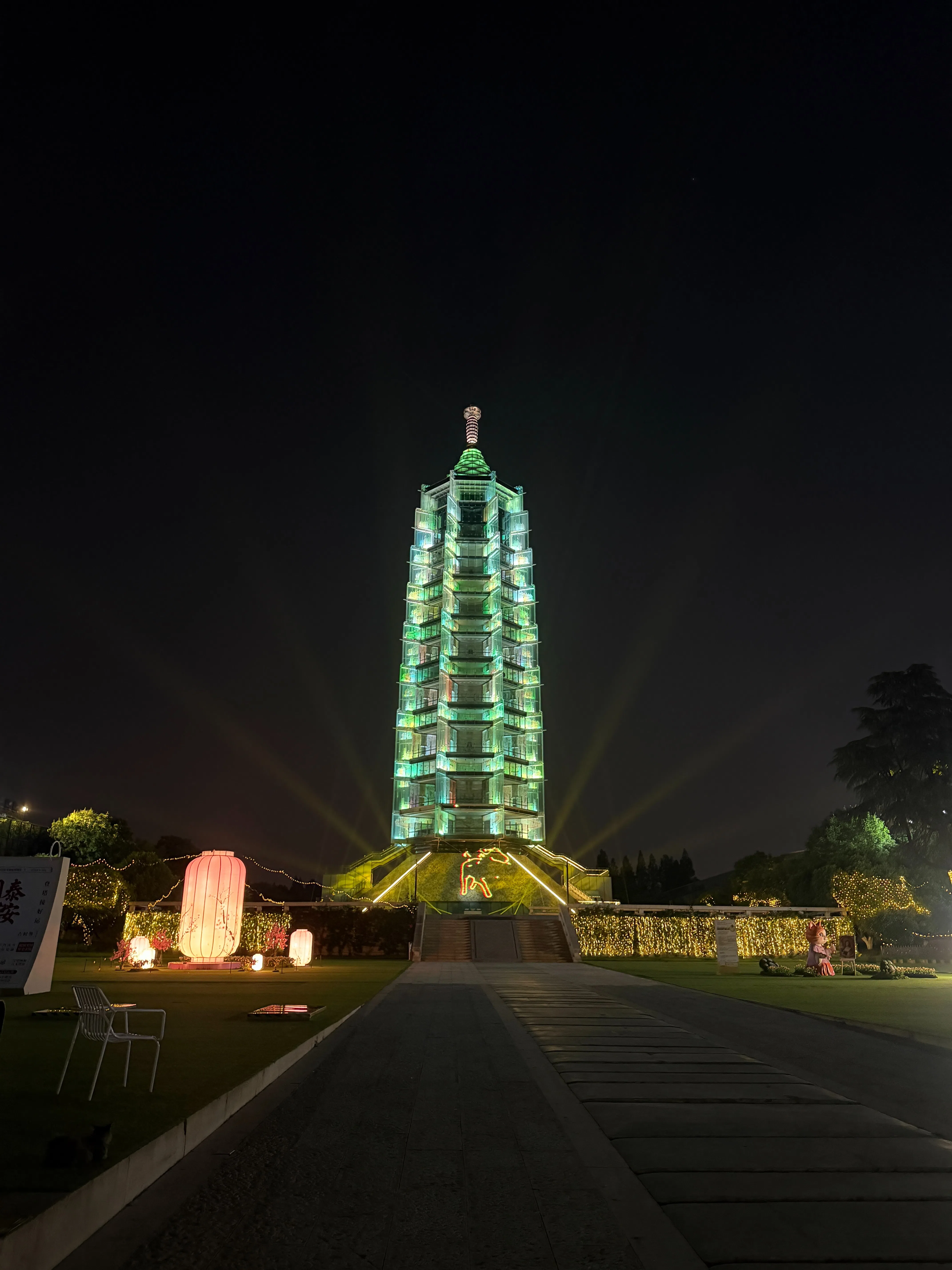
After nightfall, the most moving moment at Dabao’en Temple comes when the Porcelain Pagoda is illuminated. As the lights slowly brighten, the pagoda takes on a soft golden glow. Its tiered eaves and glazed tiles emerge through light and shadow, offering a glimpse of the former splendour of “Jinling’s finest pagoda” (Jinling is the historical name for Nanjing). At that moment, you realise that an ancient capital is not merely a succession of dynastic names in a history textbook. It is the faith, memories and emotions of generation after generation.
The Ming city wall: Nanjing’s memory across the ages
From Usnisa Palace on Niushou Mountain to Dabao’en Temple’s thousand-year Buddhist connection, and on to the long, undulating Ming city wall before me, Nanjing seems to have a way of bridging the past and the present.
Unlike the fragmented remains of many ancient city walls, Nanjing’s Ming wall still stands imposing and intact, silently embracing the city across the centuries.
Construction began in 1366, the 26th year of the Zhizheng reign in the late Yuan dynasty, on the orders of Zhu Yuanzhang, who became the founding emperor of the Ming dynasty. Taking nearly 30 years to complete, it is one of the world’s largest and best-preserved surviving walls of an ancient capital. Countless craftsmen were brought in from across the country to build this defence for the capital. Some bricks still bear inscriptions identifying craftsmen and kilns, preserving names and stories from more than 600 years ago.
The wall and rivers keep each other company. On one side stands the weathered Ming wall, shaped by over six centuries of wind and rain; beyond it are views of the misty expanse of Xuanwu Lake and the silent currents of the Qinhuai River. Every brick and stone beneath your feet bears the marks of time. The ancient city’s fortitude and the softness of Jiangnan’s waterways meet here, shaping Nanjing’s distinctive character and allowing history and the present to reflect each other in a single landscape.
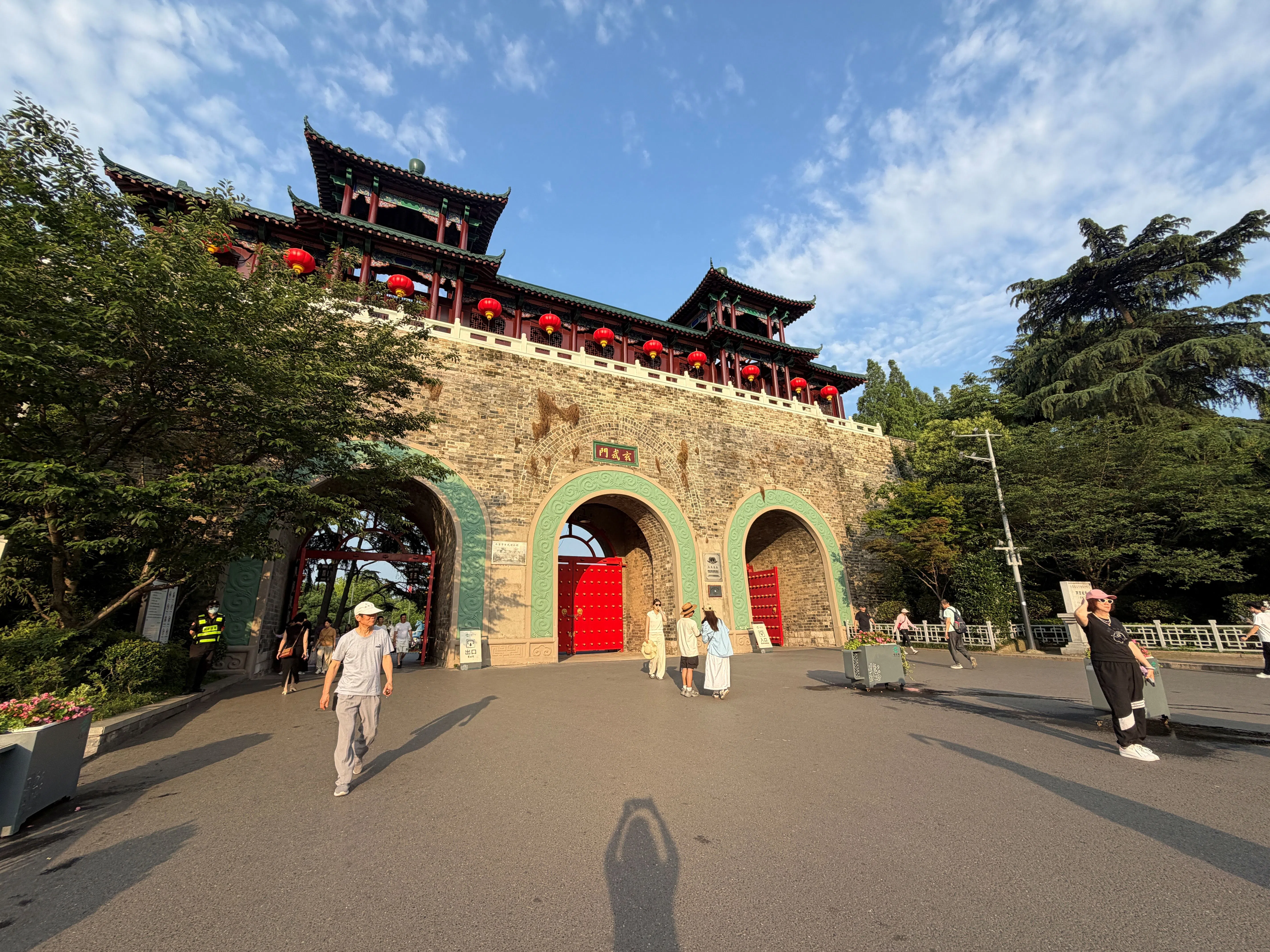
Atop the ramparts, there is little noise — only the composure and calm that comes from having endured changing times. I chose to climb up at Jiefang Gate, where the ticket office stands beside the entrance. Ascending the steps, I saw Xuanwu Lake on one side, its waters reflecting the city, and the yellow walls of Jiming Temple framed by green trees on the other. Ancient walls, lake and hills, and a modern city all share the same view — one of Nanjing’s most characteristic vistas.
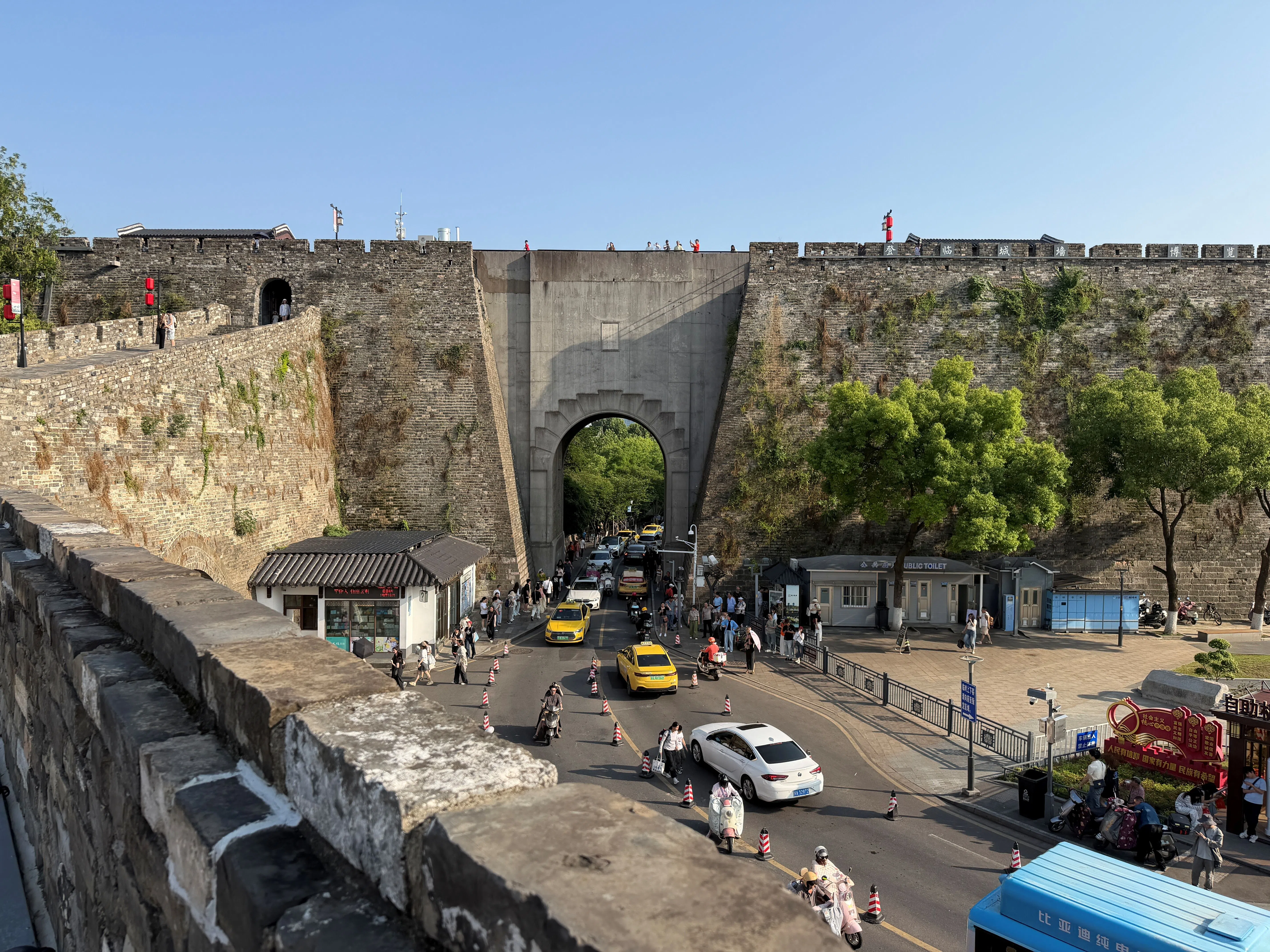
Unlike many historical monuments that can only be admired from a distance, the Ming city wall remains woven into local life. In the early morning, people jog and walk next to it. In the evening, residents cycle in the breeze, take photographs or enjoy the lake views from alongside the wall. Age has not separated the ancient structure from the city. Instead, it stands like a silent guardian, accompanying Nanjing’s residents through their daily rhythms.
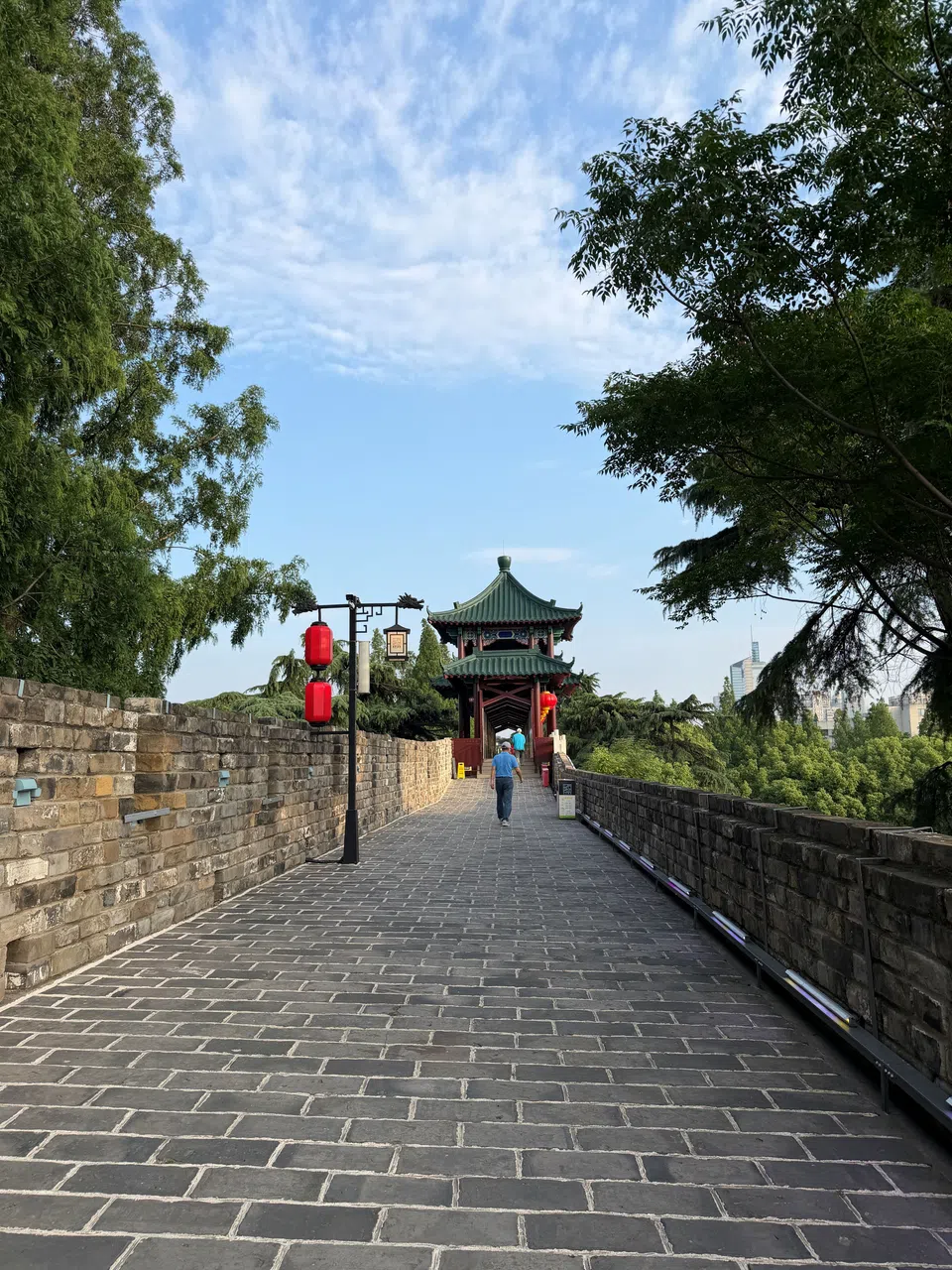
History is no longer simply a bygone era confined to museums; it is a living presence woven into the breath and daily rhythm of the city. That is why Nanjing exudes such a rare historical resonance — not distant and imposing, but warm and present alongside modern life.
Nanjing roast duck: A taste of everyday life
Beyond its hills, waterways, temples, pagodas and city walls, what makes Nanjing unforgettable is the everyday vitality tucked away in its streets and lanes. After leaving the Ming city wall, I followed a Baidu Maps recommendation to a long-established roast duck restaurant. It was lunchtime, and the place hummed with conversation. Diners sat in small groups, drinking and chatting freely. Some stayed on after their meal to play cards and talk, in no hurry to leave. The lively atmosphere and easy pace formed a vivid portrait of local life.

Many people know about Beijing roast duck, but may not realise that Nanjing’s love of duck runs just as deep. Known as the “duck capital”, Nanjing has made duck part of its everyday diet, from salted duck and duck blood vermicelli soup to the roast duck shops found everywhere along its streets. Traditional Nanjing roast duck differs from Beijing’s version. Rather than elaborate carving and ceremony, it is prized for its fragrant skin, tender meat and rich sauce. It is also more affordable, making it a firm local favourite. At the restaurant I visited, once the roast duck had been carved, the remaining meat and bones were stir-fried with salt and pepper for a savoury, moreish dish. The slices of duck skin were golden and crisp, crackling with each bite and adding another dimension to the feast.
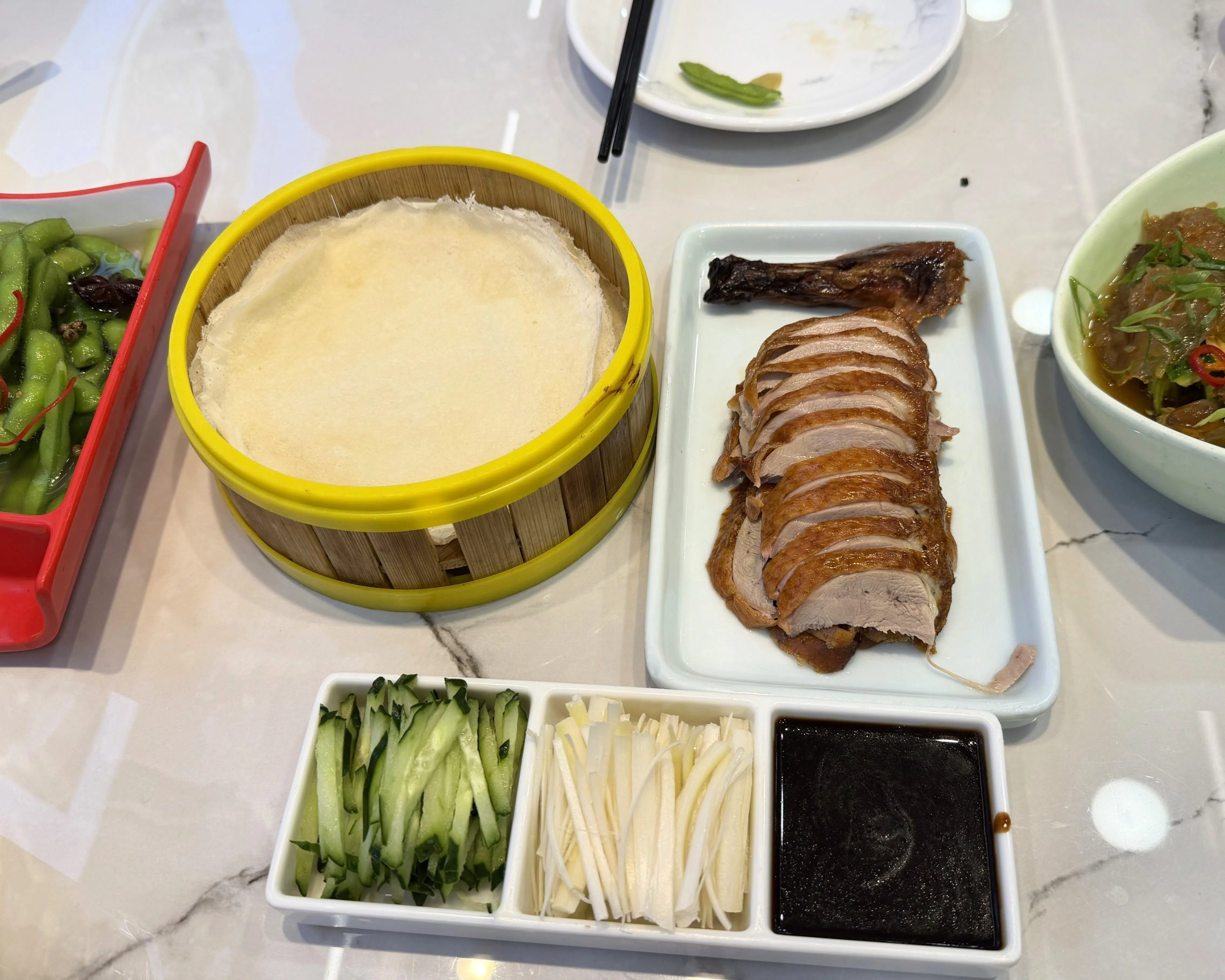

After the meal, I stepped outside. Watching residents stroll leisurely and young people eat at small street-side shops, it suddenly dawned on me that a city’s memories are made not only of famous sights, but also of these most ordinary vignettes of daily life. Perhaps Nanjing’s charm lies in the balance it strikes between the gravitas of its past and the warmth of everyday life.
In Nanjing, rediscovering yourself
The longer I travel, the more I realise: I would think I am looking for scenery, when in the end, what I encounter is often a long-forgotten piece of my soul. “A mountain, a pagoda and a city wall” — from Usnisa Palace on Niushou Mountain to the thousand-year Buddhist legacy of Dabao’en Temple, and finally to the imperial grandeur embodied in the Ming city wall, I found myself threading together the different layers of Nanjing’s soul.
A mountain stills the mind;
a pagoda reveals the light;
a city wall helps us understand the passage of time.
Often, what truly stays in the memory is not the attraction itself but a moment: a shaft of light falling from a dome, a brief stillness before the Buddha’s relic, or a breeze passing over the Ming city wall. Perhaps that is why Nanjing feels so particularly familiar and welcoming. It holds the deep history of a capital of six dynasties while retaining the gentleness and unhurried pace of a Jiangnan city. Whether in the Buddhist chants of its temples, the evening breeze on its wall or the lights along the Qinhuai River, you sense a city in no hurry to show travellers what it has to offer. It simply waits for them to draw closer, slowly, and discover it for themselves.
