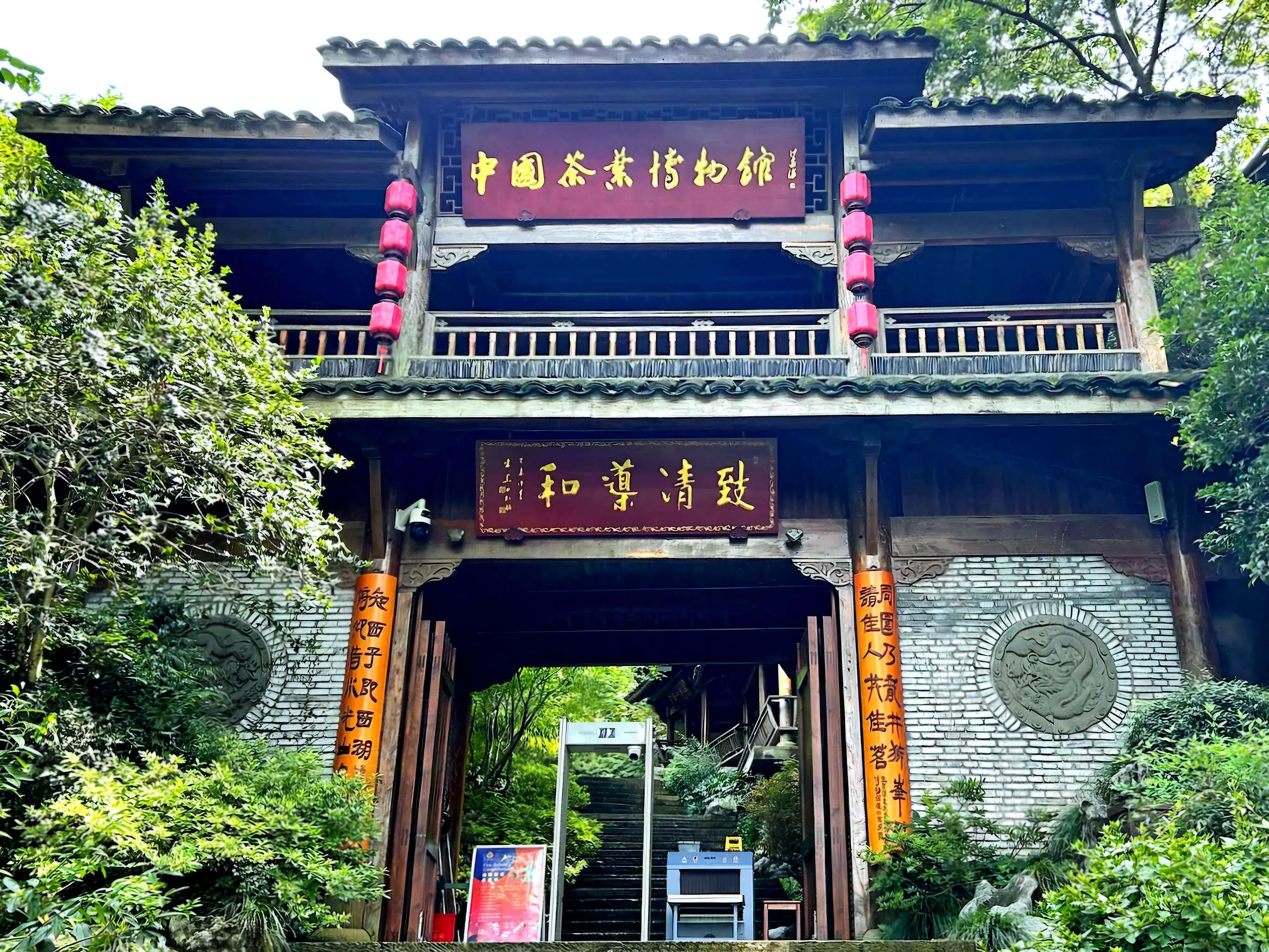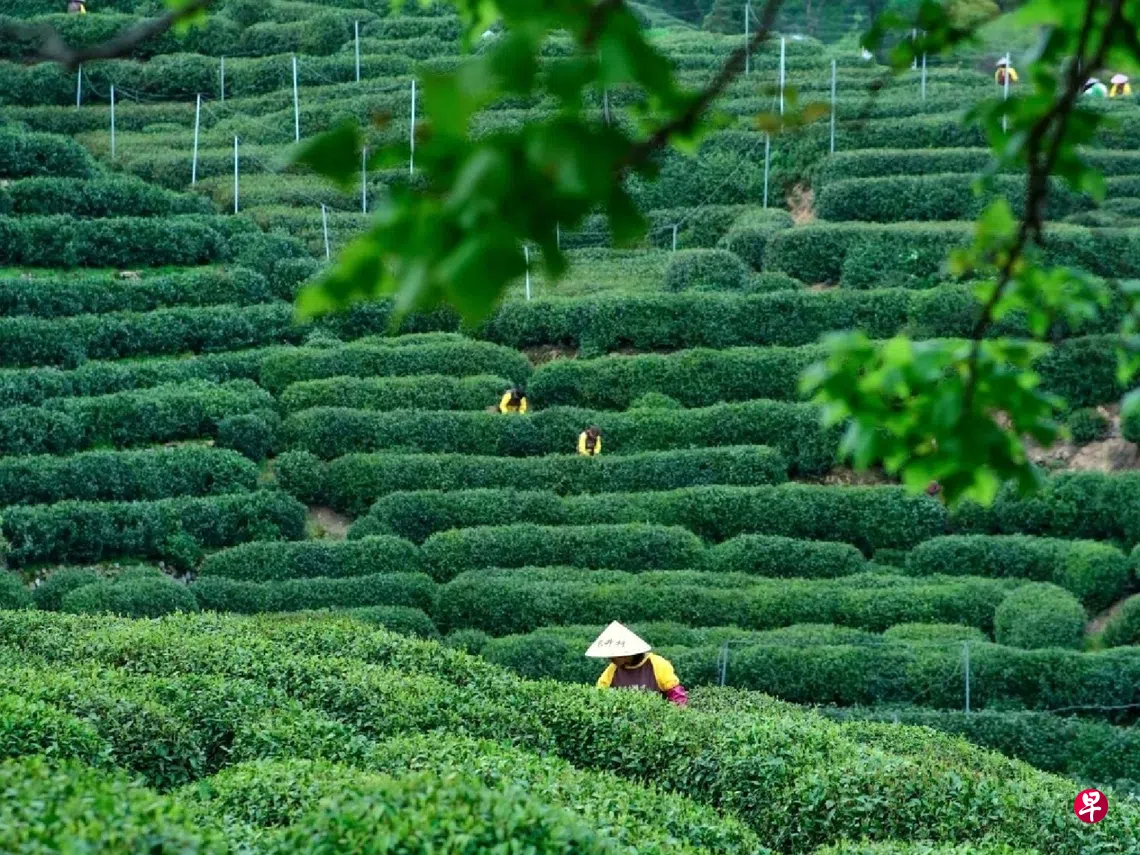
In March this year, I answered spring’s invitation to explore vast tea plantations deep in the hills of Hangzhou, China. As I took time to savour the place, I discovered its constant search for just the right balance between ecological conservation, cultural heritage and the visitor experience.
For many people, Hangzhou first brings to mind West Lake, its misty waters stretching into the distance, and the refined elegance of Jiangnan, the region south of the Yangtze River. But in the tea-growing hills, I discovered another side of Hangzhou’s beauty. There was none of the bustle of commercial tourism, nor any carefully contrived scenery. What captivated me was the natural feel of a place built into the hills, following the contours of the land.
There are few high mountains around Hangzhou’s urban centre, but tea plantations and bamboo groves together create a distinctive landscape. As I strolled along the plantation paths, rows of tea bushes spread out on either side, their faint fragrance drifting on the breeze. Above me, tall bamboo swayed gently, sunlight filtering through the leaves as though bathing the whole world in a soft green glow.
Walking through the tea plantations felt less like travelling than briefly retreating from the world. The city’s pace quietly slowed here, and time seemed to lose its power to hurry me along. There were no conspicuous signboards, dazzling lights or photo spots designed for social media.
All I needed to do was look at the hills, listen to the wind and breathe in the tea’s fragrance, letting body and mind settle into the greenery. Here, I gradually came to understand what Jiangnan’s “slow life” really meant. It was not laziness but composure; not stagnation but the wisdom to make peace with time. Hangzhou’s slower pace is not about wasting the hours, but finding one’s own rhythm between activity and rest. Perhaps this is the most beguiling thing about its tea plantations. They have nothing to prove and make no effort to impress. Simply pause among the fragrance of tea and the shadows of bamboo, and a long-forgotten sense of peace and freedom returns.
Watching the spring tea harvest at dawn in Longjing village
Longjing village is one of Hangzhou’s best-known tea-growing areas. The West Lake Longjing it produces has long been acclaimed as “China’s finest tea”, thanks not only to its long history but also to its exceptional geographical setting. The tea-growing area has a humid climate and good air circulation, with clouds and mist swirling among the hills throughout the year, creating spectacular scenery.
I arrived in Longjing village before 6am, while a thin veil of white mist still hung over the hills. In the early light, with dew still clinging to the leaves, the plantations had a particular softness. Distant village houses with white walls and black-tiled roofs dotted the landscape like a living ink painting. The farmers were already busy picking tea, as March is the busiest time of year for the spring harvest. Wearing conical hats, they moved between the rows, deftly plucking the tenderest shoots, each with a bud and a leaf. The shoots then fell into their baskets in a fluid sequence of movements, like a silent dance – a scene unique to tea country.
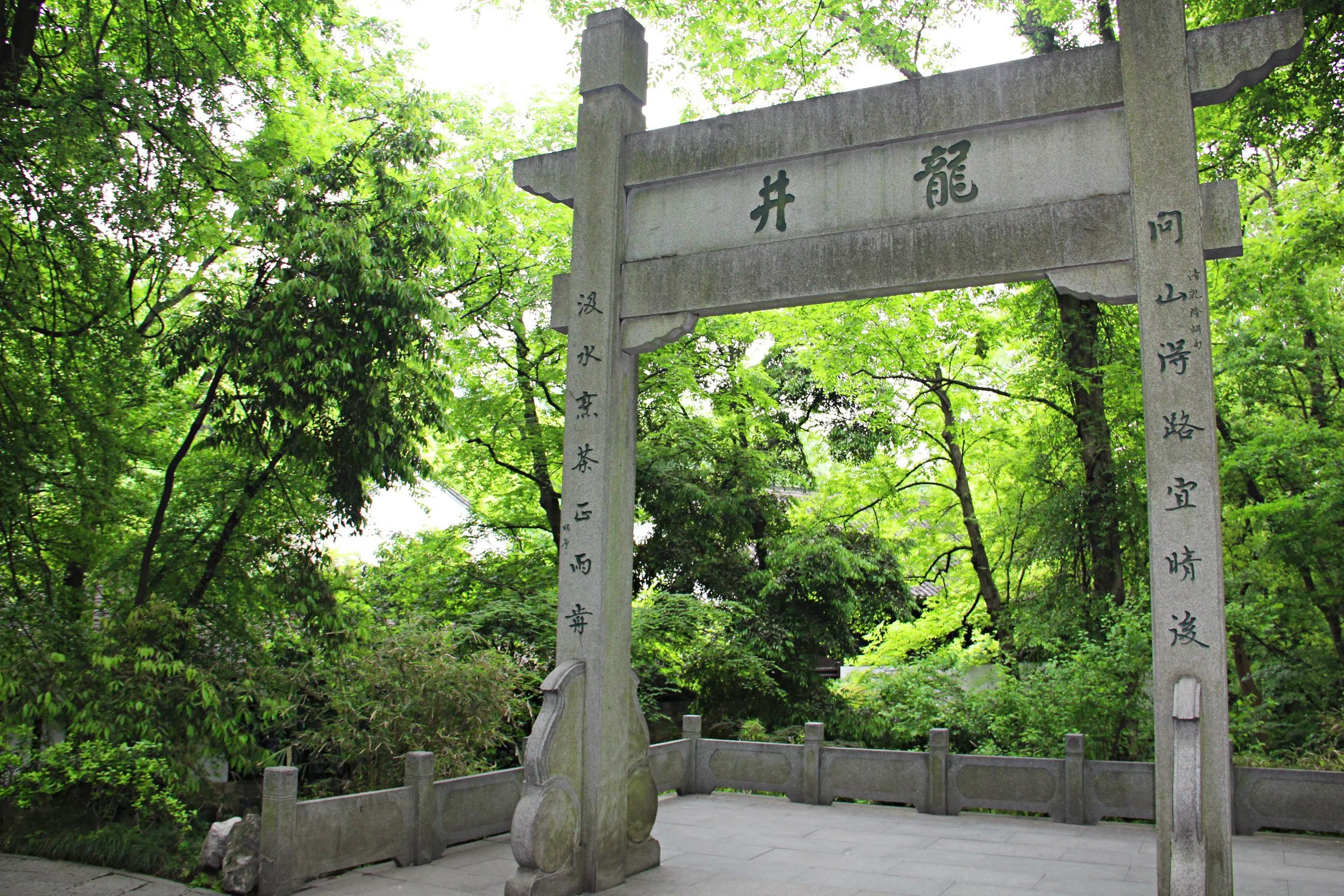
As I walked along the main road running north to south through Longjing village, delicate wafts of tea fragrance drifted through the air. On a whim, I followed a path into a small house with a sign advertising “farmhouse tea”. The owner brought out a glass, added a pinch of dried leaves and poured in hot water at around 80 degrees Celsius. The leaves unfurled, their buds slowly standing upright as they rose and sank. The water turned from colourless to pale green, then a clear jade. There, I drank the most memorable cup of Longjing of my life. It had neither the depth of pu’er nor the delicate allure of Biluochun, but a sweet, bean-like fragrance and a lingering finish, like an unassuming old friend who says little, yet whose every word touches the heart.
Chatting with the owner, I learnt that a row of tea bushes about 10 metres long yields the full five jin of fresh leaves needed to produce one jin of finished tea. A seemingly ordinary cup of Longjing embodies an enormous amount of hard work. Sitting on a bamboo chair in the tearoom, looking out over the unbroken rows of tea bushes, I found every sip especially precious.
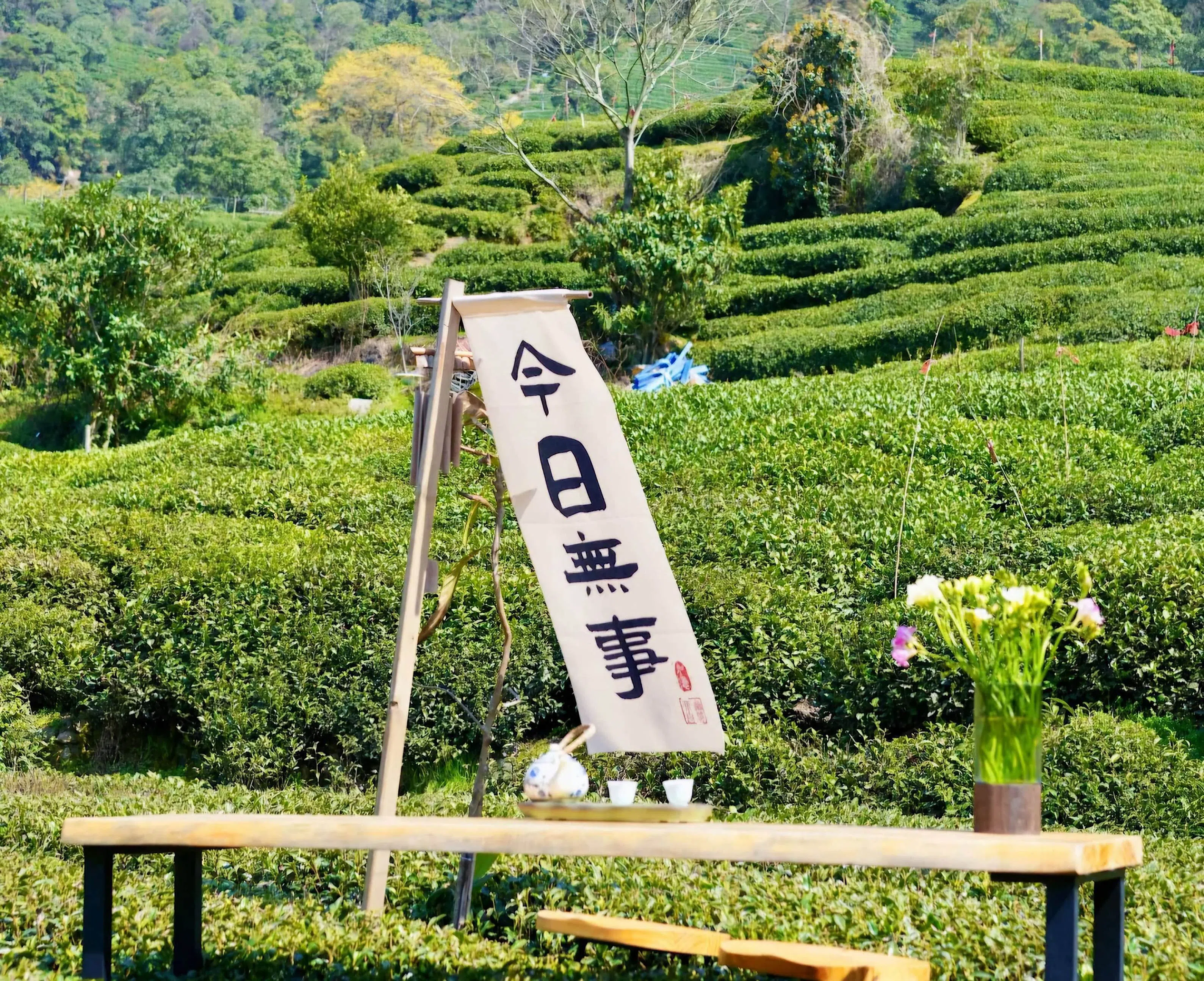
Learning to pick and pan-fire tea in Meijiawu
Meijiawu is one of the core production areas for West Lake Longjing, long known for its extensive tea-growing valley. Surrounded by hills and continuous plantations, it has a beauty captured in the line: “The hills stay moist without rain; the waters lie shaded without clouds.” From the Shili Langdang ridge, tea-covered slopes undulate like green waves, with clouds and mist drifting slowly between them. Nestled in the valley, Meijiawu’s white walls and dark-tiled roofs complement the lush plantations. Everywhere, a rich sense of local life and heritage blends with the distinctive beauty of this tea-growing landscape.
Meijiawu’s most enchanting feature is the streamside valley trail that runs through the village. Follow the stream and the sound of flowing water accompanies you past tea plantations, farmhouses, slender bamboo and old trees. Occasionally, a farmer passes slowly with baskets of tea suspended from a shoulder pole. The trail is gentle and easy enough for both older visitors and children. The walk takes about an hour, yet feels like a journey through a quieter, more leisurely Jiangnan.
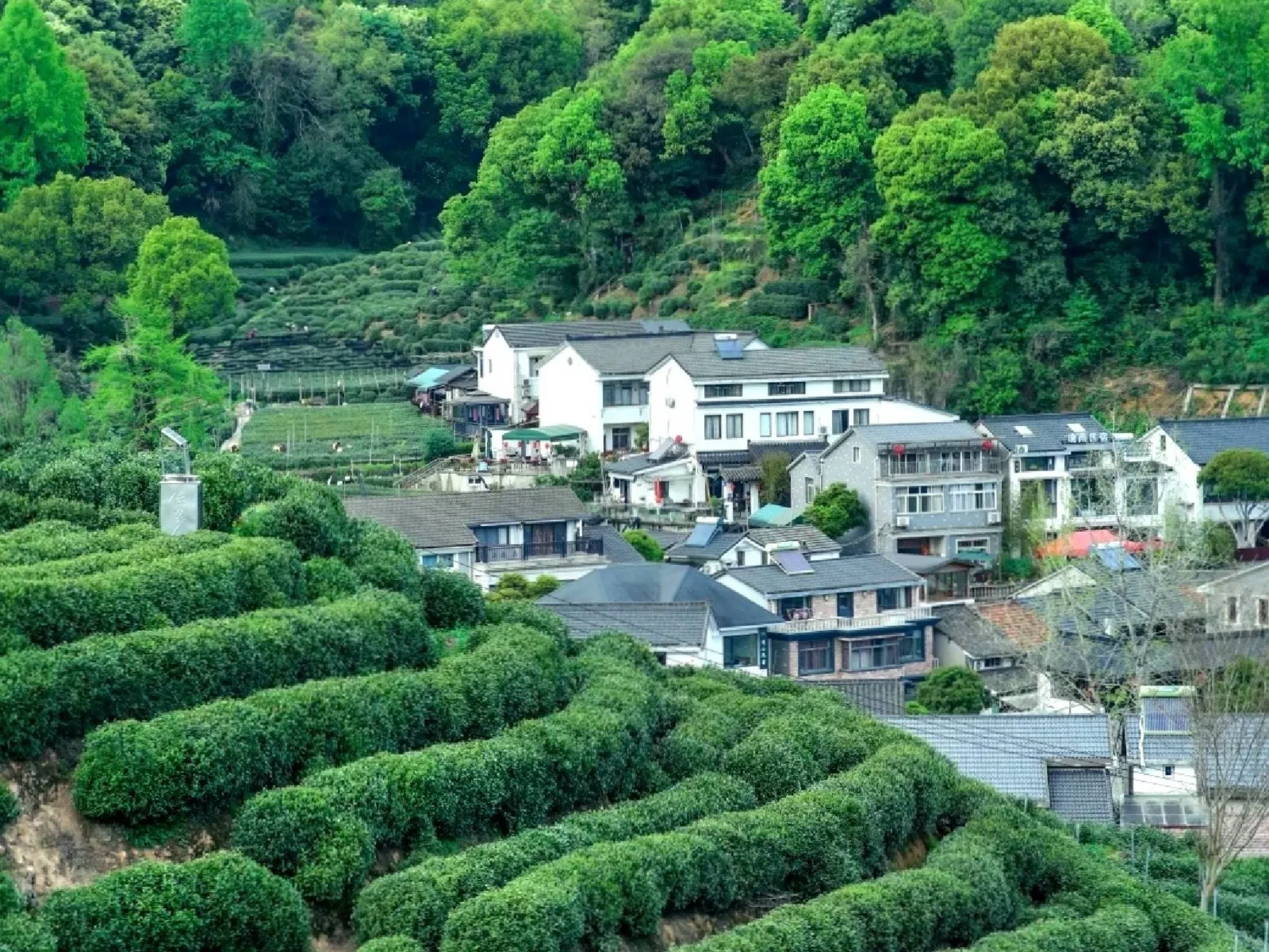
Many family-run plantations offer tea-picking sessions, allowing visitors to experience traditional farming culture first-hand. I put on an apron and stepped between the rows, learning under a farmer’s patient guidance to gently pluck the pale-green shoots with my thumb and forefinger. Next, a tea maker showed me the traditional art of pan-firing by hand. We placed the freshly picked leaves in a hot pan, turning them continuously as they gradually tightened and took shape, their fresh fragrance growing ever stronger.
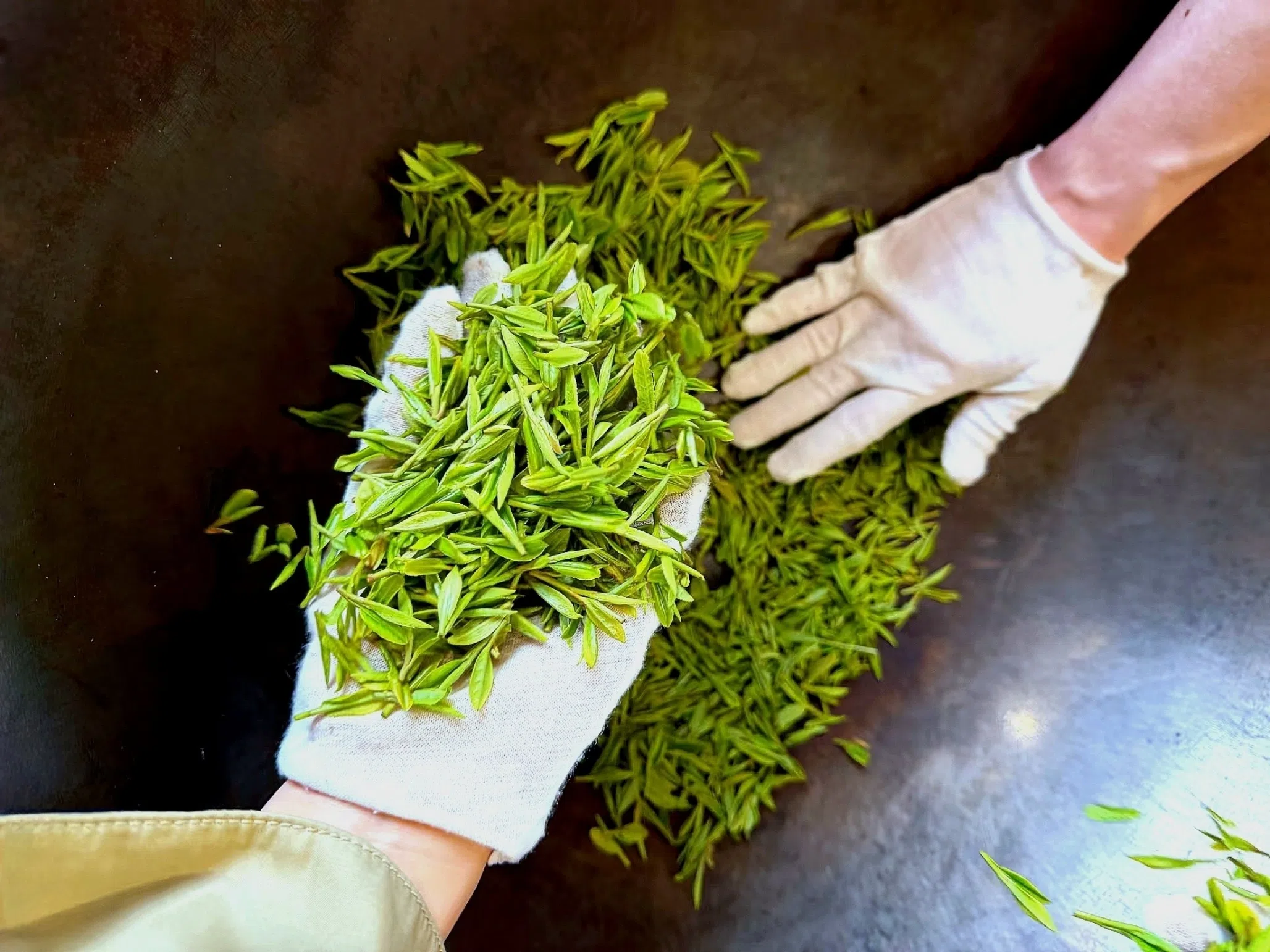
The pride and joy of producing my own small handful of Longjing were hard to put into words. As its fresh fragrance rose from my palm, I truly appreciated how much work goes into bringing a Longjing leaf from branch to cup. The experience was more vivid than anything in a book about tea, deepening both my understanding of and affection for this tea-scented corner of Hangzhou.
Following centuries of tea heritage along Wengjiashan’s ancient paths
Wengjiashan village lies deep in the hills of the West Lake Scenic Area, yet seems separated from the city’s bustle by a doorway into another time. Along with Longjing village and Meijiawu, it is known as one of the three great West Lake Longjing villages, and retains the strong character and rustic charm of a tea-growing community. A winding stretch of ancient stone path survives here, passing century-old tea bushes and moss-covered walls. Walking along it, I heard my footsteps tapping against the stone slabs and felt as though I was tracing the contours of history.
Old wells and the remains of ancient temples lie scattered among the hills, silently bearing witness to the village’s centuries of change. A leisurely walk along the ancient path also leads to Baguatian Heritage Park. From above, tiers of tea plantations spread across the hills, offering broad, magnificent views that lift the spirits.
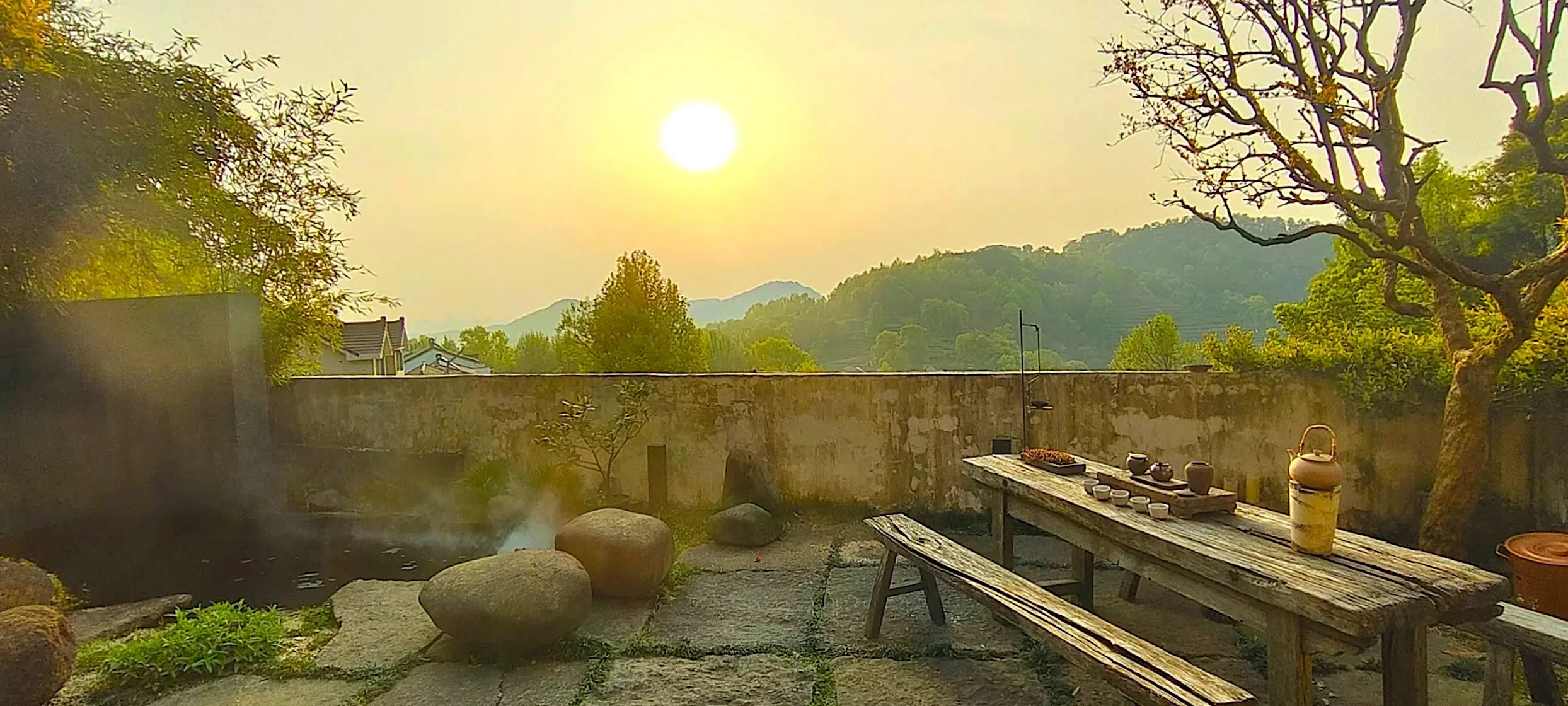
Wengjiashan’s greatest charm is how close it brings you to its tea culture. Many tea-farming families also run tearooms. Visitors can enter their courtyards to watch Longjing being pan-fired, seeing for themselves how tender fresh leaves tumble and take shape in iron pans. A pot of Wengjiashan Longjing yields a clear, pale-green brew with a delicate, lingering fragrance. Sweet, mellow and refreshing, it carries the distinctive clean sweetness of high-mountain tea, quite unlike the Longjing commonly sold in shops. I bought a small packet of freshly harvested Longjing to take home, carrying with it memories of Hangzhou’s hills, waters and tea fragrance, so that its flavour could continue to linger in the days ahead.
Finding the essence of Jiangnan in Manjuelong
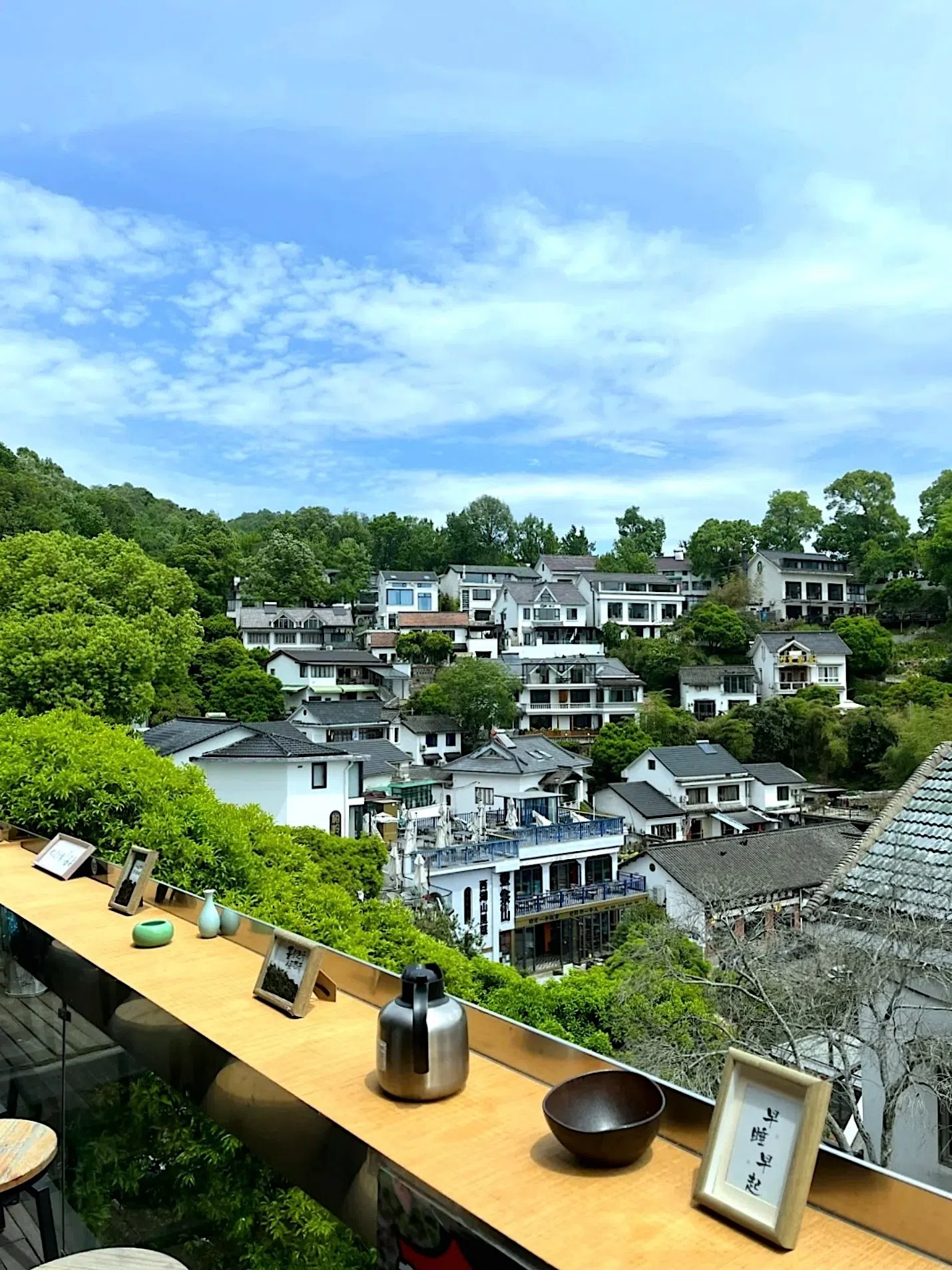
Many visitors go no further than Wengjiashan village, missing Manjuelong. It is about a 20-minute walk along the mountain road, with tea bushes lining both sides and the occasional farmhouse among them. Cooking smoke rises above the treetops and merges with the mountain mist.
Manjuelong is famous for its autumn osmanthus blossoms, but is just as inviting in spring. The osmanthus trees had yet to flower, their rain-washed leaves glossy against the tender green of the tea bushes. The valley was so quiet that I almost forgot the city existed. I sat on some stone steps beside the road and let the mountain breeze carry my thoughts away. At that moment, I realised that this was the truest essence of Jiangnan – not aboard West Lake’s ornate pleasure boats, nor among the crowds at Broken Bridge, but deep in these undisturbed tea-growing hills.
By evening, the setting sun cast a golden glow over the rows of tea bushes. Distant bamboo groves swayed in the breeze, birdsong filled the air, and the everyday life of Jiangnan quietly merged with the natural landscape, banishing thoughts of the noisy city. Standing there felt like entering a living ink painting, savouring the gentle peace of life in the fragrance of tea and the evening breeze.
Shifeng mountain and its 18 imperial tea bushes
Shifeng lies at the very heart of the West Lake Longjing production area. Its Longjing is renowned worldwide, as the saying goes: “Among the world’s famous teas, Longjing stands out; the finest Longjing comes from Shifeng.” The Qianlong Emperor is said to have bestowed imperial status on 18 tea bushes in front of Hugong Temple at the foot of Shifeng mountain. Shifeng Longjing is therefore highly prized and has been served at state banquets.
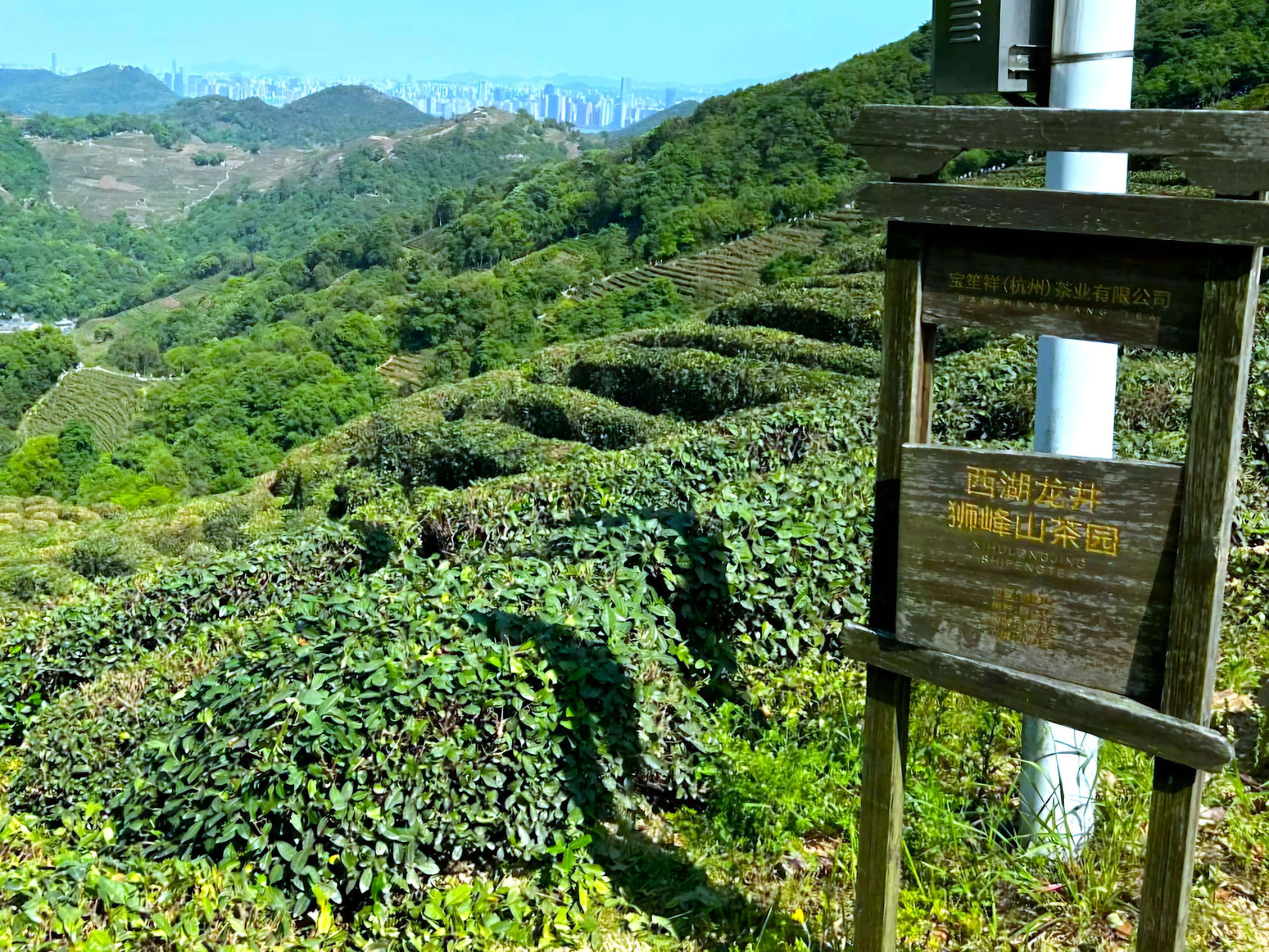
Farmers were picking tea throughout the plantations, their chatter and laughter audible from afar. Near the summit, banks of cloud and mist swept swiftly on the wind over the tea bushes, creating one ethereal mountain scene after another. Where the path reached the top, a few thin, withered trees stood on either side. The bare, open summit and hazy sky resembled a desolate prehistoric world, as though a doorway into a realm of fantasy had opened for visitors.
By the time I left the plantations, the mist along the mountain path had cleared, and sunlight gilded the edges of every tea leaf. I bought a tin of Longjing from a shop at the village entrance, its paper wrapping bearing the name “Shifeng Mountain”. The shopkeeper reminded me to store it somewhere cool, away from strong smells.
The simple hospitality of Longwu’s tea farmers
Longwu tea town does not require the same strenuous walking as Longjing village’s plantations. Its slopes are gentle, with paths leading in every direction. Take almost any side path and you soon find yourself among broad expanses of tea bushes. During the spring harvest, dense clusters of tender shoots emerge at the tips, turning the entire hillside an intense emerald that almost glows in the sunlight. Farmers move busily between the rows, picking the year’s most precious leaves. Visitors can stop to watch or greet them; most are happy to pause for a brief chat – about tea, the hills or the season’s harvest.
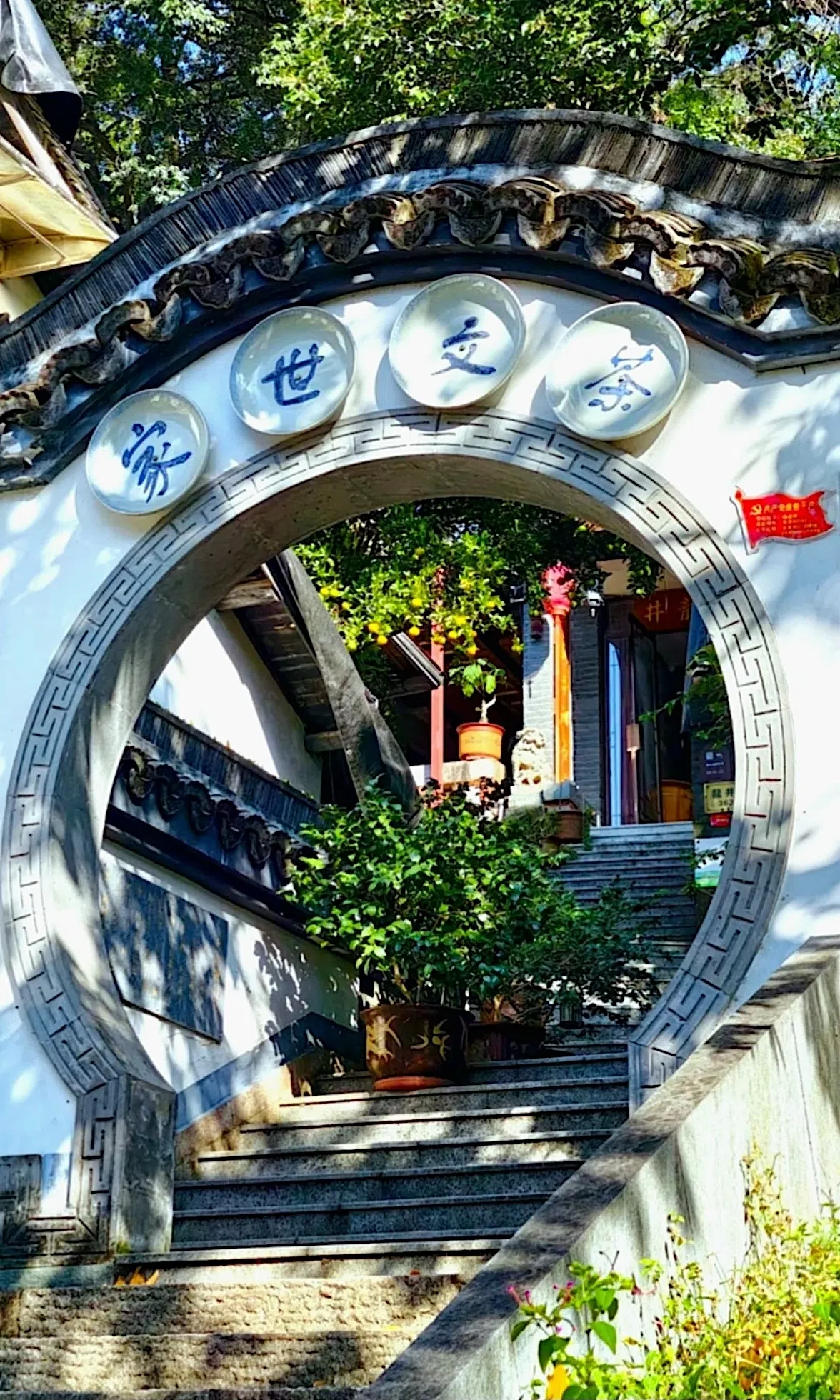
Most farmers here come from families that have grown tea for generations. Their spring “pre-Qingming Longjing”, picked before the Qingming Festival, is the year’s most prized harvest. Its buds and leaves are tender, flat and smooth, yielding a clear, pale-green brew with a rich fragrance and lingering sweetness. The difference from ordinary Longjing on the market is unmistakable.
I bought directly from farmers in the village, paying less than I would at tea shops in the city. More importantly, I could trace the tea’s origin and trust its quality. Many farmers invite visitors inside for a cup before deciding whether to buy. This simple hospitality makes buying tea a relaxed, enjoyable experience. If unsure about the quality, ask to taste different teas side by side, or enquire about the picking date. The three harvests – before Qingming, before Guyu, the Grain Rain solar term, and in late spring – differ markedly in price and flavour, distinctions that locals understand well when drinking tea.
Hangzhou is more than a city with a long history. It is a poetic retreat where visitors can slow down and immerse themselves in nature and culture. A cup of fragrant Longjing or a quiet moment walking among the tea-covered hills is enough to reveal its distinctive character and charm.
Many people come to Hangzhou to see West Lake. But it was only when I entered the plantations in search of Jiangnan’s grace that I discovered the city’s particular warmth and appeal, hidden among these waves of green. Their beauty is more than visual: they have a genuine power to soothe a restless mind.