

After the APEC Economic Leaders’ Meeting concluded last week in Shenzhen, on the eastern shore of the Pearl River estuary, the China International Aviation and Aerospace Exhibition will open early next month in Zhuhai, on the western shore. The two major events — one diplomatic, the other military — will showcase China’s diplomatic soft power and military hard power in succession.
This year marks the 30th anniversary of the Zhuhai airshow, which will feature a maritime equipment exhibition area for the first time. The Chinese navy is bringing its best equipment and taking centre stage. Nearly 10 types of military aircraft, including the J-35 stealth carrier-based fighter, KJ-600 carrier-based early warning aircraft and WZ-2 unmanned helicopter, will make their airshow debuts. The full five-aircraft carrier aviation line-up will also be assembled.
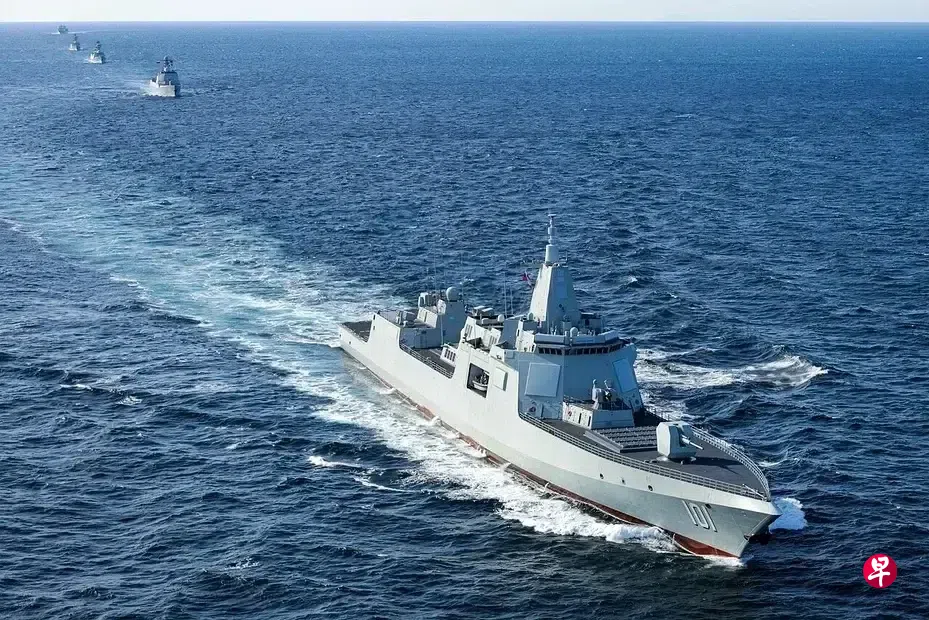
The Chinese navy disclosed on Monday (23 November) that three types of frontline warships would open to the public for the first time, including a “mystery 10,000-tonne destroyer” of the Type 055 class. This has fuelled speculation that a new escort for the aircraft carriers Shandong and Fujian could soon enter service with the People’s Liberation Army’s (PLA) Southern Theatre Command Navy and make its debut at the Zhuhai airshow.
Now in its 16th edition, the Zhuhai airshow is China’s largest aviation and aerospace exhibition. Generally held in Zhuhai every two years since 1996, it features military and civilian aircraft, space technology, airborne weapons and military equipment, as well as air defence and electronic warfare systems. It has become an important bellwether for the global aerospace sector.
This year’s airshow will run from 7 to 13 December. At a press conference in Beijing on 13 October, the organisers said more than 3,000 pieces of equipment would be exhibited, about 10% of them making their first appearance or debut demonstration.
After nearly 30 years with aviation equipment at its core, the airshow will expand into the maritime domain for the first time.
According to the Chinese navy, its equipment will be showcased through indoor exhibitions, outdoor static displays, flying displays and ship visits. New aircraft in the outdoor static display area will include the J-15T catapult-launched multirole carrier-based fighter, Z-20F shipborne anti-submarine helicopter, Y-9 anti-submarine patrol aircraft and WZ-2.
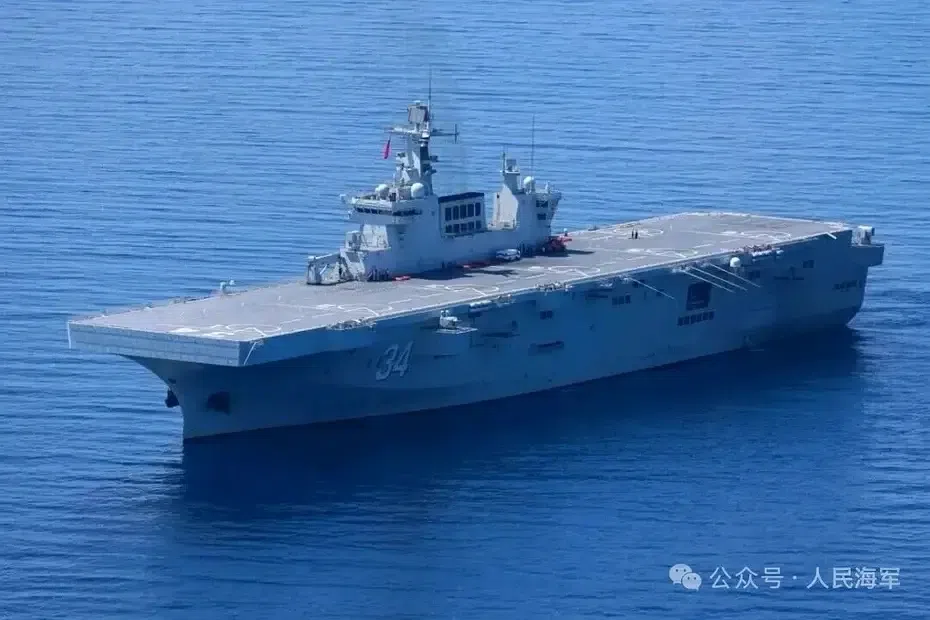
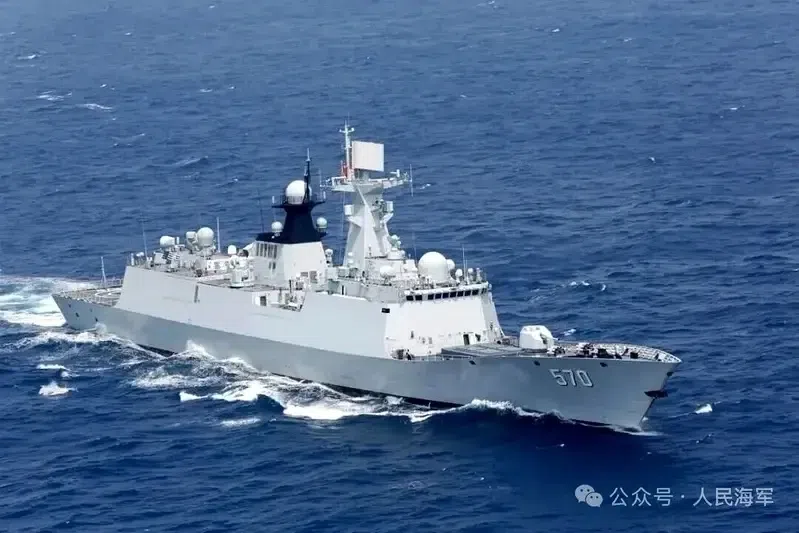
A Type 055 10,000-tonne destroyer, the Type 075 amphibious assault ship Hubei (hull number 34) and the Type 054A frigate Huangshan (hull number 570), among others, will berth at Zhuhai’s Gaolan Port for public visits.
Compared with the previous airshow, the Chinese navy said it would place greater emphasis on operational readiness and realistic training. All the frontline equipment on display is in active service and regularly deployed to distant seas for combat readiness training, exercises, and missions to safeguard maritime rights and maintain control. A range of newly upgraded and newly developed carrier-based fighters, early warning aircraft and helicopters will also make their debuts together, alongside models of unmanned equipment such as drones and unmanned underwater vehicles.
Russia’s Sputnik news agency on Wednesday (25 November) quoted Chinese military commentator Deng Qiyuan as saying that the naval equipment was not made-for-exhibition “showpieces”. Its experience on distant-seas missions, he said, was itself a silent declaration of combat capability.
Deng also said that the 16th Zhuhai airshow, marking its 30th anniversary, was undergoing a historic transformation. No longer merely an aviation and aerospace event, it was evolving into a defence exhibition spanning sea, land, air and space — a strategic window offering the outside world a direct view of China’s distant-seas defence and integrated combat capabilities.
Retired Taiwanese major-general Li Cheng-chieh also noted on a CTi News programme on Monday (23 November) that, besides the 3 September military parade, the Zhuhai airshow offered another window for the outside world to observe China’s weapons.
He said: “The biggest difference between the Zhuhai airshow and the 3 September parade is that all the weapons shown at the parade are in active service — in other words, equipment currently fielded and used by PLA units... Some equipment at the Zhuhai airshow is, of course, also in active service, but some is equipment planned for future development.”
Z-20F shipborne anti-submarine helicopter makes first public appearance
The Global Times quoted Chinese military expert Zhang Junshe as saying that the navy was sending an impressive line-up of three types of frontline warships and nearly 10 types of military aircraft. He identified three highlights: the appearance of the full five-aircraft carrier aviation line-up; the joint display of unmanned equipment, including shipborne unmanned helicopters such as the WZ-2 and unmanned surface vessels; and the first public opening of a Type 055 10,000-tonne destroyer.
The five-aircraft line-up comprises the J-15T fighter and J-15DT carrier-based electronic warfare aircraft, which appeared in 2024, along with the J-35 fighter, KJ-600 early warning aircraft and Z-20F helicopter, all making their Zhuhai airshow debuts. These new aircraft cover the full range of maritime and air offensive and defensive operations for a catapult-equipped carrier group, from long-range stealth penetration and air superiority to airborne early warning and command, electromagnetic suppression and anti-submarine defence.
Among the five, the Z-20F will not only be attending the Zhuhai airshow for the first time but also making its first public appearance.
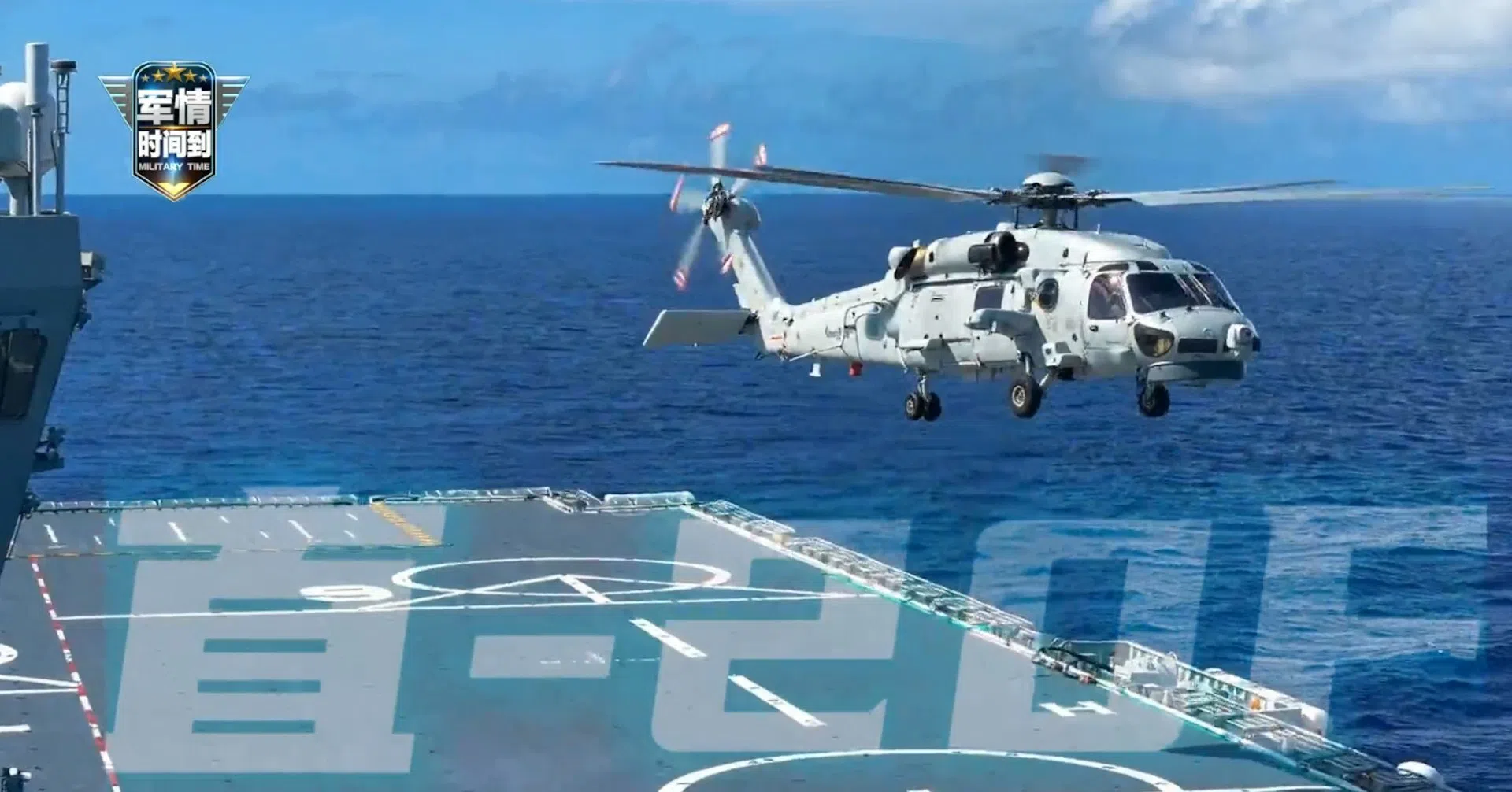
Publicly available information shows that the Z-20F was developed by China’s Harbin Aircraft Industry Group, based on the 10-tonne-class Z-20 utility helicopter. The shipborne anti-submarine helicopter made its maiden flight in 2018. Benchmarked primarily against the US Navy’s SH-60/MH-60R Seahawk helicopters, it is intended to fill a gap in medium-sized, ocean-going anti-submarine helicopters for the Chinese navy’s frontline warships.
Zhang said the Z-20F has folding rotor blades, allowing it to operate from frontline warships such as aircraft carriers, destroyers and frigates. Compared with anti-submarine helicopters currently in service with the Chinese navy, including the Z-9 and Z-18F, the Z-20F offers substantial improvements in range, combat radius and endurance. Its submarine-detection equipment, including search radar and a magnetic anomaly detector, has been upgraded, and it can carry longer-range, more powerful anti-submarine and anti-ship weapons, significantly enhancing its anti-submarine warfare capabilities.
He said the Z-20F was designed for anti-submarine operations within a carrier group. It can conduct routine anti-submarine patrols and launch rapid strikes as required, providing a mobile underwater defensive screen for a fleet at sea.
The WZ-2 is a two-tonne-class shipborne unmanned reconnaissance and strike helicopter developed by the Aviation Industry Corporation of China. Zhang said it could carry out strikes against air, maritime and ground targets, and could be deployed aboard a range of surface combatants, including destroyers, frigates and amphibious assault ships.
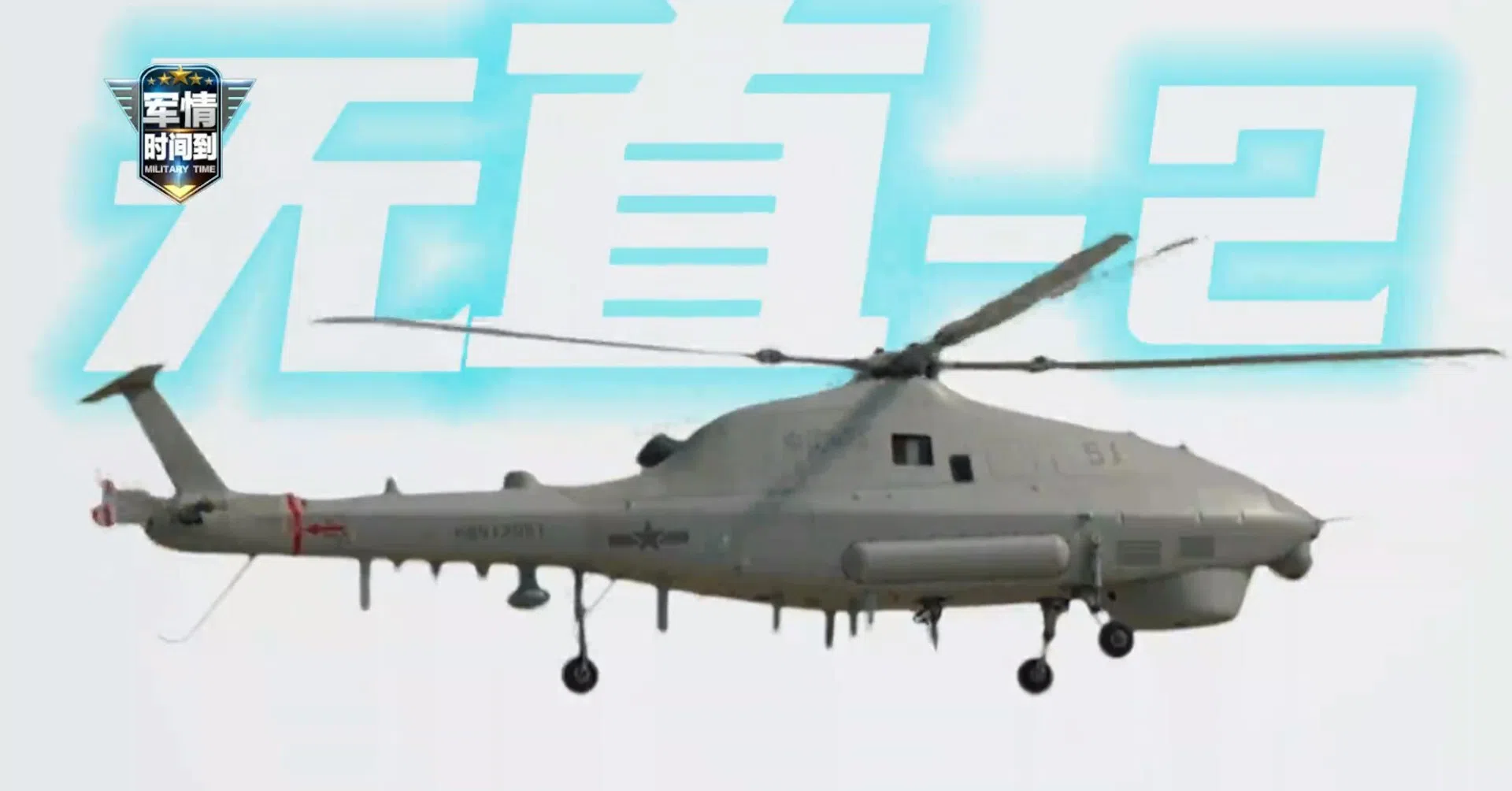
The drone will also help enhance the navy’s distant-seas reconnaissance and detection capabilities. It can work with surface ships and anti-submarine helicopters to search for and identify surface and underwater targets, as well as intercept and destroy small enemy boats mounting surprise attacks, including explosive-laden unmanned boats, while flying at low altitude.
Deng said the WZ-2’s entry into service not only demonstrated the navy’s cutting-edge exploration of intelligent naval warfare and manned-unmanned teaming. Unmanned platforms would also extend the reach of carrier groups in sensing, strike and attritional operations, adding a crucial capability for future naval warfare.
Exact model of “mystery 10,000-tonne destroyer” yet to be revealed
The Chinese navy this week described the Type 055 set to appear at the Zhuhai airshow as a “mystery 10,000-tonne destroyer”, saying that “the exact model will not be revealed for now” and “we’ll keep you in suspense — all will be revealed in December”. Zhang assessed: “This is most likely the newest Type 055 10,000-tonne destroyer, with its debut reserved for the Zhuhai airshow.”
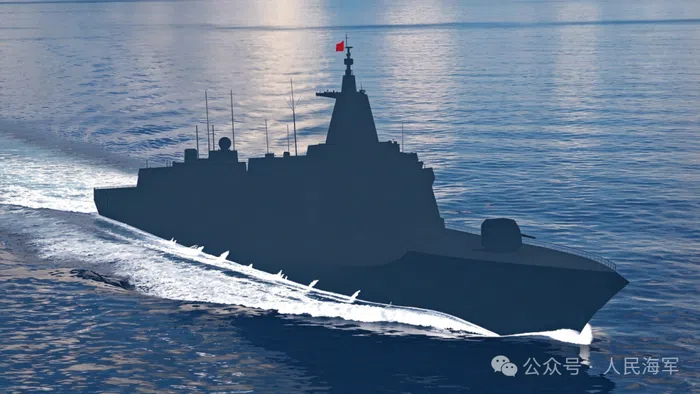
The Type 055 is China’s domestically developed fourth-generation guided-missile destroyer. It is also the largest, most technologically advanced and most capable destroyer the Chinese navy has ever operated. Described as an aircraft carrier’s “armed bodyguard”, it serves as a core escort and command ship for carrier battle groups and ocean-going formations. Its full-load displacement exceeds 13,000 tonnes, comparable to that of a cruiser serving as a principal surface combatant.
Its weapons fit makes it something of a “floating arsenal”. Besides a 130mm main gun, the ship has a 112-cell universal vertical launch system that can carry a mix of YJ-21 hypersonic anti-ship missiles, HHQ-9B long-range surface-to-air missiles, CJ-10 cruise missiles and Yu-8 anti-submarine missiles.
The Dongguan (hull number 109) and Anqing (hull number 110) made their official public debuts on CCTV’s Xinwen Lianbo in March this year. They were the first Type 055 destroyers to enter service in three years, and both are deployed with the Eastern Theatre Command Navy.
With the Chinese navy’s third 10,000-tonne destroyer of the year nearing commissioning, Zhang said the new ship’s public display sent a clear signal that the class had achieved a stable level of combat capability. The commissioning of three Type 055 destroyers in a single year reflected the growing maturity of China’s shipbuilding technology and processes, and the establishment of a complete modern shipbuilding system.
Both ships already announced for the airshow belong to the Southern Theatre Command Navy. Citing the practice of not transferring ships between theatre commands for such events, Zhang assessed that the “mystery 10,000-tonne destroyer” should also belong to the Southern Theatre Command.
He added that prioritising the deployment of the newest Type 055 to the South Sea Fleet would provide a long-range air defence, missile defence and anti-submarine protective network for the Shandong and Fujian carrier groups, both of whose carriers are homeported in the South China Sea. It would also strengthen control and strike capabilities in the distant reaches of the South China Sea.
Meanwhile, will the much-watched H-20 next-generation long-range stealth strategic bomber and China’s sixth-generation fighter aircraft appear at the airshow? Military expert Song Zhongping assessed that the sixth-generation fighter had completed flight testing and that the H-20 might be “displayed in some mysterious way”, making it something to look forward to.
This year’s Zhuhai airshow will undoubtedly offer the outside world another close-up view of advances in China’s military equipment and defence technology, as well as the strategic thinking behind its deployments. The comprehensive enhancement of carrier battle groups’ combat capabilities and innovations in unmanned combat equipment are likely to be two key areas of outside interest. These developments will also put security agencies and militaries in the West and along the first island chain on greater alert.
