

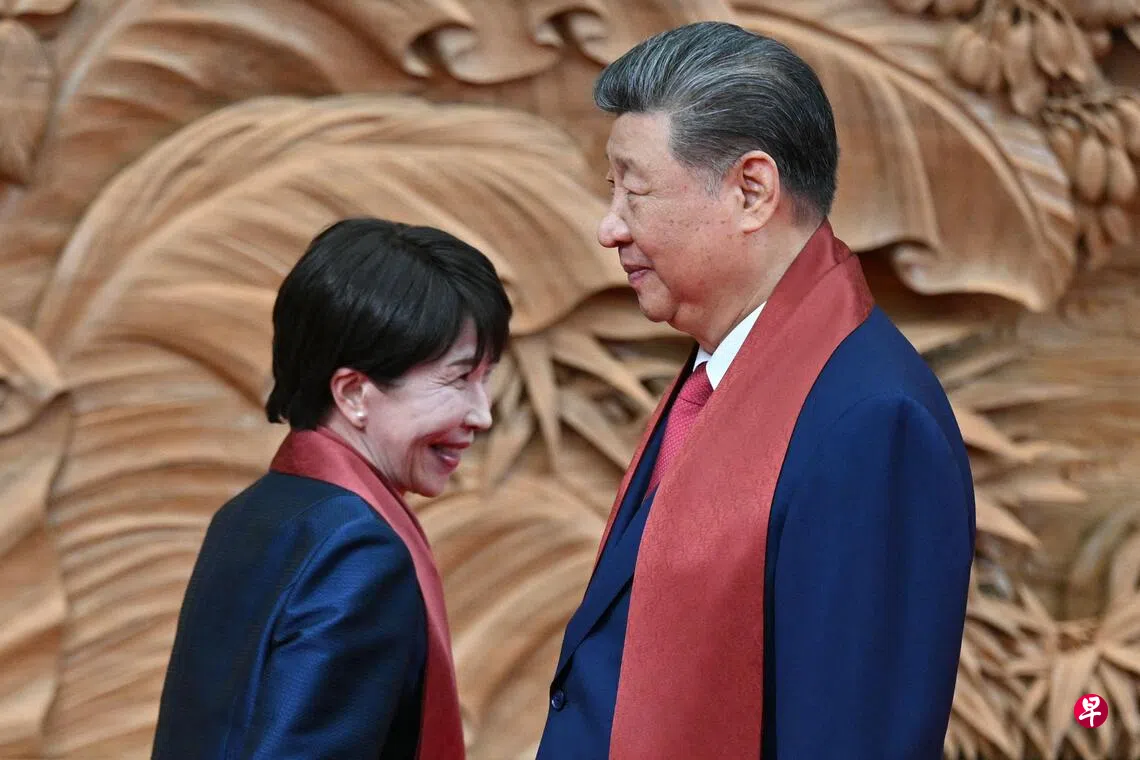
Japanese Prime Minister Sanae Takaichi finally met Chinese President Xi Jinping in Shenzhen and shook his hand, but never managed to exchange words with him.
The two shook hands twice at the Asia-Pacific Economic Cooperation (APEC) summit on Wednesday and Thursday (18 and 19 November). These were their first face-to-face encounters since Takaichi’s remarks on Taiwan in November last year triggered a diplomatic row between China and Japan.
On both occasions, Takaichi offered a greeting, but Xi merely smiled or nodded without replying. The brief, somewhat awkward interactions were just one aspect of the cool reception she received during her Shenzhen visit.
When Takaichi arrived at Shenzhen Bao’an International Airport on Wednesday afternoon, she was met not by a serving senior government official but by Zhang Qiyue, a former Chinese ambassador to Greece who retired five years ago. There was no music or dance performance, nor a welcoming party bearing flowers.
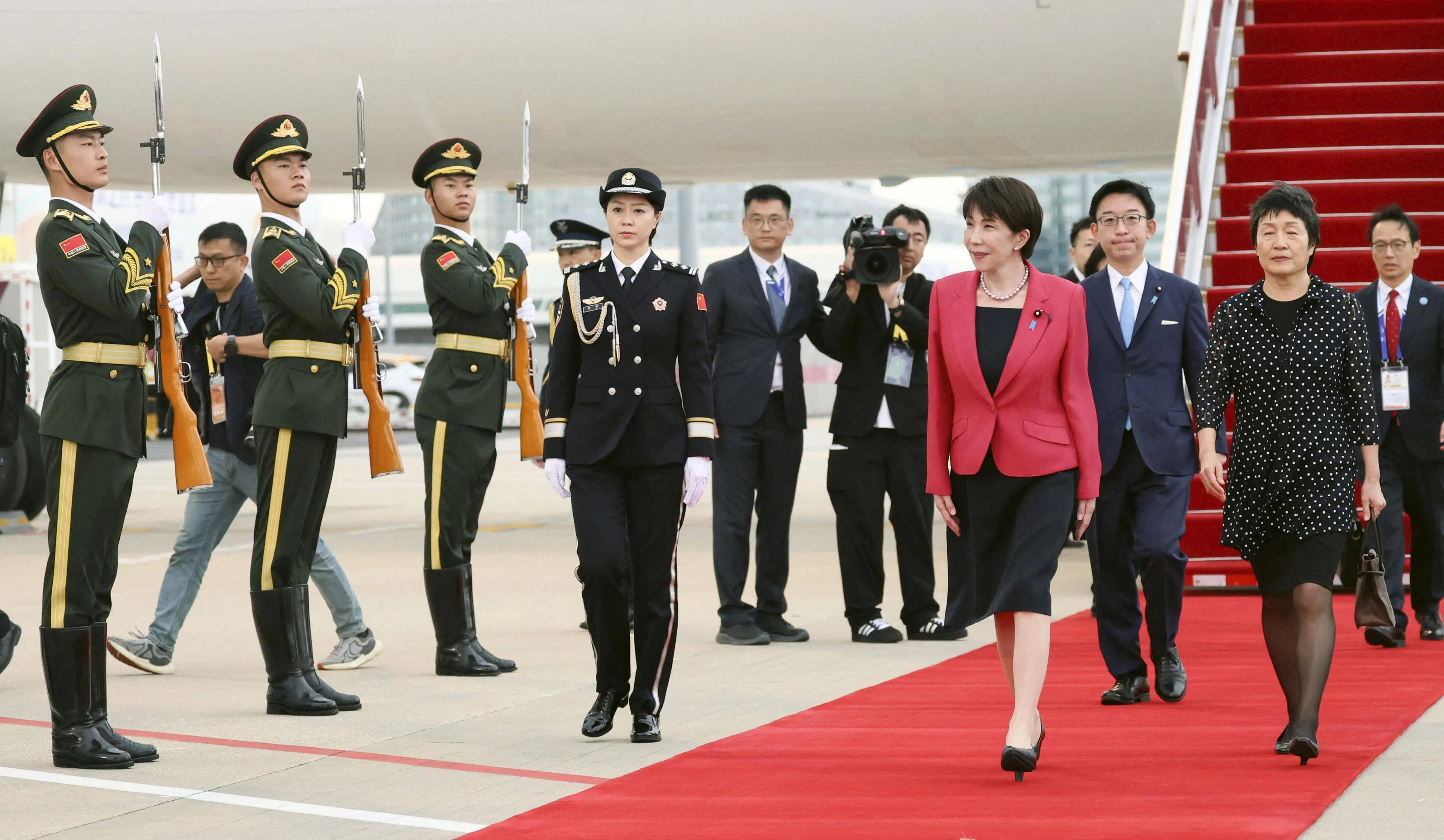
By contrast, US President Donald J. Trump not only received a warm welcome, but Xi also broke with convention to meet him personally at the airport. Russian President Vladimir Putin was greeted by Cai Qi, a member of the Chinese Communist Party’s Politburo Standing Committee. Even Philippine President Ferdinand Marcos Jr., whose country has territorial disputes with Beijing in the South China Sea, was welcomed with a dance performance.
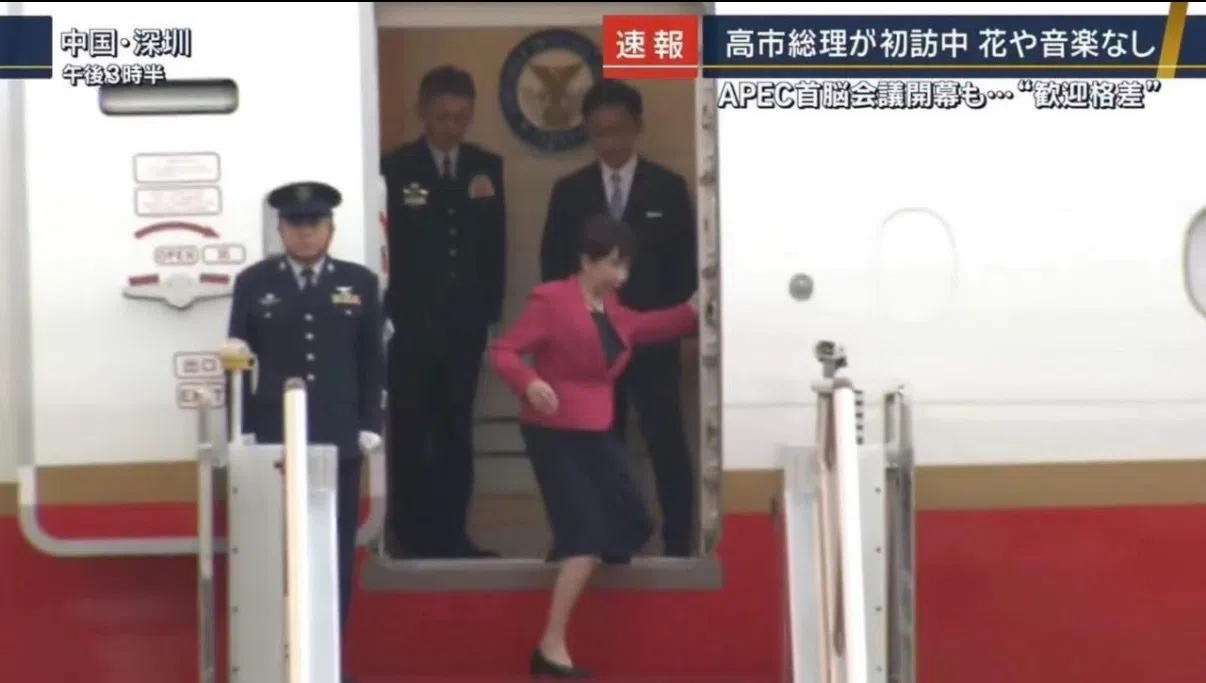
Some Japanese media also reported that a substantial height difference between the aircraft door and the platform of the passenger stairs forced Takaichi to hold on to the door as she stepped out. Some Japanese politicians questioned the adequacy of the Chinese arrangements, while Chinese internet users joked that Beijing had deliberately denied her a graceful way down — a play on a Chinese expression meaning to deny someone a face-saving way out. There is, however, no evidence that China deliberately arranged this.
According to Japanese broadcaster NHK, Chief Cabinet Secretary Minoru Kihara said on Friday (20 November) that staff on site had known in advance about the height difference between the aircraft door and the passenger stairs and had taken the necessary safety measures. He stressed that Takaichi had disembarked safely.
The cool reception continued at the APEC summit. For the leaders’ group photograph, Takaichi stood at the edge of the back row, while Trump, Xi and Putin interacted in the front row. During the meetings, she was seated near the end of the conference table, seven seats away from Xi.
Another episode came at the welcome banquet, when the band played the classic Japanese song “Sukiyaki”. Sung by the late Kyu Sakamoto in 1961, it describes someone walking alone, looking up at the sky to hold back tears while wistfully recalling the past.
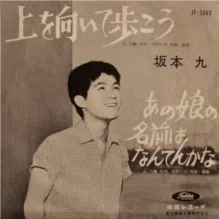
Ken Moriyasu, a senior fellow with the Hudson Institute, described it as an intriguing musical choice, saying it could mean hope or political irony. He said: “The 1961 song was inspired by disillusionment over the failed protests against the US-Japan Security Treaty. A song rooted in opposition to the US-Japan alliance, played to welcome a Japanese prime minister in China.”
However, airport receptions, positions in group photographs and seating arrangements all follow diplomatic protocol and should not be overinterpreted. China’s Ministry of Foreign Affairs also stressed on Thursday that it had made appropriate protocol arrangements for all participants in accordance with international practice.
The fact remains, however, that Takaichi ultimately failed to secure formal talks with Xi during her Shenzhen visit.
A handshake cannot resolve the China-Japan impasse
Japan may well have anticipated the cool reception Takaichi received at the APEC summit.
Before the summit, Japanese officials, concerned that Takaichi might be the only major participating leader unable to hold talks with Xi, had asked China to accord her equal treatment and arrange at least the customary handshake, warning that they would otherwise lodge a protest.
Her handshakes with Xi, even without an exchange of words, may therefore have met Japan’s minimum expectations. Kihara stressed on Thursday that Takaichi had received the “usual reception”. Asked about the brief airport welcome, however, he said it would be “inappropriate to comment on another country’s arrangements”.
This diplomatic cold shoulder is likely linked to Takaichi’s remarks on Taiwan last November. Answering questions in Japan’s parliament, she said a military conflict in the Taiwan Strait could constitute a “survival-threatening situation” for Japan, prompting Beijing to launch countermeasures across diplomacy, culture and trade.
With the diplomatic impasse now a year old, Takaichi appeared keen to use the APEC summit to signal a desire to ease tensions. Besides twice taking the initiative to greet Xi, she reiterated at a press conference on Thursday that Japan’s position on Taiwan remained in line with the 1972 Japan-China Joint Communiqué and has not changed in any way.
Beijing, however, appeared unmoved. Chinese Ministry of Foreign Affairs spokesperson Guo Jiakun stressed on Friday (20 November) that adherence to the four political documents between China and Japan was a “political responsibility and legal obligation that Japan must fulfil”. Japan’s immediate priority, he said, was to “correct the erroneous words and moves on the Taiwan question immediately”.
In other words, maintaining basic diplomatic courtesies is one thing. But unless Takaichi retracts her remarks on Taiwan, a thaw in bilateral relations will probably remain a distant prospect.
A breakthrough 12 years ago
In fact, a low point in China-Japan relations need not prevent their leaders from holding talks.
On 10 November 2014, an awkward scene also unfolded at Beijing’s Great Hall of the People. Then Japanese Prime Minister Shinzo Abe and Xi shook hands with solemn expressions and almost no eye contact. Yet they went on to hold formal talks lasting about 25 minutes.
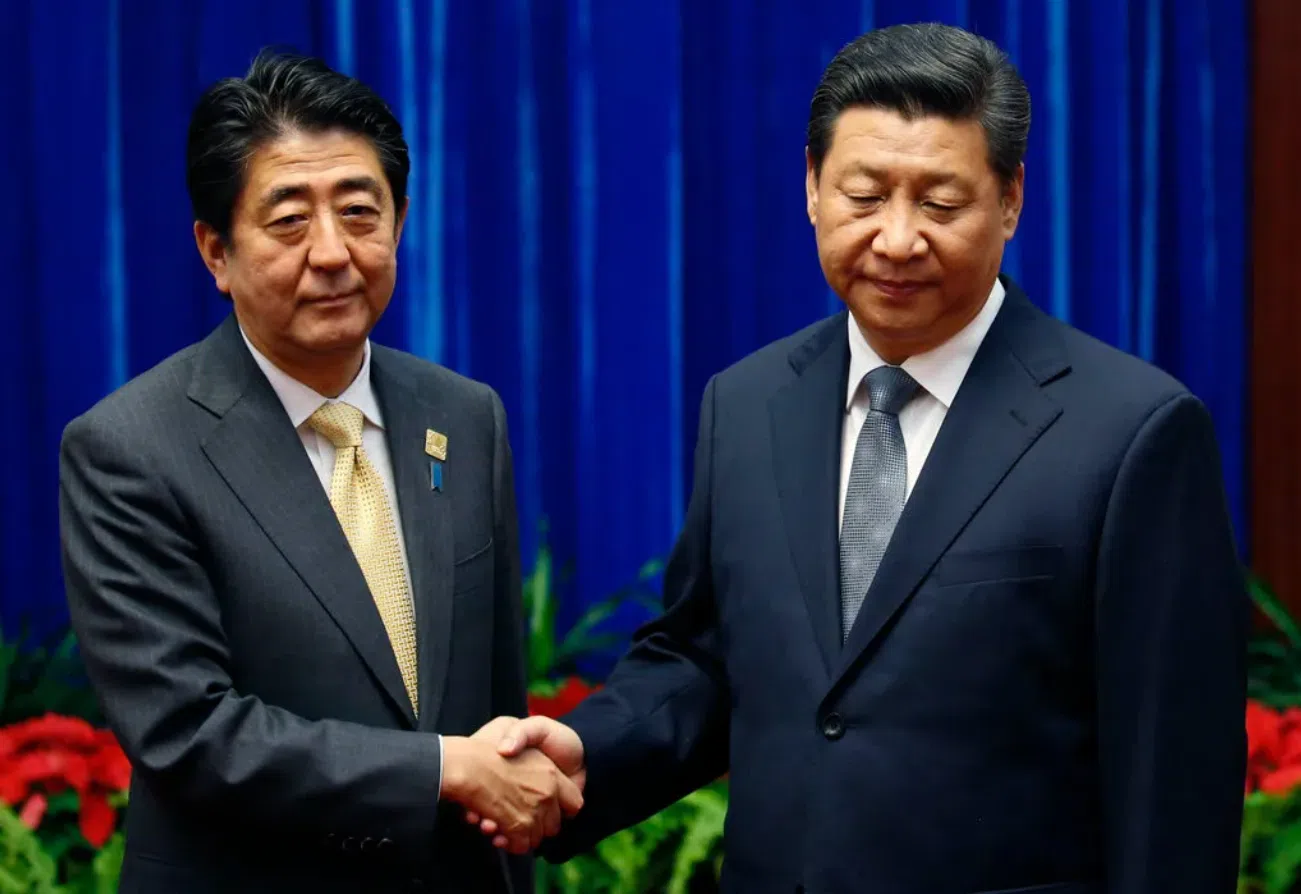
Relations that year were not much better than they are today. After the government of Yoshihiko Noda nationalised the Diaoyu Islands, known in Japan as the Senkaku Islands, in 2012, diplomatic friction persisted and confrontations in the East China Sea intensified. The tensions continued into Abe’s tenure.
But even as the two governments clashed publicly, diplomatic efforts were under way behind the scenes.
In May 2014, former Japanese foreign ministers Masahiko Komura and Katsuya Okada led a cross-party parliamentary delegation to China. In July and October that year, former prime minister Yasuo Fukuda visited China twice to meet Xi, seeking to restore high-level dialogue.
Official contacts also gradually resumed. In September 2014, China and Japan restarted maritime confidence-building consultations that had been suspended for more than two years. On the eve of the APEC summit in November, Shotaro Yachi, head of Japan’s National Security Secretariat, held talks with Chinese State Councillor Yang Jiechi, paving the way for a four-point consensus.
Although the consensus did not resolve the Diaoyu Islands dispute, it allowed both sides to retain their positions while agreeing to establish a crisis management mechanism, prevent the situation from deteriorating and gradually resume political, diplomatic and security dialogue. This ultimately made a meeting between their leaders possible.
Why the 2014 approach is hard to repeat
Twelve years on, that breakthrough may be difficult to replicate. Not only is the intensive diplomacy of that period absent, but China and Japan also face greater difficulty finding common ground to resolve their dispute.
Kyodo News quoted Japanese government sources as saying that, although Takaichi had repeatedly expressed a willingness to engage in dialogue, her government had taken almost no concrete action to break the impasse. Compared with the Abe administration, the Takaichi government was less prepared in its discussions of diplomatic strategy and coordination of China policy, making it difficult to devise a way forward.
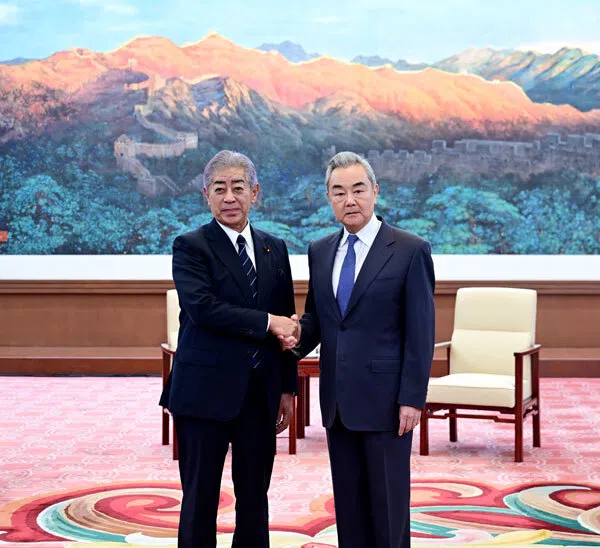
Former Japanese foreign minister Takeshi Iwaya did lead a delegation to China in September this year, meeting Chinese Foreign Minister Wang Yi and Vice Premier He Lifeng. But his distant relationship with the Takaichi government leaves him with little influence over its China policy.
More importantly, the two crises differ in nature. In 2014, although China and Japan clashed over the Diaoyu Islands and historical issues, they could still agree on managing disputes in the East China Sea while maintaining their respective positions. Today’s dispute directly touches on Taiwan, which Beijing regards as a core interest, leaving less room for compromise.
China insists that Takaichi retract her parliamentary remarks about a “survival-threatening situation”, while she maintains that they are consistent with Japan’s existing policy. Although she reaffirmed the importance of the four political documents between China and Japan in Shenzhen, she has stopped short of retracting her remarks.
Domestic politics may also explain her reluctance to yield. A Kyodo News poll in the middle of this month found that 54.7% of respondents approved of her stance towards China, rising to 68.9% among Liberal Democratic Party supporters. Dependent on conservative support and attentive to domestic public opinion, Takaichi may find it difficult to take any step that could be seen as weakness towards China.
Moreover, the balance of national power between China and Japan has changed substantially over the past 12 years.
Kei Koga, an associate professor of public policy and global affairs at Singapore’s Nanyang Technological University, previously told Lianhe Zaobao that Beijing now had more leverage to pressure Japan in areas such as critical mineral supply chains, and might see little need to compromise.
In other words, the current problem between China and Japan may go beyond insufficient diplomatic communication. Neither side is willing to make the first concession, and neither can find a way to restore dialogue. A handshake can be merely a matter of protocol; breaking the ice requires both sides to offer each other a face-saving way forward.
