

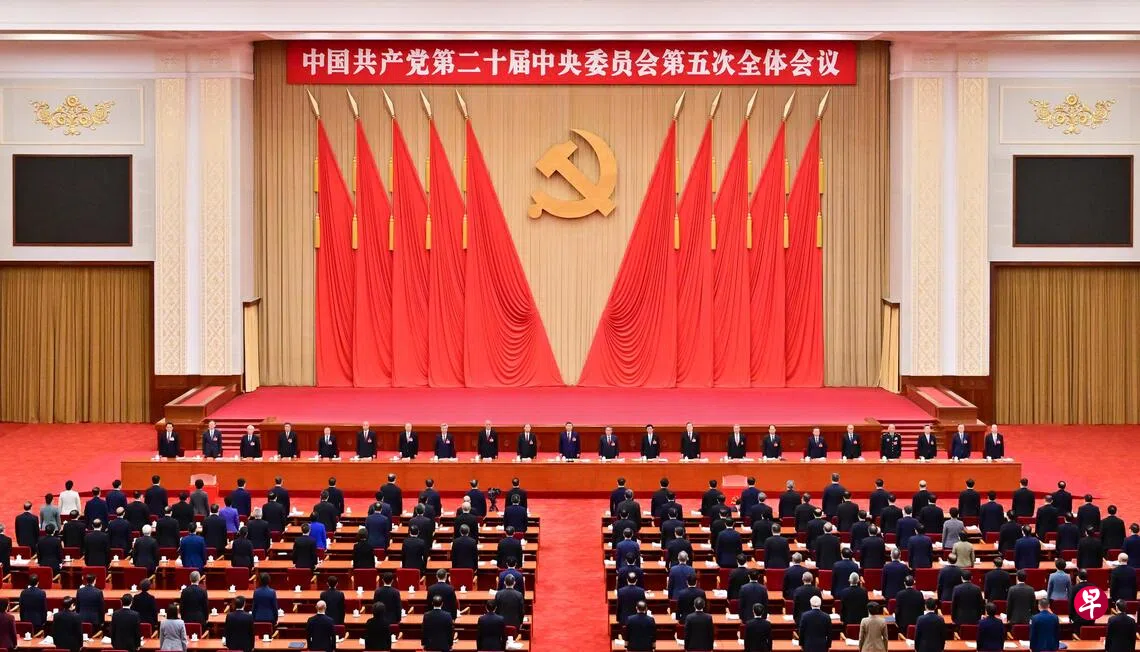
Most of the 10 officials elevated to full Central Committee membership at the fifth plenum of the Communist Party of China’s (CCP) 20th Central Committee were born after 1965, drawing attention to the potential successors who could emerge after the party’s 21st congress. Taiwanese scholars say officials born after 1967 could become the party’s seventh generation of leaders. However, few currently serve as provincial party secretaries, leaving most unlikely to enter the Politburo at next year’s congress. They are more likely to gain prominence gradually between the 21st and 22nd congresses.
The fifth plenum of the CCP’s 20th Central Committee concluded in Beijing on Thursday (29 October). It adopted the Resolution of the Central Committee of the CCP on Certain Major Issues concerning Persevering with Full and Rigorous Party Self-Governance, and decided that the 21st party congress would be held in Beijing in the second half of 2027. The plenum elected Central Military Commission vice-chairman Zhang Shengmin to the Politburo; it also elevated 10 alternate Central Committee members to full membership, including four born in the 1970s and five born in the mid-to-late 1960s.
The communique also called for improvements in the training and selection of outstanding young officials. Compared with earlier years, however, there has yet to be a large influx of younger officials into key positions.
The Institute of International Relations at Taiwan’s National Chengchi University held a forum on Friday (30 October), inviting scholars to interpret the party and government signals from the fifth plenum.
Speaking at the forum, Chang Hung-yuan, a professor in the Department of International Trade at Chihlee University of Technology and a former deputy director of the Kuomintang’s mainland affairs department, said observers were watching for a generational leap in the succession at the 21st party congress. But the current distribution of officials suggested that seventh-generation leaders still lacked the provincial leadership experience needed to move straight into the Politburo.
He noted that very few officials born after 1967 were provincial party secretaries. More were serving as provincial governors, with a small number holding posts in central ministries and agencies. Under the CCP’s established promotion pathways, officials typically need to have served as provincial party secretaries before entering the Politburo. “If a governor were to enter the Politburo directly within a short period, the promotion might be too rapid,” he said, adding that this would be out of step with the party’s usual pace of appointments.
Chang also singled out Wang Zhijun, Li Lecheng and Zhou Zuyi, saying these officials still had room to advance politically over the next five to six years. They currently serve as party secretaries of Hunan, Anhui and Henan respectively. All three were born in 1965 and are now 61.
Chang said the CCP’s seventh-generation leaders should be young, come from diverse backgrounds and have professional training. At the top, however, personnel arrangements still prioritised control over “hard power”, including national security, the military and the police. He assessed that the new generation’s roles might initially be largely symbolic after they entered the Politburo, with stability and obedience guiding the transfer of power.
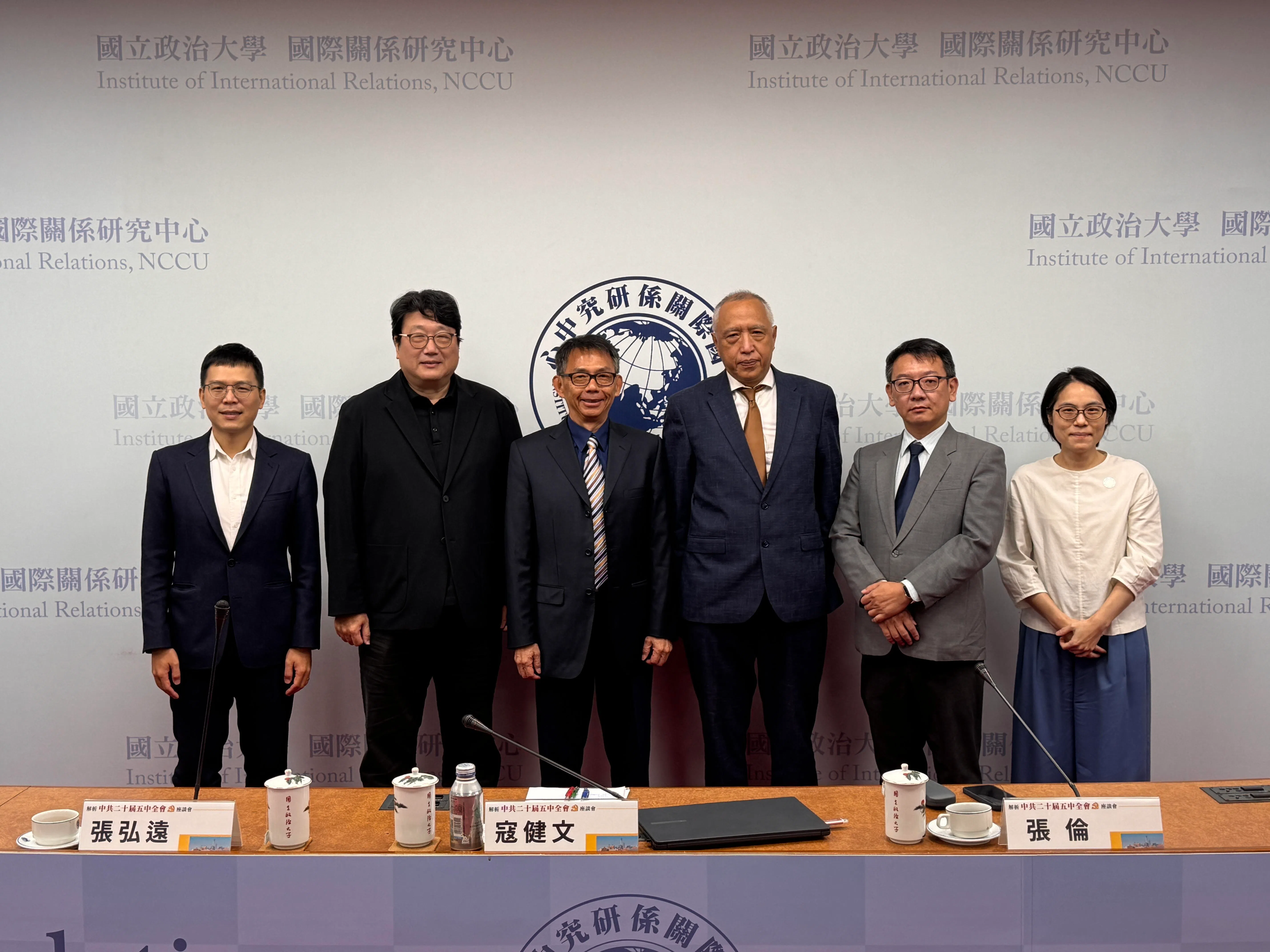
Kou Chien-wen, a distinguished professor at National Chengchi University’s Graduate Institute of East Asian Studies, similarly saw limited prospects for seventh-generation CCP officials to enter the Politburo directly at the 21st party congress. Judging by their current career records, few officials born after 1967 had reached the rank of provincial party secretary. Many might need to build up their credentials after the 21st congress before having a chance of entering the Politburo at the 22nd congress.
He also said delaying the succession of younger officials would both allow the CCP leadership the time needed to train and assess them, and prevent rising figures from developing independent political influence too early.
Tzeng Wei-feng, an associate research fellow at National Chengchi University’s Institute of International Relations, said the next generation of leaders might not be headed by a single, publicly designated successor. Instead, it could comprise a group of officials chosen through ideological training, assessment and selection.
He described the fifth plenum as an important step towards CCP general secretary Xi Jinping “institutionalising long-term rule”. The 21st party congress would bring a leadership reshuffle rather than a succession, he said. The top leadership would then use party-building ideology to further select the eventual successors from the new generation of officials promoted at that congress.
Kou assessed that more CCP officials could fall from power over the coming year, with the political atmosphere expected to remain tense ahead of the 21st party congress. On when seventh-generation officials might enter the core of power, he said: “Rather than treating the 21st party congress as the point at which the succession is settled, we should watch how newly appointed provincial leaders build up experience as provincial party secretaries, as well as the personnel changes after the congress.”
