

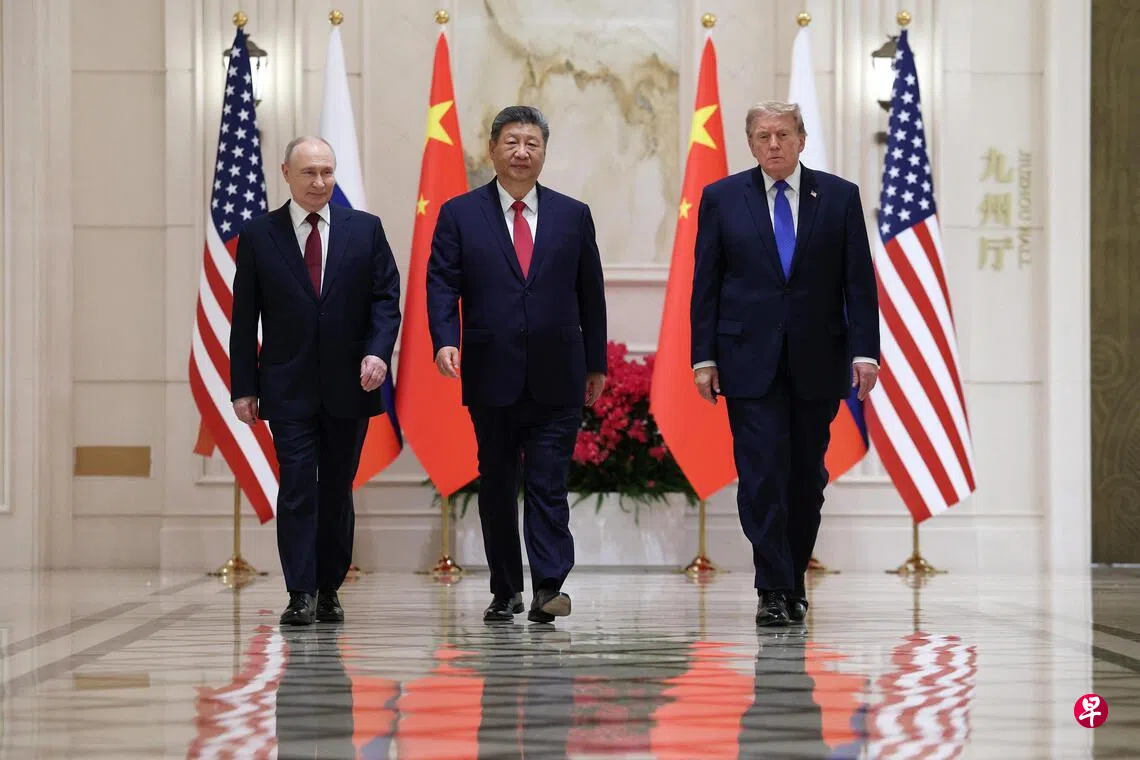
Russian military aircraft twice entered Taiwan’s air defence identification zone during the Asia-Pacific Economic Cooperation (APEC) summit in Shenzhen, and also entered Japanese airspace on Tuesday (17 November). Taiwanese scholars see these developments as consistent with Beijing and Moscow’s converging positions on Taiwan. They say trilateral talks also signal a shift in major-power coordination from a G2 to a G3, with implications for international organisations and small states. Taiwan, too, must watch whether it is included in major-power consultations.
This year’s APEC Economic Leaders’ Meeting was held in Shenzhen on Thursday (19 November). After talks on the sidelines with US President Donald J. Trump, Chinese President Xi Jinping held a trilateral meeting with Trump and Russian President Vladimir Putin. It was the first face-to-face meeting between the three leaders and lasted about 90 minutes. Afterwards, the three sides issued a Peace Declaration setting out four points of consensus: advancing UN reform, maintaining energy stability, respecting the immunity of state officials and starting dialogue on reducing nuclear risks.
Discussions of the international order have often been framed around a China-US “G2”. The three leaders’ first face-to-face meeting and joint declaration have now broadened the focus to a China-US-Russia “G3”.
Russian military aircraft movements around the summit drew attention. Taiwan’s defence ministry reported that it detected two Russian Tu-95 bomber sorties entering its air defence identification zone from the south on Thursday morning. The aircraft flew along Taiwan’s east coast before leaving to the northeast of Keelung. Japan’s Ministry of Defense said Russian aircraft entered Japanese airspace northwest of Okinoshima in Fukuoka prefecture on Tuesday, prompting it to scramble fighter jets.
The Institute of International Relations at Taiwan’s National Chengchi University held a forum on Friday (20 November), inviting scholars to analyse the APEC summit. Chang Wu-Ueh, director of Tamkang University’s Center for Cross-Strait Relations, said Russia’s position on Taiwan has become increasingly specific in recent years. China-Russia documents now include opposition to interference by external forces and references to UN General Assembly Resolution 2758. Russian military aircraft activities further signal an intention to play a greater role in East Asian security affairs, he said.
Speaking to Lianhe Zaobao (LHZB) during the question-and-answer session, Chang added that the aircraft movements alone were not enough to prove coordinated action by China and Russia. However, they echoed the two countries’ diplomatic statements on Taiwan and warranted continued attention. “In technology, economics and diplomacy, I don’t think the US, China and Russia constitute a G3 yet — it is still a G2. Militarily, though, a G3 configuration is indeed emerging,” he said.
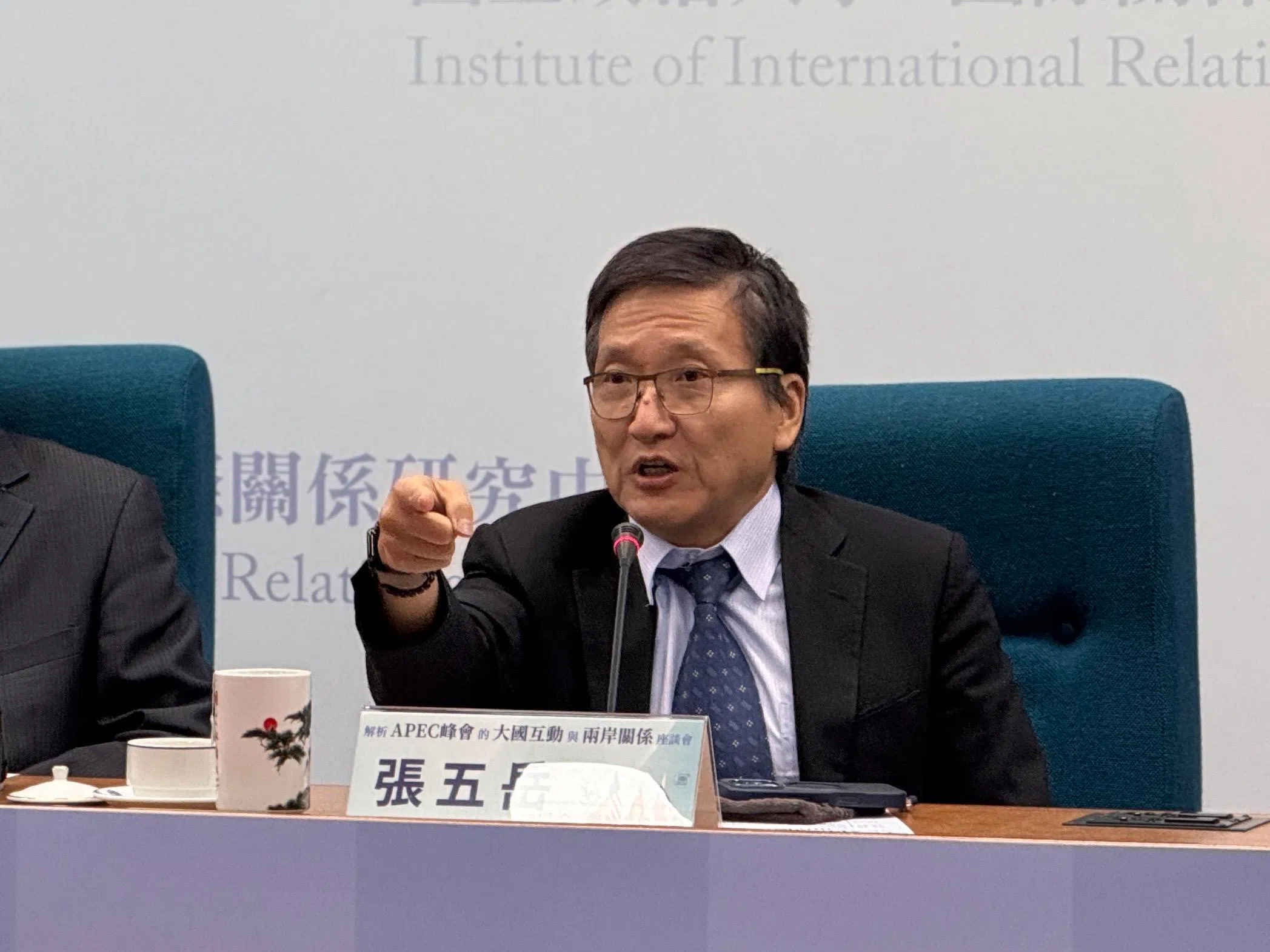
He also said interactions among the three powers would affect the Taiwan Strait, but did not mean they had formed a stable alliance across all areas.
Responding to a question from LHZB, Tzeng Wei-feng, an associate research fellow at National Chengchi University’s Institute of International Relations, said China-Russia interactions on the Taiwan Strait may have moved beyond statements of position towards some form of strategic approach. “China and Russia may be developing a degree of strategic planning on the Taiwan issue, rather than merely making declarations as they did in the past.”
Tzeng said that if China, the US and Russia formed a G3 coordination framework, the major powers could use international organisations such as the UN to address security issues and shape rules. Small states would be affected by those rules but would struggle to participate in decision-making. If major powers replaced broader multilateral consultations with their own consensus, both the representativeness of international organisations and the scope for small states to safeguard their interests could suffer.
He added that the most immediate risk for Taiwan was that the Taiwan Strait could become an issue for major-power coordination while Taiwan was absent from the negotiations, potentially leaving it in a position similar to Ukraine’s exclusion from talks.
However, Tzeng noted that the trilateral declaration lacked a follow-up mechanism and that Trump had only about two years left in office. Unless the consensus could be institutionalised, the declaration’s effect might struggle to outlast the current political cycle.
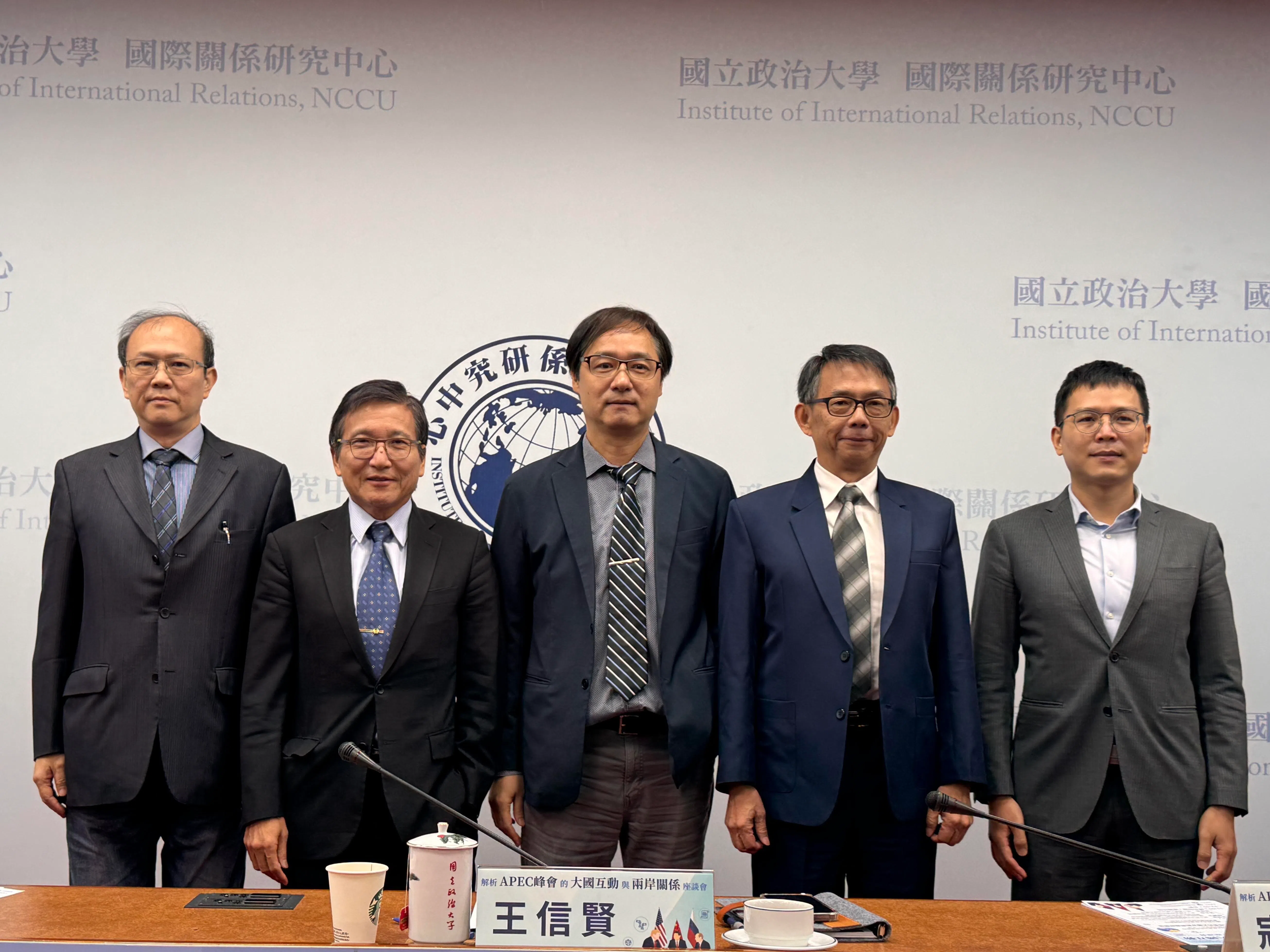
Kou Chien-wen, a distinguished professor in National Chengchi University’s Department of Political Science and Graduate Institute of East Asian Studies, also said Russia’s dependence on Chinese support, aid and trade could lead it to use military moves to signal alignment with Beijing. “Russia is, in fact, demonstrating its intention to participate in East Asian geopolitics.”
Chang Teng-chi, a professor in National Taiwan University’s Department of Political Science, said: “The future world will be deeply pluralistic, with three tiers: the US will retain its advantage, but will no longer be the sole pole of power. Nor will it be a China-US G2.” He said Russia’s military capabilities meant it could not be excluded from major-power consultations.
Chang Teng-chi said that if the G2 expanded into a G3, the agendas of international organisations would be more likely to be driven by major-power coordination. Small states without a seat at the table would find it harder to influence how rules were made and implemented.
