

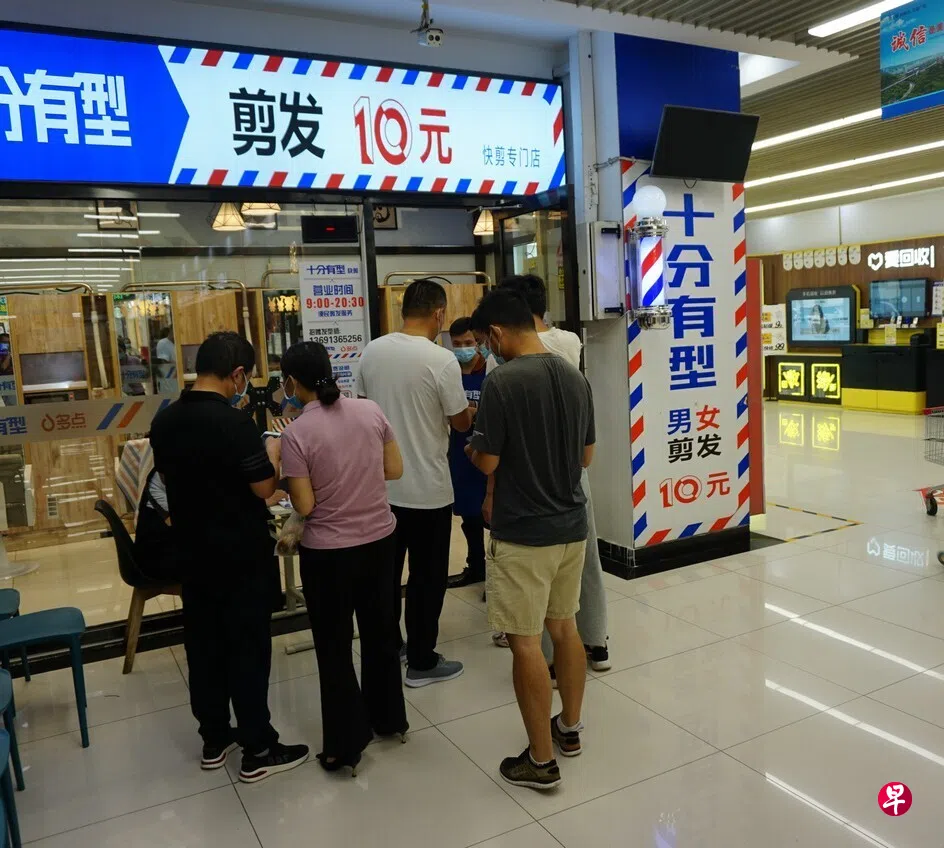
“Express haircuts for 10 RMB (S$1.91) are trouncing salon ‘design directors’ across China.”
The topic trended on China’s Weibo last Friday (30 October), sparking discussion about the popularity of budget express haircuts and traditional hair salons’ pricing and service models.
These “design directors” are not corporate executives, but hairstylists with titles commonly used in salons. Chinese internet users often jokingly call such stylists “Tony”.
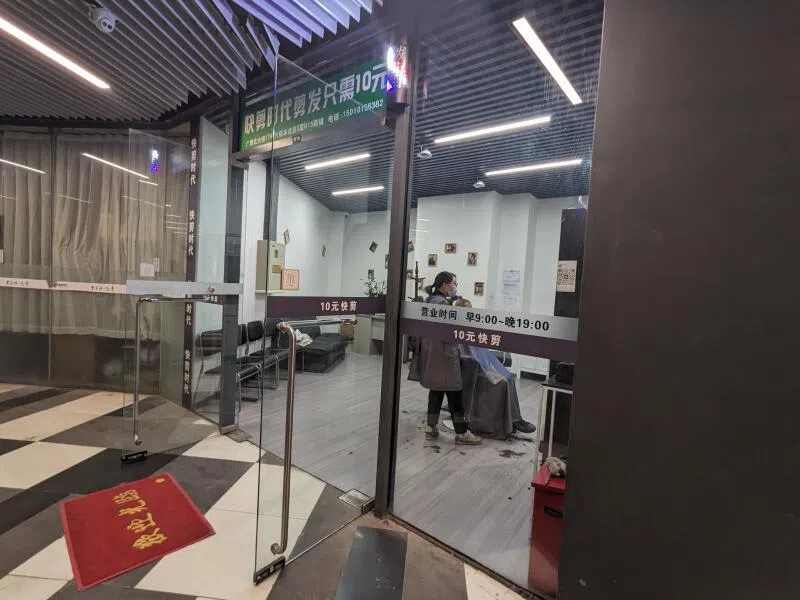
A haircut from “Tony” used to cost anything from tens to hundreds of RMB, or even upwards of 1,000 RMB in major cities. Now, more consumers are discovering that they can get a haircut for just 10 RMB, with no shampooing, membership cards or sales pitches.
Budget express haircuts are nothing new, but they have recently attracted renewed attention. Just how popular are they?
Henan-based Daxiang News reported on 31 October that 10 RMB express haircut shops had sprung up near many supermarkets and residential estates in Zhengzhou. Zhai Yong, who runs one inside a local supermarket, said: “Customers come in one after another. There’s hardly a moment when we stop.”
Haibao News also reported that at a 10 RMB express haircut shop in a street-facing unit of a residential building in Jinan, Shandong, another customer would take the chair as soon as one finished. One male customer, who gets his hair cut roughly every 20 days, said the 20 to 25 RMB charged by conventional barbershops nearby is “too expensive”.
In Beijing, 10 RMB express haircuts have also attracted plenty of customers. Jiemian News reported on 30 October that some customers on review platform Dazhong Dianping said the stylists at express haircut shops are meticulous and that they always had to queue behind several other people. Others felt the results are average, but appreciated the low prices and speed.
Data from business information platform Qichacha showed that, as of 30 October, China had 7,227 express haircut-related businesses, mainly in southern and southwestern China. More than 99% had registered capital of no more than 1 million RMB, while nearly 80% had been established less than five years ago.
Registrations of express haircut-related businesses in China have grown rapidly over the past decade, reaching a 10-year high of 1,872 last year.
By contrast, traditional hair salons face mounting business pressures. Citing figures from the China Hairdressing and Beauty Association, media reports said 213,000 barbershops and hair salons across China were deregistered, closed or transferred to new owners in the first quarter of this year.
Some hairstylists who previously worked in traditional salons have also switched to offering 10 RMB express haircuts.
Zhai, the Zhengzhou express haircut shop owner mentioned earlier, used to work in a salon before quitting to open his own shop. According to Daxiang News, he gives more than 1,000 haircuts a month. At 10 RMB each, that amounts to monthly revenue of more than 10,000 RMB, though he said frankly: “It’s basically all hard-earned money.”
Zhai said a wash, cut and blow-dry at a traditional salon costs at least several dozen RMB. Express haircuts dispense with shampooing and blow-drying and styling, naturally bringing costs down.
Another Zhengzhou express haircut shop operator, surnamed Li, also left a salon to strike out on her own. She told Daxiang News that running an express haircut shop meant not having to worry about sales pitches or persuading customers to sign up for membership cards. “You just have to cut their hair well.”
Express haircut shops generally need little space and few staff. Each customer takes just over 10 minutes, with the business relying on high volume to offset thin margins. Whether a 10 RMB haircut can turn a profit, however, still depends on customer traffic. If business slows down, rent, wages and other costs can make it difficult for these shops to survive as well.
Why are customers turning away from “Tony”?
The appeal of 10 RMB express haircuts goes beyond low prices; it also reflects longstanding complaints about some traditional salons’ business practices.
An analysis by WeChat public account Financial Gossip Girl Channel identified “title inflation” among hairstylists as a major problem. From stylist to design director, chief hairstylist and salon manager, the grander the title, the higher the fee tends to be — but the haircutting skills do not necessarily improve accordingly.
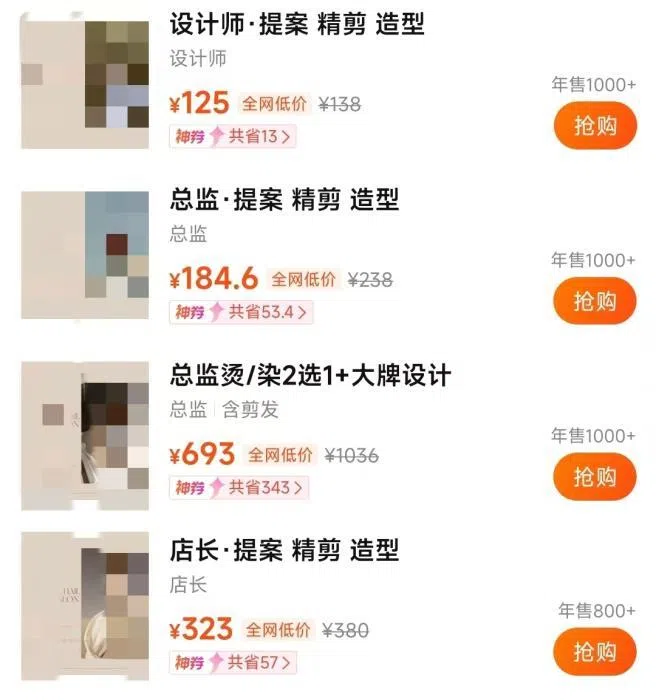
Beyond inflated titles, aggressive sales pitches and pressure to sign up for membership cards are also common sources of dissatisfaction with traditional salons.
A 2024 survey by the China Youth Daily’s Social Survey Centre found that 77.5% of respondents could relate to the joke that “no one leaves a hair salon smiling”. Some 62.9% said constant product pitches and pressure to sign up for membership cards were the most widespread problems in the industry.
Prepaid membership cards also carry risks for consumers. Some customers have topped up their cards only for the salon to close suddenly, leaving them struggling to recover the remaining balance.
By comparison, while 10 RMB express haircuts do not include shampooing, blow-drying or styling, they also spare customers the hassle and frustration of sales pitches and membership cards. Customers simply explain the hairstyle they want, pay after the cut and leave.
But that does not mean consumers are willing to spend only 10 RMB on a haircut.
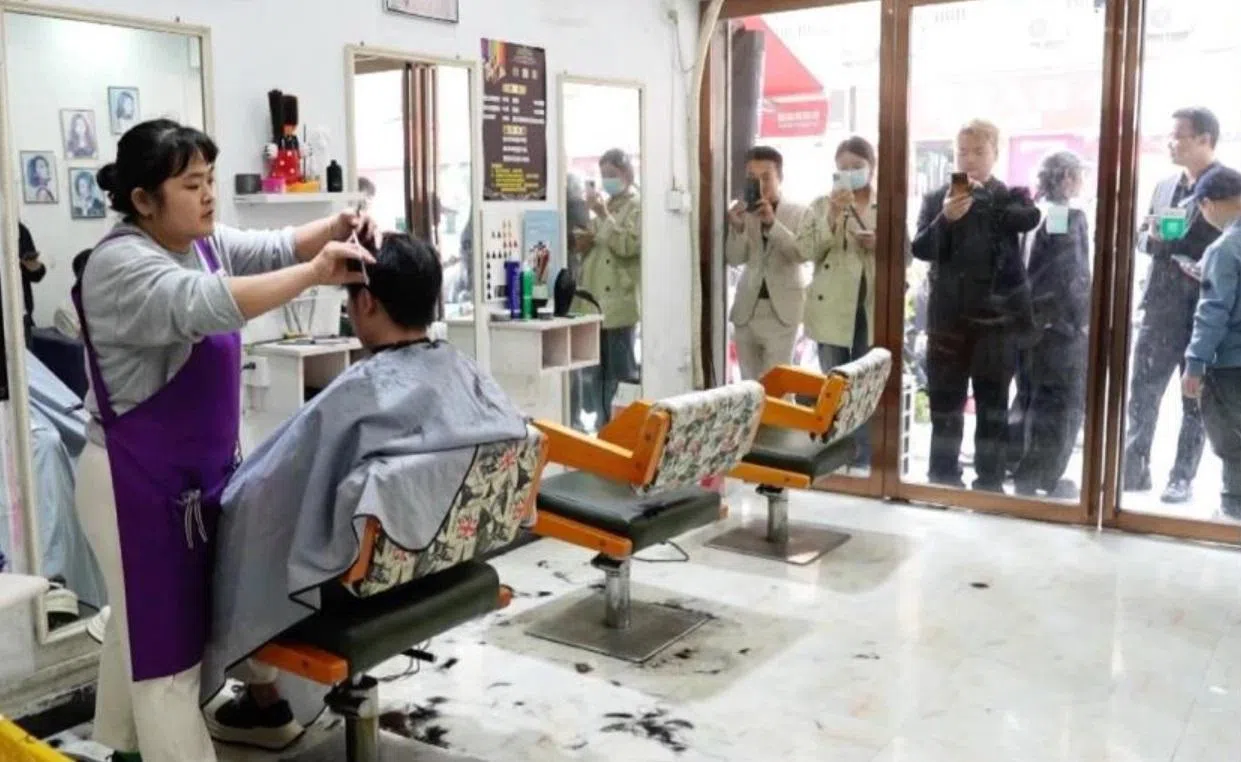
In 2024, Li Xiaohua, a hairstylist in Huaihua, Hunan, became an online sensation. She had no grand “design director” title, but internet users dubbed her “the hairstylist who actually listens” because she understood what customers wanted and delivered haircuts that met their expectations.
At the time, Li charged 30 RMB for men’s haircuts and 45 RMB for women’s. Although her prices were higher than those of 10 RMB express haircut shops, many customers still made special trips to see her. This suggests that consumers are not unwilling to pay for haircuts; rather, they want their money to buy skills and service they are happy with.
Is there still a future for traditional salons?
Jiupai News quoted Hong Tao, director of the Business Economics Research Institute at Beijing Technology and Business University, as saying that the popularity of 10 RMB express haircuts essentially reflects a return to rational spending on necessities. Consumers are not simply chasing bargains; they are no longer willing to pay a premium for information gaps and marketing gloss.
Hong said express haircuts attracted consumers not just on price, but also by offering certainty about the service: “Before walking in, customers already know the price, how long it will take and what is included. They don’t have to worry about sales pitches or face the social pressure of signing up for a membership card. For customers who only need a basic trim, that transparency is valuable in itself.”
He said the expansion of 10 RMB express haircut shops does not mean traditional salons would be replaced. Express haircuts meet the need for basic trims, while traditional salons can still offer personalised services such as styling, perms, colouring and hair treatments. Both have their own markets.
Faced with fierce competition from express haircut shops, Hong said traditional salons must either retain customers through their styling, perming and colouring skills and service experience, or offer basic haircuts as a separate, clearly priced service. They need to shift their revenue focus from commissions on membership card sales back to their craft.
The express haircut boom reflects the growing importance Chinese consumers place on value for money amid an uncertain economic outlook. From budget coffee and discount supermarkets to 10 RMB haircuts, consumers are reassessing what is worth paying for and where they can save.
This shift is linked to economic pressures, but also reflects changing attitudes towards consumption. Consumers do not necessarily want only the cheapest goods or services, but are increasingly concerned about whether prices reflect actual value.
10 RMB express haircuts may not cut off “Tony’s” livelihood, but they could accelerate a shake-up of the traditional hairdressing industry. Budget express haircut shops attract customers through efficiency, while professional salons retain them through skill and service. Salons that charge relatively high prices without offering a clear service advantage may face greater competitive pressure.
Ultimately, consumers are not unwilling to pay for haircuts. They simply refuse to keep paying for empty titles and unnecessary services. The shift from “Tony” to 10 RMB express haircuts is a snapshot of the many changes in Chinese consumer behaviour today.
