

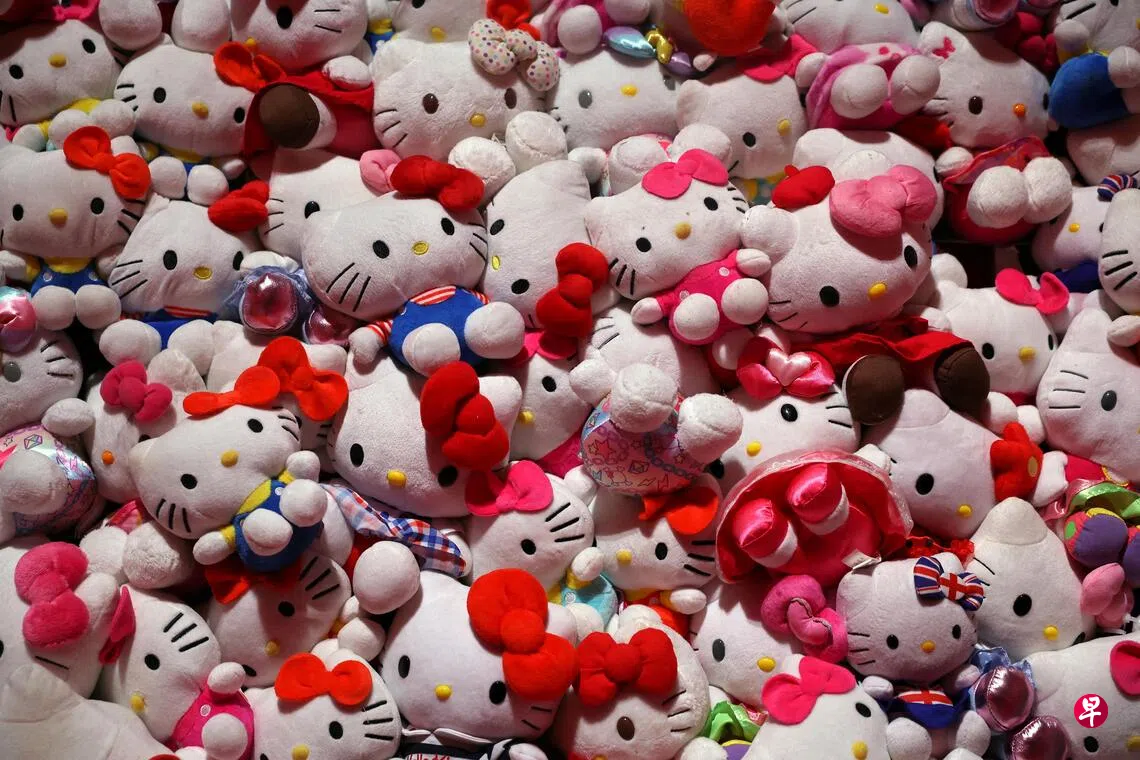
“Mbappé has apologised. Now it’s Hello Kitty’s turn.”
That was how one Chinese internet user summed up this week’s two successive apology controversies, after news that Japanese company Sanrio had posted an apology on its website on Thursday (29 October) began trending on Weibo. Another quipped: “Welcome to the age of apologies.”
Sanrio, which owns popular cartoon characters including Hello Kitty, My Melody and Cinnamoroll, issued an apology over a collaboration with a Japanese television series.
The second season of VIVANT, a spy drama produced by Japan’s TBS, features a fictional Chinese secret intelligence organisation and scenes of Chinese intelligence officers torturing Japanese agents, drawing fierce criticism from Chinese state media.
In an article on its WeChat account on 25 October, China’s CCTV News criticised the series for “portraying Chinese people as inhumane perpetrators of violence while glorifying intelligence officers from Japanese Self-Defence Forces as righteous figures fighting back”, accusing it of “deliberately creating confrontation and inciting hostility”.
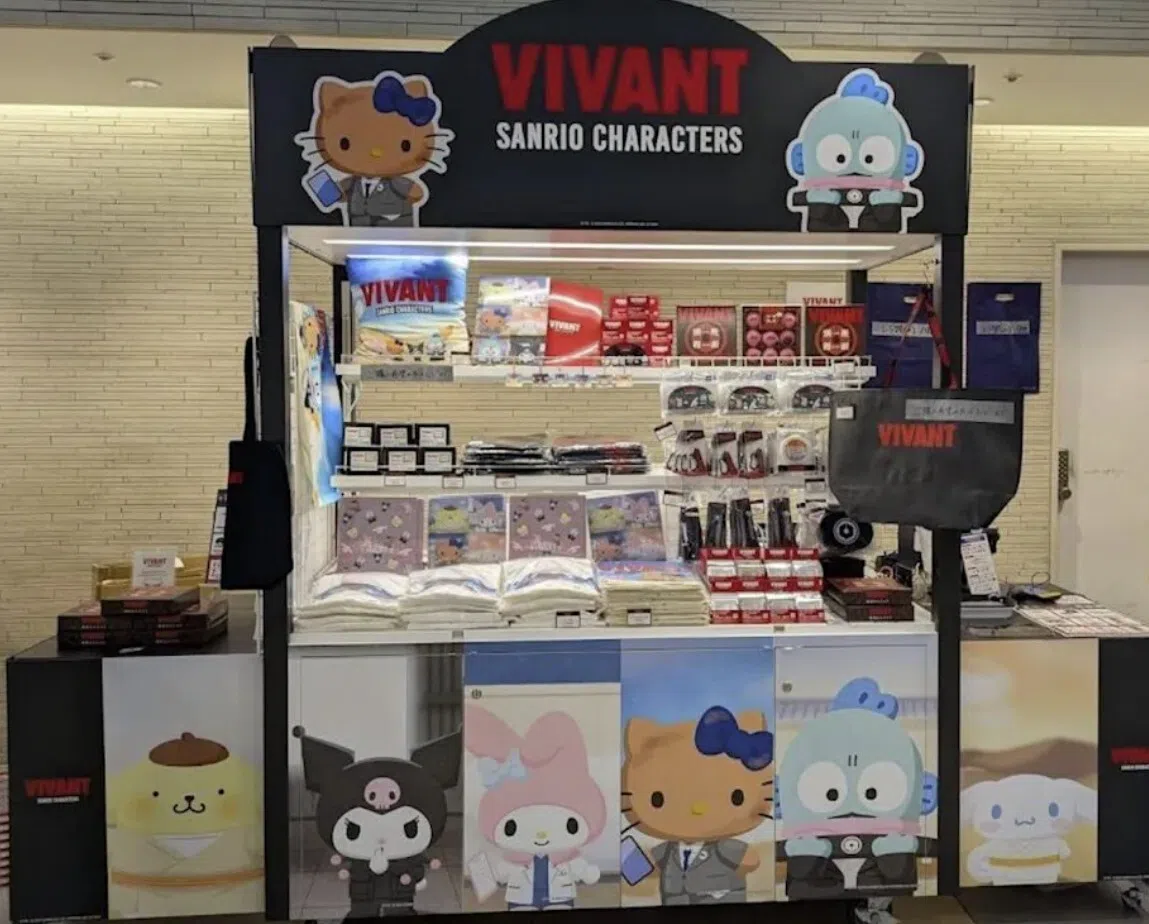
Internet users subsequently discovered that Sanrio had launched co-branded merchandise with VIVANT in July this year, including Hello Kitty and My Melody dolls dressed as characters from the series. A second range was also due to go on sale.
On Wednesday (28 October), the Global Times published a commentary titled “Hello Kitty should not dance with Japan’s right wing”. It said Sanrio needed to recognise that associating its brand with “anti-China content” would damage the trust and emotional ties it had built over many years. “On questions of historical understanding and positions towards other countries, Sanrio must never join Japan’s right wing in playing with fire.”
Late that night, Sanrio posted a statement on Weibo apologising for the concerns caused by the collaboration. It said it had decided to end the collaboration and all subsequent projects because the content included expressions inconsistent with the company’s values. It pledged to strengthen its review procedures for future collaborations.
Many Chinese internet users, however, were unconvinced, saying the statement, visible only on Weibo, was an attempt to “fob off Chinese people”. The most-liked comment beneath the post read: “Have you posted it on overseas (non-Chinese) platforms? If you’re admitting a mistake, you need to act like you mean it.”
In a commentary published around midday on Thursday, Beijing Daily said Sanrio’s “apology exclusively for China” showed no sincerity and that “the matter clearly cannot end here”. It asked: “How can anyone believe it is genuinely reflecting on its actions and correcting its mistakes when it behaves so differently for different audiences?”
That afternoon, Sanrio also published a statement ending the collaboration and a letter of apology in both Chinese and Japanese on its Japanese website. Yet internet users continued to ask why it had not simultaneously posted the statement on social media platforms such as X. “If you don’t know how, take a leaf out of Mbappé’s book.”
A day before the Sanrio apology controversy gained traction, Chinese internet users were still abuzz with French football superstar Kylian Mbappé’s apology for his remarks about China.
The Mbappé saga: apologies from star to club
In an online interview video that circulated on Monday (26 October), Mbappé said the funniest meme was one that superimposed his face on that of a “Chinese dictator”. The video also showed a meme with Mbappé’s face superimposed on an image of Mao Zedong, the late founding leader of the Chinese Communist Party.
Several Chinese companies ended their partnerships with Mbappé on Tuesday (27 October). CCTV also halted broadcasts of matches involving La Liga and Mbappé, and pulled advertisements featuring him.
That evening, Mbappé posted an apology in Chinese, English and French on his personal X account, acknowledging that his remarks were inappropriate and had hurt many people in China and ethnic Chinese around the world. La Liga, the Spanish top-flight football league in which he plays, and its president had already publicly apologised.
Real Madrid, Mbappé’s club, did not immediately comment, however. Spanish news outlet OK Diario quoted the club as saying that Mbappé had been expressing a personal view and had not intended to cause offence. On Wednesday, a spokesperson for the Sports and Youth Programming Centre of China Media Group, CCTV’s parent organisation, publicly declared: “Until Real Madrid has delivered a proper apology, there is nothing to discuss.”
Real Madrid issued a statement that day apologising for “the displeasure and offence caused to the Chinese people” by Mbappé’s recent remarks. It said it hoped to maintain and strengthen its friendship with China and the Chinese people. China Media Group subsequently confirmed that it had received Real Madrid’s letter of apology. A spokesperson for China’s Ministry of Foreign Affairs said the same day that it “takes seriously the apology made by the person concerned”. At that point, the escalating public controversy finally showed signs of easing.
It is not uncommon for public figures, companies, or institutions to apologise after their words or actions spark controversy. However, this week’s two sagas show that Chinese public opinion is demanding apologies from an ever-wider range of targets, and holding them to increasingly higher standards: beyond the exact wording of an apology, the visibility of the statement has also become a yardstick for sincerity.
The confidence behind these demands comes from the Chinese market’s formidable purchasing power.
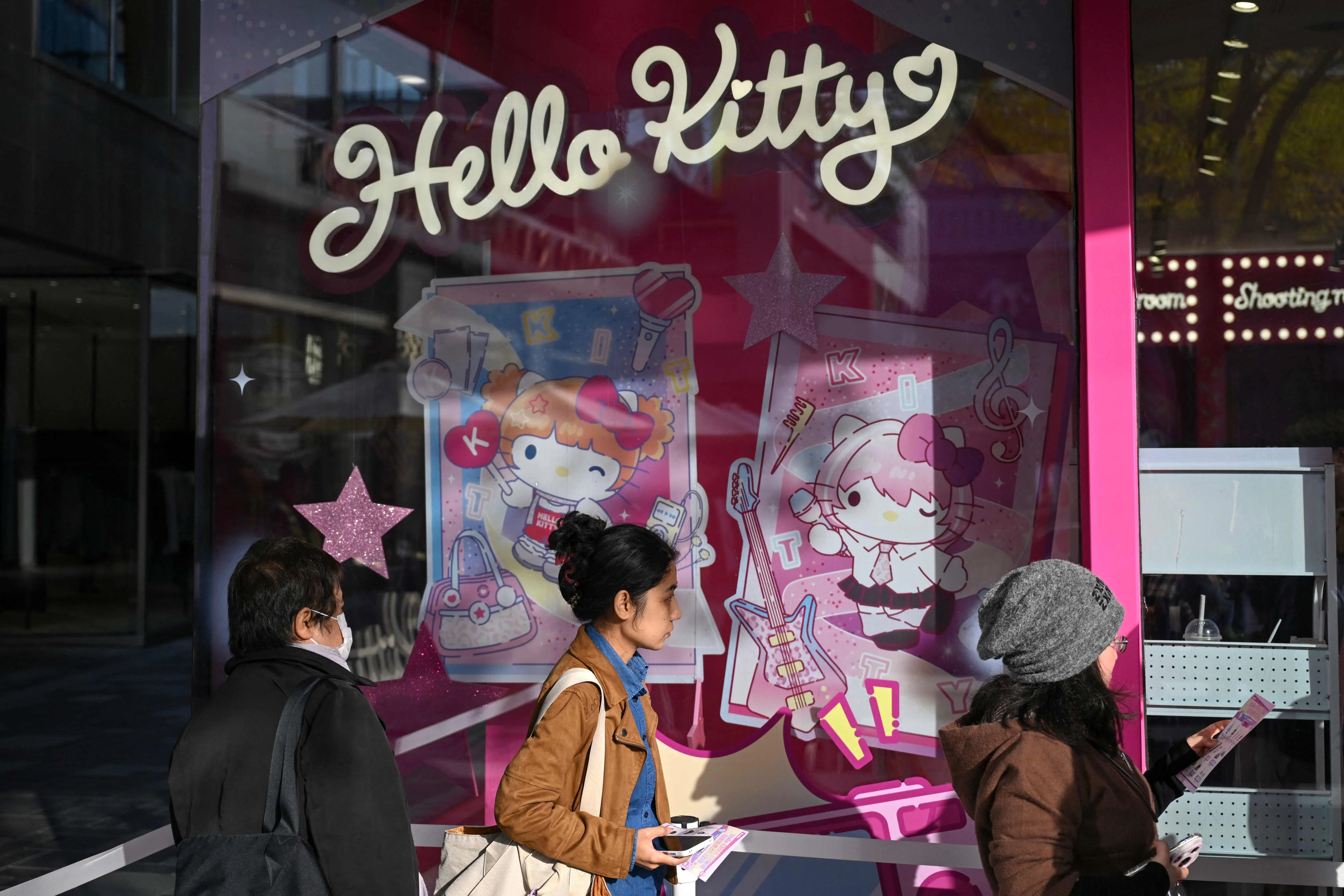
According to AFP, Sanrio has more than 60 stores in China, which contributes to 40% of its overseas sales and about 25% of its operating profit. In the financial year ending in March this year, sales in mainland China surged by 83%, far outpacing the 37% growth in its overall overseas business.
Spanish news outlet Vozpópuli, citing estimates from market participants, reported that La Liga’s television broadcasting business in China would be worth more than €400 million (S$572 million) by 2030.
Jessica Gleeson, chief executive of Shanghai-based retail consultancy BrighterBeauty, told Bloomberg that Chinese consumers are well aware of the influence and scale of their purchasing power. “As your largest customer base, they expect you to do your homework beforehand.”
Sports analyst Mark Dreyer, who has long followed China’s sports industry, said foreign companies’ usual approach to similar controversies had been to post a short, deeply apologetic statement on Weibo, then keep a low profile and wait for public attention to shift. But that strategy no longer works.
What worries foreign celebrities and companies even more is that no matter how they apologise, it is hard to contain the fallout.
Even after Mbappé, La Liga, and Real Madrid issued a string of apology statements, many netizens still felt they lacked sincerity. As one commenter wrote, Mbappé’s swift apology was “mainly out of fear that it would affect his ability to cash in on China, not because he genuinely thinks he was wrong.”
Wang Zhi’an, a prominent media commentator who has moved to Japan, reposted Mbappé’s apology on X, quipping: “To be honest, you have seriously hurt the feelings of the Chinese people. An apology is no use now. You’ll have to commit hara-kiri (suicide by disembowelment) to prove your sincerity.”
In an interview on Thursday local time, French Football Federation president Philippe Diallo said Mbappé had clearly explained the context of his remarks. Since he had apologised, the matter should be put behind him so that he could continue the season in the best possible form. Soon afterwards, “Mbappé’s apology does not mean the matter is closed” appeared among Weibo’s trending topics.
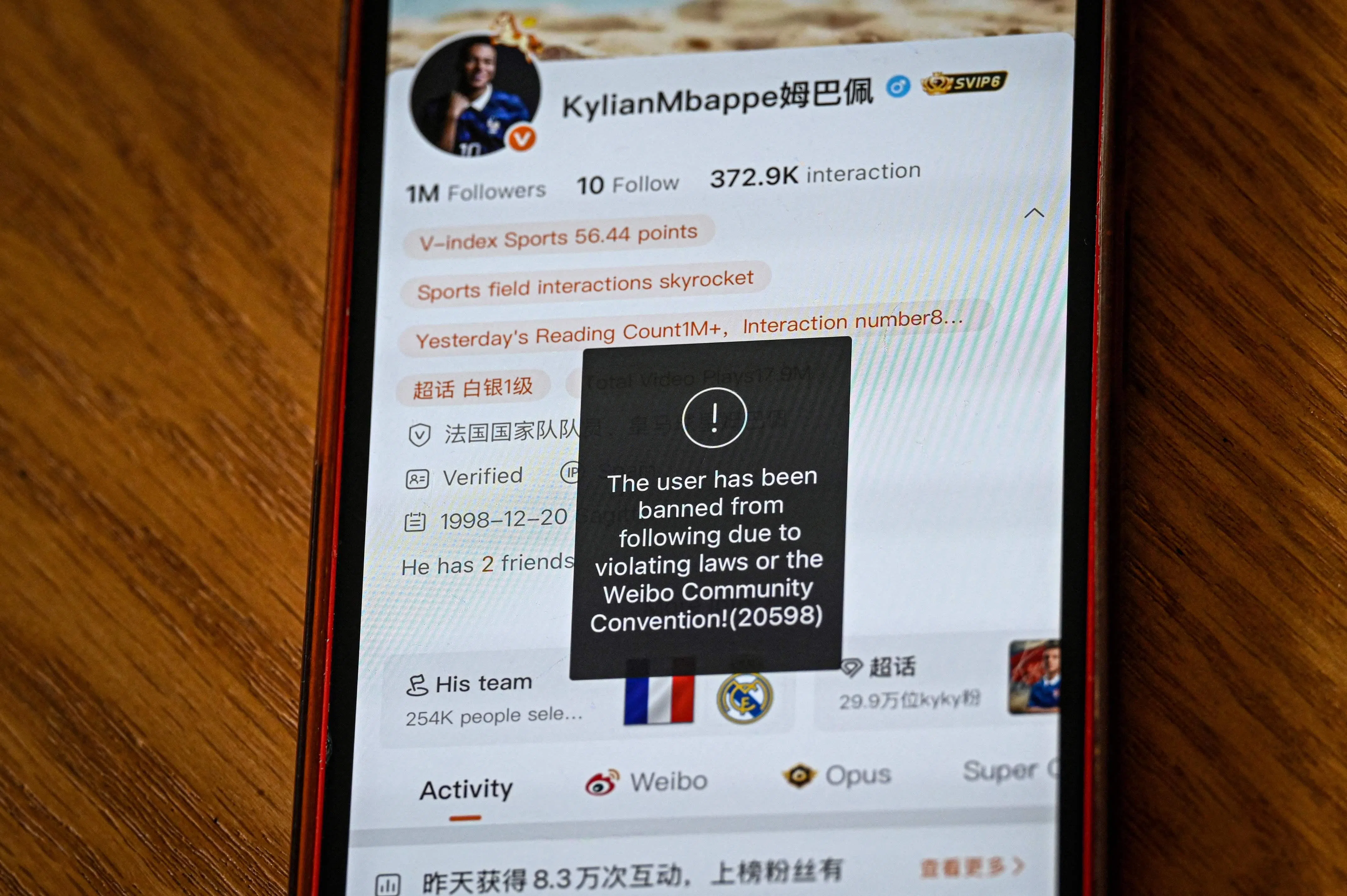
For now, Mbappé’s Weibo and Xiaohongshu accounts remain barred from posting or gaining new followers. Streaming platform Migu’s broadcast schedule still does not list Real Madrid’s match against Racing Santander this coming Sunday (1 November). A source connected to La Liga told Reuters that its president, Javier Tebas, was considering travelling to China to try to reduce the league’s financial losses from the episode.
The seemingly endless arguments over apologies have also wearied some internet users. One said: “Some criticism would have been enough. Instead, these endless apologies have let the whole world on the matter. Who is more embarrassed now?” Another suggested that “foreigners should stop praying before meals every day and apologise to China instead”.
On Thursday, Zhejiang Publicity, an account run by the Chinese Communist Party’s Zhejiang provincial publicity department, criticised Real Madrid for offering “no internal accountability and no commitment to corrective action” after apologising for Mbappé’s remarks. “All these details reveal Real Madrid’s dismissive and perfunctory attitude.”
The commentary drew polarised reactions online. Some supported continued condemnation of Real Madrid. Others asked why, as a local government affairs account, “Zhejiang Publicity” was not focusing on more pressing domestic issues and holding those who genuinely harm the public interest to account. “Who apologised when someone hired a killer to murder an anti-fraud blogger? Where is the pledge to take corrective action over 78 students in Liaoning sharing a single needle?”
It is entirely reasonable to expect multinational corporations and public figures to respect the Chinese market and its consumers, and to mend fences and rebuild trust through apologies. However, when the bar for apologies keeps rising, the net is cast ever wider, and the resulting controversies drag on endlessly, the very meaning of an apology may become diluted in the process — to the point where people forget why it was demanded in the first place.
