

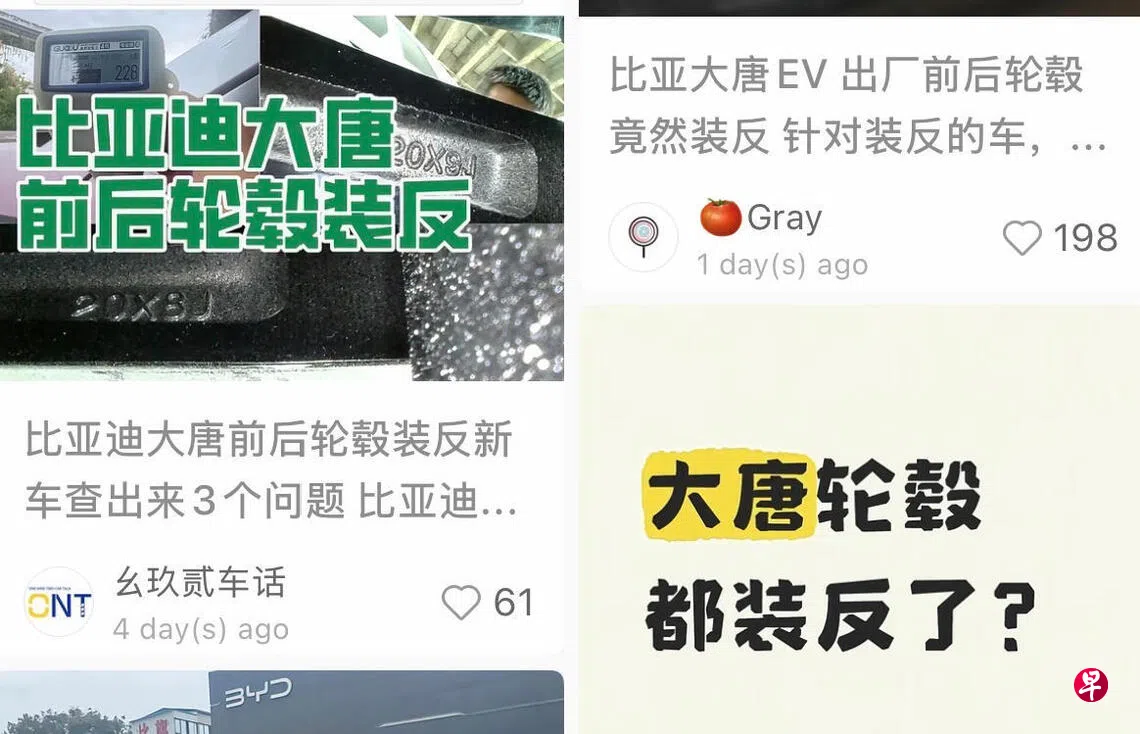
“Are the front and rear wheel rims on your Datang fitted the wrong way round too?! BYD, you never cease to astonish me!”
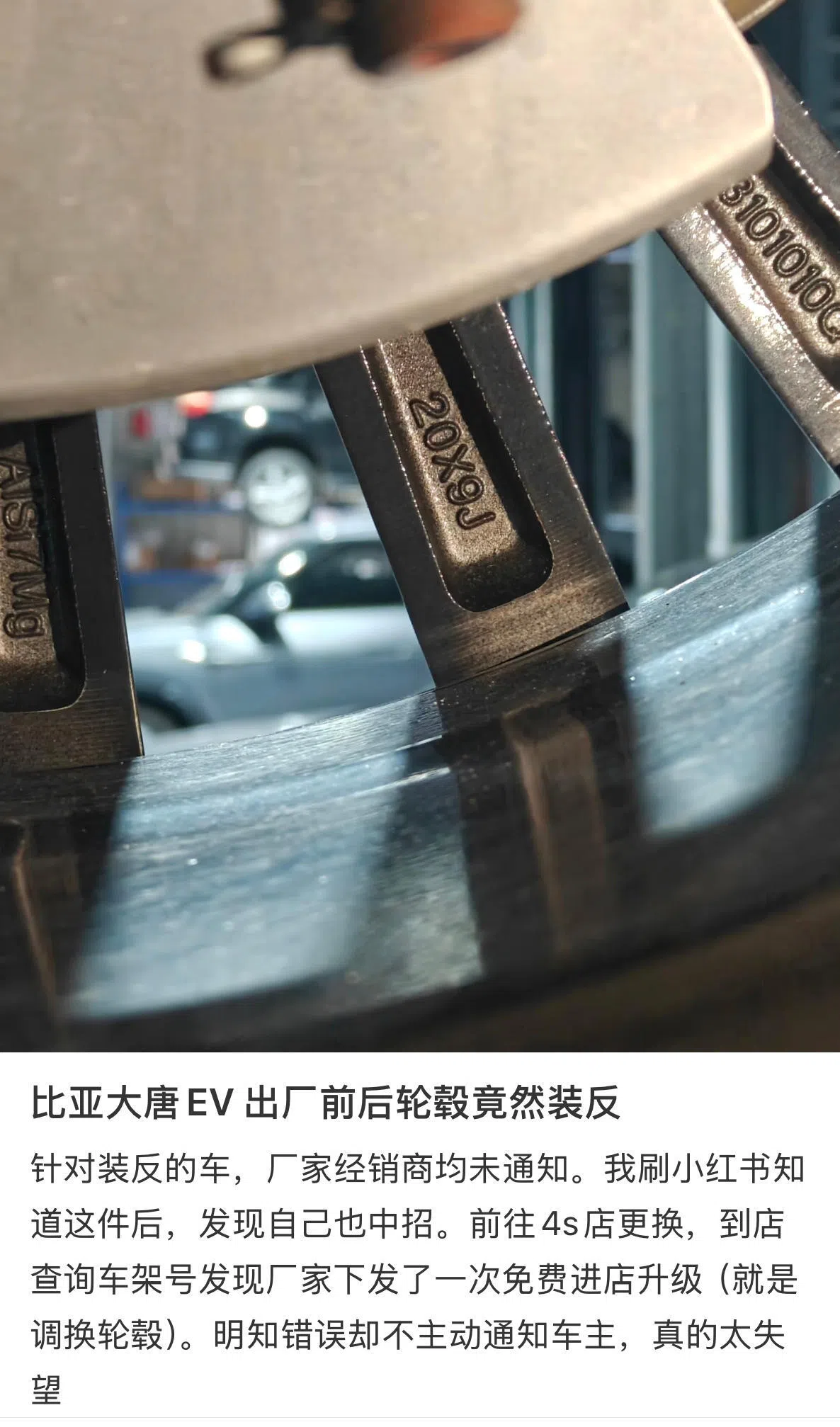
A BYD Datang SUV owner recently wrote on social media that, after a puncture, they took their car to an authorised dealership to have the tyre replaced. Staff said the manufacturer had issued a “technical service programme” requiring the wheel rims to be refitted and the wheels rebalanced. Only then did the owner discover that the front and rear rims on all four wheels had been fitted the wrong way round.
The Chinese term the owner used for “wheel hub” is commonly used in everyday speech, but the technically correct term is “wheel rim”: the circular metal part on which the tyre is mounted. It supports the tyre bead and maintains the tyre’s shape.
This was not an isolated case. According to several Chinese media reports, BYD Datang owners have been reporting online since 4 November that their vehicles left the factory with the front and rear wheel rims fitted the wrong way round.
The vehicle complaints platform Chezhiwang has received more than 150 related complaints, mainly involving the 2026 all-electric rear-wheel-drive model with a range of 950 kilometres.
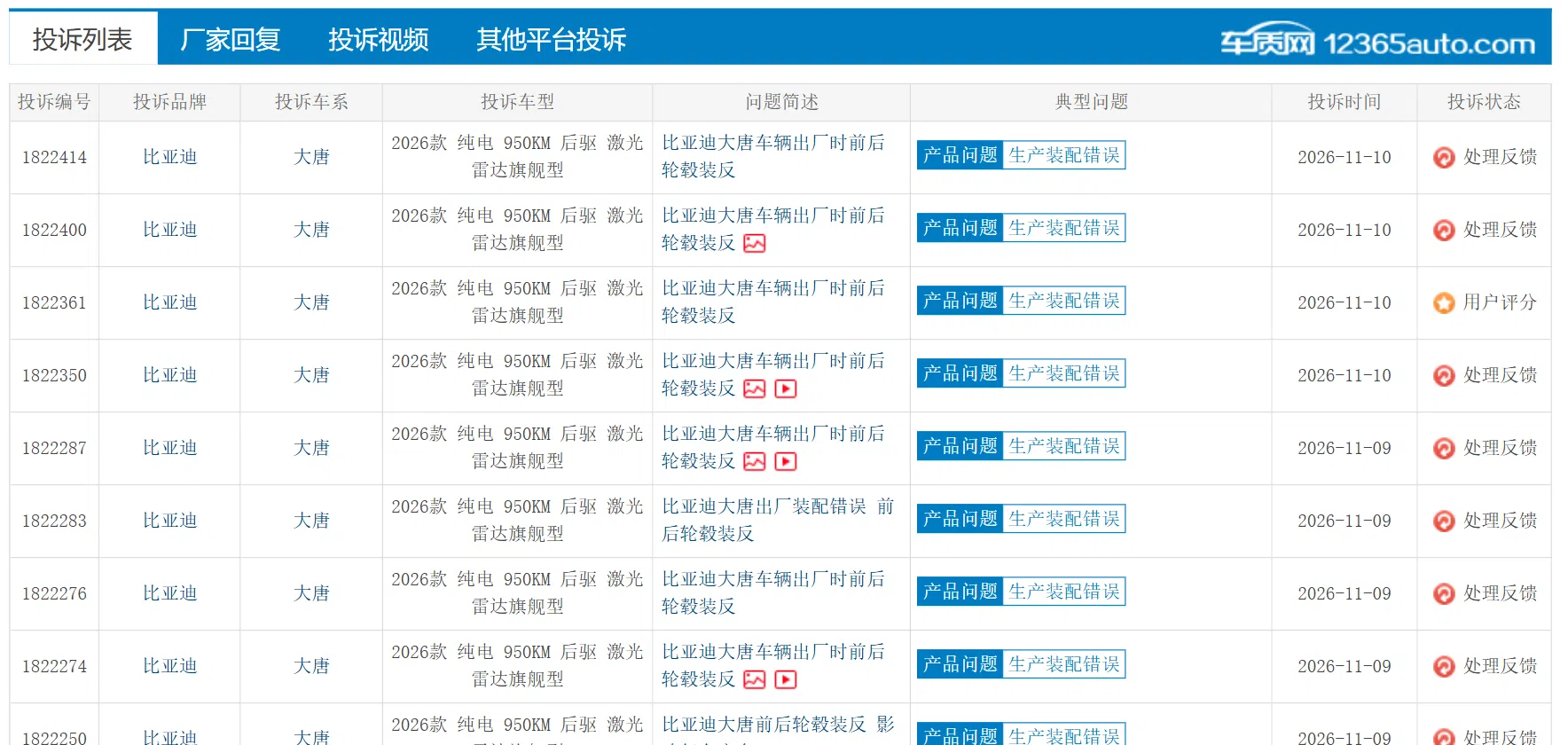
Wheel rim width is usually indicated by a J rating: the higher the number, the wider the rim. The Datang SUVs involved were designed with 8J rims and 255-millimetre-wide tyres at the front, and 9J rims and 275-millimetre-wide tyres at the rear.
In other words, both the rims and tyres at the rear are wider than those at the front and cannot simply be swapped. After the mismatch came to light, many internet users called it “outrageous”. One motoring blogger said: “At first I thought there must have been a mistake. How could BYD make such a basic error?”
However, there is no authoritative conclusion yet on whether fitting wide tyres to narrow rims and narrow tyres to wide rims poses a safety risk.
According to an analysis by automotive information website Autohome, mismatched rim and tyre widths could alter the tyre’s contact patch, lateral support and the vehicle’s chassis dynamics. At high speeds, on slippery roads in wet weather or during emergency lane changes, these differences could further affect handling stability and increase driving risks.
Some owners have also reported rear tyre blowouts, while others said their tyre treads were severely worn after about 6,000 kilometres. Whether these individual cases were directly caused by the incorrectly fitted rims remains to be verified.
BYD’s official Datang owner’s manual explicitly advises owners to use rims and tyres with the same specifications as the originals. It states: “Using inappropriate rim and tyre sizes may impair the vehicle’s driving characteristics and pose a risk of accidents.”
BYD is the world’s largest seller of electric vehicles. The Datang series is the top-end flagship SUV under its Dynasty sales network, priced from 239,900 yuan to 309,900 yuan (about S$46,100 to S$59,600). Sales have been strong since its launch in June this year. In October, 14,000 units were sold, marking the fourth consecutive month in which sales exceeded 10,000.
Dynasty is one of BYD’s two passenger vehicle sales networks, with model series named after ancient Chinese dynasties such as Qin, Han, Tang and Song. Lu Tian, general manager of Dynasty’s sales division, wrote on Weibo on Wednesday (11 November) that the Datang had topped the sales rankings for all-electric large SUVs for two consecutive months. “Every purchase is an affirmation from our customers,” he wrote.
Yet about two hours before Lu posted those results, BYD’s official Weibo account issued an apology over the wheel rim mix-up, which had been drawing attention for nearly a week. It attributed the problem to a coding entry error by a supplier, Hubei Boyu Shiye Co., Ltd., which resulted in the front and rear rims being fitted incorrectly on some vehicles. BYD said it had begun checks and corrected the coding, while the supplier had added a visual error-prevention system to its production line to prevent a recurrence.
The statement stressed that dedicated testing had found the issue did not affect vehicle handling or pose a driving safety risk. It invited affected owners to visit their local service centres for free inspections and to have the rims swapped to their correct positions.
BYD also pledged to restart the full vehicle warranty from Wednesday for vehicles with incorrectly fitted rims. It said it would conduct a comprehensive review and work with the supplier on continued rectification.
Despite BYD’s assurance that the mix-up did not affect driving safety, many owners still want the company to investigate whether the tyre blowouts and possible tyre wear were caused by the incorrectly fitted rims. Some have also called on the manufacturer to recall affected vehicles, replace the tyres free of charge, provide inspection reports on other components and pay compensation.
BYD’s statement did not specify the batches or number of vehicles affected. Nor did it explain why such a basic error had gone undetected during quality checks before the vehicles left the factory.
The incident has again brought quality management at Chinese new energy vehicle makers into focus. Earlier, Maextro, the premium car brand jointly developed by technology giant Huawei and JAC Motors, also became embroiled in a quality controversy over a braking test.
On 8 October, automotive information platform Dongchedi released a video showing brake pedal brackets breaking on three brand-new Maextro V800 vehicles during emergency braking tests. Maextro said the tests involved non-standard, extreme operating conditions, and that there had been no cases of brackets breaking during actual customer use since deliveries began. Nonetheless, it said it would improve the component’s design and provide free upgrades to owners who had already received their vehicles.
A week later, China’s Ministry of Industry and Information Technology and other departments announced the formation of a joint investigation team to look into the incident.
The two incidents involve different technical stages. BYD’s problem arose in supplier component coding and vehicle assembly, while Maextro’s exposed weaknesses in braking components under extreme testing.
Although the causes of the two incidents and responsibility for them have yet to be fully established, both have put Chinese carmakers’ quality management capabilities under scrutiny. An oversight at any stage can raise doubts about product quality.
The successive quality controversies involving leading new energy vehicle makers come amid increasingly fierce competition in China’s car market. With domestic demand under sustained pressure, carmakers are accelerating new model launches and technology updates to compete for market share, leading to ever more frequent product updates across the industry.
Figures released by the China Passenger Car Association on 9 November showed that passenger vehicle retail sales nationwide totalled 14.978 million in the first ten months of this year, down 22.3% year on year. BYD’s net profit attributable to shareholders fell 4.24% year on year to 22.345 billion yuan in the first three quarters, also reflecting the operating pressures facing leading carmakers.
BYD executive vice-president He Zhiqi wrote in July that 542 new models had been launched in China’s passenger vehicle market in the first five months of this year, an average of 3.6 a day. “It’s gone completely mad,” he said.
“This competition is no longer just intense — it’s brutal,” He said. Still, he also believed fierce competition helped drive the industry’s development. He likened China’s car market to a “super gym”, saying carmakers could only “get stronger and fitter” by putting themselves through the rigours of market competition.
To cope with persistently weak domestic sales, carmakers are not only launching new products in quick succession but also actively expanding overseas in search of new growth opportunities. China Passenger Car Association figures showed that China exported 928,000 passenger vehicles in October, up 68.5% year on year.
Of these, 582,000 were new energy passenger vehicles, an increase of 144.7% year on year. BYD led all carmakers in export volume by a wide margin, with 165,200 vehicles.
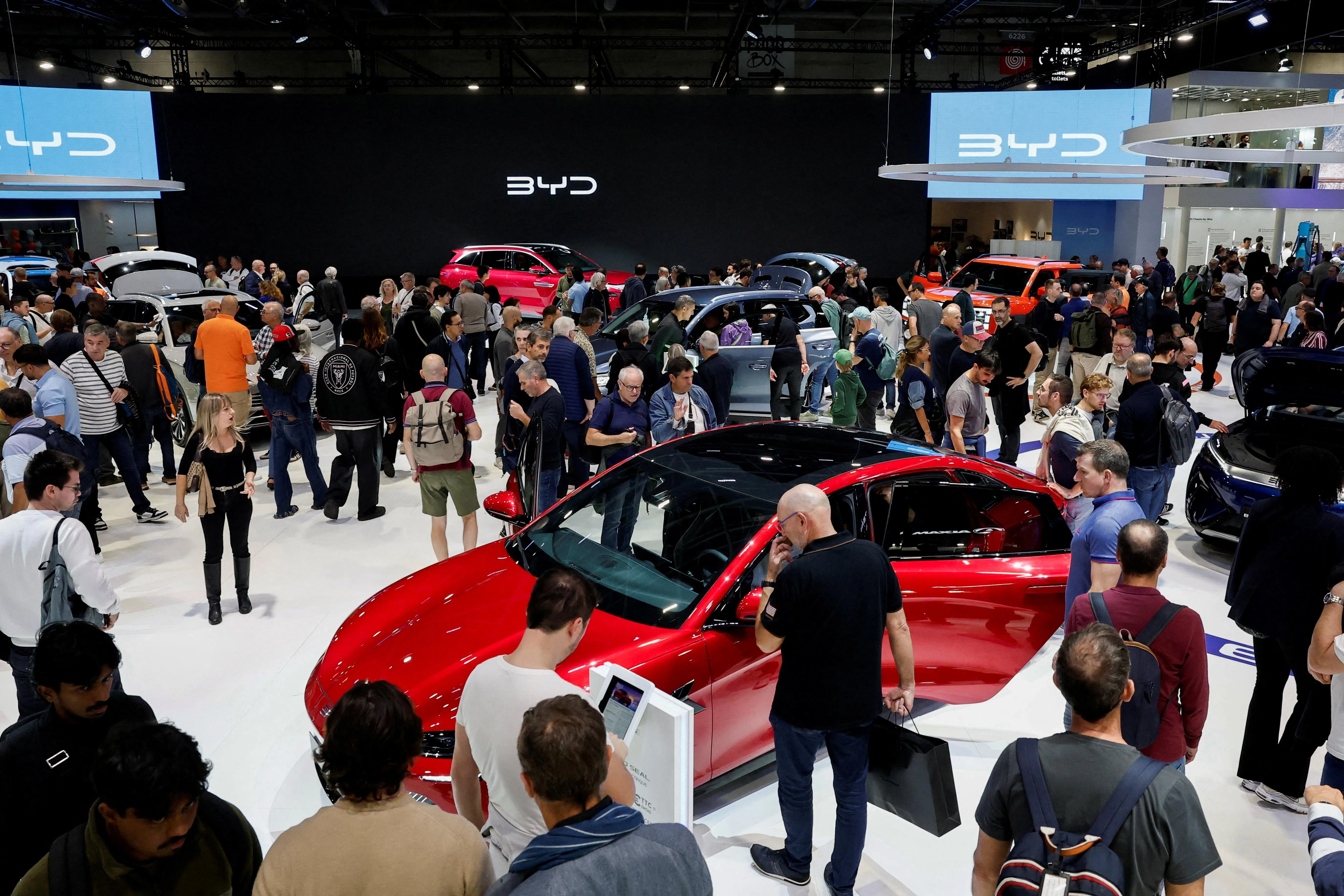
BYD has attributed the wheel rim mix-up to a supplier’s coding entry error. But questions remain over why subsequent quality checks failed to detect that error promptly, and why action was taken only after vehicles had been delivered and owners discovered the problem themselves. This has raised doubts about its quality management processes and factory inspection system.
As carmakers accelerate production and continue to expand their product ranges, supply chains are becoming more complex, making quality control harder. In China’s increasingly competitive car market, success may depend not just on who can launch new models and expand capacity faster, but also on who can manage supply chains more precisely and effectively while maintaining quality standards.
