

“Mum, can you change my name?”
The plea came from Jiahao, an elementary school boy in China. Because his name is also a popular internet meme, he has endured persistent taunts and ridicule from classmates, even suffering sleeplessness and anxiety. He has repeatedly begged his mother, who asked to be identified by the pseudonym Ms Liu, to change his name, revealing his despair at seeing no other way out.
On Tuesday (10 November), Guangzhou Daily quoted Liu as saying she was initially baffled by the ridicule her son faced at school. How had a perfectly good name become a meme used to insult and mock people?
She explained that she had chosen the name for its positive meaning: “‘Jia’ means goodness and kindness, and is also a character used in our family’s names. ‘Hao’ embodies my hopes for him: that he will be safe and healthy throughout his life, have good character and grow into a child I can be proud of.”
Liu had taken pains to explain these meanings to her son. Yet classmates kept mocking him, and he often could not sleep at night. “He has to put up with all these negative effects simply because his name is Jiahao. I think it is terribly unfair.”
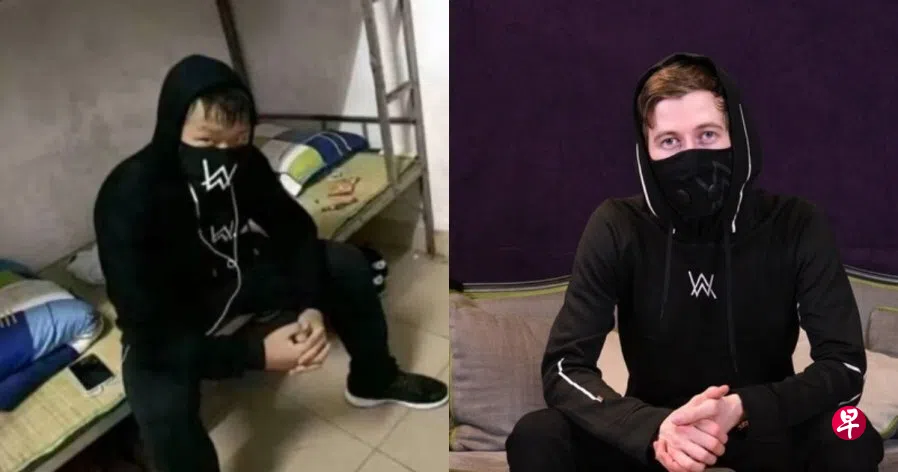
The “Jiahao” meme originated in 2024, when a student using the online handle “Zhengyang Is Not a Sheep” imitated Norwegian electronic music star Alan Walker in a classroom. A classmate uploaded a video of the performance to Douyin, where it unexpectedly went viral.
When the video was uploaded, the student’s real name was mistakenly entered as Jiahao. From then on, internet users used “Jiahao” to poke fun at their own adolescent attempts to look cool — wearing black hoodies and black face masks, for instance, and striking dramatic emo poses as though lost in a world of their own.
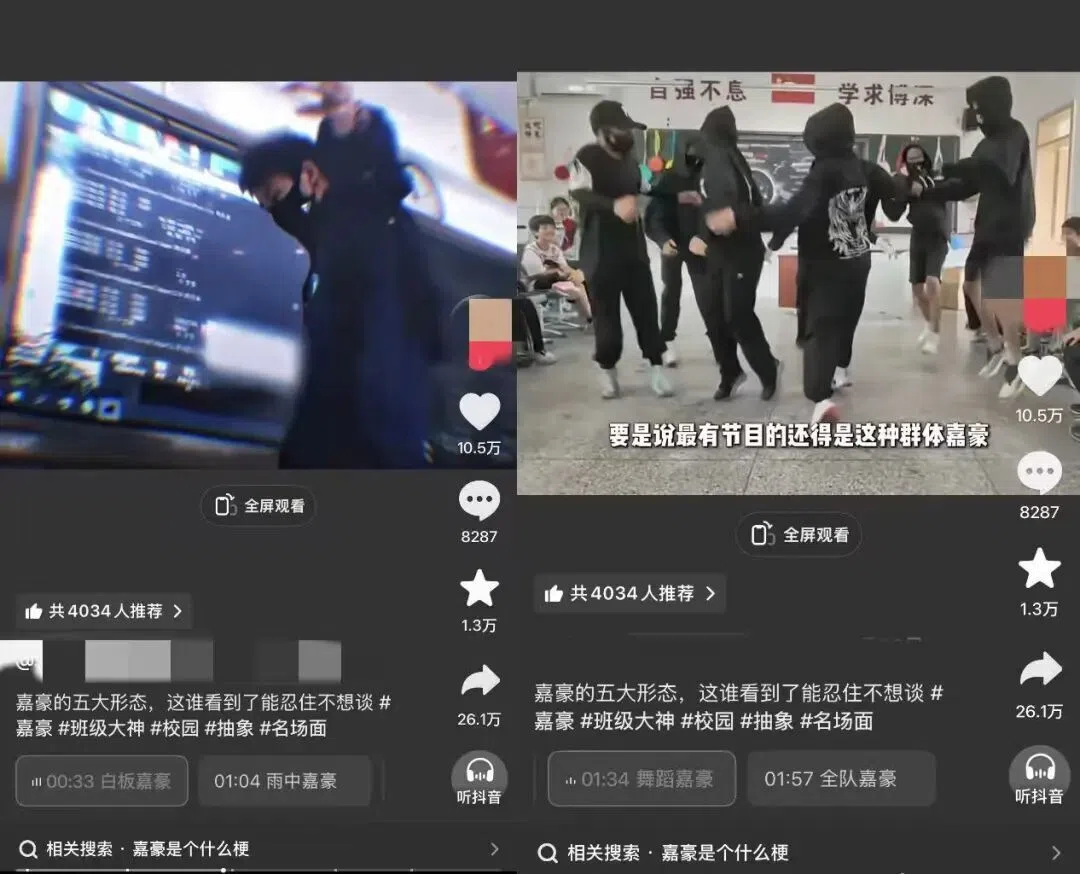
By the summer of 2026, the meme had gone viral again, reaching a much wider audience but losing its original context. What began as self-deprecating humour became a way to mock others for anything deemed “pretentious” or “trying too hard”. It turned into a derogatory label and one of China’s most popular internet memes this year.
The harm caused by this shift in meaning has also played out offline.
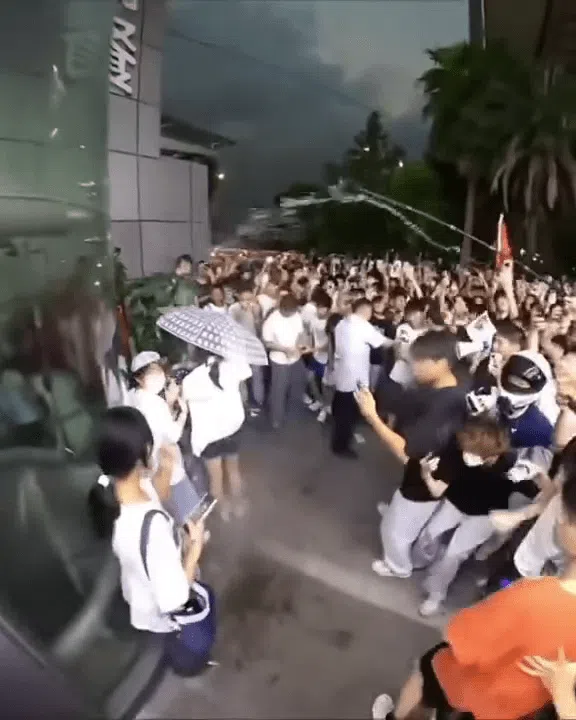
During a group clash in Chongqing’s Nan’an district in August this year, livestreamers and people following the trend, most of them young men, gathered to broadcast outside the Changjiang International building, where talent agency TF Entertainment has offices. They filmed underage trainees entering and leaving the building, as well as female fans waiting outside, shouting “Jiahao” and other internet expressions to mock and provoke them. Arguments, water-throwing and physical clashes between the male and female groups followed, prompting police intervention.
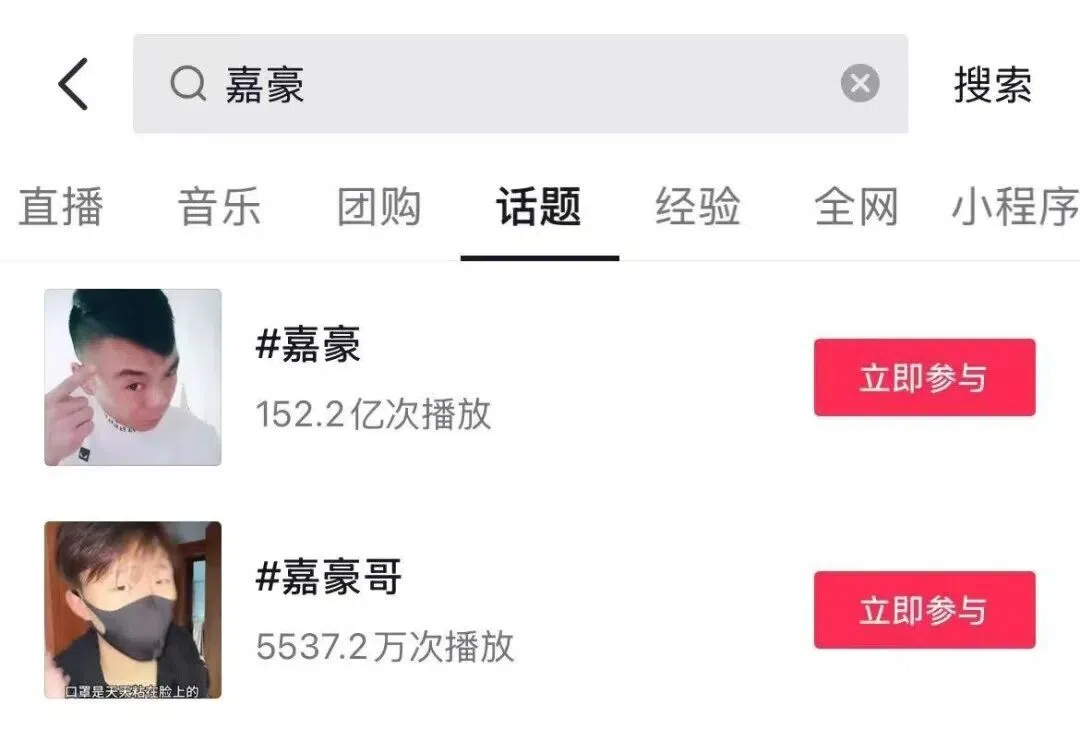
According to short-video platform Douyin, topics related to Jiahao have amassed more than 15.22 billion views this month. Phrases such as “so Jiahao”, “cringelord Jiahao” and “I just got Jiahao-ed” have become commonplace in comment sections and on-screen comments. Children named Jiahao in Chinese schools have consequently been caught in the fallout, suffering bullying fuelled by internet users with little recourse.
Liu said: “Appealing to internet users to stop using the meme will not do much good. Ordinary people have too little influence… Some will say, ‘I was only joking. How was I to know he was so sensitive?’”
As she sees it, changing his name is the only solution. But their hometown is too far away, and the return journey would be too tiring for a child. “We can only wait until he is a little older before changing it.”
In an article published on Thursday (12 November), Ma Junzhe, director of Guangdong Zheqing Law Firm, wrote that “being ridiculed” is a legitimate reason for a name change in China, but that this may not be the best solution. Changing the child’s name would mean he no longer had to be called “Jiahao”, but the meme would remain. When another name becomes a meme, another child would ask the same question.
Ma noted that if classmates’ behaviour went beyond “joking” and involved persistent ridicule, insulting nicknames or acts such as shoving, it would constitute school bullying. The costs of a civil lawsuit would be wholly disproportionate to the benefits. A more practical approach would be to speak to the school first and ask the form teacher to address the use of memes to mock classmates.
“This is not about asking schools to punish every child who shouts ‘Jiahao’. It is about asking schools to make one thing clear: using internet memes to label classmates and repeatedly taunting them until they have insomnia is not ‘joking’. It is something the school must address.”
Internet memes continue to fuel bullying in Chinese schools
The story of elementary school pupil Jiahao repeatedly asking his mother to change his name trended online this week, parking public calls that real-life ‘Jiahaos’ should not become casualties of a viral meme frenzy.
In a commentary, the official media outlet People’s Daily said that for a child to be driven to want to change his own name, one could only imagine how much ridicule and distress he had endured because of an internet meme that had nothing to do with him. The article argued that the harm caused by such labelling and mockery must not be underestimated: a meme must never be allowed to ruin a child’s life. Innocent children should not have to pay the price for the noise adults create online.
Zhejiang Xuanchuan, the Zhejiang provincial publicity department’s WeChat account, also published a commentary criticising the Jiahao meme for having long crossed the line from ordinary joking into outright offence in many cases. It called for restraint in using memes and urged platforms not to stand idly by, but to prevent algorithms from becoming tools that amplify ridicule and fuel hostility.
Indeed, amplified by social media platforms, internet memes have continued to fuel bullying in Chinese schools in recent years, with signs that the problem is worsening.
As early as the beginning of 2023, a schoolboy in Chengdu, Sichuan, was nicknamed “Chicken Bro” by classmates because his name contained the character “Kun”. Some wrote offensive internet memes and malicious taunts, such as “Chicken, you’re so beautiful”, on his textbooks and desk. They also frequently chased him around, calling him a “sissy”, leaving him feeling depressed, averse to school and inclined towards self-harm.
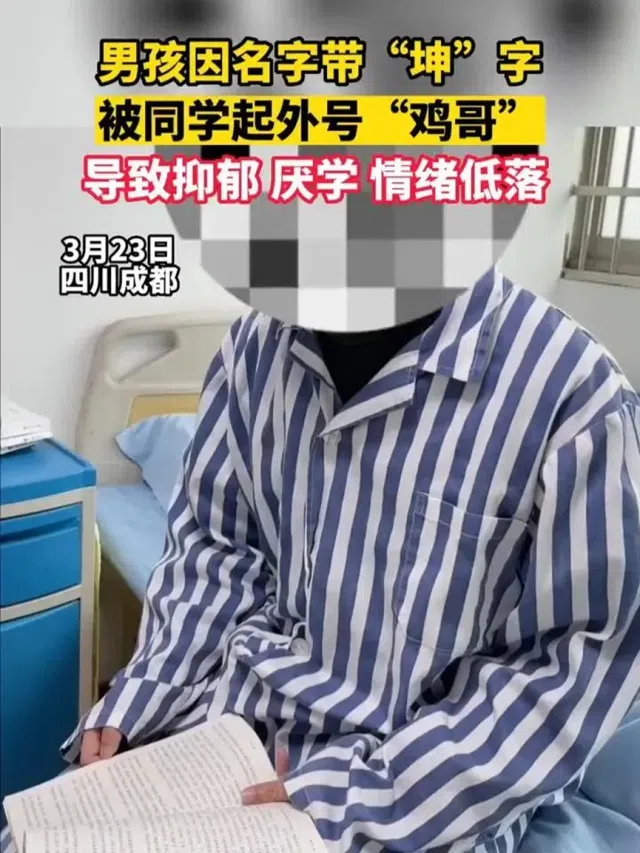
“Chicken, you’re so beautiful” is a well-known Chinese internet meme originating from a self-introduction video by Chinese singer Cai Xukun on the 2018 talent show Idol Producer. In the clip, he dribbled a basketball while dancing to the song “Just Because You’re So Beautiful”. Sung too quickly, part of the title line sounded to internet users like “Chicken, you’re so beautiful”, spawning a wave of remixes and other derivative content. Following the non-physical bullying incident at the Chengdu school, the official People.cn website singled out the meme in a commentary, calling for children to be protected from vulgar, trashy online content.
From late 2003 to last year, the rise and spread of the “Zihan” meme affected many elementary and middle school pupils with that name. It originated in short-video skits mocking unreasonable, overindulgent parents and their badly behaved children. As a result, pupils named Zihan were jeered at and ridiculed by classmates. The online mockery even extended indiscriminately to people whose names sounded the same but were written with different Chinese characters, such as Zihan written with “Zi” meaning “purple” or “catalpa”.
In September last year, a middle school form teacher in Chongqing posted a video on social media saying that students in the class had been using the term “Tang people” to mock classmates. Only after looking it up did the teacher discover that it had become an insult alluding to Down’s syndrome, which Chinese name contains the character “Tang”. The teacher immediately reprimanded the students involved and explained why the term was wrong, calling for offensive internet memes to be kept out of schools.
In October 2024, the Chinese authorities launched a targeted campaign against practices including the creation of offensive internet slang and memes and the misuse of veiled expressions. So far, however, its impact has been limited.
The Jiahao meme, meanwhile, looks set to spread further.
Guangzhou Daily quoted Jiaxin, a university student in Guangdong, as recalling that she had even found the Jiahao meme amusing when it went viral. Only when people online began joking that “the boys are called Jiahao, the girls are called Jiaxin” did she realise how close to home it was. “Perhaps you really do not feel the pain until it happens to you.”
To Jiaxin, this was suffering she had done nothing to deserve. She explained that “Jia” was the shared generational name for children in her extended family, while “Xin” represented flourishing and prosperity. “I used to be very proud of my name,” she said. But her experiences were beginning to erode that pride.
Jiaxin said that one day, she came across a video using the “Jiaxin meme” and could not resist commenting: “This meme is really disrespectful.” Someone soon replied: “Now that’s a real Jiaxin.” She was unsure whether she was being oversensitive, but the remark stung. “It felt sarcastic. I felt so powerless and did not know what to say, so I deleted my comment.”
Later, Jiaxin tried posting online about the distress the meme had caused her. Unexpectedly, the comment section quickly became a place for others with the same name to confide in one another. Many internet users named Jiahao or Jiaxin shared their experiences: some had been mocked by colleagues, some dared not continue using their real names in group chats, and others lay awake late at night because of a single joke.
Lawyer Ma Junzhe lamented that, for now, what Chinese law could do was make a name change possible for Jiahao. Both parents could attend, sign the paperwork and have the application processed at a police station. Once the procedure was complete, the child could have a new name, one not tainted by 15.2 billion views. But the law could not make the Jiahao meme disappear, let alone prevent the next name turned into a meme from causing harm.
Clearly, legal recourse merely gives victimised Chinese children an escape route. At the end of the day, it is only a stopgap measure that fails to address the root problem of rampant trashy memes and verbal bullying. Tackling the causes and preventing more children like Jiahao from suffering will require parental guidance, intervention by schools, action by online platforms and government oversight. Only through a concerted effort on all these fronts can Chinese society hope to spare innocent children the undeserved harm caused by offensive internet memes.