


Late autumn is usually the best time to admire the scenery at Jiuzhaigou in Sichuan. But what sent the tourist destination trending this week was not its autumn colours, but flying fists and bloodied faces.
A video that went viral on the Chinese internet on Monday (2 November) showed an elderly male tourist in a blue jacket repeatedly punching a younger male tourist in purple, knocking him to the ground. The younger man suffered facial injuries and was bleeding from his mouth. A young woman was also bleeding from her face.
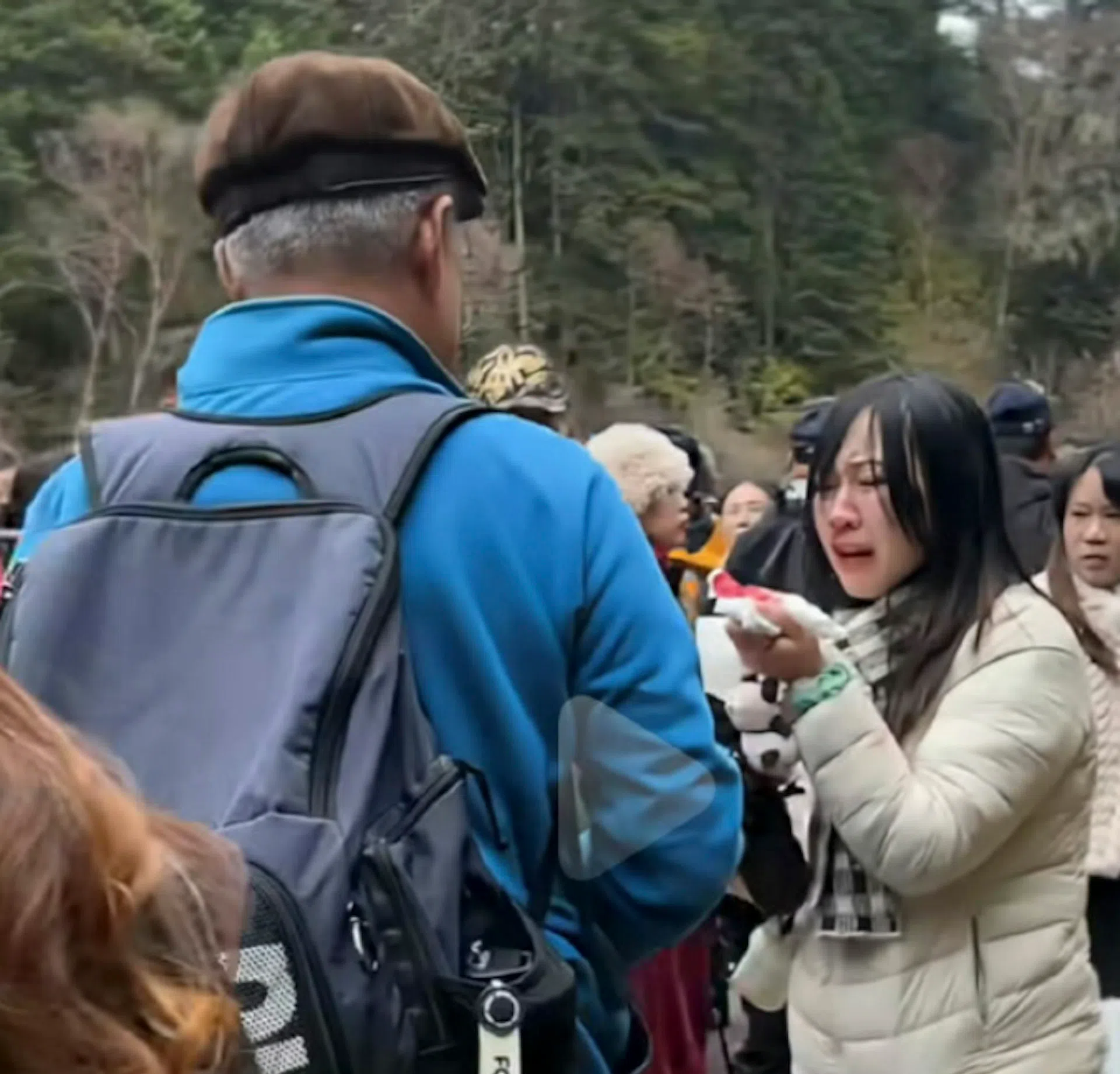
The video showed a large crowd of onlookers, with some people stopping the older man from leaving. The younger man who had been punched shouted: “Don’t leave! You can’t just walk away from this!” Several related topics soon trended on Weibo.
On Tuesday (3 November) afternoon, the Jiuzhaigou County Public Security Bureau issued a statement saying that a dispute over taking photographs had escalated into a physical altercation at 2pm on Monday. It involved a 62-year-old male tourist surnamed Xue from Shaanxi, a 58-year-old female tourist surnamed Zhang, a 27-year-old male tourist surnamed Zhao from Beijing and a 26-year-old female tourist surnamed Li from Guangdong. All except Zhang were injured.
The official statement described the cause simply as a “dispute over taking photographs”, without providing further details. Before its release, however, a staff member from the public security bureau told Dahe Daily that the two sides had fought over a better spot for photographs, with an argument escalating into violence. The staff member said it was understood that “the younger side probably struck first”.
Although the official statement said both sides “fully acknowledged their mistakes, apologised to each other, obtained each other’s forgiveness, and reached and fulfilled a mediation agreement”, public attention to the age gap between the tourists far exceeded expectations. The debate over taking sides with “young tourists versus elderly tourists” continued to intensify.
Jiuzhaigou becomes “Elbow Valley”?
The debate has also brought “Zhouzhaigou”, an online pun that has circulated on social media in recent years, to wider public attention. It replaces the first syllable of Jiuzhaigou with the Chinese word for “elbow”.
Located in northern Sichuan, Jiuzhaigou is a national 5A-rated tourist attraction that draws large numbers of visitors throughout the year. Open data compiled by Sohu Travel showed that the scenic area received 7,442,400 visits last year, up 27.02% year on year and a record since it opened to the public in 1984.
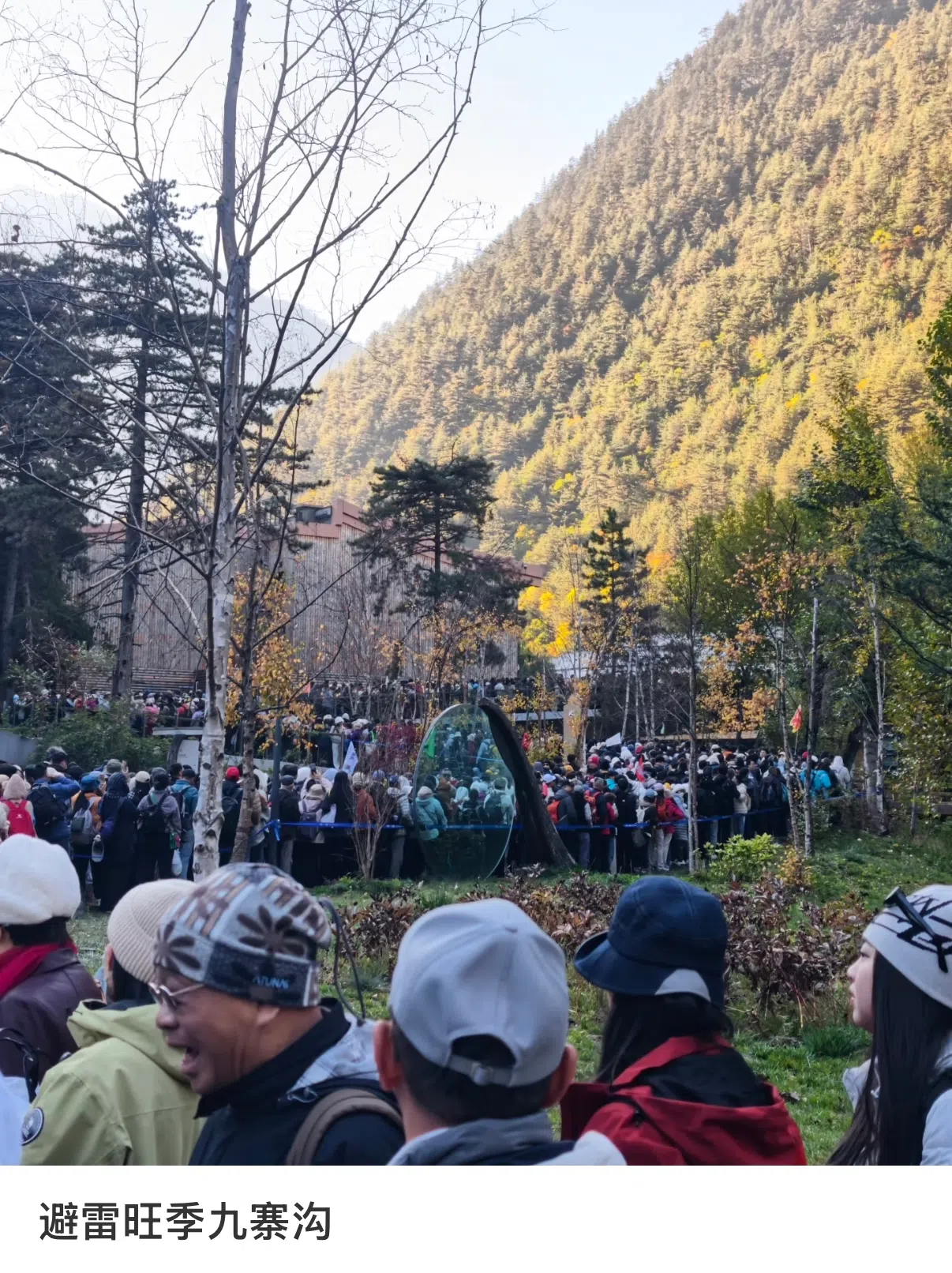
Last year, Jiuzhaigou reached its maximum daily capacity of 41,000 visitors on 52 days, compared with just six days in 2024. Older people make up a significant share of the visitors flocking there.
Since 2018, Jiuzhaigou has offered free admission to Chinese visitors aged 65 and above. Those aged 60 to 65 also enter free outside public holidays and receive a half-price discount on public holidays.
Data from the Jiuzhaigou administration showed that although people aged 26 to 59 remain its main visitor group, those aged 60 and above accounted for as much as 19.61% of visitors in the first half of last year. That share fell to 16.14% in the first three quarters of this year, but remained higher than at the Huangshan scenic area in Anhui and Changbai Mountain scenic area in Jilin.
On social media and travel review platforms, where younger users predominate, many have complained about peak-season crowds at Jiuzhaigou and inconsiderate behaviour by some older tourists, such as queue-jumping and elbowing others out of the way. They have jokingly dubbed it “Zhouzhaigou”.
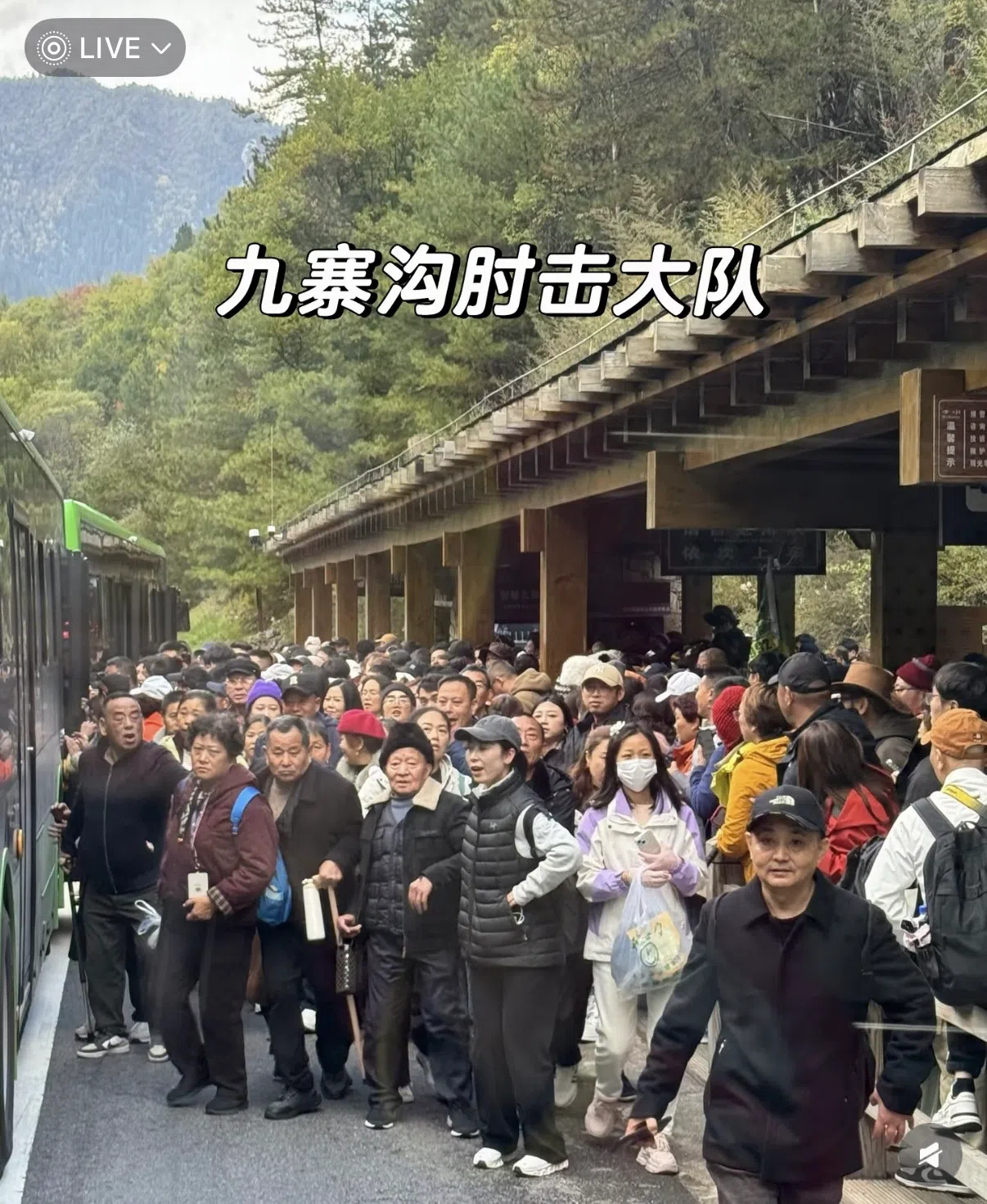
Numerous posts on Xiaohongshu have even sought advice on “how to avoid the elbowing army”. One user jokingly suggested setting up a “boxing ring” at Jiuzhaigou, saying they had seen five fights there in a single day and had “saved on cinema tickets”.
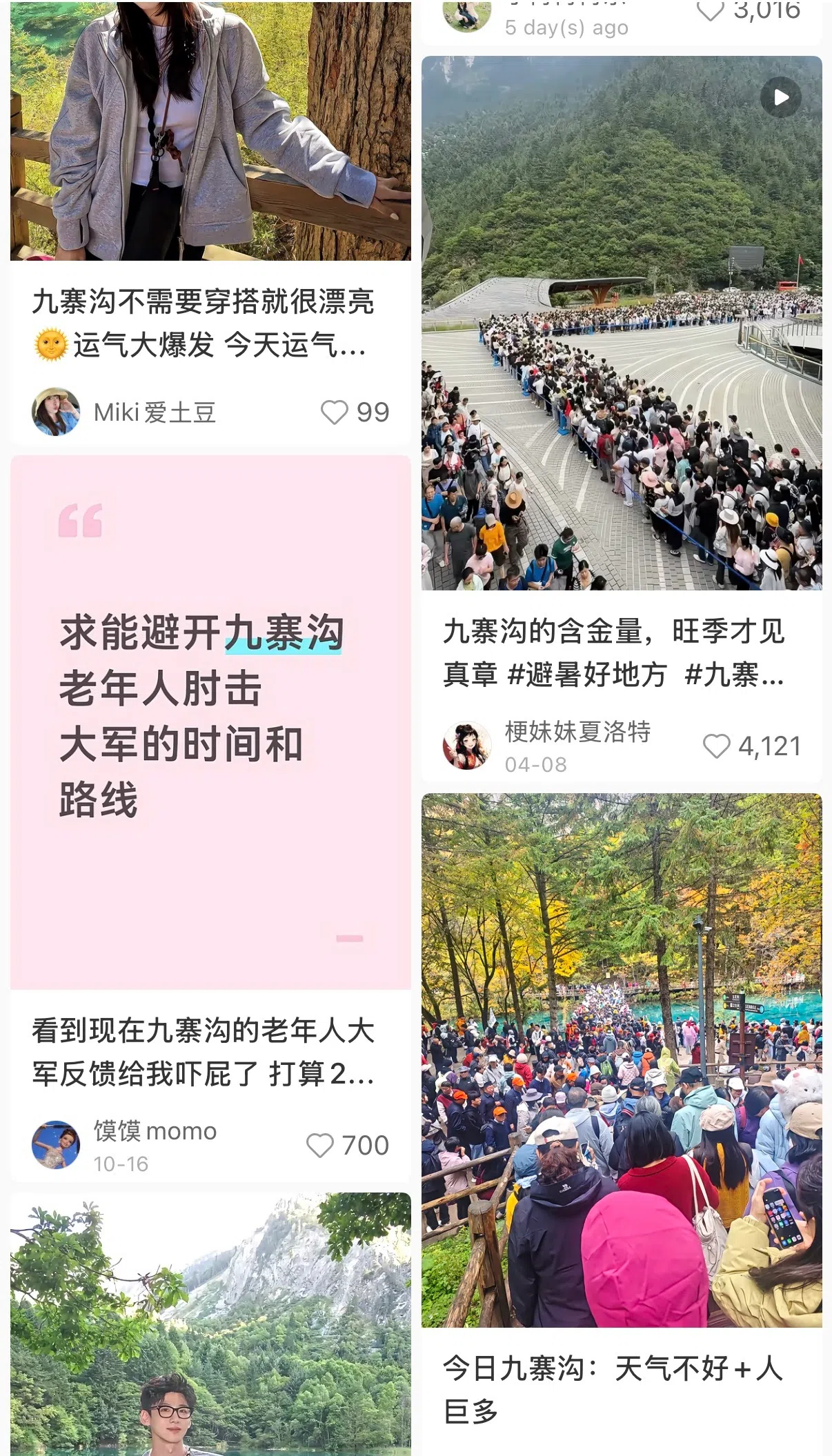
As the discussion intensified, some users took aim at the scenic area’s concessions for older visitors. Modern Express reported that some had suggested changing Jiuzhaigou’s peak-season admission policy for those aged 65 and above from free entry to half-price tickets, to ease jostling for space on boardwalks and sightseeing buses.
The dispute over photographs that drew widespread attention this week has further fuelled the debate over age. Some media outlets, noting the generational antagonism behind the incident, urged people not to label the “Jiuzhaigou assault” as a case of “older people beating up younger people”.
A commentary by Shangyou News said individual behaviour had quickly been generalised as characteristic of an entire group, turning an ordinary dispute into extreme, partisan accusations online. “Age is no shield, but nor should it be grounds for judging people through stereotypes,” it said, arguing that individual disputes must not be allowed to fracture social consensus.
The Paper brought the discussion back to the incident itself, stressing that responsibility should be established through facts and right and wrong judged according to the law. An individual conflict should not be allowed to turn into generational antagonism. Young or old, people should bear responsibility for their actions and should not enjoy privileges because of their age.
Is generational antagonism growing?
Similar friction between generations has not been uncommon in China in recent years. In August 2024, a 69-year-old man and a 23-year-old man had a physical altercation on the Qingdao metro, leaving the younger man with a shattered nasal bone. Police found that the younger man had first verbally harassed and insulted the older man, who was placed under compulsory criminal measures on suspicion of intentional injury.
In April this year, a 32-year-old woman and a 66-year-old passenger fought over a seat on the Shanghai metro. In June, an elderly person pulled at a girl on the Chengdu metro, demanding that she give up her seat. Discussions sparked by these incidents often go beyond the clashes themselves to questions about the obligation to respect older people, personal boundaries and whether age confers certain privileges.
A report in The Straits Times in August 2024 cited analysis suggesting that tensions between young and old in China stem partly from differences in their economic circumstances. Some retirees have relatively stable pensions, while younger people face pressures from competition for jobs, housing costs and uncertainty over their own retirement security. Slower economic growth and employment anxiety have further magnified these existing generational differences.
Today, the burden of social insurance contributions on young Chinese people, along with policies on raising the retirement age and retirees returning to work, has prompted debate about how benefits are distributed between generations. Claims such as “young people cannot afford to support the elderly” and “older people are taking young people’s jobs” continue to stir controversy. Last Thursday (29 October), the official People’s Daily published an article specifically addressing the issue, criticising some independent online content creators for using such claims to fuel anxiety and provoke division.
These sentiments are reflected in discussions of the Jiuzhaigou incident. Comments beneath related reports included “Elbowed by the very people your social insurance contributions support” and “The wage slaves paying social insurance dare not hit back, while the aunties collecting it come out swinging”. Such remarks redirect anger over a single clash towards the distribution of benefits between generations.
In December 2024, economist Gao Shanwen used the phrase “energetic elderly people, dispirited young people” to describe the contrast in spending appetite and income expectations between age groups after the pandemic. The phrase went viral again this year, with discussions extending beyond economic trends to differences in lifestyles and resource allocation between generations.
Meanwhile, online slang such as “laodeng”, a derogatory term for older people, has become increasingly popular. Initially used mainly to mock older people’s patronising attitudes and rigid views, it has now broadened in some contexts into a disparaging label for middle-aged and elderly people in general.
Many others, however, take a different view of this narrative of generational antagonism.
Some argue that today’s social benefits are the product of decades of nation-building. Many older people also faced the pressures of productive work, national development and supporting their families when they were young. Enjoying life after retirement is a deserved reward for their labour, not an encroachment on young people’s resources. As one online user put it: “Work hard when you’re young, then enjoy life after retirement. That is a positive incentive. Otherwise, what is the point of working hard?”
Friction is not unusual at crowded tourist attractions. The Jiuzhaigou incident may have provoked such a strong public reaction because it also touched a nerve among some young people with long-standing grievances towards the older generation.
In fact, older people are far from a homogeneous group. There are vast differences in the welfare and social protection available to retired urban employees and older rural residents.
Take pensions, for example. Under China’s current system, 180 million older people receive a basic pension for urban and rural residents of around, but less than, 300 yuan a month (S$57.40). Most of them live in rural areas. Retirees from government agencies and public institutions, and retired employees of urban enterprises, come under different pension systems.
According to Caixin, the average monthly pension for urban and rural residents nationwide was just 287 yuan last year, far below the average monthly payout of 3,498 yuan under the urban employee pension insurance scheme. Pensions also vary enormously by region, with basic pension rates in eastern China 6.2 times those in the west.
Reducing complex economic pressures and social security issues to a conflict between young and old could obscure the deeper structural tensions behind them.
