

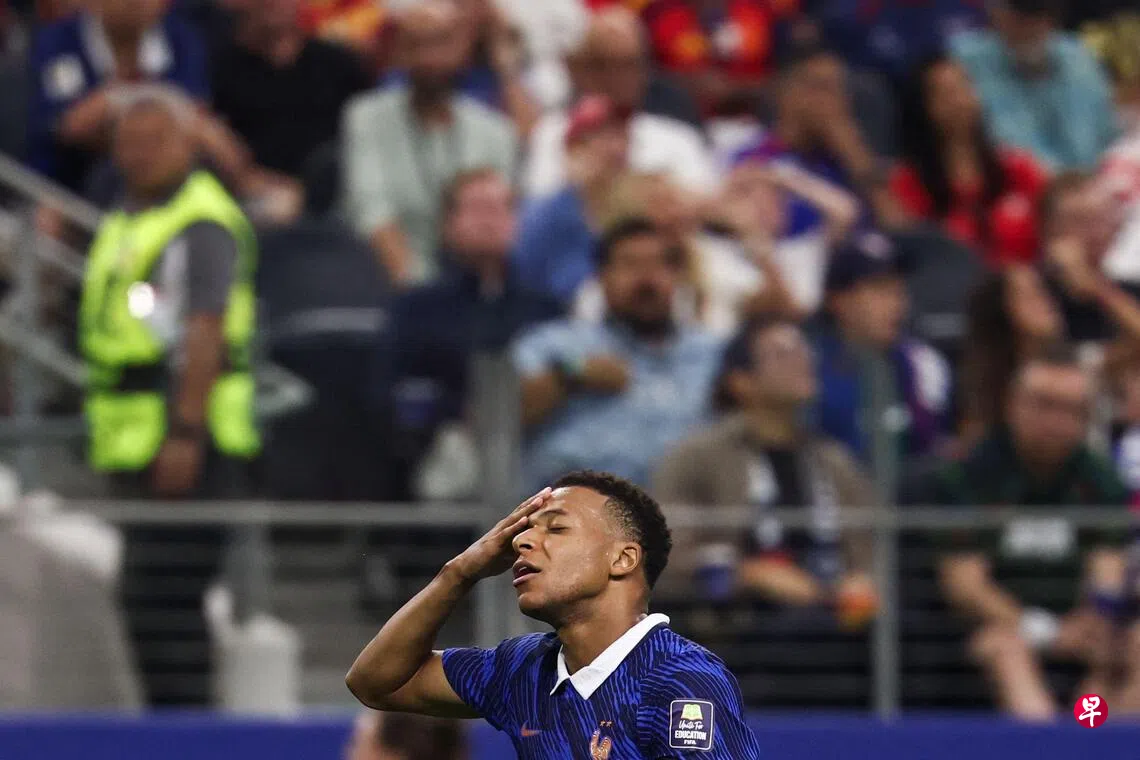
French football superstar and Real Madrid forward Kylian Mbappe, who plays in Spain’s La Liga, has sparked an uproar in China with a comment about a meme.
Within a day, sponsors and social media platforms had rushed to distance themselves from him. He swiftly apologised that evening, stressing that he had “deep respect for the Chinese people and their history”.
The controversy began with an interview clip circulating online recently. In it, Mbappe said the funniest meme he had seen of himself was one that superimposed his face on “some guy…a Chinese dictator”.
Mbappe did not name anyone, but as he spoke, the video displayed a meme with his face superimposed on an image of Mao Zedong, the founding leader of Communist China. Mbappe said he often used the meme when playing games online with friends.
It is unclear when the video was filmed. The logo of The Bridge, an podcast interview hosted by French footballer Aurelien Tchouameni, appears in the top-right corner. Mbappe took part in a recording of the programme in April this year.
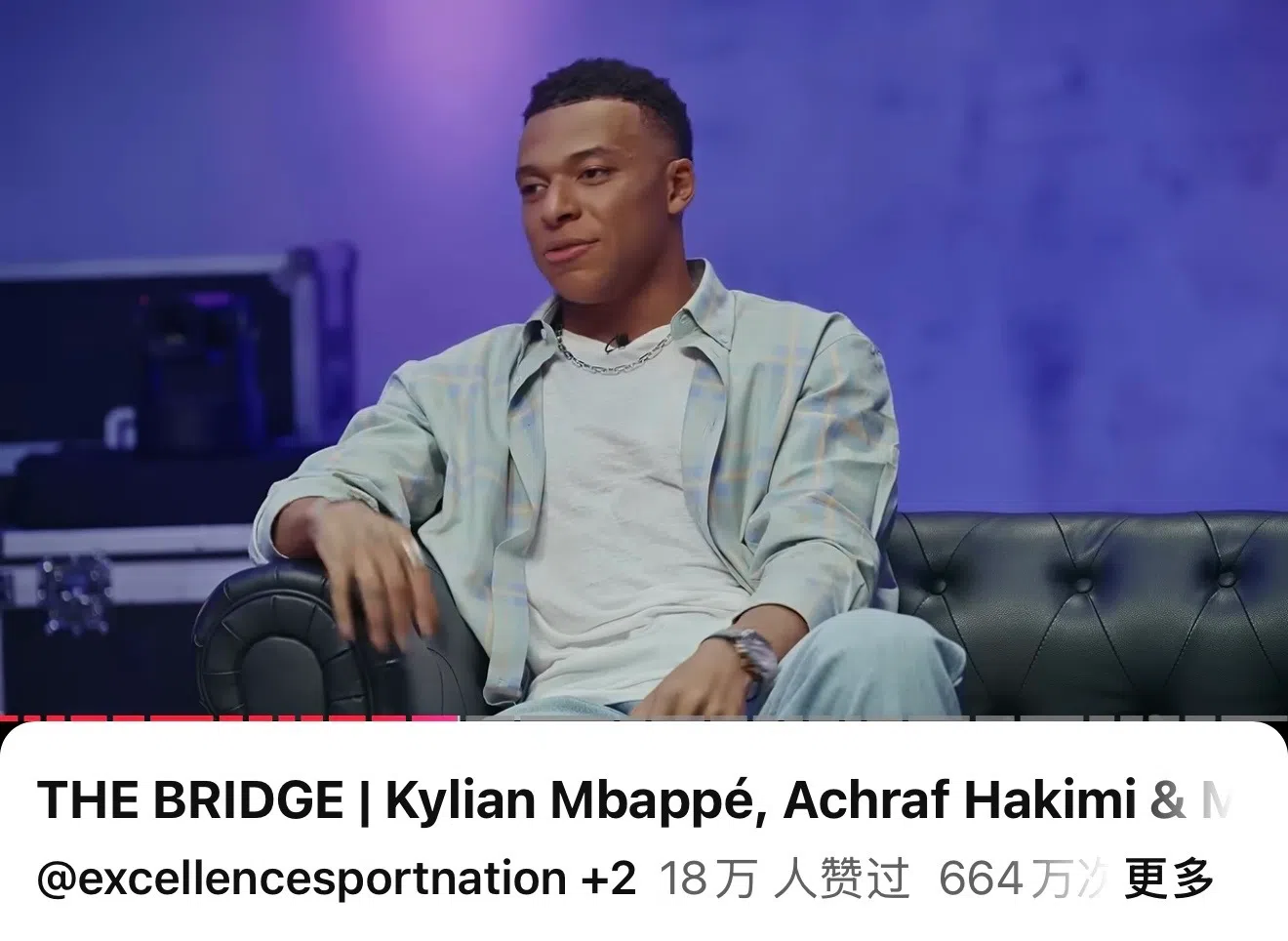
The video appeared on the football community of online forum Reddit on Monday (26 October), before spreading to Chinese football circles. That evening, Chinese football news platform Dongqiudi issued a statement accusing Mbappe of making inappropriate remarks about China that hurt the feelings of Chinese fans and the Chinese people.
The statement said: “As his remarks are hurtful to China and the Chinese people, we cannot translate them. Regardless, his remarks have already hurt the feelings of Chinese football fans and the Chinese people. Such remarks are unacceptable to us.”
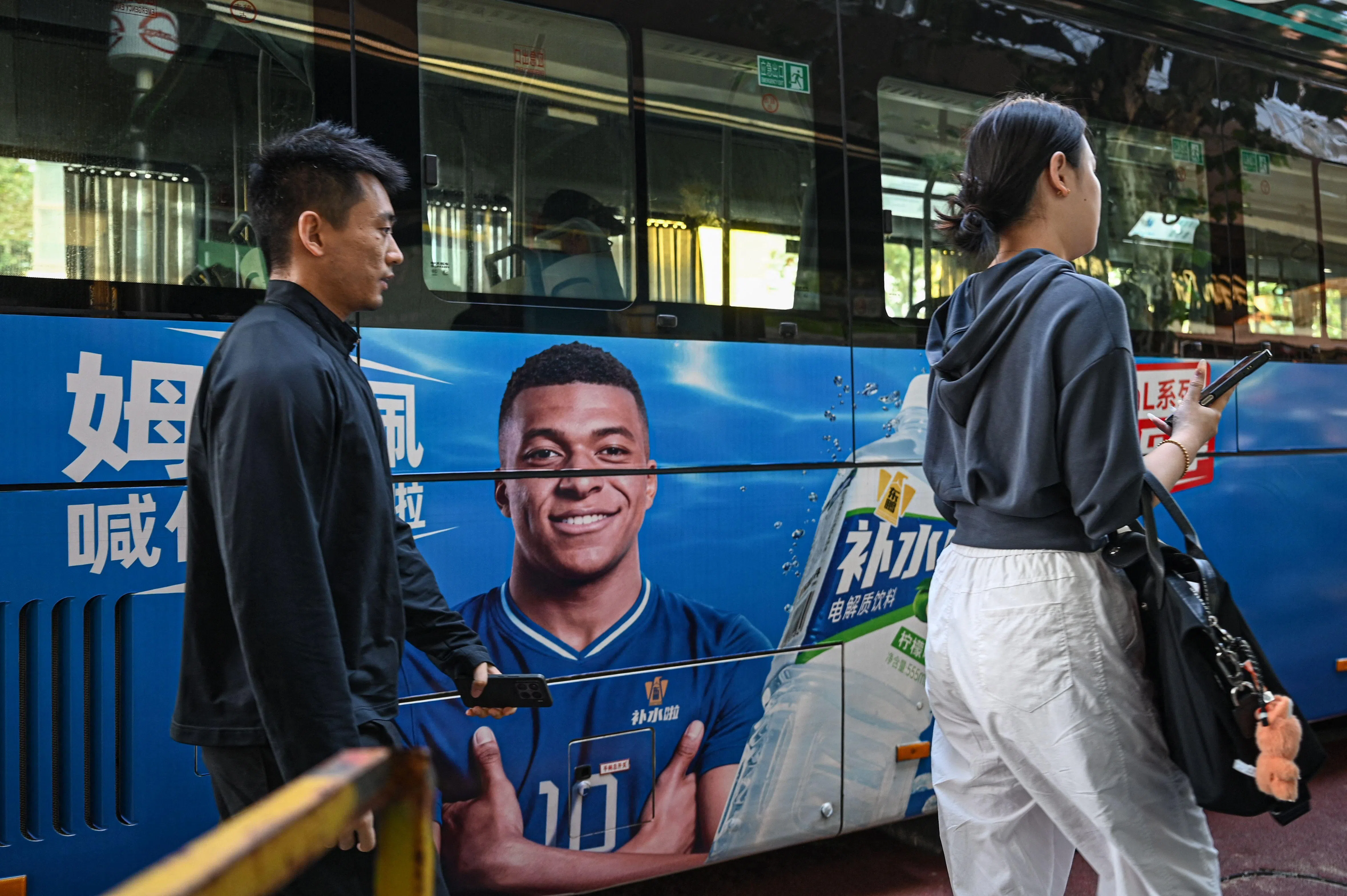
Early on Tuesday (27 October), Eastroc Beverage Group followed suit, announcing that it was ending all cooperation with Mbappe. It said it “firmly opposes and has zero tolerance for actions that hurt national feelings”.
Neither Dongqiudi nor Eastroc specified what Mbappe had said, while Chinese media reports described his comments simply as “inappropriate remarks”. Some internet users asked what had happened. One explained: “Mbappe used the Teacher’s face in a meme, said he found it funny and used it while gaming.” “The Teacher” is one of the names Chinese netizens use for Mao Zedong.
The fallout spread rapidly, with several brands distancing themselves from Mbappe in quick succession. Chinese dairy companies Mengniu Dairy and Shanghai Milkground announced that they were ending their partnerships with him. Swiss sportswear brand On removed promotional material featuring Mbappe from its Chinese social media accounts. Online sports community Hupu even removed Mbappe from its ratings table for this year’s Ballon d’Or.
Social media platform Xiaohongshu said in a statement that its content partnership with Mbappe in 2024 had ended that same year, and that it was continuing to check for and remove related material. Mbappe has more than a million followers on both Xiaohongshu and Weibo, but users can no longer follow his accounts.
Asked about the matter at a press briefing on Tuesday afternoon, Chinese Ministry of Foreign Affairs spokesperson Guo Jiakun replied: “Words and actions that hurt the feelings of the Chinese people will naturally be met with unanimous rejection from all sectors of Chinese society.”
The controversy over his remarks also spread to sports broadcasting. China’s state broadcaster CCTV announced on Tuesday that it had halted broadcasts of La Liga and matches involving Mbappe, and removed advertisements featuring him.
La Liga issued a statement the same day expressing regret for the hurt Mbappe’s remarks had caused Chinese fans. It stressed that his comments reflected his personal views, not the league’s position, and apologised on behalf of the league and its clubs.
La Liga president Javier Tebas apologised again on social media platform X on Tuesday evening, saying the league was taking every measure within its power and engaging directly with its partners and relevant parties in China to resolve the situation.
Mbappe subsequently issued an apology on X in Chinese, English and French, acknowledging that his remarks were inappropriate and had hurt many people in China and Chinese people around the world. “I have deep respect for the Chinese people and their history, and I am sincerely sorry.”
CCTV responded again that evening, saying it had noted Mbappe’s apology but stressing that it would judge Mbappe by his actions as well as his words. It hoped all parties would learn from the incident and “mend their ways”.
Notably, after Mbappe’s apology, both CCTV and the Chinese Football Association disclosed that they had “immediately” taken up the matter with the relevant parties following the incident. CCTV said it had promptly contacted La Liga and sent a letter to Tebas in the name of CCTV’s president, demanding apologies from Real Madrid and Mbappe himself, as well as a written apology to CCTV. The Chinese Football Association also said it had immediately approached Real Madrid to demand an apology.
Topics including “What did Mbappe do?”, “Brands that have ended their partnerships with Mbappe” and “Mbappe apologises” took turns appearing on Weibo’s trending list. One netizen said: “Luckily Mbappe didn’t win the Ballon d’Or, or even that would have faced a boycott.”
Mbappe’s “dictator” memes
Netizens outside China began making “dictator” memes of Mbappe in 2024. During this year’s World Cup, another wave of “Dictator Mbappe” memes swept social media overseas. Users generated meme images and videos with artificial intelligence, portraying him as a dictator in military uniform seated on a throne, or placing him alongside historical figures such as Soviet leader Joseph Stalin.
French newspaper Le Parisien (《巴黎人报》) said Mbappe’s “dictator” nickname was linked to the controversy over his contract renewal at Paris Saint-Germain (PSG), his pivotal role in the team and his leadership style. The nickname evolved into an online joke and grew more popular during the World Cup.
In an interview with the magazine France Football (《法国足球》) in September this year, Mbappe discussed online memes, saying “some of them are genuinely quite funny” and bore no ill will, but added that he did not like being compared with figures associated with historical tragedies. He also noted that while he knew the images were jokes, they sometimes reflected a lack of political and humanistic awareness.
In the interview, Mbappe also spoke about his France teammate Ousmane Dembele calling him “Mobut”, a reference to Mobutu Sese Seko, the former leader who ruled the Democratic Republic of the Congo for many years. Mbappe said Dembele had picked up the name on social media: “For him, it was purely a joke.”
Chinese media: Biting the hand that feeds you is unacceptable
But China did not see it as a joke. In a commentary posted on its Douyin account on Tuesday, state-run newspaper Guangming Daily (《光明日报》) said: “Insults against China’s late great leader will not be tolerated” and “No matter how good your football skills are, you cannot cross the line.” The post was subsequently deleted.
A Jimu News commentary said Mbappe had gained both fame and fortune in China: “Enjoying the benefits of the Chinese market, only to turn around and make outrageous, disrespectful remarks, is a classic case of biting the hand that feeds you. Such ingratitude is utterly intolerable!” It added that China’s market would never welcome “two-faced” people who abandon their principles for profit, or “opportunists” who speak without restraint.
Former Global Times (《环球时报》) editor-in-chief Hu Xijin, meanwhile, argued that Mbappe was “unlikely to have deliberately intended to offend China and the Chinese people”. His words reflected “serious cross-cultural ignorance”, Hu said.
Hu said that to safeguard their position in the Chinese market, Mbappe and Real Madrid should have taken the initiative to understand certain taboos in Chinese public discourse and shown due respect. “Every culture has its own principles, sensitivities and sources of pride. Unfortunately, Mbappe failed to do that. The swift moves by several Chinese companies to distance themselves from him should not be dismissed as oversensitivity. Their response deserves understanding.”
International sports stars repeatedly cross red lines
This is not the first time an international sports figure has faced a boycott in China over remarks concerning the country. In October 2019, Daryl Morey, then general manager of the NBA’s Houston Rockets, posted comments on social media supporting Hong Kong protesters opposed to the extradition bill, angering China’s basketball community and commercial partners.
The Chinese Basketball Association subsequently announced that it was suspending exchanges and cooperation with the Rockets. Sponsors including Li-Ning and Shanghai Pudong Development Bank’s credit card centre also suspended their partnerships, while CCTV announced that it would suspend NBA broadcasts.
In December that year, German football star Mesut Ozil, then playing for English Premier League club Arsenal, criticised the Chinese government’s Xinjiang policies in a social media post. The Chinese Football Association said his remarks had hurt the feelings of Chinese fans and the Chinese people. CCTV subsequently cancelled its scheduled broadcast of Arsenal’s Premier League match against Manchester City.
These controversies show that sensitive issues in the Chinese market extend beyond Hong Kong, Macao, Taiwan and Xinjiang to include assessments of historical political figures. As social media platforms become more widespread, public figures’ every word and action face greater scrutiny. Understanding sensitive issues in different contexts and anticipating market reactions is an increasingly complex but unavoidable challenge.
