

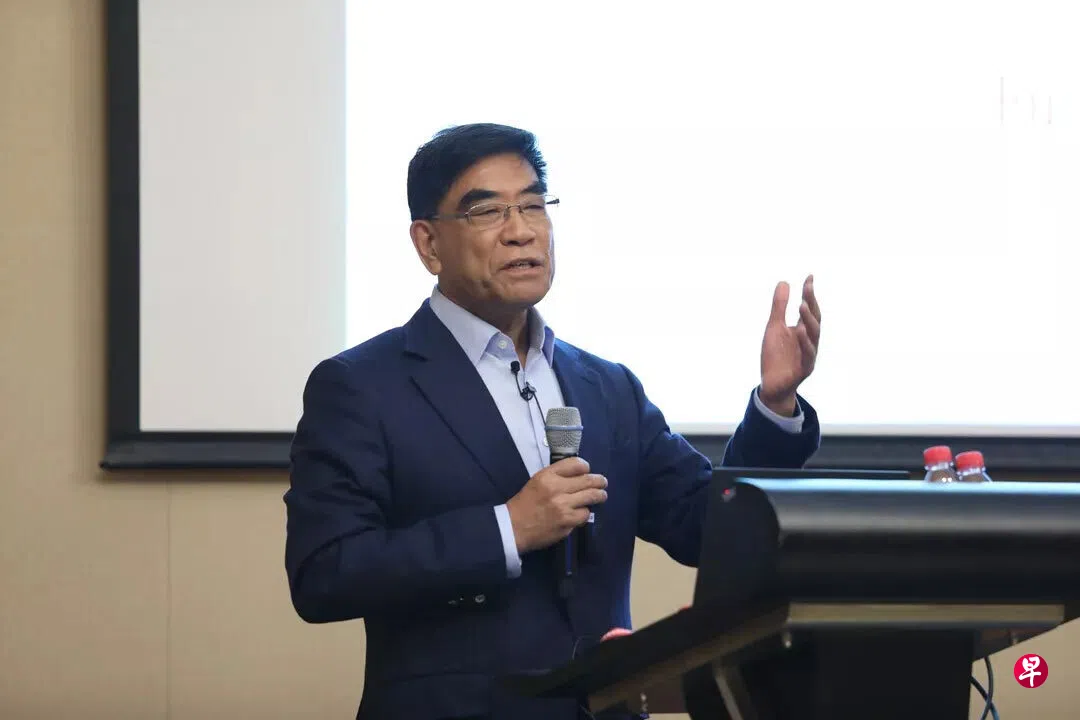
Fu Chengyu, the 75-year-old oil industry “tiger” (corrupt high-ranking official), has come under investigation 11 years after retiring, becoming the latest senior Chinese official to be investigated long after leaving office, following former Chongqing Mayor Huang Qifan. Throughout October, Chinese authorities announced investigations into a string of retired officials, a pace that has caught observers’ attention.
Oil “tiger” investigated more than 11 years after retirement
The website of the Chinese Communist Party’s (CCP) Central Commission for Discipline Inspection (CCDI) and the National Commission of Supervision announced last Saturday (31 October) that Fu Chengyu, former party leadership group secretary and chairman of China Petrochemical Corporation (Sinopec in short), was under investigation for suspected serious violations of discipline and the law.
Sinopec is China’s largest supplier of refined oil and petrochemical products, as well as the world’s largest oil refiner and second-largest chemical company. Caixin reported that Fu was taken away for questioning around last Thursday (29 October). He may have been implicated in financial improprieties during Sinopec’s mixed-ownership reform and efforts to list its sales subsidiary.
Fu, who is 75 this year, holds a master’s degree in petroleum engineering from the University of Southern California in the US. He spent more than 40 years in the oil industry, with his career largely divided between China National Offshore Oil Corporation (CNOOC) and Sinopec.
Fu joined CNOOC in 1982 and took the helm in 2003. In 2005, Time magazine named him one of the world’s most influential people following his bid to acquire a US oil company. He became Sinopec’s chairman and party leadership group secretary in 2011, stepping down and retiring in May 2015.
According to Hong Kong’s Ming Pao, Fu pushed through sweeping business restructuring at several subsidiaries after becoming Sinopec chairman. Observers described him as “the boldest and most enterprising leader, with the most modern approach to corporate governance” among the heads of China’s national oil companies. After retiring, Fu continued to make frequent public appearances, speaking frankly on issues such as state-owned enterprise reform and cuts to excess capacity. Just a month ago, he attended an annual gathering of entrepreneurs.
Fu also served on the 17th CCDI and the Standing Committee of the 12th National Committee of the Chinese People’s Political Consultative Conference (CPPCC).
In 2013, a sprawling corruption scandal erupted in China’s oil industry, with several senior officials investigated in succession over more than a year. It was the largest series of corruption cases in the history of China’s energy sector. Chinese media once noted that almost every third-generation leader in the oil sector — save for Fu — had fallen from grace.
According to Beijing Youth Daily, Fu said in 2016 that he was “particularly proud” not to have succumbed to corruption, having avoided being implicated in the oil sector scandal. He also said: “The most important restraint comes from one’s conscience and moral compass: in other words, not wanting to be corrupt. But we have, after all, lived through difficult times, so it is not entirely realistic to expect many people to have no desire for corruption. There are also too many temptations in a market economy... We still have a long way to go in building the necessary systems.”
Those words proved prophetic. Ten years later, Fu has become the latest illustration of his own remarks that it is “not entirely realistic” to expect people to have no desire for corruption, and that there is still “a long way to go” in building anti-corruption systems.
The signal behind the spate of probes into retired officials
Fu was the third retired official under central party management whose investigation was officially announced in October. He was also the third “tiger” in a month to be investigated while in his seventies and more than a decade into retirement.
The most prominent of these was Huang Qifan, known as a “political survivor” in China, whose investigation was announced on 13 October.
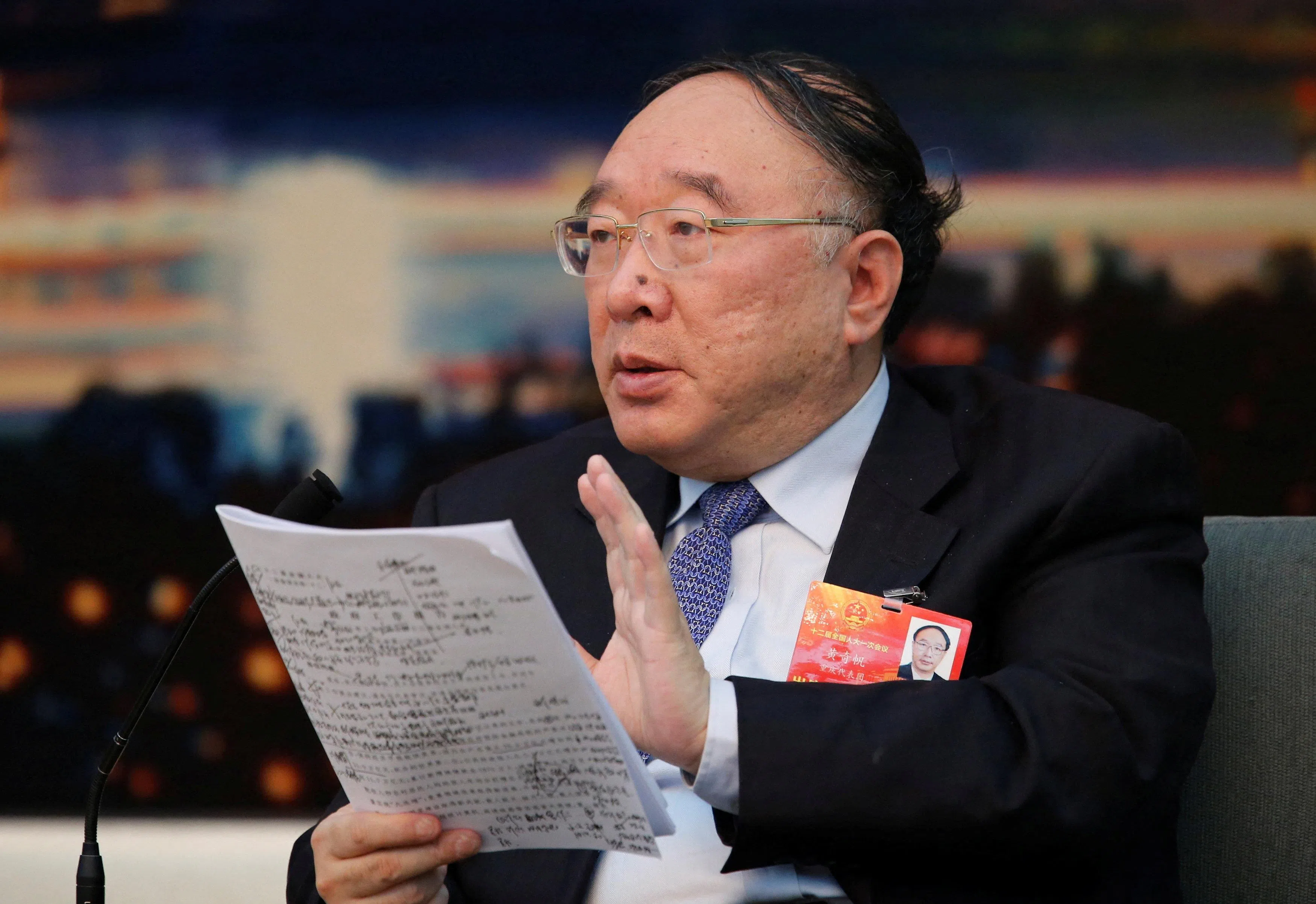
Huang, who is 74 this year, served in Chongqing for about 15 years, working alongside two municipal party secretaries who subsequently fell from grace, Bo Xilai and Sun Zhengcai. Having survived major political upheavals, he stepped down as Chongqing mayor at the end of 2016 and was regarded as a prime example of an official who had made a “safe landing”. In recent years, Huang reinvented himself as an “influencer economist” with a large online following. He had made a public appearance shortly before coming under investigation.
In Chinese political parlance, a “safe landing” generally describes an official who may have been implicated in disciplinary or legal violations while in office, or undergone intense scrutiny, but escaped accountability because of rank, status or other factors, ultimately retiring smoothly and leaving the political stage unscathed.
Yet Huang suddenly came under investigation ten years after stepping down as mayor and eight years after retiring. The announcement came at a sensitive juncture: on the eve of the fifth plenary session of the 20th CCP Central Committee, alongside a new round of local leadership transitions, personnel reshuffles, and start of personnel manoeuvring for the 21st Party Congress. It sent shock waves through Chinese politics, sparking a range of speculation about the reasons for his downfall and the political signals behind it.
Even earlier, on 28 September, authorities announced an investigation into Lu Xin, 71, a former vice-minister of education and member of the ministry’s party leadership group. Her reputation was tarnished in her later years, a decade after retirement.
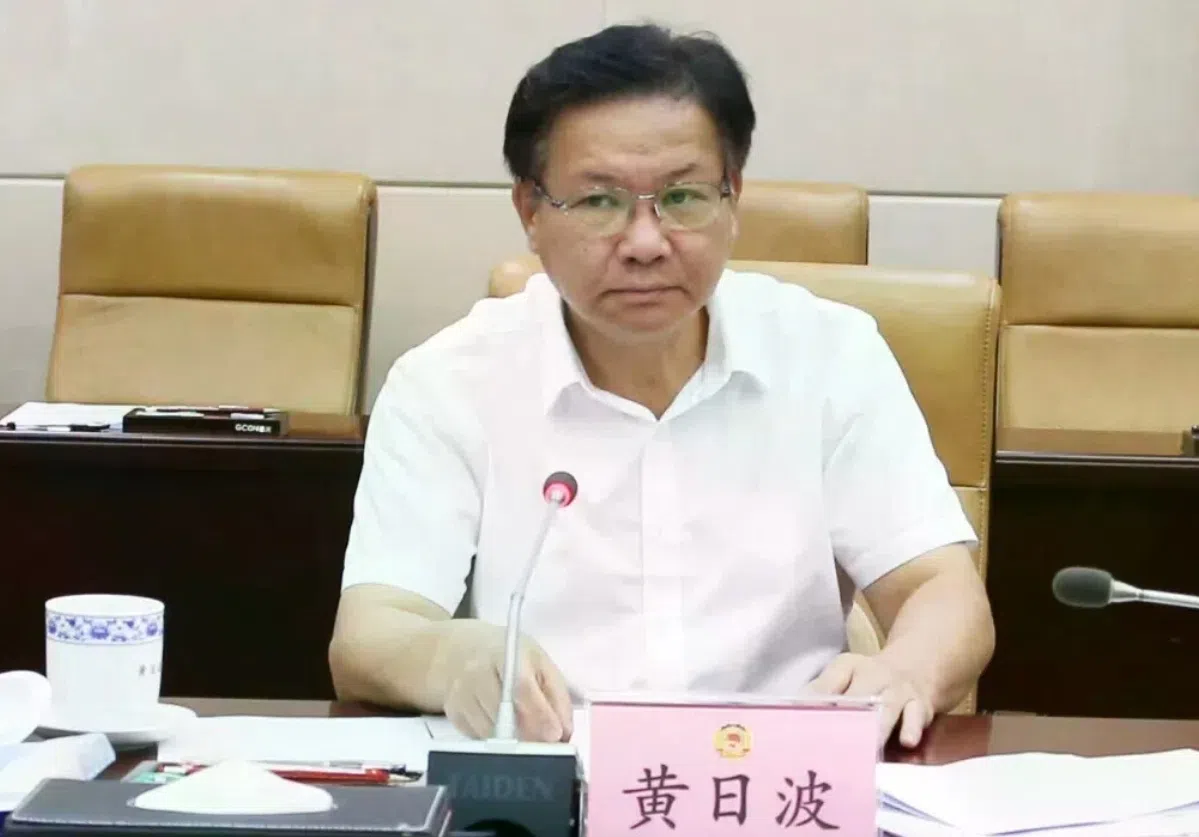
Separately, the CCDI website announced on 18 October that Huang Ribo, 68, a former vice-chairman of the CPPCC Guangxi Zhuang Autonomous Regional Committee, was under investigation for suspected serious duty-related violations of the law. The non-party official of vice-provincial rank, who had retired two and a half years earlier, became the first “tiger” brought down in Guangxi this year.
Chu Chaoxin, a Chinese political observer who frequently interacts with officials, wrote on his personal WeChat account last Thursday that a wave of veteran officials who had been retired for years had fallen in October. Besides retired provincial- and ministerial-level officials, large numbers of retired department-level officials had also been detained across the provinces. “I reckon quite a few retired division-level officials have been detained recently too,” he wrote.
For instance, on 21 October alone, investigations into three department-level officials who had long been retired were announced: Wang Zhenhua, 70, a former inspector at the State Taxation Administration, who had been retired for about ten years; He Gui, 69, former head of Chongqing’s Jiangbei district, who had been retired for 11 years; and Ren Shuben, 67, a former department director at the National Development and Reform Commission, who had been retired for about seven years.
Separately, an investigation into Chen Yuanhu, 79, a former member of the CCP Chongqing Municipal Committee’s standing committee and former vice-mayor, was also announced on 8 October. Posting on Weibo that same day, Shen Yachuan, a Shanghai lawyer and former deputy editor-in-chief of Sina.com, noted that placing Chen under investigation nearly 20 years into his retirement and at almost 80 years of age “pretty much breaks all previous records among publicly known cases. This can naturally be explained as ‘putting discipline first’, or understood to mean that ‘ there is no floor when it comes to house rules (party discipline)’.”
Chu said: “Taken individually, these cases do not tell us much. But when viewed collectively, they reveal some clues: if a large group of retired veteran officials are detained within a short period of time, it can be seen as a political trend.”
He argued that China had previously detained retired veteran officials sporadically, showing that anti-corruption efforts did not stop when officials retired. But detaining so many in quick succession sent a clear signal: “Do not think you are safe just because you have retired. Do not think that wrongdoing will be forgiven just because many years have passed. If your hands are dirty, you can be detained at any time. So it is best to keep them clean.”
A “China Watch” column under the byline Ji Xiaohua in Hong Kong’s Sing Tao Daily on Monday (2 November) also noted: “The decision to make Fu Chengyu, who retired 11 years ago, the first ‘tiger’ brought down after the fifth plenum carries a pointed warning. The successive investigations into three ‘tigers’ in their seventies show that anti-corruption efforts have no expiry date. Looking back ten or twenty years has become routine. Those who retire but do not truly step away, continuing to bask in the residual warmth of power, may find that this lingering warmth burns them too.”
Indeed, investigations into retired Chinese officials have become commonplace in recent years. A 2021 China Newsweek report titled “A wave of probes into retired officials: brought down 18 years after retirement, surrendering after 15 years, and uncovering a corrupt official aged 75” cited experts as saying that retirees were relatively rare among officials investigated and punished after the 18th Party Congress in 2012. After the 19th Party Congress in 2017, their numbers began to rise.
The experts said many of these officials had retired with unresolved misconduct that was subsequently uncovered during anti-corruption investigations. The wave of investigations was necessary to address accumulated corruption, but also exposed shortcomings in the oversight of retired officials.
After Huang Qifan’s downfall, an article published on the CCDI website on 17 October stated: “Regardless of rank, contribution or retirement status, anyone who has engaged in corruption has no escape route and no so-called safe landing.”
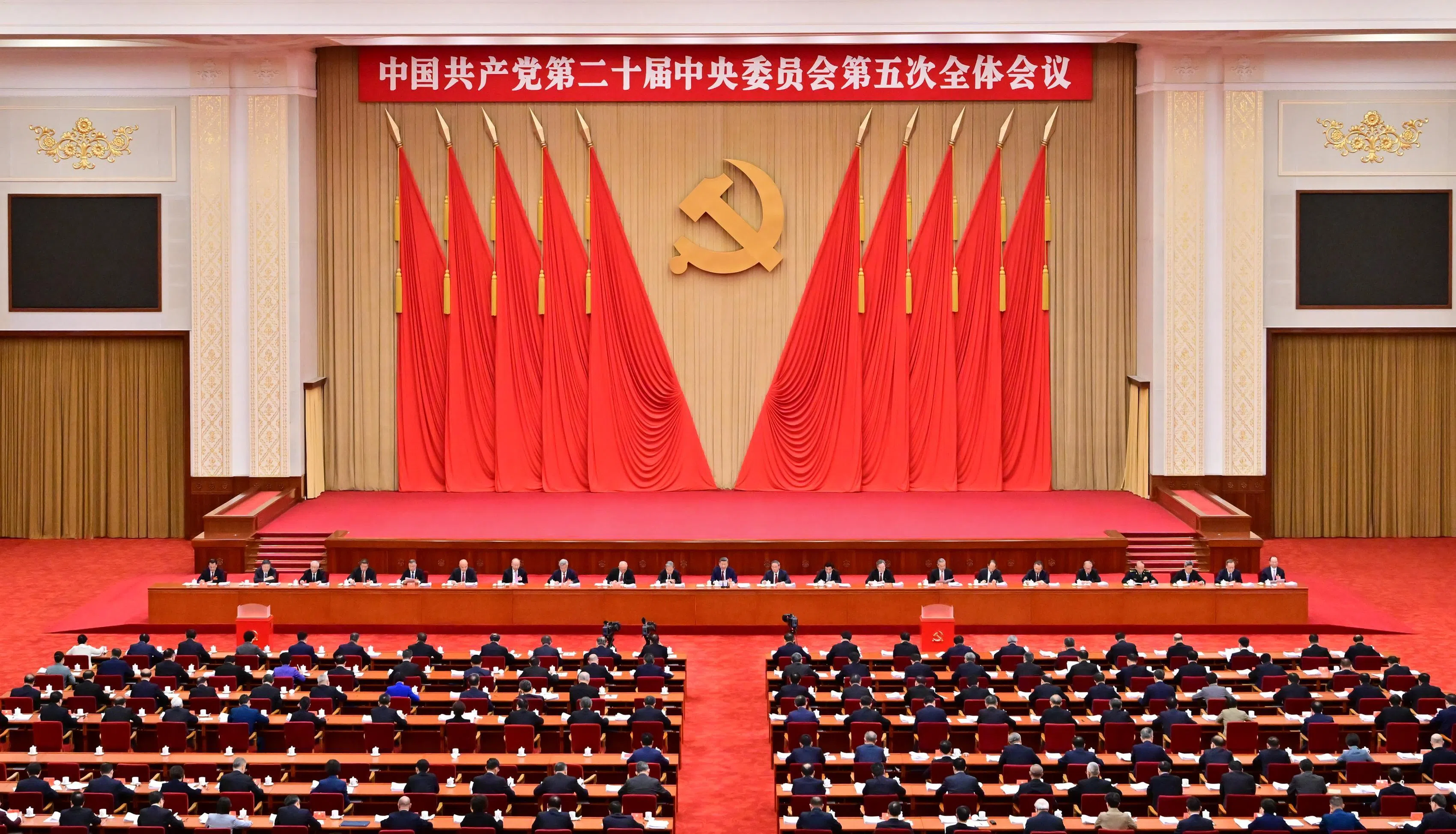
Following the close of the fifth plenary session of the 20th CCP Central Committee last week, the Decision of the CCP Central Committee on Several Major Issues Concerning Sustained Efforts to Advance Full and Rigorous Party Self-Governance, released on Sunday (1 November), explicitly called for stronger management and oversight of retired officials. It also called for disciplinary education throughout officials’ careers and beyond, with reminders about discipline at important junctures such as leaving office and retiring.
With Chinese authorities acknowledging that “the situation in the fight against corruption remains grave and complex”, more elderly retired officials will presumably face a belated reckoning in their later years. As China’s top leadership has put it: “You may be having your way today, but watch out when it’s time to settle the score.”
