

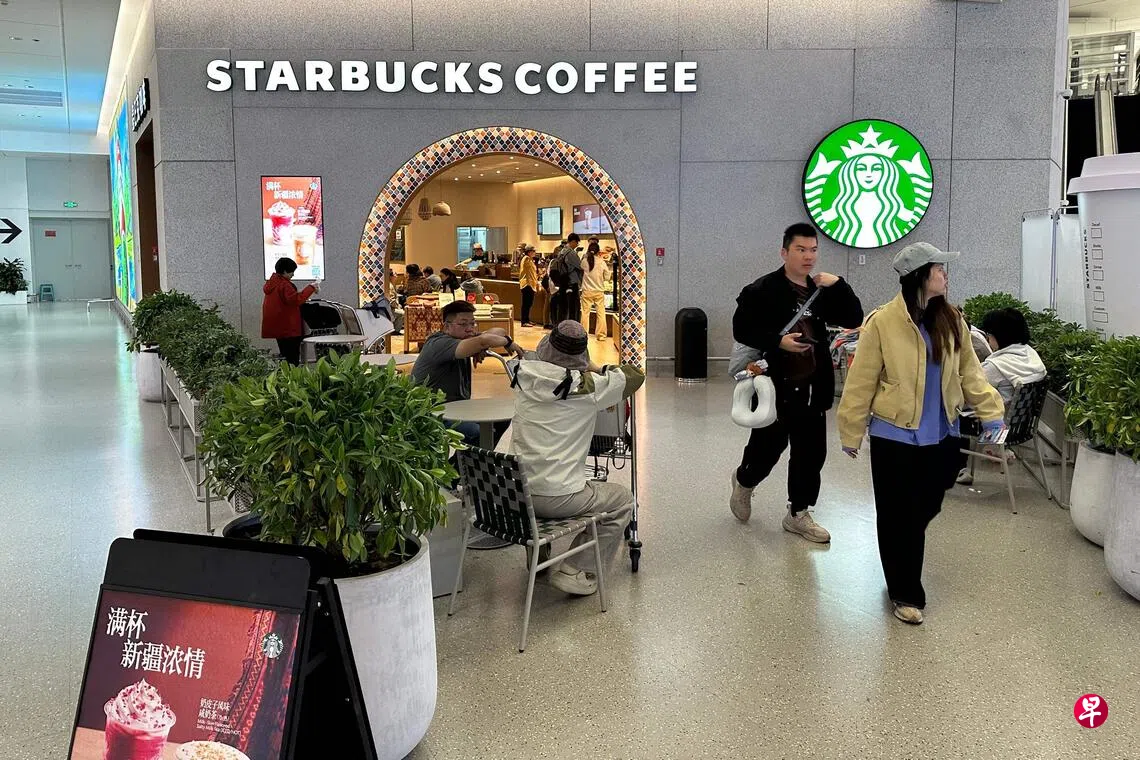
US coffee giant Starbucks began introducing a pay-to-sit policy at its mainland China stores on Thursday (22 October), putting up signs to notify customers. The relaxed approach that once allowed people to work or chat in its stores without ordering now has stricter boundaries.
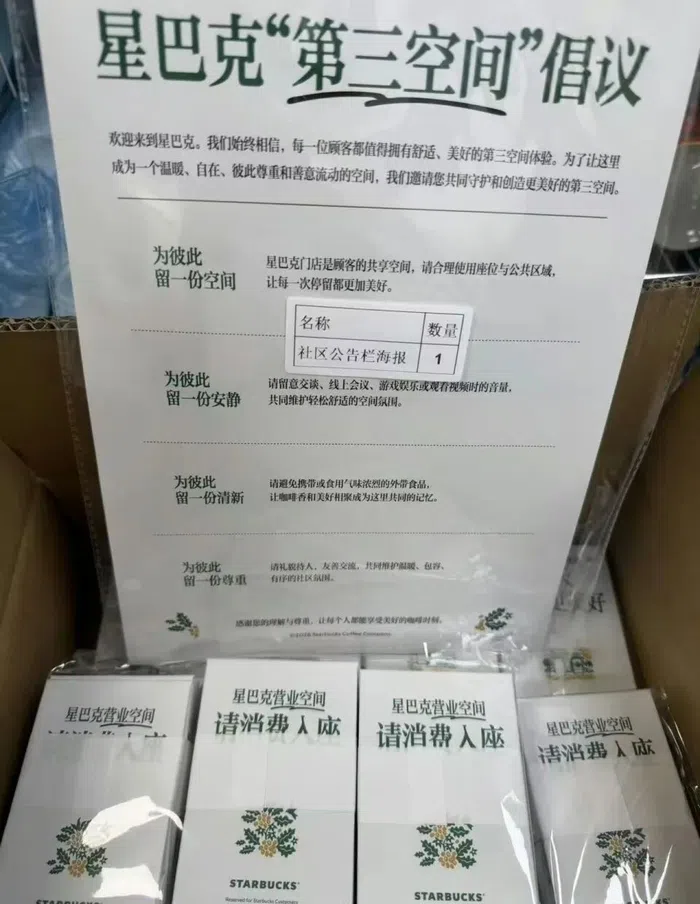
Photos of store materials had circulated online before the new policy took effect. Beside a poster titled “Starbucks Third Place Initiative” were signs, still in their packaging, reading: “Starbucks business premises: please make a purchase before taking a seat.” The poster stressed that stores are spaces for serving paying customers, urging people to use seats and shared areas considerately, keep conversations quiet and help maintain a peaceful, welcoming environment.
Earlier explanations from stores left some flexibility over how those limits would be applied. An employee at a store in Beijing’s Shijingshan district said the main aim was to encourage people to make a purchase before sitting down, reducing the disruption to other customers caused by non-paying visitors occupying seats for long periods or talking loudly. Another employee said staff would approach people who had been sitting for a long time without buying anything to ask whether they wanted to order, but would not insist on a purchase.
When Starbucks confirmed the policy on Wednesday (21 October), it also stressed that staff would receive standard service guidelines and the required support to communicate with customers in a friendly manner and accommodate reasonable short-term needs and special circumstances flexibly. Priority assistance would also be offered to people in need, including pregnant women and those with limited mobility.
The news quickly sparked discussion online. Many of those supporting the policy had experienced buying coffee only to find no seats available: some people occupied seats for long periods without ordering, others brought in drinks from competing brands, and some spoke loudly on the phone or played games. To these supporters, it was entirely reasonable for a business to prioritise paying customers. Others said they had only just learnt that people could sit in Starbucks without buying anything. They said they would feel uncomfortable occupying a seat without ordering and would rather leave it for paying customers who needed one.
Others, however, worried that the policy would diminish stores’ role as public resting places and cause friction during implementation. Would someone wanting only a brief rest also have to buy something first? When should staff remind people to order, and how often would be appropriate?
China National Radio (CNR) quoted a Shanghai resident surnamed Yang, who frequently works at Starbucks, who said that she had needed to join an online meeting at a store on the day the policy took effect. She had intended to order afterwards, but staff reminded her five times in about an hour and a half. She had no objection to the pay-to-sit principle itself, but said there were plenty of seats available at the time. The repeated reminders made her feel as though she was being “chased out”, and she eventually went to another Starbucks nearby to make her purchase.
Some stores have taken a more relaxed approach. During visits to several outlets in Chengdu, Red Star News reporters found that, despite the signs, passers-by were still sitting down without making purchases, and staff did not ask them to buy anything or leave. One employee said the frequency of checks on seating depended on customer traffic: roughly every 20 minutes during quiet periods, and about every 10 minutes at busy times.
The employee added that, during these checks, staff would politely ask customers whether they wanted to order, recommend drinks and look out for anyone feeling unwell, rather than insist on a purchase. Passers-by and tourists who had no intention of buying anything but needed a temporary resting place would still be allowed to sit briefly, with help offered where needed.
This suggests that customers’ experience of the same pay-to-sit policy depends largely on how tactfully individual stores implement it. There could be a world of difference between a gentle reminder seats are scarce and repeated requests to order when plenty of seats are available.
Redrawing the boundaries of ‘third place’
The debate goes beyond who should get a seat because it also touches on the brand image Starbucks has long cultivated. Starbucks has consistently positioned its stores as a “third place” outside the home and workplace, where customers can meet friends, get work done or simply linger over coffee. Comfortable seating, relatively relaxed attitudes towards how long patrons can stay and inviting atmosphere have formed part of its appeal beyond the coffee’s price — making it common practice for many to nurse a single cup of coffee for hours.
But while an open space generates goodwill, it also creates management challenges. When non-paying visitors occupy seats for long periods and paying customers cannot find a place to sit, the very space intended to attract customers can detract from their experience.
From a business perspective, Tang Jiansheng, deputy secretary-general of the Shanghai Consumer Council, regards pay-to-sit as a basic commercial rule that should not require much debate. Businesses rent premises and bear the cost of the space, with tables and chairs provided as amenities for paying customers. In his view, the public’s need for somewhere to rest briefly should be met through government-provided seating and rest areas, rather than become the responsibility of commercial outlets.
Striking a balance between keeping spaces open and protecting paying customers’ experience is a challenge Starbucks faces across its global markets. In South Korea, it has already banned customers from bringing in office equipment such as desktop computers and printers to address prolonged seat occupation by people studying or holding meetings. Some outlets in busy Hong Kong shopping malls have also trialled 90-minute limits for dine-in customers and minimum-spending requirements.
The changes in North America have been more comprehensive. Last year, Starbucks ended the open-door policy it had introduced in 2018, which allowed people to enter stores and use toilets without making a purchase, shifting instead towards prioritising paying customers. It also brought back services such as refills and condiment bars as part of a broader set of measures to improve the in-store experience.
In the first three fiscal quarters of this year, Starbucks’ North American same-store sales rose by 4%, 7.1% and 8.1%, respectively. Those gains, however, came as several operational changes were being rolled out simultaneously. They cannot simply be attributed to tighter seating rules, much less taken as evidence that the same approach would deliver similar results in China.
Will freeing up seats encourage customers to come back?
In China, Starbucks faces competitive challenges far more complex than managing seats.
Since opening its first store in 1999, Starbucks has expanded to about 8,000 outlets in China. In recent years, however, local brands such as Luckin Coffee have grown rapidly through lower prices, mobile ordering and convenient collection, changing how consumers buy coffee. For those who simply want a cup to perk themselves up, a spacious store is not necessarily a reason to pay more.
This has put Starbucks’ business model of attracting customers through its store space and the experience of spending time there to the test. Larger stores mean higher premises costs, requiring enough customers willing to sit down and spend money to sustain them.
In pursuit of its next phase of growth, Starbucks completed a joint venture deal with Boyu Capital in April this year. Funds managed by Boyu hold a 60% stake in the China retail business, while Starbucks retains 40% and continues to own and license its brand and intellectual property.
Although the China business is showing signs of recovery, pressure on growth remains. Same-store sales in China rose by 7% and 0.5% in the first and second quarters of fiscal 2026, respectively, marking a sharp slowdown in growth. Average spending per transaction fell 1.6% year on year in the second quarter, also reflecting pressure on prices.
Fu Yifu, a special researcher at Sushang Bank, believes that people occupying seats without making purchases are only the visible part of the problem. The bigger challenge is that competitors are drawing away consumers willing to pay a premium for Starbucks’ “third place”. In his view, making access to seating more restrictive can only improve operations. To address the broader competition, Starbucks must also improve its products and in-store experience, offering value that sets it apart from rivals.
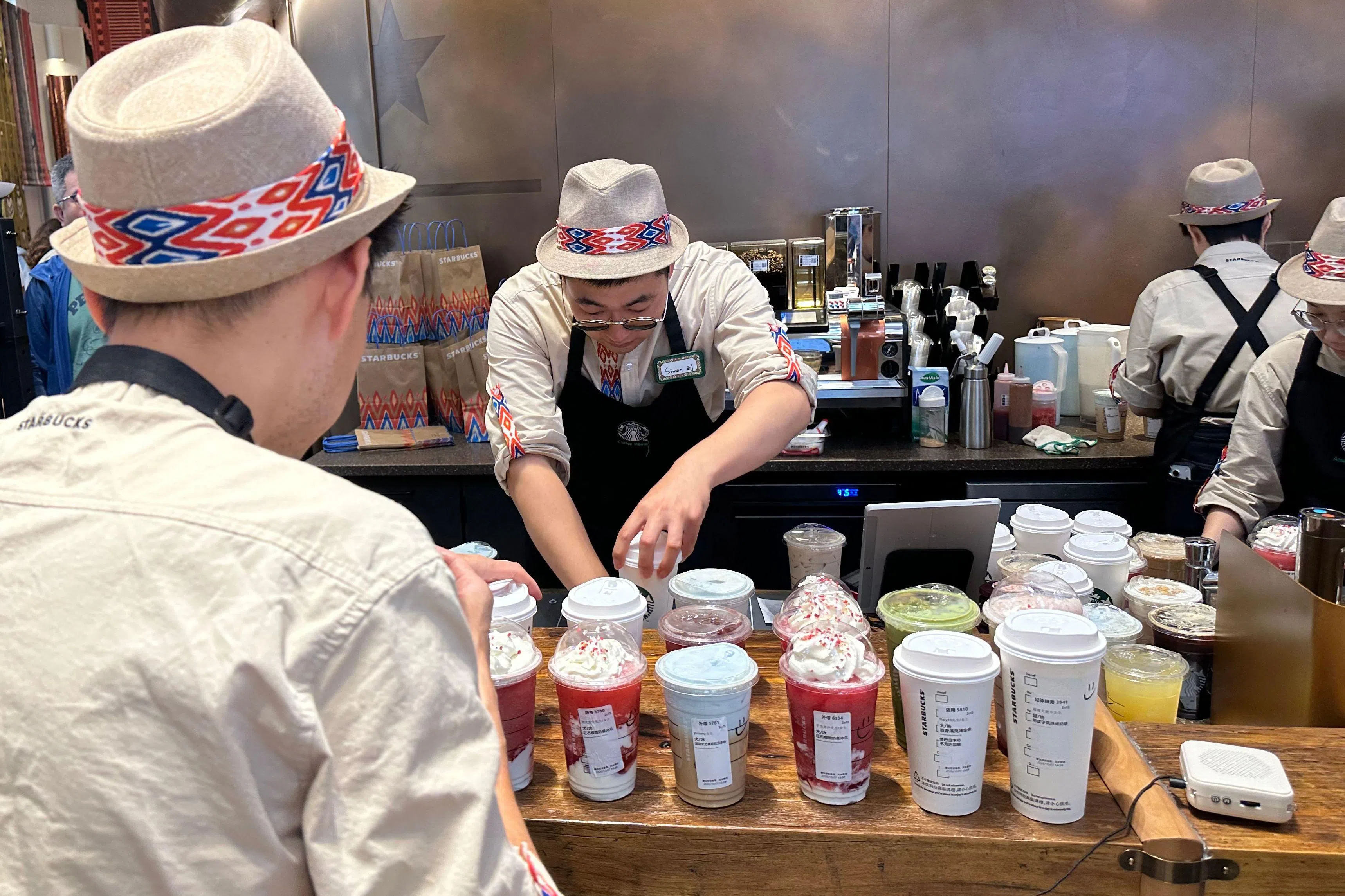
Besides changing its seating rules, Starbucks plans to invest more in its stores. Starbucks China announced that it would invest an additional sum of more than 300 million RMB (S$57.4 million) in fiscal 2027 to increase staffing during peak hours, upgrade systems and equipment, and improve facilities at about 1,000 outlets.
Whether this investment can improves the customer experience will be a key test of the transformation’s success. Curbing prolonged seat-hogging and improving order can benefit paying customers. But in a market where consumers are spoilt for choice, seating is only one part of the experience: products, service and prices also influence whether customers return.
In the past, Starbucks used its “third place” appeal to command a premium for a cup of coffee. Now, it must persuade customers once again that the space is worth paying extra for. Rules can free up seats, but giving people a reason to sit down and spend may take more.
