

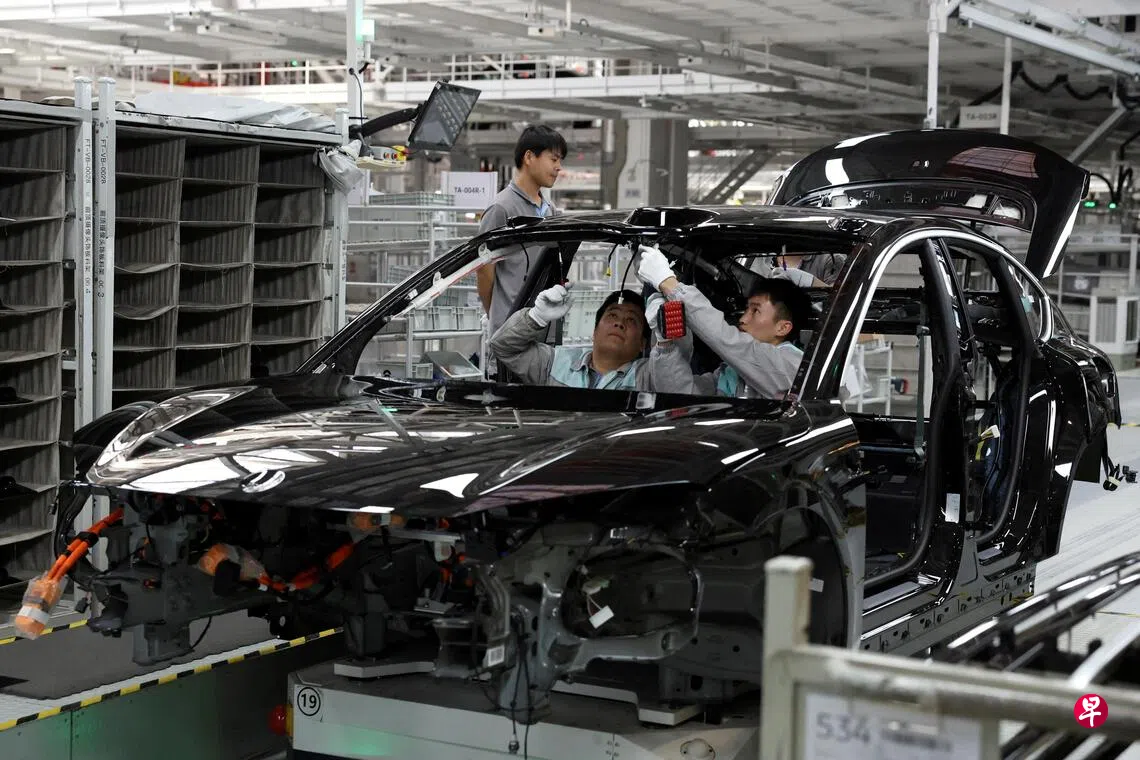
Accounts receivable in China’s car manufacturing industry approached 3 trillion yuan (S$580.3 billion) as of the end of September this year, with the average collection period reaching 100 days, said Cui Dongshu, secretary-general of the China Passenger Car Association. The figures reflect mounting cash-flow pressures across the automotive supply chain.
In a post on his WeChat public account on Tuesday (24 November), Cui cited data from China’s National Bureau of Statistics showing that the industry’s average collection period had lengthened by 11 days year on year to 100 days as of the end of September. In comparison, the average was just 66 days in 2020 — an increase of 34 days in only six years.
The industry’s profitability has also continued to weaken. In the first nine months of this year, profits at China’s car manufacturers fell by about 23% year on year. Their profit margin on sales was just 3.3%, far below the 9% recorded in 2014 and below the overall margin of 6.7% for downstream industries.
Cui said the car industry had faced pressures in recent years from intense retail price wars and high spending on research and development for new energy vehicles. With weak retail demand squeezing their profits, downstream vehicle manufacturers were using their dominant position to shift financial pressures onto midstream component suppliers, forcing them to hold inventory and extending payment terms. This was severely straining manufacturers’ cash flow.
He warned that allowing unpaid bills to accumulate would put small and medium-sized suppliers at risk of running out of cash and deprive the entire industry of the internal funding needed for technological innovation. Vehicle manufacturers would inevitably face supply disruptions and declining quality.
Across China’s industrial sector, accounts receivable at industrial enterprises above a designated size had reached nearly 30 trillion yuan as of the end of September. Cui said the continued lengthening of average collection periods in midstream and downstream industries reflected significant cash-flow pressures in manufacturing.
Cui said the Chinese authorities’ recent push to curb destructive competition in the car industry should not only rein in damaging price wars but also address overdue payments across the supply chain. Large companies should be prevented from using their market dominance to extend payment terms and shift operational pressures onto small and medium-sized suppliers.
He stressed that only by ensuring a healthy flow of funds across the supply chain could China’s car industry truly move beyond mutually damaging low-price competition towards higher-quality competition and cooperation that benefits all participants.
In September this year, China’s Ministry of Industry and Information Technology and the State Administration for Market Regulation issued the first sector-specific guidelines on payment terms. They encourage carmakers to pay small and medium-sized suppliers within 30 days of accepting goods that meet requirements, with payment to be completed within 60 days at the latest. The relevant authorities will jointly summon carmakers that deliberately delay payments or attract numerous complaints from small and medium-sized enterprises, and press them to rectify the problems.
