

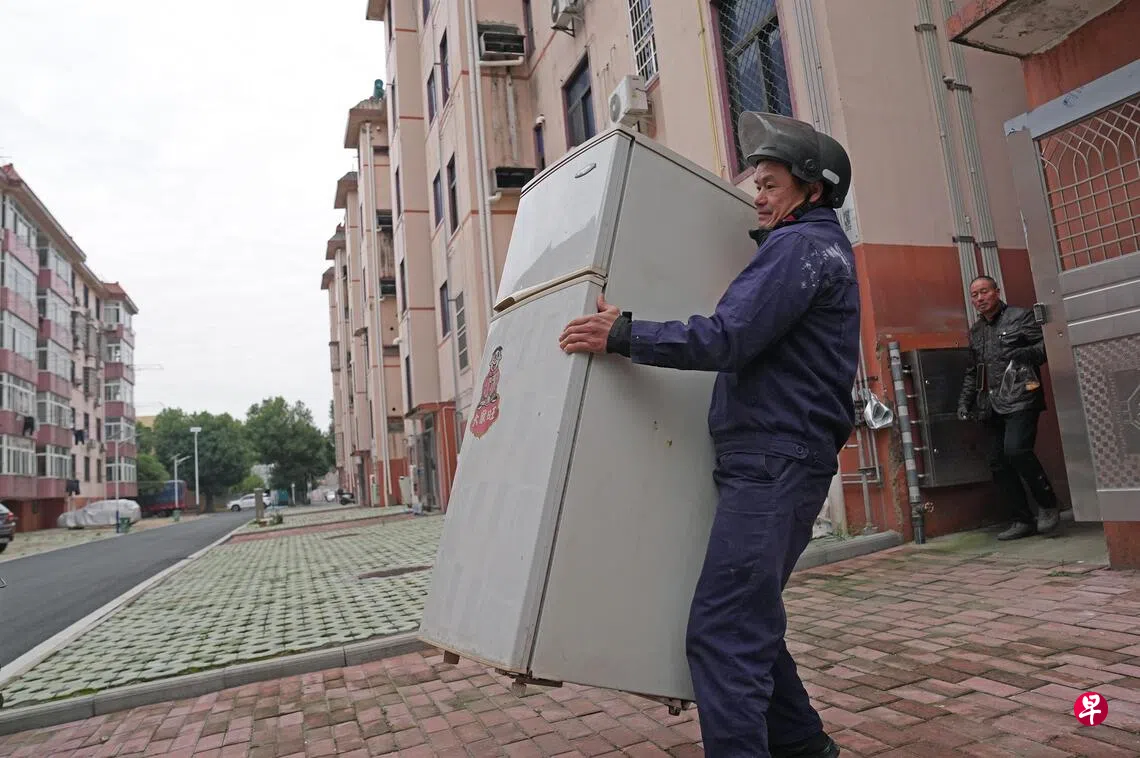
China’s Ministry of Commerce has urged government agencies and public institutions at all levels to “take the lead in practising frugality” by sharing idle and second-hand equipment. They should prioritise reusing idle assets within the public sector, reduce duplicate purchases, put state-owned assets to productive use and promote trade in second-hand goods.
Ministry spokesman He Yadong told a regular press briefing on Thursday (26 November) that trade in second-hand goods was an important part of the circular economy. In 2024, the ministry and other relevant departments launched pilot programmes to promote second-hand trade, which have yielded practices that can be replicated elsewhere.
He said government agencies and public institutions at all levels should take the lead in practising frugality. Using the Ministry of Finance’s national platform for reallocating and sharing state-owned assets held by government agencies and public institutions, they should establish mechanisms for reallocating and sharing assets across departments, administrative levels and regions. These should facilitate the swift identification, verification, transfer, transport and handover of idle equipment, “putting unused resources to work, bringing idle assets into use and getting second-hand goods circulating”.
Meanwhile, as online second-hand trading becomes increasingly widespread, the industry is shifting from traditional buying and selling to a full-chain business model covering acquisition, distribution and services. New business models such as leasing, auctions and sales of individual components are also developing rapidly.
He said the ministry would continue working with relevant departments to promote practices developed through the pilots, further expand the reallocation and sharing of state-owned assets, and foster high-quality development in the second-hand goods industry.
China has repeatedly called on government agencies to practise frugality in recent years. In January last year, it established a unified national platform for reallocating and sharing state-owned assets held by government agencies and public institutions to reduce idle resources and duplicate purchases.
