

China's value-added industrial output at enterprises above a designated size grew 4.8% year on year in real terms in October, while total retail sales of consumer goods rose 0.4%. Both figures fell short of expectations, while investment continued to decline, indicating that Beijing's latest stimulus measures have yet to have a noticeable impact on the economy.
China's National Bureau of Statistics said on Monday (16 November) that value-added industrial output at enterprises above a designated size rose 4.8% year on year in October and 0.21% month on month. The year-on-year increase was below the 5.3% forecast in a Reuters poll and September's 5.5% growth. In the first 10 months of the year, output grew 5.3% year on year.
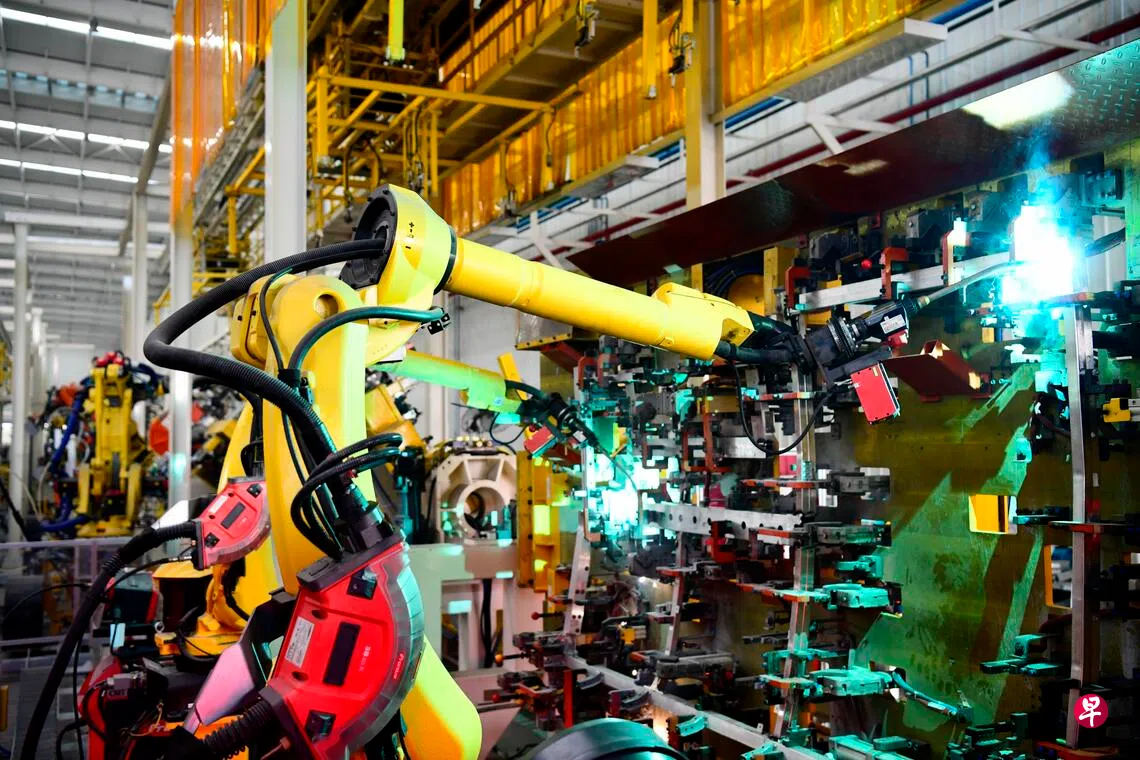
Across the three main industrial sectors, value-added output rose 0.7% year on year in mining, 5.4% in manufacturing and 4.4% in the production and supply of electricity, heat, gas and water. Value-added output in equipment manufacturing grew 10.6%, while high-tech manufacturing recorded growth of 17.6%, outpacing overall growth at industrial enterprises above a designated size by 5.8 and 12.8 percentage points respectively.
Retail sales, a gauge of consumption, edged up 0.4% year on year in October, below September's 1.1% increase and the 0.8% growth economists had forecast.
Fixed-asset investment fell 8.1% year on year in the first 10 months of this year, a steeper decline than the 7% economists had forecast. Investment fell 7.2% in the January-to-September period.
Fixed-asset investment excluding property development fell 5.1%. By sector, infrastructure investment declined 5.1% year on year, manufacturing investment fell 2.9% and property development investment dropped 21.6%. In October, fixed-asset investment excluding rural households fell 2.93% month on month.
Bloomberg said the figures point to slowing growth and a gloomy outlook for China's economy, despite Beijing stepping up efforts to bolster growth in late September. Officials introduced a modest stimulus package, including mortgage subsidies and higher public borrowing limits, while accelerating measures to boost investment.
The report noted that this reliance is becoming a greater risk as questions arise over the sustainability of the global artificial intelligence investment boom, which has driven demand for Chinese electronics and other manufactured goods. Slower exports would put greater pressure on domestic consumption and investment to make up the shortfall.
Senior officials will closely monitor the data released in October ahead of the Central Economic Work Conference in the first half of December. The meeting will offer clues to Beijing's economic priorities for 2027 and the scale of any additional support.
If the economy loses further momentum, policymakers may lean more heavily on fiscal measures. The People's Bank of China has signalled caution about cutting interest rates amid weak borrowing demand.
