

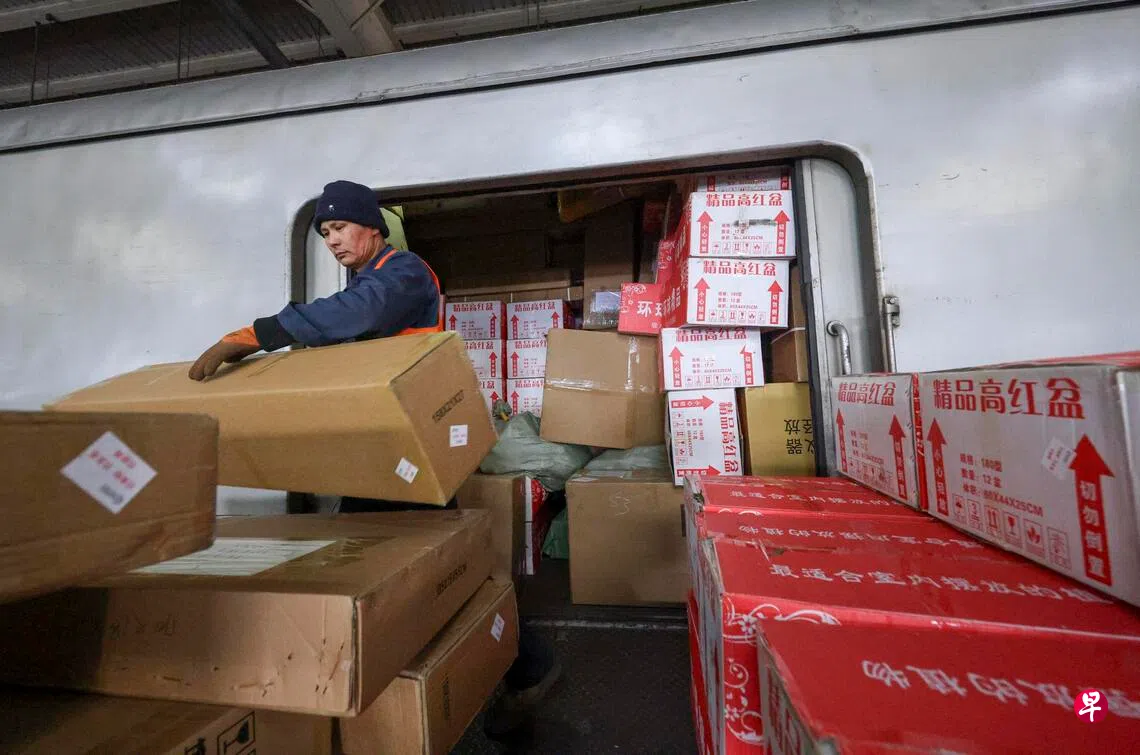
The total value of goods handled by China’s logistics sector reached 312.4 trillion yuan (S$6.05 billion) in the first 10 months of this year, up 4.8% year on year, according to data released by the China Federation of Logistics and Purchasing on Saturday (28 November). The sector continued to make steady progress, with improvements in quality and efficiency.
China News Service reported that the total value of goods handled by the sector maintained steady growth from January to October. Demand for industrial goods logistics remained on a firm footing, while consumer logistics expanded and improved in quality. Demand for high-end logistics grew more rapidly, with new growth drivers providing a stronger boost.
In October, logistics demand from high-tech manufacturing rose 17.6% year on year, while demand from equipment manufacturing increased by 10.6%. Improvements in the industrial structure drove an increase in output of high-value-added products, with a shift towards higher-end industrial goods logistics demand becoming more evident.
Consumer logistics demand showed clear signs of expansion and upgrading. Online consumption grew faster than overall consumption, becoming the main driver of consumer logistics. Online retail sales of goods reached 10.7 trillion yuan from January to October, up 2.9% year on year.
Overall, the logistics sector is entering its traditional peak season as the year draws to a close. The Singles’ Day online shopping promotions, the year-end rush to complete production and winter stockpiling are getting under way in succession, driving a surge in logistics demand. Activity in areas such as e-commerce parcel delivery and warehousing logistics is expected to pick up.
Industry expectations remained positive. The business activity expectations index stood at 55.3% in October, staying above 54% — a level indicating strong activity — for the third consecutive month. The index for completed fixed-asset investment stood at 55.4%, remaining in expansionary territory. Businesses’ willingness to invest and market confidence were generally improving.
Analysts said policy support and funding for the logistics sector had worked in tandem since the start of the year. Logistics network development had moved from high-level planning to full implementation, while investment continued to increase in key areas such as integrated multimodal transport infrastructure. A more interconnected network had helped shorten average transport distances and reduce the number of transfers.
As the effects of existing and new policies become more apparent, alongside an accelerating shift towards digital, smart and green operations, the logistics sector is expected to maintain steady progress for the full year, with further improvements in both quality and efficiency.