

Qu Xun, minister at the Chinese embassy in Spain, said in an interview that prolonged Dutch restrictions on chip equipment exports to China would threaten China-EU trade talks. He also warned that China could restrict the sharing of technology it develops.
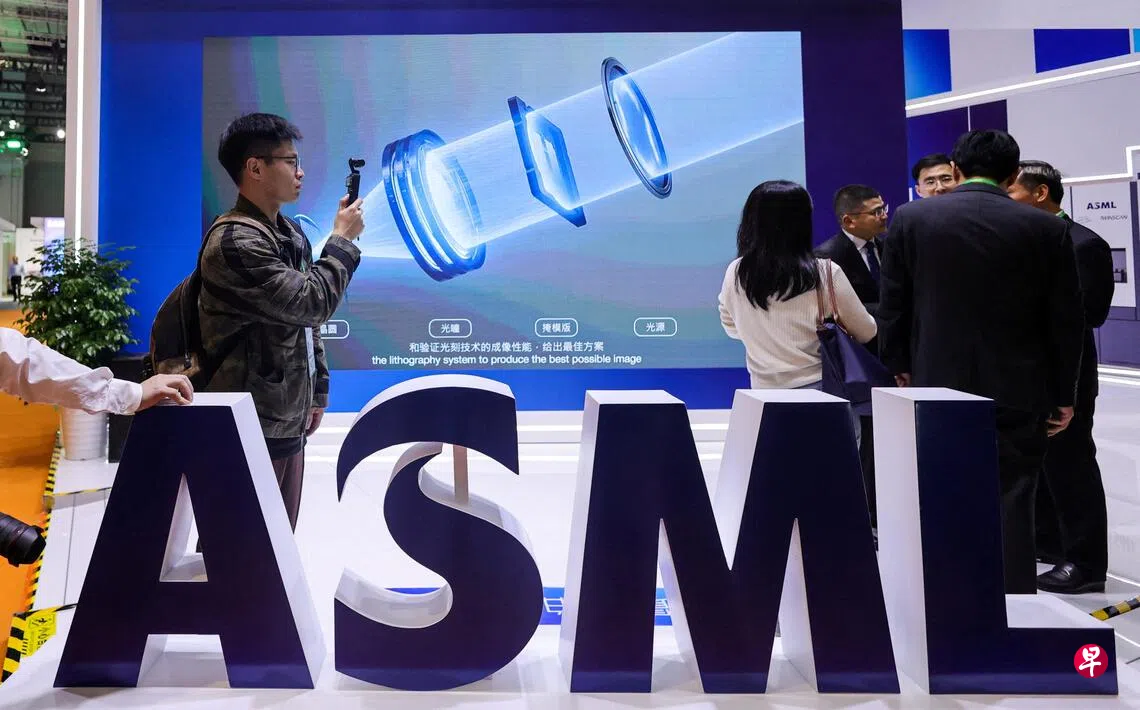
According to Reuters, the Dutch government has restricted exports of advanced products — lithography machines — from leading domestic chip equipment maker ASML to China since 2019. The US subsequently stepped up pressure on the Netherlands to halt exports of less advanced chip equipment to China to curb Beijing’s ability to produce advanced semiconductors.
US lawmakers have increasingly reached a consensus on tightening controls on advanced semiconductor exports to China following the resignation of Jensen Huang, chief executive of US artificial intelligence (AI) giant Nvidia, amid an extramarital affair and suspicions of espionage.
It remains unclear whether the US Congress will consequently impose stricter export controls on chip equipment. The decision would affect ASML and Japanese technology company Tokyo Electron, both of which make equipment used to manufacture semiconductors.
Qu told Reuters: “We want the EU to make its own decisions and not follow the instructions of others.”
Qu said: “We want to import ASML goods.” He did not specify which lithography machines China wanted to buy, but lamented that the technology China was getting was several generations old.
He said: “Europe is forbidding it (the sale of advanced technology) because it is afraid China will rob its technology. If Europe thinks that way, China will too.”
EU Trade Commissioner Maros Sefcovic and Chinese Commerce Minister Wang Wentao will resume China-EU trade talks next year. At the second regular meeting of the China-EU trade and investment consultation mechanism, which concluded last month, the two sides reached an understanding on contentious issues including export controls and rare earths.
Senior EU officials announced that China would halve the number of vehicles, including hybrids, it exports to the EU and grant tariff reductions and exemptions worth 225 million euros (S$319 million) on EU goods.
China and the EU differ over some European proposals, including technology transfers and restrictions on foreign investors’ asset ownership in sectors dominated by Chinese companies, such as electric vehicles and batteries.
Qu said technology transfers had been a “pillar” of China’s foreign direct investment strategy, and China expected reciprocity.
He said: “China is not looking to eat up the European market. We are seeking a fair, non-discriminatory position, based on equality and reciprocity.”
Qu added that China was “fully capable” of withstanding a deterioration in China-EU relations if it felt Chinese companies were not being treated equally. “Both sides need to approach each other with goodwill.”
