

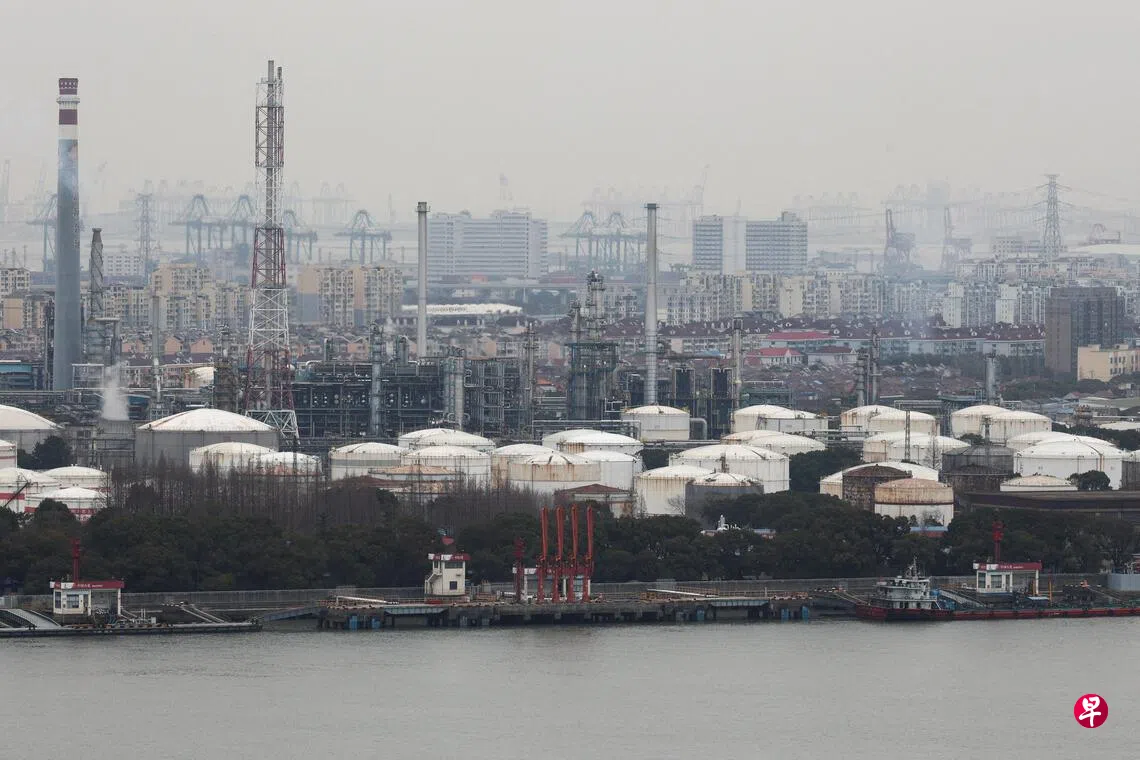
China’s state-owned and private refiners have stepped up crude purchases this month, taking advantage of lower oil prices and shipping costs to replenish inventories depleted during the war in the Middle East.
Bloomberg reported on Tuesday (24 November), citing traders, that Unipec, the trading arm of China’s largest refiner Sinopec, had bought as many as 20 cargoes of West African crude for loading in December. Each cargo typically holds about 1 million barrels. By comparison, West Africa exports an average of about 20 million to 25 million barrels of crude to China each month.
Chinese buyers are also actively purchasing crude from the Persian Gulf and Brazil. Traders said spot cargoes of Saudi and Iraqi crude delivered to East Asia were priced at premiums of US$2 to US$3 (S$2.60 to S$3.90) a barrel over the Dubai benchmark, down from a premium of US$12 a barrel for Basrah crude a month earlier.
The buying spree comes as the global oil market is expected to return to oversupply next year with the recovery of oil exports from the Persian Gulf, even though the Middle East conflict remains unresolved.
Global benchmark Brent crude has plunged by about a quarter since the start of November. A key question for the market is whether China’s purchases will be enough to stem the decline in oil prices.
“As crude prices fall, the clearest source of additional buying demand is China,” said June Goh, senior analyst at energy intelligence firm Sparta Commodities. “That is because other buyers, such as Japan and South Korea, have already maximised their purchases over the past few months.”
Lower freight rates are also encouraging purchases. The cost of shipping crude from the Gulf of Oman to China has fallen from about US$21 a barrel last month to about US$8 a barrel. Vessel earnings on most major routes to Asia have also declined.
