


Several Chinese universities have stepped up checks on attempts to bypass the country’s internet restrictions, following disciplinary action against 20 students at Harbin Engineering University, one of China’s “Seven Sons of National Defence”. On Monday (16 November), the Communication University of China issued a notice detailing cases involving staff, stressing that such actions cross legal and disciplinary red lines and warning that “circumventing the firewall is no small matter, and curiosity comes at a cost”.
Analysts believe that as China’s social and economic conditions grow more complex, and with the politically sensitive 21st National Congress of the Chinese Communist Party taking place next year, universities — regarded as key ideological strongholds — will further tighten oversight of opinion and thought.
In a notice published on Monday on its official WeChat account, “Ping’an Zhongchuan”, the Communication University of China’s security department said university staff are both disseminators of knowledge and guides to students’ intellectual development. Yet some staff, hoping to evade detection, use illegal tools to bypass the firewall and access overseas websites to consult foreign-language materials, engage in academic exchanges or satisfy their curiosity, causing irreparable harm to their careers, their universities’ reputations and national security.
The cases cited in the notice included a teacher who bypassed the firewall to access and publish articles about religion, a young academic who provided an overseas organisation with classified and sensitive project data, and a teacher who posted a video on an overseas social media account containing “inappropriate remarks that distorted domestic policies”. The three received disciplinary penalties from their universities, including dismissal and a demerit.
The notice said overseas websites contain separatist rhetoric, extremist ideas, smear campaigns and rumours. Prolonged browsing could leave users swayed by erroneous views and even trigger damaging public controversy, harming universities’ reputations. Those with genuine academic needs could apply for access through officially approved channels.
Bypassing the “Great Firewall” refers to using tools such as virtual private networks (VPNs) and proxy servers to circumvent official internet access restrictions and connect to the overseas internet, including websites such as Google and Facebook that cannot be accessed directly in China.
China introduced centralised regulation of international internet access in 1996, prohibiting users from independently establishing or using other channels to connect to the global internet. In 2017, China’s Ministry of Industry and Information Technology further tightened regulation of the internet access services market, cracking down on unapproved cross-border connectivity services.
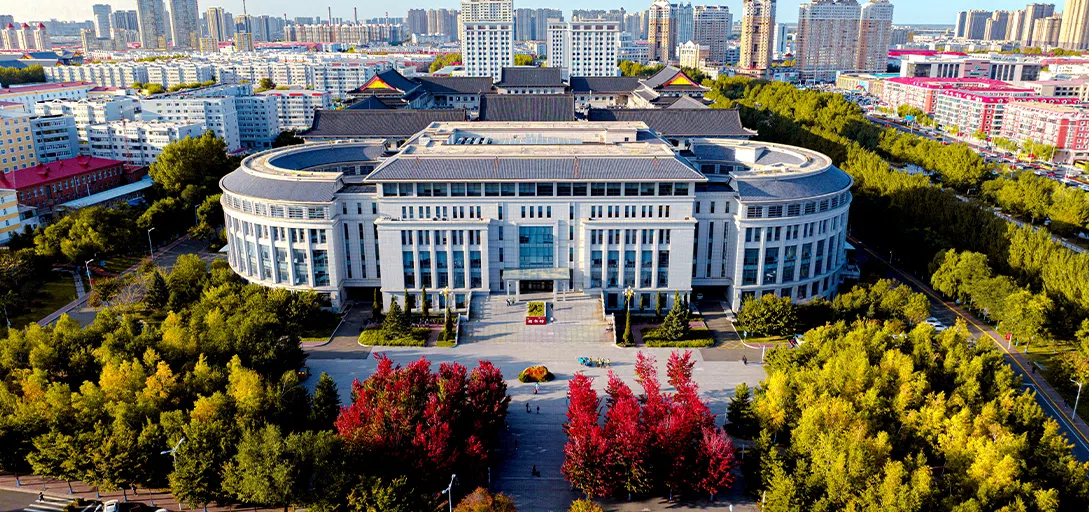
In September this year, Harbin Engineering University issued disciplinary warnings to 20 students for using their personal campus network accounts on university premises to access overseas networks through VPNs and other channels.
Harbin Engineering University traces its origins to the PLA Military Engineering Institute. It is one of the “Seven Sons of National Defence”, seven universities directly administered by the former Commission of Science, Technology and Industry for National Defence, now under the Ministry of Industry and Information Technology. These universities conduct research and train personnel for China’s defence sectors, including aviation, aerospace, armaments, shipbuilding and electronics.
The disciplinary action at Harbin Engineering University sparked online discussion. Some internet users argued that “Harbin Engineering has national defence responsibilities, and the university regulates its network for security reasons, so it should be stricter”. Others said that, because of costs, universities generally do not make authorised channels for accessing overseas networks available to students. “The door may be there, but it is far too difficult to get through.”
Over the past two months, more than a dozen universities, including Northwest University, Chongqing University, Hubei Institute of Fine Arts, South China Agricultural University and Shenzhen University, have issued notices or advisories warning that “illegally bypassing the firewall” could have serious consequences.
Lin Feiran, a lawyer at Beijing’s King & Capital Law Firm, told Lianhe Zaobao that whether bypassing the firewall is deemed illegal depends primarily on whether the access channel complies with regulations, rather than the purpose of its use. “Whether for entertainment, study or other purposes, privately using unauthorised channels to connect to overseas networks is illegal.”
Taiwan-based current affairs commentator Xu Quan said in an interview that the authorities usually “turn a blind eye, with a tacit understanding” to browsing beyond the firewall. But oversight has tightened amid a weakening economy, growing social tensions, greater emphasis on ideological security in recent years and the politically sensitive timing of the CCP’s 21st National Congress next year.
He added that universities are seen as key strongholds of thought, public opinion and ideology. Much of the work to safeguard national security is concentrated in universities, including resource security, data security and ideological security. “This is also crucial to the career prospects of university leaders, so universities will certainly treat it as a top priority.”
Lin said some universities hold large volumes of research data and academic findings, and do face a degree of data leakage risk that requires vigilance.
