

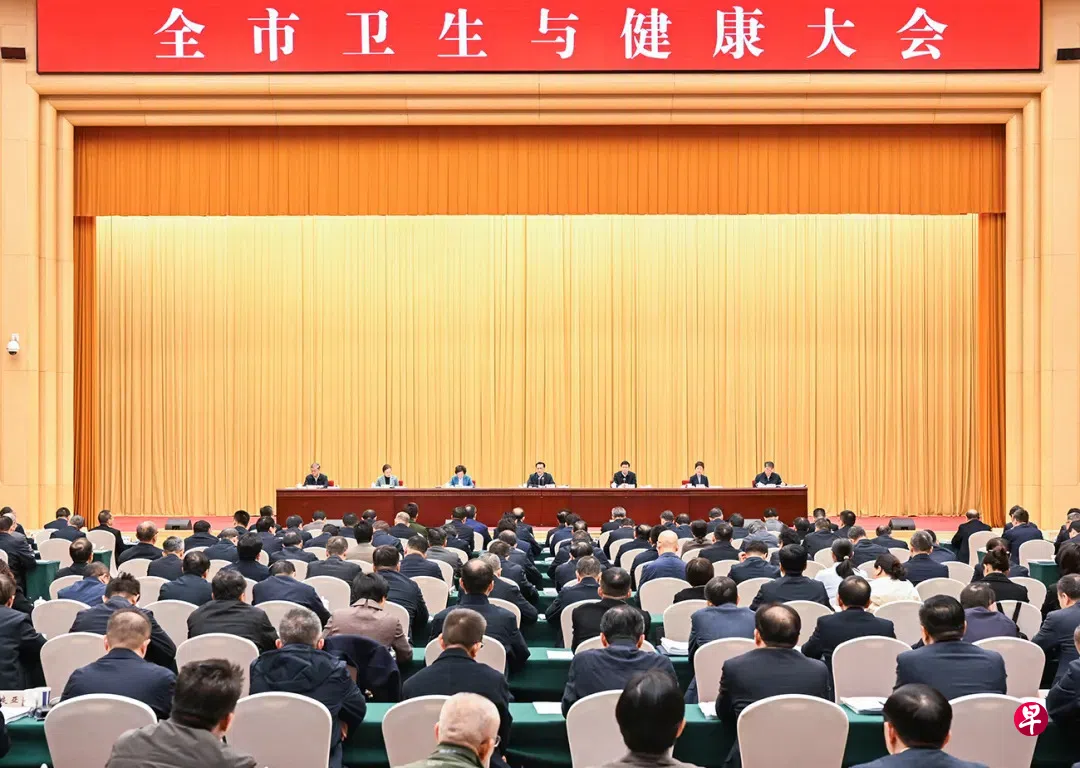
Chongqing Communist Party Secretary Yuan Jiajun has called for a firm commitment to a health-first development strategy, a more balanced distribution of healthcare resources across the city, and tangible, accessible health benefits for residents from healthcare reform.
According to Chongqing Daily (《重庆日报》), Yuan addressed the city’s health conference on Wednesday (18 November) afternoon. The meeting, held by video link, was chaired by Chongqing Deputy Party Secretary and Mayor Chen Xinwu. Attendees included Cheng Lihua, chairman of the Chongqing Municipal Committee of the Chinese People’s Political Consultative Conference.
Yuan said that since the Communist Party of China’s 20th National Congress, Chongqing had expanded and improved health services across the municipality, with digital and smart technologies and reform and innovation serving as “twin drivers”. It had continued to strengthen the foundations of its healthcare sector, improve environmental conditions affecting residents’ health and effectively support national strategies. These efforts had produced a series of landmark achievements that were “leading in western China, advancing nationally and distinctively Chongqing”.
On deepening healthcare reform, Yuan called for reforms involving “three-sector coordination” and “six-sector integration”, continued reform of public hospitals and improvements to the tiered diagnosis and treatment system. He said medical insurance should play a greater role in driving coordinated changes in healthcare and pharmaceuticals. He also called for the development of digital and smart technologies for universal health, and efforts to make the biopharmaceutical industry cluster more competitive.
He also called for sustained efforts to improve the quality and efficiency of primary care services, accelerate the development of national medical centres and national regional medical centres, and strengthen the foundations of primary healthcare. Closely integrated medical consortia should be improved and expanded, health services for older people and children strengthened, and the development of “15-minute health service circles” accelerated.
On public health, he called for stronger prevention and control of major infectious diseases, comprehensive services covering the prevention, screening, diagnosis, treatment and rehabilitation of chronic diseases, and a stronger system for emergency medical response and treatment. He also urged improvements to mental health screening, early intervention and comprehensive treatment mechanisms for priority groups, including young people.
Yuan also called for sustained efforts to improve the capabilities and professional standards of officials and personnel in the healthcare system. He urged the careful selection of strong leadership teams, particularly their heads, for the relevant authorities and healthcare institutions at all levels. He called for systematic efforts to build a sufficiently large, well-structured and highly qualified medical workforce, strengthen reform-oriented “Hongyan Pioneer” organisations for the new era, and uphold medical ethics and professional conduct.
Finally, he called for stronger arrangements under which party committees exercise unified leadership and party and government authorities jointly oversee healthcare. He urged stronger coordination, more detailed and quantifiable targets, tasks and measures, and greater care and support for medical personnel. He also called for the promotion of healthcare workers’ dedication and a social climate that respects doctors and values healthcare, to meet people’s growing health needs.
