

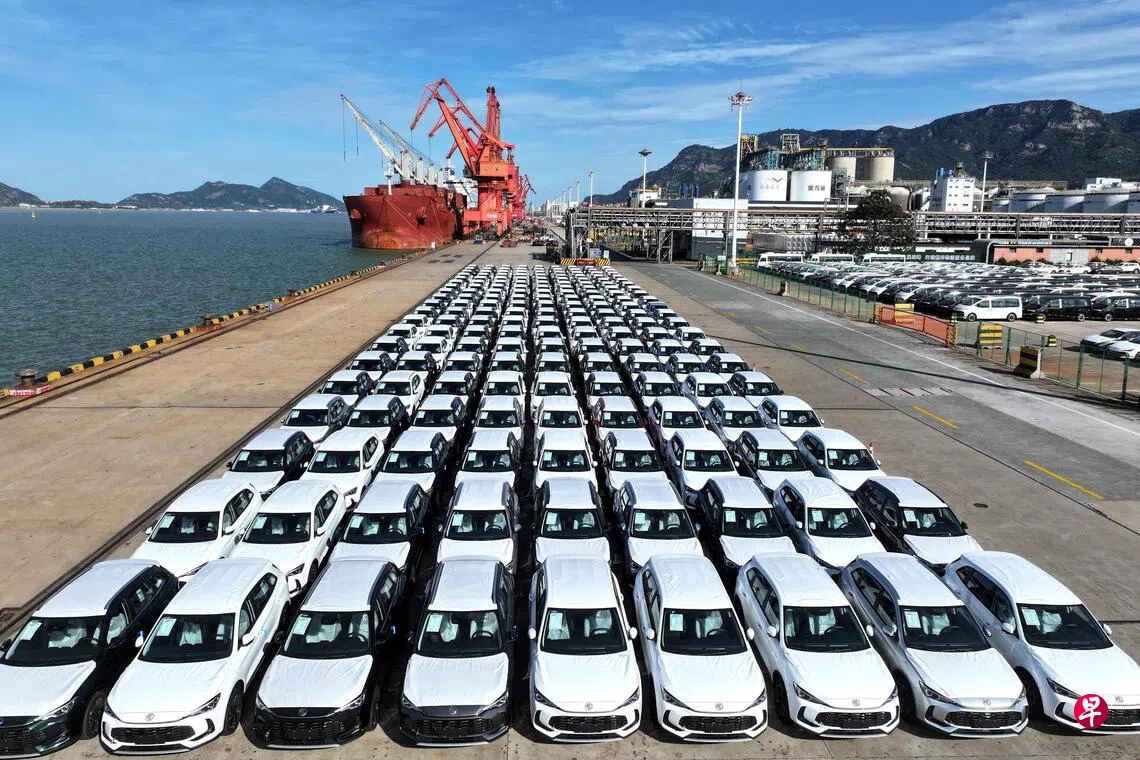
Trade tensions between China and the EU have resurfaced following an agreement last month, with the EU announcing temporary safeguard measures on Tuesday (24 November) to impose quotas on hybrid car imports from China and elsewhere. China’s Ministry of Commerce urged Brussels that same day to honour the consensus reached by both sides, stressing that it would resolutely safeguard the legitimate rights and interests of the Chinese industries concerned.
According to Bloomberg, Reuters and other media reports, the temporary measures, which will last from 1 December until 18 June next year, will cap Chinese hybrid car imports at 191,780 during that period, according to a regulation published on Tuesday by the European Commission, the EU’s executive arm.
Other major trade partners will also be affected by the safeguards introduced on Tuesday. Japan will see its imports capped at 170,889 vehicles for the relevant period, Turkey at 126,320, the UK at 105,402, South Korea at 67,924 and the US at 18,482.
According to reports, the bloc’s executive arm is currently carrying out a trade investigation that is likely to lead to longer-term caps.
In a statement issued on Tuesday in the form of a spokesperson’s response to reporters’ questions, China’s Ministry of Commerce noted that the EU had launched a global safeguard investigation into hybrid car imports on 30 October and decided less than a month later to impose temporary safeguard measures.
The statement said China and the EU had previously held consultations before the investigation was launched, under the China-EU trade and investment consultation mechanism, based on mutual respect and consultation on an equal footing. They had reached a lawful, compliant, pragmatic and balanced arrangement on hybrid car trade. It urged the EU to honour their consensus, strictly follow World Trade Organization (WTO) rules, fully uphold the principle of non-discrimination and conduct the investigation fairly and impartially.
The statement added: “China will closely monitor the progress of the EU’s investigation and reserves all rights, including recourse to dispute settlement under the WTO framework and seeking trade compensation, to resolutely safeguard the legitimate rights and interests of the Chinese industries concerned.”
Brussels struck an agreement with Beijing in the Chinese capital last month to limit imports of hybrid cars from China to 350,000 vehicles annually from December, around half the number set to arrive in the EU this year.
China’s Ministry of Commerce also reiterated that protectionism offered no way forward, and that openness and cooperation were the right path. With the global automotive industry at a critical stage in its green transition, openness and cooperation were an inevitable trend. The Chinese and EU automotive industries had complementary strengths and were deeply integrated, making closer cooperation in both sides’ interests. “We hope the EU will work with China to provide a stable, predictable and sustainable trade and investment environment for industries on both sides, and promote the stable, balanced and healthy development of bilateral economic and trade relations.”