

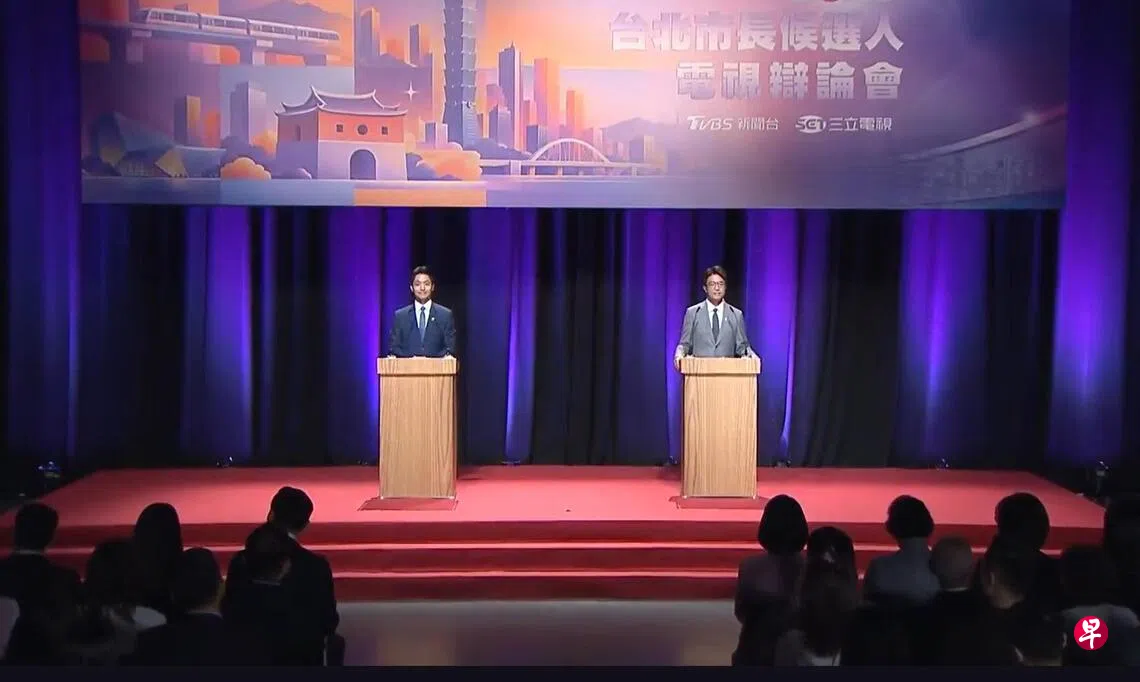
Taipei’s first televised mayoral election debate saw incumbent Chiang Wan-an of the Kuomintang (KMT) attack Democratic Progressive Party (DPP) candidate Puma Shen for his empty slogans and lack of concrete action. Seeking re-election, Chiang fired off nine questions to highlight inconsistencies in Shen’s positions.
Shen deftly sidestepped them, saying most of the issues concerned the central government: “You could go back to being a legislator, and I’ll be mayor.”
An academic interviewed said Chiang had the upper hand, giving pan-Blue coalition supporters a much-needed boost and helping stem the damage after his campaign had risked being overwhelmed by the “Shen wave”. But the pan-Green camp is adept at turning debate soundbites into short video clips and mobilising internet users and allied groups for a sustained “long-tail” communications offensive. Chiang would remain on the defensive in the subsequent online battle, ultimately leaving the two sides evenly matched overall.
TVBS and SET TV jointly hosted a televised debate for Taipei mayoral candidates on Saturday (31 October). Chiang wore a dark blue suit with a colourful “Team Taipei” badge on his chest, signalling his determination to win re-election. Shen wore a grey suit with a rainbow Taiwan badge, reflecting the importance he attaches to LGBT issues.
Speaking first, Shen said the debate was not about winning or losing, but about presenting positions and values and giving residents a choice. He stressed the importance of “being there” for people, saying he hoped no one would feel lonely and everyone could live freely and at ease. He listed tree planting, child abuse and nutritious school lunches as priority issues for his first 100 days in office.
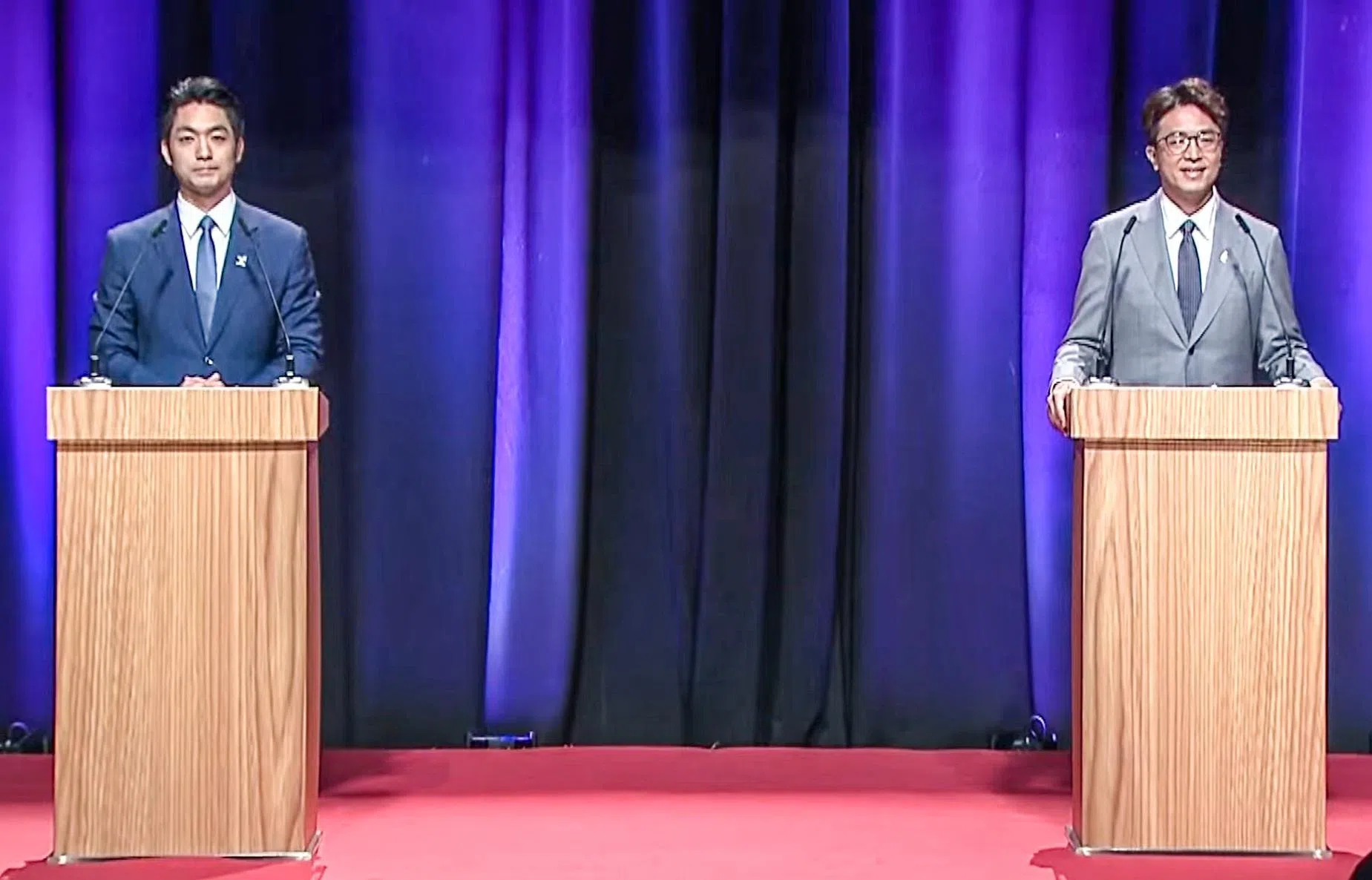
Chiang went on the offensive from the outset, saying he had fulfilled promises made four years ago, including on childcare allowances, while Shen had made only empty promises. Using a Taiwanese saying, he accused Shen of making plans all night but taking no action by daybreak. Chiang also pressed Shen repeatedly for solutions on policy proposals such as urban renewal, seeking to expose his unfamiliarity with municipal affairs and accusing him of irresponsibly “reading the question, then replying at random”.
Chiang easily fended off Shen’s questions about fresh milk for students and tree felling by the Taipei city government. He said the city government had acted where the central government had not, and that Taipei had planted 42,000 trees and would plant another 40,000.
During the cross-examination segment, Chiang stepped up his attacks, listing nine past statements by Shen. These included: “The Taipei-Shanghai City Forum is an opening for infiltration”; “Missiles fired at us by China (the mainland) would be a great help to us”; “The Republic of China is a quasi-colonial system, which needs to be addressed by drawing up a new constitution”; and “I hope Taipei will hold an independence referendum in future”. Chiang demanded to know who had made those remarks.
Shen did not answer directly, saying only that Chiang was very interested in his posts from more than a decade ago and that explaining them one by one would take considerable time. Almost all the issues concerned the central government, he said. “Or you could go back to being a legislator, and I’ll be mayor. That might be quicker.”
Shen then turned Chiang’s tactic against him. He said the premise for holding the Taipei-Shanghai City Forum was that neither side should yield to threats from the other, before asking who had said: “Given political circumstances such as Chinese military aircraft harassing Taiwan, we need to think twice about the Taipei-Shanghai City Forum.” He added that Chiang had made that statement in 2022.
Shen said cross-strait exchanges of information were beneficial if there were no political or cybersecurity concerns. For example, Shanghai also had the sports stations he had proposed. He noted that the Chinese Communist Party had launched military exercises immediately after Chiang last returned to Taiwan from the forum. “This isn’t about whether there is an opening for infiltration. This is a national defence issue.”
Chiang smiled frequently during the debate and appeared confident. In his closing remarks, he questioned Shen’s inconsistent positions on issues including the mass recall campaign, saying Taipei would lose its direction if Shen were elected. He stressed that while he was not good at packaging his image, his words and actions were consistent.
Chiang made a point of thanking previous mayors, particularly Ko Wen-je, founding chairman of the opposition Taiwan People’s Party (TPP), for laying the groundwork for projects such as the Taipei Dome during his tenure. Chiang said he had maintained fiscal discipline, reducing debt by more than NT$40 billion (S$1.57 billion) over four years in office, the most among Taiwan’s six special municipalities. The remarks were clearly aimed at winning TPP votes.
In his closing remarks, Shen appealed to voters by quoting well-known television host Kevin Tsai: “In an election, you don’t need to worry about which candidate wins. You need to care about whether you win. When you vote for the way of life you want, you have won.”
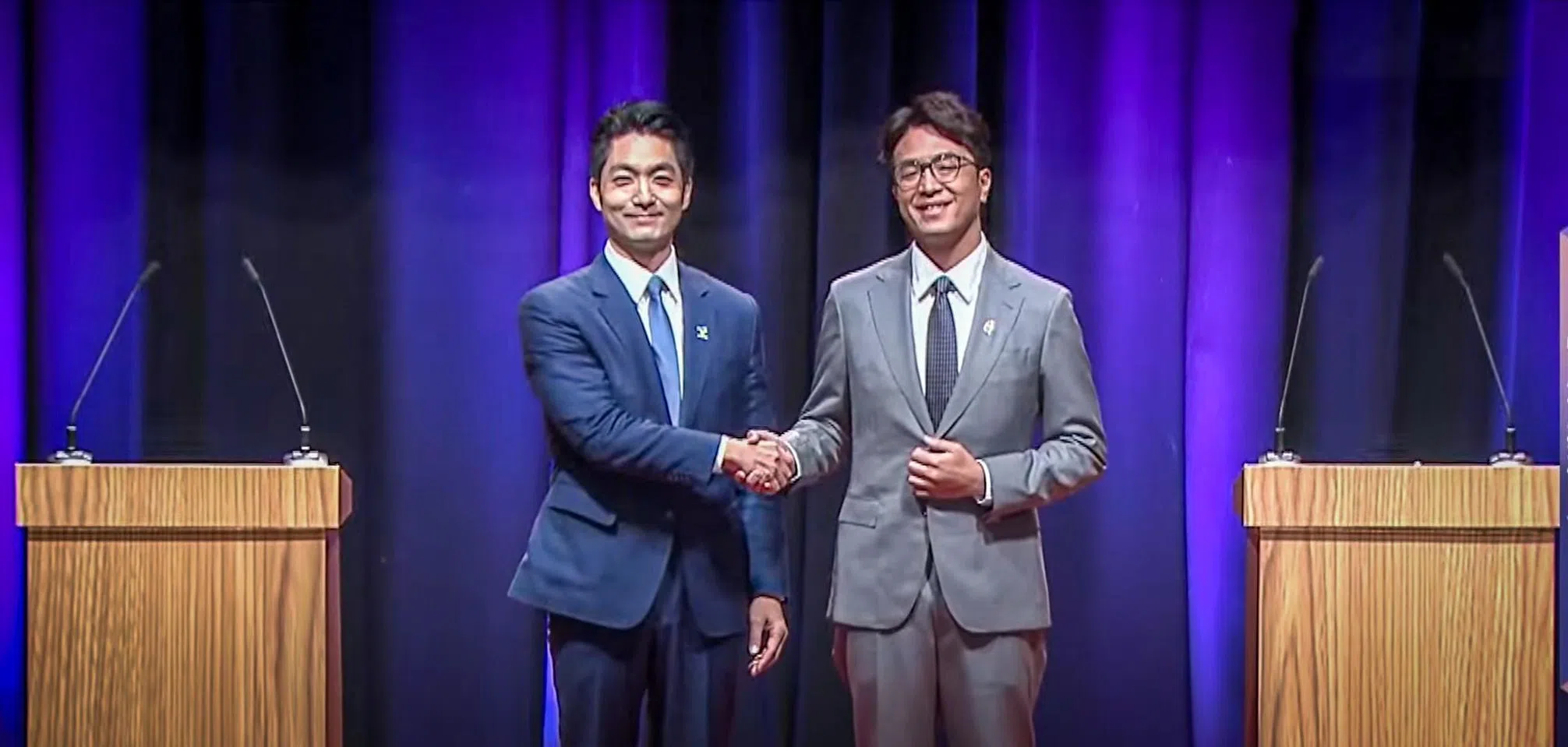
Tu Sheng-tsung, an associate professor and head of Ming Chuan University’s Department of Radio and Television, told Lianhe Zaobao that Chiang had the upper hand overall.
Pan-Blue supporters growing anxious from the fragmented information they receive from social media clips could finally get a chance to hear Chiang’s policy platform in full via the debate, Tu said, which stemmed the damage from the pan-Green camp’s repeated taunts that he was an “empty suit”.
But Tu cautioned that Shen would certainly win the communications battle to come after the political debate. “When it comes to short videos and online creativity, Shen’s camp is sharper, more thorough and more systematic in its operations.”
