

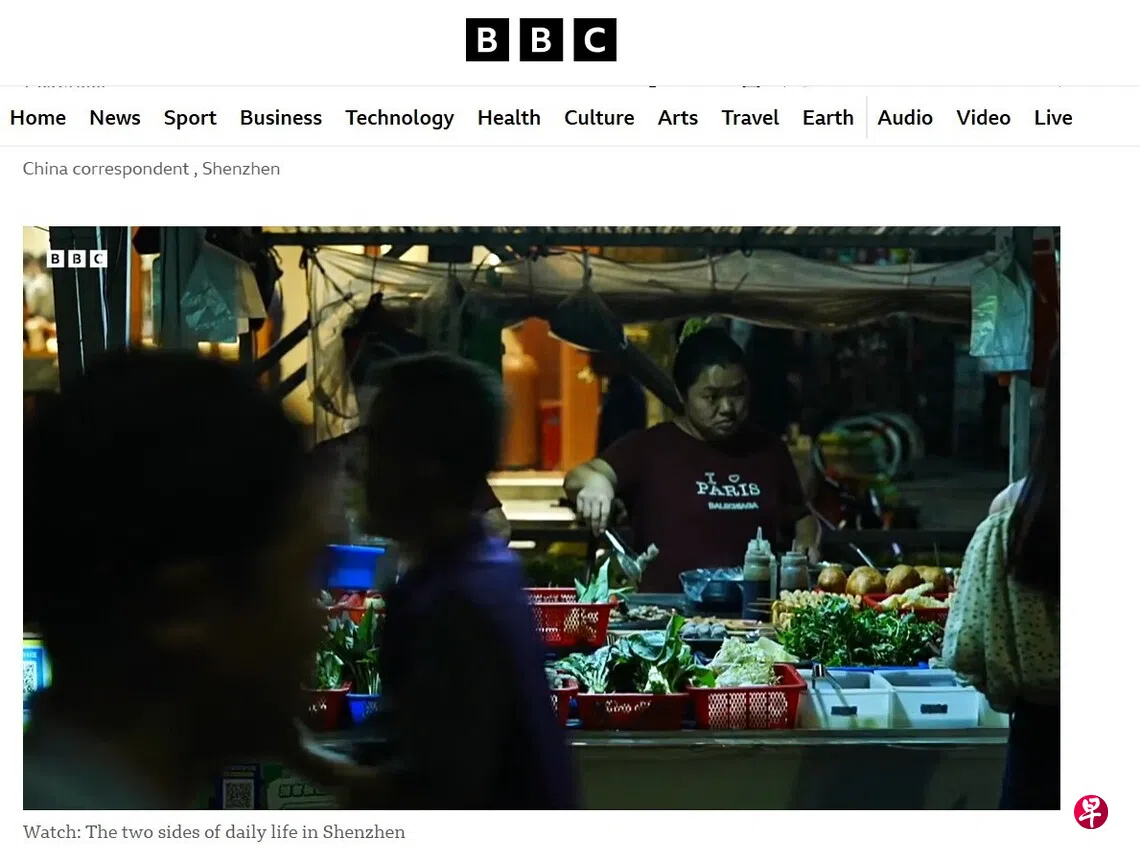
Ahead of the Asia-Pacific Economic Cooperation (APEC) Economic Leaders’ Meeting, the BBC published a report on the pressures on jobs and incomes facing workers in traditional industries behind Shenzhen’s technology boom. China’s Global Times (《环球时报》) accused the BBC of using a “gloomy filter” to produce selective and misleading coverage, and demanded an apology to Shenzhen residents.
The BBC report, published last Tuesday (17 November), was headlined “China is hosting the world’s leaders in its AI wonderland. Here’s what they won’t see” (《中国以AI奇境接待各国领袖,但他们看不到的另一面是什么?》). Through visits to technology companies and traditional manufacturing hubs in Shenzhen, it examined the experiences of different groups amid China’s technological development.
The report highlighted Shenzhen’s technological innovations, including drone deliveries, driverless taxis and humanoid robots. It also turned its attention to traditional manufacturing hubs such as Shajing and Songgang, focusing on factory relocations, falling incomes and workers’ concerns about job prospects in the age of artificial intelligence (AI).
According to the BBC, a property market downturn and weak consumption have prompted some manufacturers to scale back production, pursue automation or move factories to areas with lower labour costs. Increasing numbers of workers are turning to the gig economy, where pay and benefits are relatively low.
In a commentary published on Monday (23 November) headlined “BBC should apologise to the Shenzhen residents it offended” (《BBC应向被冒犯的深圳市民道歉》), Global Times accused the broadcaster of using editing and image processing to portray ordinary residents’ lives as bleak and eerie, in support of a predetermined conclusion.
The commentary said the BBC was not blind to China’s technological progress, but habitually put a negative spin on its development achievements. Such reporting offended not only Shenzhen residents but also the BBC’s readers worldwide, it said.
Global Times also accused the BBC of longstanding bias in its China coverage, going further to frame it as an issue of racism. The commentary said that, with growing numbers of foreign tourists visiting China, the barriers to understanding erected by Western media had been broken down.
