

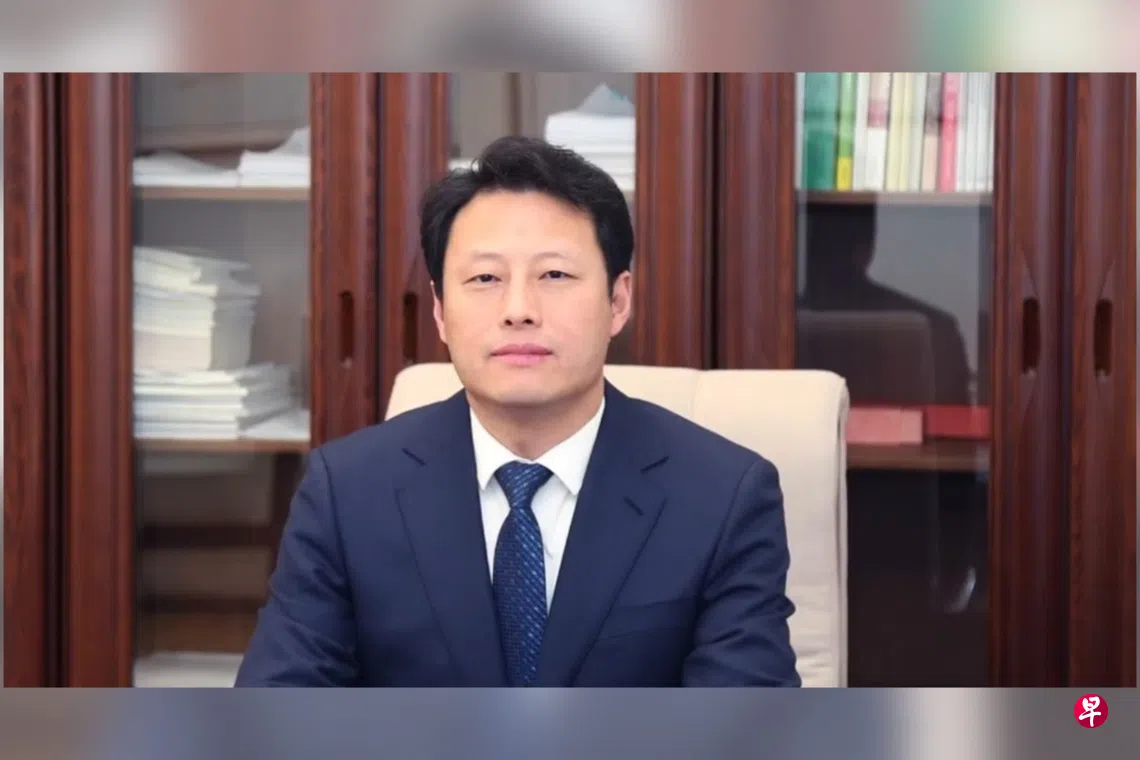
The Chinese Communist Party’s Hebei provincial committee has completed its leadership reshuffle, with four officials joining its standing committee. Among them is Cangzhou party secretary Liu Jing, 50, who has risen to vice-provincial rank after just six months at the helm of the city.
According to Hebei Daily (《河北日报》), the 11th CCP Hebei provincial committee held its first plenary session in Shijiazhuang on Sunday (29 November), electing a new 12-member standing committee. Luo Wen was elected provincial party secretary, while Zhao Chenxin and Chang Bin were elected deputy provincial party secretaries.
A comparison of the standing committee’s membership before and after the reshuffle shows four new members: Hebei vice-governors Wang Litong and Zhao Xinhai, Qinhuangdao party secretary Wang Xi and Cangzhou party secretary Liu Jing.
Publicly available information shows that Liu was born in December 1975 and has spent much of his career in Hebei. His previous posts include Fuping county party secretary, Handan deputy party secretary and director of the Hebei provincial bureau for letters and visits. In 2021, the CCP Central Committee’s Organisation Department named him an “outstanding county party secretary nationwide”.
Liu became mayor of Cangzhou in January last year and was promoted to the city’s party secretary in May this year.
Speaking at the plenary session, Luo stressed the need to improve the leadership team’s rules for deliberation and decision-making, and to regulate how top leaders perform their duties and exercise power, ensuring that decisions are made scientifically, democratically and in accordance with the law. He also called for sustained efforts to exercise full and rigorous party self-governance, urging leading officials to maintain strict self-discipline, fulfil their responsibilities rigorously and exercise strict oversight over those under their authority, with the “critical few” setting an example for the “vast majority”.
He also called for stronger monitoring and coordination of economic activity, with targeted measures to stabilise employment, businesses, markets and expectations, to ensure that the main economic targets and tasks for the year are met and that the 15th Five-Year Plan gets off to a good start.
