

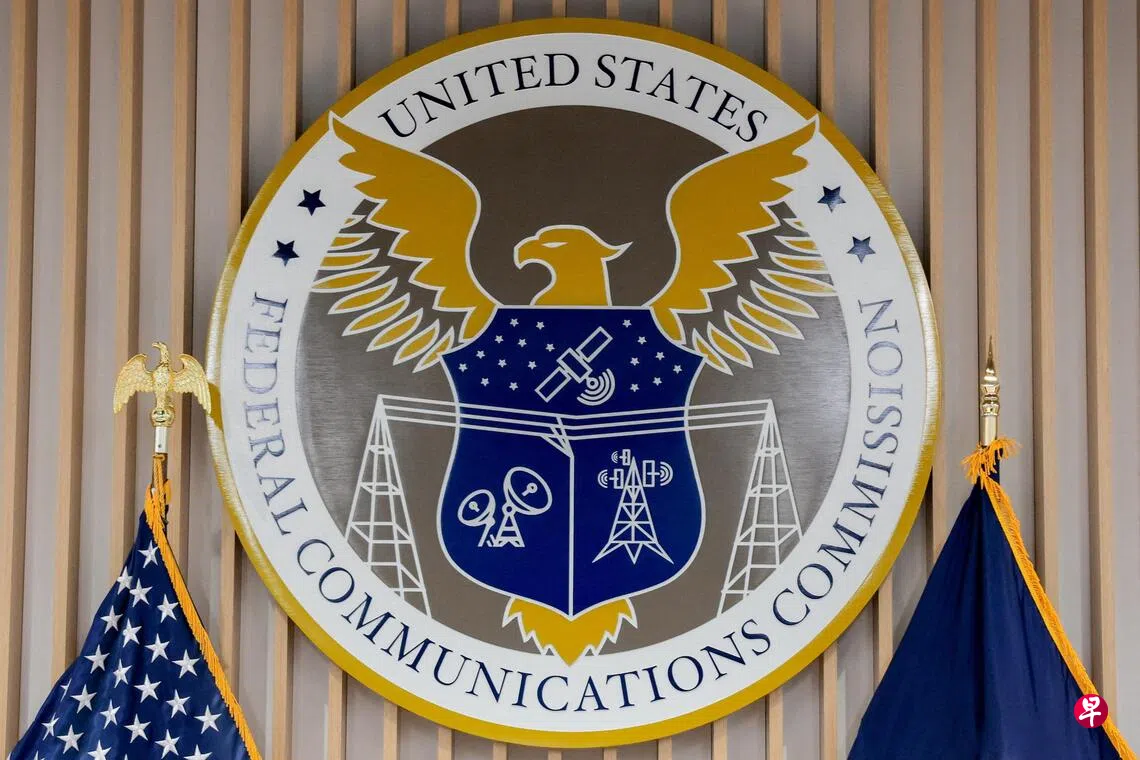
US national security scrutiny of China’s telecommunications industry has extended to Hong Kong companies with mainland Chinese corporate shareholders. HKT, a major Hong Kong telecommunications operator, has agreed to cease its US operations under pressure from the US Federal Communications Commission, which had threatened to revoke its authorisation to operate.
The US Federal Communications Commission (FCC) said in October last year that it proposed revoking HKT’s authorisation to operate in the US, citing national security concerns and ties between HKT’s parent company, PCCW, and China Unicom.
Under a consent decree reviewed by Reuters, HKT agreed on Friday (30 October) to cease providing international and domestic telecommunications services in the US. It must submit an application to the FCC within 30 days to discontinue those services and cease its US operations by 1 September 2027 at the latest.
It remains unclear why HKT agreed to withdraw or whether the two sides had held negotiations. With the agreement signed, however, the FCC will no longer pursue proceedings to revoke HKT’s authorisation.
This also means that further details of US national security concerns that might have emerged during the proceedings will not be made public. PCCW did not respond to Reuters’ request for comment.
FCC documents released in October last year disclosed that HKT held 12 US international telecommunications service authorisations. Its subsidiary PCCW Global provided domestic interstate telecommunications services in 30 US states, Washington, D.C. and Guam. HKT’s annual report did not disclose specific revenue figures for its US operations.
Washington has grown increasingly concerned in recent years that Chinese companies could use telecommunications data and infrastructure for espionage. Since 2019, the FCC has successively banned the three major telecommunications operators — China Mobile, China Telecom and China Unicom — from providing international telecommunications services to the US, citing national security concerns.
Donald J. Trump’s administration has stepped up its crackdown over the past year. On Thursday (29 October), the FCC decided to ban all Chinese laboratories from testing electronic products for the US market from December 2028.
In 2025, Chinese laboratories carried out 82% of the testing involved in US electronic equipment certification, while less than 4% was conducted in the US.
The measure drew a strong response from Beijing. On Friday evening, China’s Ministry of Commerce accused the FCC of “ignoring China’s repeated representations” and “repeatedly introducing restrictive measures targeting China”, seriously undermining the stability of China-US economic and trade relations. Expressing strong dissatisfaction and firm opposition, Beijing urged the US to revoke the measures.
A ministry spokesperson said Chinese testing laboratories were an important part of the global testing and certification system. The US was using administrative measures to interfere with market choices and forcelly pushing for the so-called “reshoring of testing”, which “will ultimately harm the interests of US businesses and consumers”. China warned: “If the US insists on proceeding, China will take further necessary measures to firmly safeguard its legitimate rights and interests.”
The FCC also announced on Thursday that it planned to ban Chinese telecommunications companies from directly obtaining US telephone numbers soon, over national security concerns. It was also considering barring Chinese telecommunications companies from accessing US communications networks and operating data centres in the US.
Responding to the bans on testing and access to telephone numbers, China’s Ministry of Foreign Affairs on Friday accused the US of overstretching the concept of national security and abusing state power to unjustifiably suppress Chinese companies. It said China would take necessary measures to firmly safeguard its legitimate rights and interests.
