

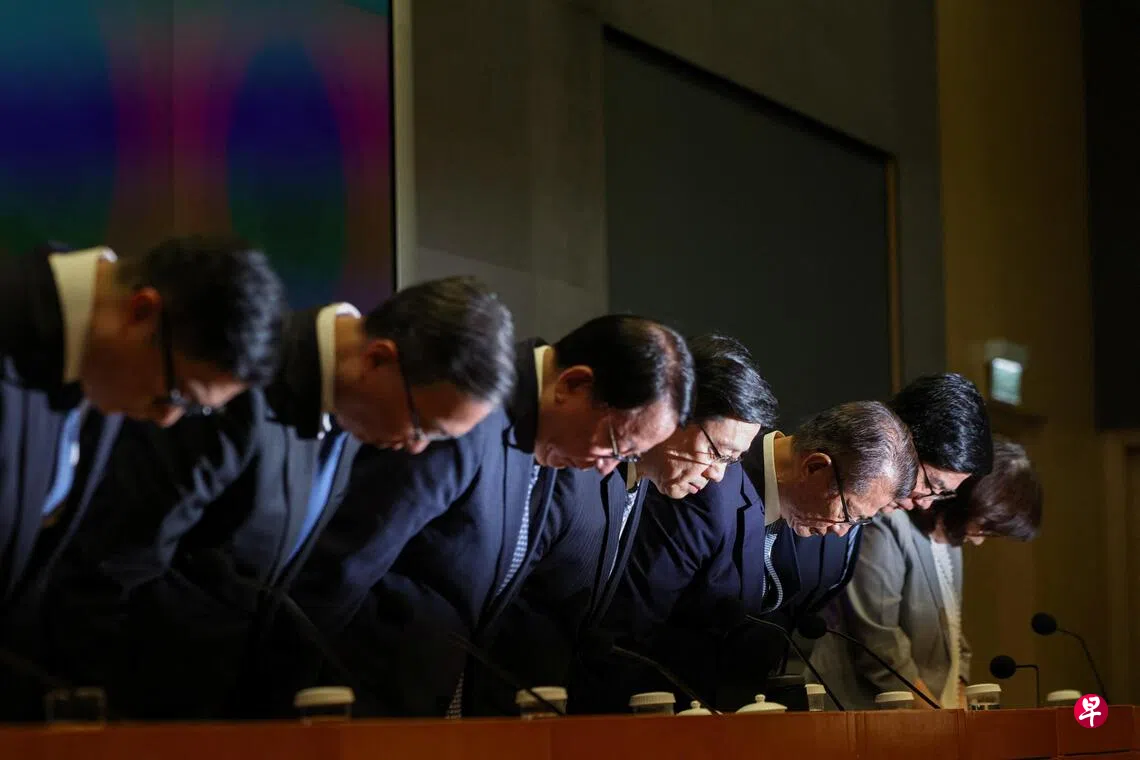
Nearly a year after the Wang Fuk Court fire, the Hong Kong government has apologised for the first time over the disaster and announced that Secretary for Housing Winnie Ho has resigned to take political responsibility.
An academic interviewed said the move demonstrated a spirit of political accountability. Hong Kong residents are also watching to see whether more government personnel would be held accountable.
The No. 5 alarm fire broke out at Wang Fuk Court on 26 November last year, killing 168 people and becoming one of Hong Kong’s worst fires in recent years.
Chief Executive John Lee subsequently set up an independent committee to investigate its causes, establish responsibility and recommend ways to prevent similar incidents. The committee submitted its report on 22 October.
Lee held a press conference with several principal officials on Thursday (29 October) to announce the report’s main findings and the government’s follow-up measures.
At the start of the press conference, he said that, as Chief Executive and head of the Hong Kong Special Administrative Region government, he was deeply saddened by the incident and wished to apologise on the government’s behalf to those affected and the wider public. He and seven officials then stood and bowed deeply before the cameras.
Lee said that although the Wang Fuk Court fire did not involve any personal wrongdoing by Ho, she should bear political responsibility because the estate fell under the building control oversight of the Housing Bureau’s Independent Checking Unit.
He also noted that Ho submitted her resignation to him on Wednesday (28 October), saying she was willing to take political responsibility. Lee had accepted her resignation and appointed Deputy Financial Secretary Michael Wong to serve concurrently as secretary for housing.
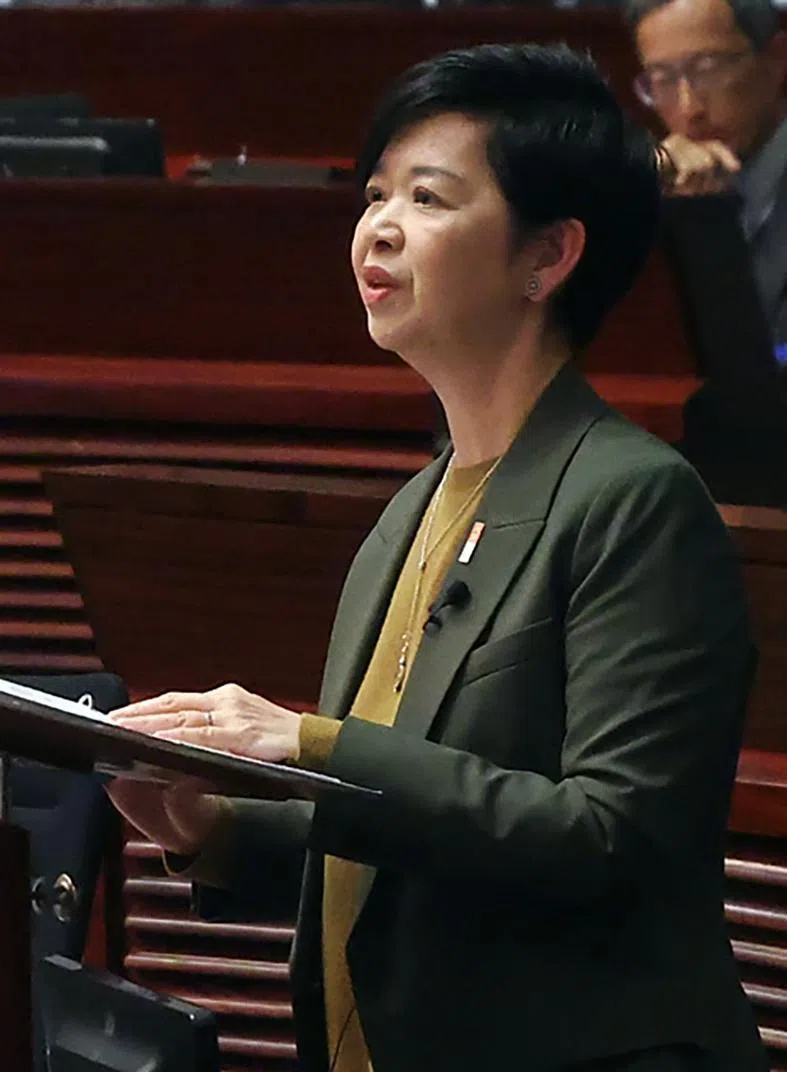
Hong Kong’s Secretary for Housing is a political appointee, ranking below the Chief Executive, the three secretaries — the Chief Secretary for Administration, Financial Secretary and Secretary for Justice — and their deputies. The post is on the same level as other policy bureau heads. Its holder is a principal official of the Hong Kong government, equivalent to a minister in Singapore.
Lee said that, beyond political accountability, the government would also pursue administrative accountability among the civil servants concerned. Citing the independent committee’s report, he said the Housing Bureau’s Independent Checking Unit, the Buildings Department, the Fire Services Department and the Labour Department had all shown varying degrees of inadequacy and failings in overseeing fire risks associated with the major renovation works at Wang Fuk Court.
The authorities will investigate and clarify the duties of personnel at each level, whether they had fulfilled their supervisory responsibilities and who should bear responsibility for the failings. They aim to complete the investigation within three months.
The independent committee’s report identified numerous problems in Hong Kong’s building maintenance system and made 120 recommendations. Lee said major building renovation projects involved large sums of money, making them easy targets for criminal syndicates.
The government will therefore strengthen oversight through institutional and legal changes. One key reform will be to criminalise bid-rigging in building maintenance works. The authorities proposed deterrent criminal penalties, with offenders facing up to 10 years in prison and a fine of HK$10 million (S$1.63 million).
The Hong Kong government also plans to establish a Building Maintenance Support and Services Authority to improve support and oversight for major renovation works.
In addition, the Housing Bureau will set up a Public Housing Building Control Unit in November to replace the existing Independent Checking Unit, reorganising the regulatory framework for public housing works and closing gaps in the system.
When asked why only one bureau chief had resigned and whether the chief executive should also be held accountable, Lee repeatedly said he had weighed a range of considerations.
“In reflecting on my own role, I considered that the government needs to carry out extensive reforms and has a great deal of work to implement. As the person with primary responsibility for the government, one of my most important duties is to lead it in confronting problems, resolving them and carrying out the substantial work ahead,” said Lee.
China’s State Council Hong Kong and Macao Affairs Office published a commentary saying that the Hong Kong government’s release of the Wang Fuk Court fire report, accountability decisions and reform measures fully demonstrated its willingness to shoulder responsibility and would help Hong Kong advance more quickly from stability to prosperity.
Hung Wing-lok, a lecturer at the Chinese University of Hong Kong’s School of Governance and Policy Science, told Lianhe Zaobao (LHZB) that Ho’s resignation demonstrated political accountability. As for administrative accountability, the government had activated the two-tier investigation mechanism under its accountability system for heads of departments and referred the matter to the Public Service Commission.
With the process expected to be completed within three months, Hung believed Hong Kong residents would be watching to see whether more personnel involved would be held accountable.
He also said the Wang Fuk Court fire had exposed structural problems in Hong Kong’s government system.
“Although the government proposed several improvements before the investigation report was released, the key question remains whether those who broke the rules will face the severe penalties they deserve. From a public administration perspective, however rigorous and well-designed the rules and procedures may be, only cases in which deterrent penalties are imposed can send a real warning throughout the system. Time will tell whether this happens.”
