

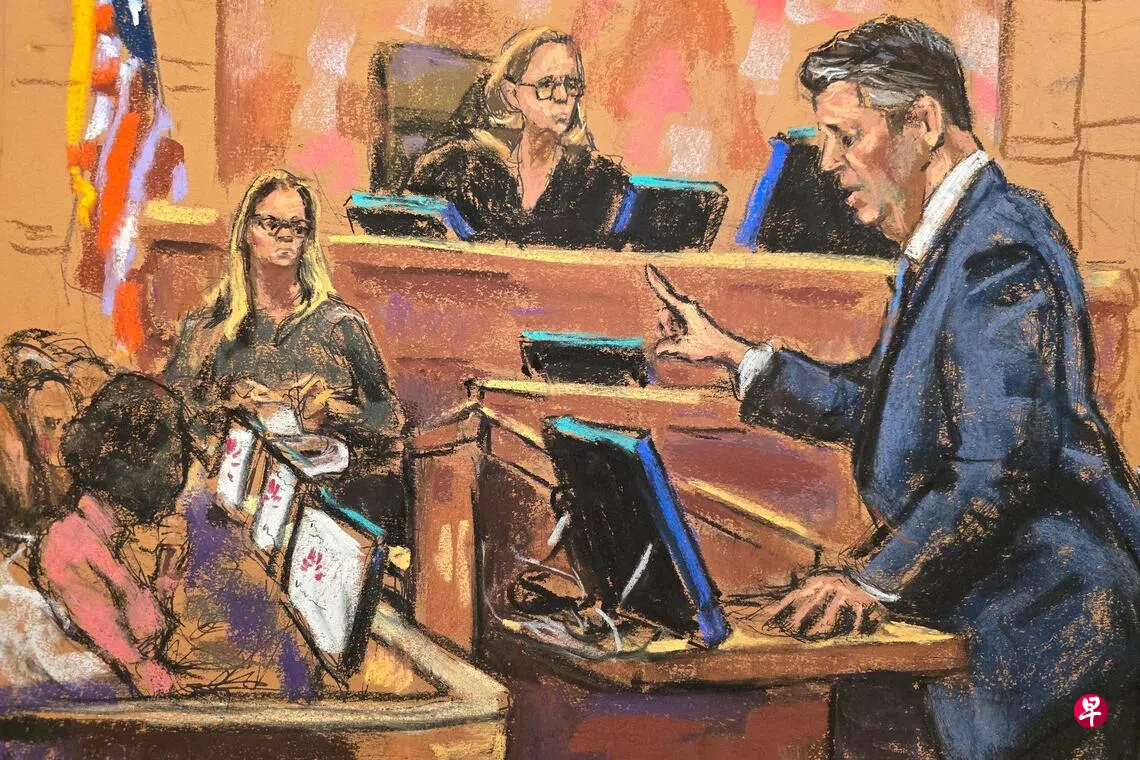
As Chinese technology giant Huawei's criminal trial in the US nears its end, defence lawyers said in closing arguments that prosecutors had put a “malicious interpretation” on the company's business activities and had failed to prove the charges after two months of hearings.
According to Reuters, prosecutors accuse Huawei of deceiving HSBC and other banks about its business in Iran and conspiring to steal trade secrets from five US technology companies.
Huawei and three affiliates face a total of 12 criminal charges, including racketeering conspiracy, conspiracy to steal trade secrets, bank fraud, wire fraud and obstruction of justice. Prosecutors also allege that the companies reinvested proceeds from a series of criminal activities in their businesses.
Defence lawyer Brian Heberlig told jurors at the federal court in Brooklyn on Tuesday (17 November): “They began with guilt and worked backwards. When the evidence didn't fit its theory, it moved the goal posts.”
Addressing the bank fraud charges, Heberlig argued that the banks knew Huawei operated in Iran, which was under US sanctions, but accepted the risks and competed for its business.
On the allegations of trade secret theft, he said: “the government cherry-picked a handful of incidents ... and tried to convert them into a 20-year conspiracy.”
Heberlig said: “Huawei didn't steal its way to success. It earned it, plain and simple.”
In closing arguments on Monday (16 November), prosecutors said they had presented evidence proving beyond reasonable doubt that Huawei operated as a criminal enterprise.
Prosecutor Meredith Arfa said: “For 20 years, Huawei committed a pattern of crimes targeted at American companies, the American financial system and the American government. It is time to finally hold Huawei accountable.”
The case first drew media attention in 2018, when Huawei's chief financial officer Meng Wanzhou, the daughter of its founder, was detained in Canada on a US arrest warrant over her alleged involvement in the bank fraud. She reached an agreement with prosecutors in 2021, and the charges against her were later dropped. The case against Huawei, however, has continued.
The trial began in September this year. Prosecutors called more than 60 witnesses, while the defence called about 15. The jury is expected to begin deliberations on Wednesday (18 November).
The impending verdict comes as competition over artificial intelligence intensifies tensions between China and the US, while their trade truce remains fragile.
