

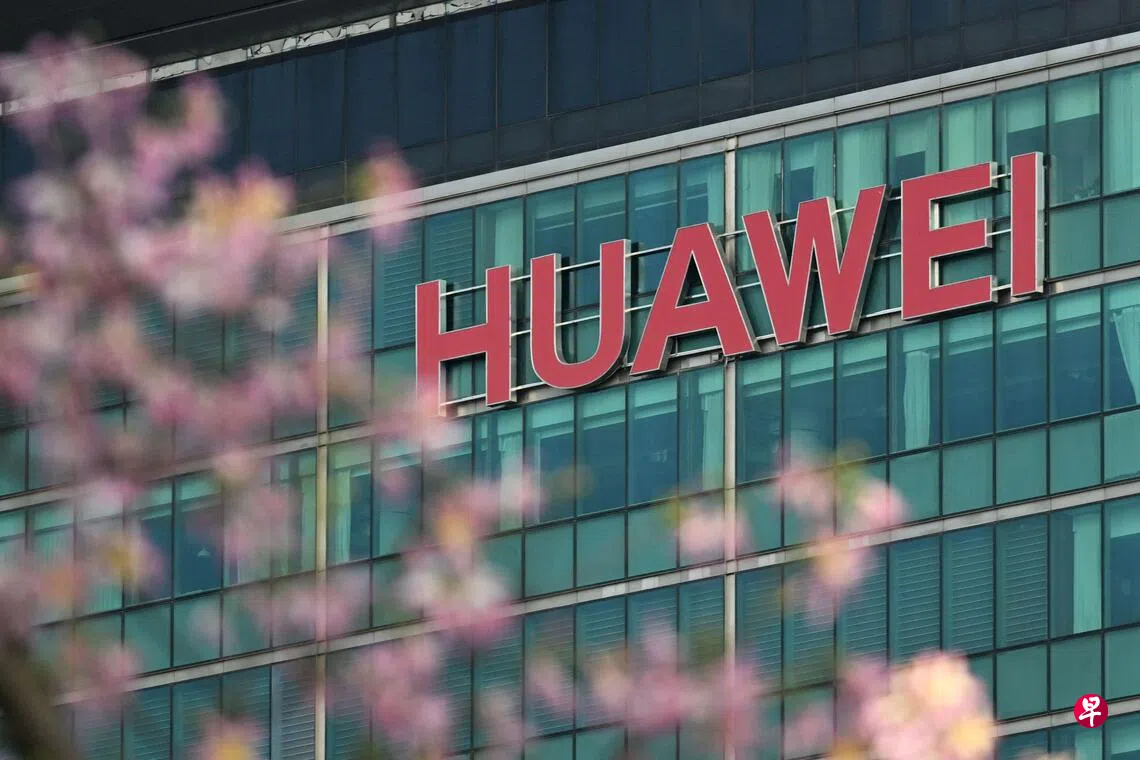
Chinese technology giant Huawei is preparing to disclose technical details of a new high-bandwidth memory (HBM) chip that could outperform current products from Samsung Electronics and SK Hynix, exploring a new route for China to produce this critical artificial intelligence (AI) component domestically.
According to Bloomberg, the title of a research paper Huawei is scheduled to present at a conference in San Francisco next February indicates that its HBM chip has twice the data-pin density of products currently mass-produced by its South Korean rivals. In theory, this would significantly increase memory bandwidth, allowing the chip to transfer more data to processors to meet the growing computing demands of AI models.
However, the extent of Huawei’s progress remains unclear. Companies also routinely publish theoretical chip designs to advance research and exchange technical ideas. The paper suggests that Huawei is exploring a deeper push into the lucrative HBM market, currently dominated by Samsung, SK Hynix and Micron Technology.
The US has banned all three companies from supplying HBM to Chinese customers, while Huawei has long worked to develop such chips independently. As China’s existing stockpiles of foreign-made HBM dwindle, mass production by Huawei would help ease a major bottleneck in the country’s drive for semiconductor self-sufficiency.
Huawei’s Ascend AI chips have become China’s most widely used domestically produced AI accelerators since the US restricted American chip giant Nvidia’s exports of its most advanced semiconductors to China. Huawei plans to launch at least one new chip each year through 2029 to meet surging demand for computing power. Leading Chinese AI laboratories, including DeepSeek and Moonshot AI, are striving to catch up with Anthropic and OpenAI.
However, Chinese companies cannot obtain the most advanced extreme ultraviolet lithography machines needed to manufacture cutting-edge AI chips and HBM, making high-performance chips harder to develop. The US government has also moved to close a loophole allowing Chinese companies to access advanced Nvidia chips remotely through data centres in Southeast Asia.
Faced with these restrictions, Chinese technology companies continue to explore new alternatives to foreign technology. Earlier this year, Huawei announced that it would try alternative techniques to pack more transistors into chips and increase data transfer speeds. The company has begun producing smartphone chips this year using a technology called “LogicFolding”, and plans to produce semiconductors by 2031 with performance comparable to chips made using a 1.4-nanometre process.
Chinese memory chipmaker ChangXin Memory Technologies is also experimenting with new architectures to catch up with South Korean and US rivals. At an industry conference in October, ChangXin announced progress on a “4F²” design that it will use in an upcoming server memory product.
ChangXin’s announcement hit the share prices of Samsung, SK Hynix and Micron, deepening investor concerns that continued technological breakthroughs by Chinese chipmakers could eventually erode the dominance of the global memory chip giants.
