

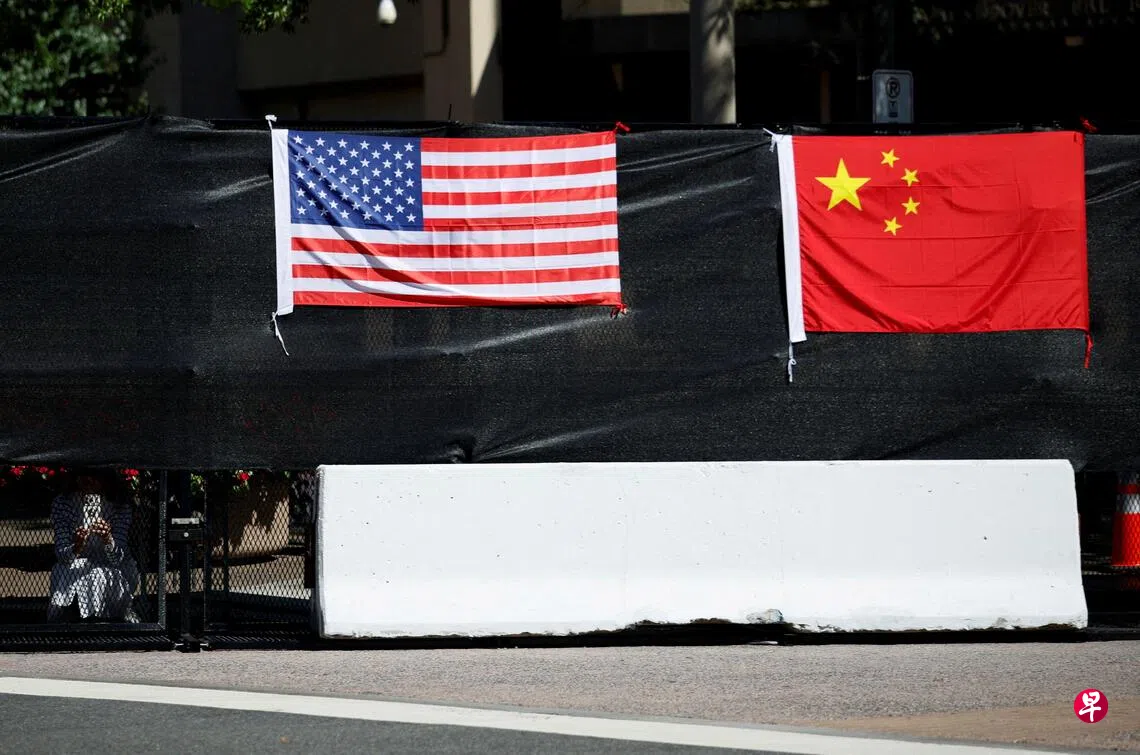
The Iran war and unilateralist policies have weakened US military capability and diplomatic influence in Asia, narrowing the gap in comprehensive power between the US and China to its smallest since 2018, according to a new report by an Australian think tank.
The 2026 Asia Power Index (《2026年亚洲实力指数》), released by Australia’s Lowy Institute on Sunday (22 November), gave the US a comprehensive power score of 78.9, with China in second place at 73.6. The gap of just 5.3 points is the smallest since the index was first published in 2018.
The US comprehensive power score fell by 1.5 points from last year, the largest decline of any country this year, while China’s remained broadly unchanged. The report noted: This narrowing divide owes more to Washington’s missteps than to any major advances on Beijing’s part.
The Lowy Institute defines “comprehensive power” as a country’s ability to shape its external environment and influence the behaviour of other countries and entities. The index is a weighted measure of eight indicators of power, including economic capability, military capability and cultural influence.
The US administration of Donald J. Trump launched joint attacks with Israel on Iran in February this year, triggering a war in the Middle East that continues to this day. The conflict has not only depleted US stocks of long-range missiles but also forced the US military to shift some resources from the Pacific to the Persian Gulf, weakening its military presence in Asia.
Meanwhile, over the past year, the US has scaled back joint military exercises and defence dialogues with key allies such as Australia, Japan and South Korea, deepening concerns about a shift in Washington’s strategic focus.
The report gave the US a military capability score of 87.4, compared with China’s 72.1, narrowing the gap to a record low of 15.3 points.
The report said that although Washington still retains clear advantages in defence spending, air power and global military power projection — the US military budget is nearly three times that of China — “China’s ongoing military modernisation added to its comprehensive power. Its maritime warfare capabilities continue to expand, particularly in sea control and sea denial, while it maintains a sizeable lead over the US in ground-based missiles and ground forces.”
The report also noted that in the Pacific, China’s military posture and ability to deploy force quickly and at scale outmatch those of the US.
On the diplomatic front, the US influence score plunged six points to 76.7 this year, the largest annual decline since the index was launched and its fourth consecutive year of decline.
The report said that, besides the Iran war, the Trump administration’s imposition of additional tariffs on trading partners, distancing from international organisations such as the UN, and demands for Asian allies to shoulder more defence spending had also weakened US diplomatic credibility in the region.
By contrast, China already leads the US in both diplomatic influence and economic relationships. The two countries are almost level in economic capability, with the US scoring 86.7 and China 86.1.
Despite the narrowing gap between the two countries, the report showed that the US remained first in Asia for comprehensive power with a score of 78.9, leading China in six of the eight main indicators.
Among other countries, India ranked third with 40.5 points, Japan fourth with 38.6 and Russia fifth with 32.2. The report noted that India had made progress in regional diplomacy and defence cooperation this year, further cementing its position as a major Asian power. However, China’s comprehensive power remained about 80% greater than India’s.
