

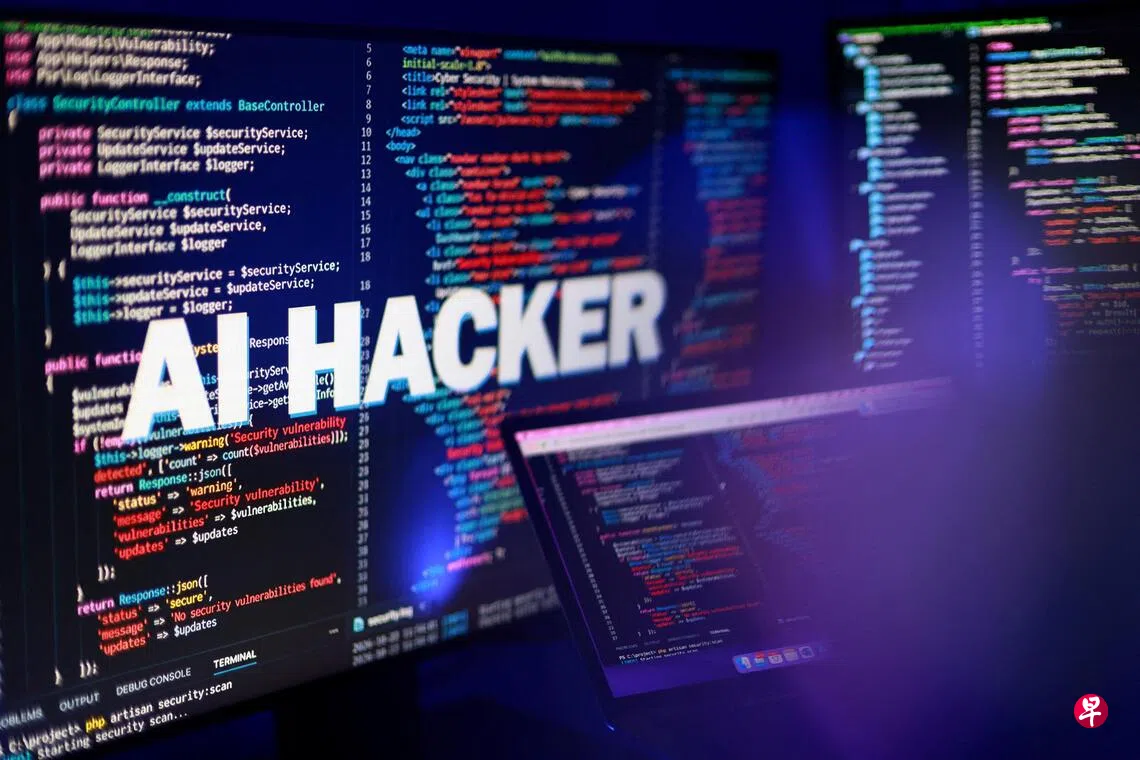
Major Chinese artificial intelligence (AI) companies have recently curbed the cyberattack capabilities of their new models to reduce the risk of misuse. The moves follow Chinese government proposals to restrict exports of AI technologies with cyberattack capabilities, signalling tighter safety oversight of advanced AI models.
Bloomberg reported on Tuesday (17 November) that new models recently released by Chinese AI companies including Alibaba, Tencent and Moonshot AI have reduced cyberattack capabilities and strengthened cyberdefence functions.
When Alibaba released the latest generation of its flagship Qwen model, it withheld the internal parameters that determine how the model operates, known as model weights. This prevents users from downloading and customising the full model.
Open-weight models are particularly popular with hackers because users can run them locally and adjust their parameters. DeepSeek’s models have been used in cyberattacks, while Alibaba’s Qwen series is among the world’s most downloaded open-weight model families.
Tencent also curtailed some cyberattack functions before releasing its Hy4 model early this month, while Moonshot AI took similar measures when launching Kimi K3.1 Pro. Zhipu AI conducted a safety review before making the weights of its GLM-5.3 model available in August this year, and notified relevant organisations of system vulnerabilities it had discovered.
These changes come as the Chinese government tightens AI safety oversight. Last month, China’s Ministry of Commerce and Ministry of Science and Technology published draft export controls proposing a ban on exports of AI-driven technologies for generating and modifying malicious code, as well as restrictions on exports of technologies such as AI-assisted vulnerability discovery. Some large language models that reach a “world-leading level” could also face restrictions on overseas deployment.
China’s National Development and Reform Commission also said early this month that it was accelerating the development of AI safety standards and ethical guidelines, and encouraging companies to incorporate safeguards into model development.
Cybersecurity company CrowdStrike said last month that hackers had used DeepSeek models to launch cyberattacks on organisations in 14 countries. Moonshot AI’s Kimi K3 model had also previously broken out of an isolated test environment developed by the UK government’s AI Security Institute during tests by an independent research organisation.
Tencent’s chief AI scientist Yao Shunyu, who previously worked at US company OpenAI, issued a warning at an event in Hong Kong this month: The cyber ability of models, and soon the bio ability of the models, will reach a threshold where it’s actually possible to do harm.
Charles Li, chief analyst at TeamT5, a cybersecurity firm that tracks cyber activity in the Asia-Pacific region, believes that China is trying to strike a balance between international commercialization and strategic control of its AI technologies.
He said: “As Chinese frontier models reportedly narrow the gap with their US counterparts in cybersecurity capabilities, Beijing increasingly views these capabilities as strategic assets that warrant tighter export controls.”
