

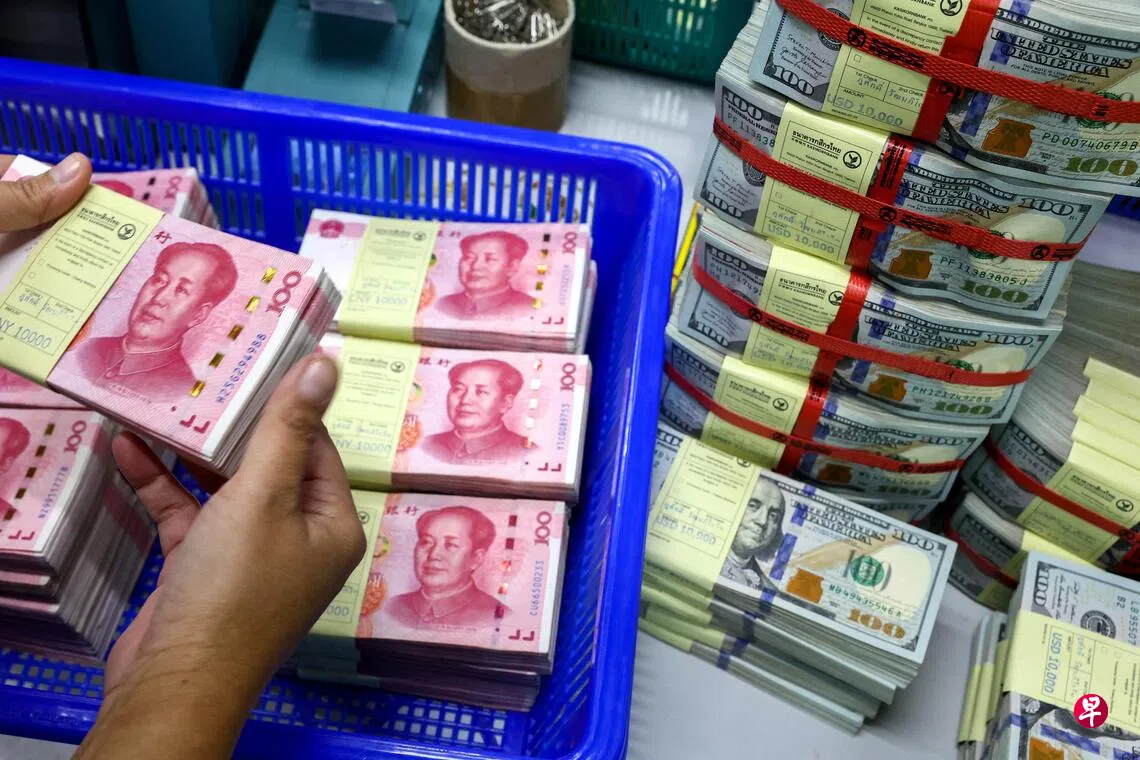
(Beijing) China’s stepped-up efforts to collect taxes on offshore wealth drove a one-off surge of nearly 90% in personal income tax revenue, giving the government a rare fiscal surplus in October.
China’s Ministry of Finance released its latest fiscal figures on Friday (20 November). Nationwide general public budget revenue for the first 10 months of this year rose 4.9% year on year to 19.6 trillion yuan (S$3.8 trillion). Personal income tax revenue rose 22.9% to 16.4 trillion yuan, the largest increase among tax categories.
According to Yicai’s calculations based on the ministry’s data, personal income tax revenue in October alone surged 89.6% year on year to 296.4 billion yuan. This helped China record a fiscal surplus of about 265.7 billion yuan for the month, its first monthly surplus in a year.
The main driver of October’s surge in personal income tax revenue was back taxes paid by high-net-worth individuals on offshore trust income. Beijing introduced new rules in July to tax offshore trusts held by Chinese tax residents, setting 22 October as the deadline for filing and paying back taxes. China’s tax authorities announced on 11 November that personal income tax declared on offshore trusts had exceeded 160 billion yuan in total, of which more than 120 billion yuan was collected in October alone.
With China’s property market still in a slump and land sale revenue falling sharply, taxing offshore trusts is seen as one way for Beijing to plug its fiscal revenue shortfall.
Bloomberg cited a report by research firm Gavekal Dragonomics as saying: “The tax measures targeting offshore trusts represent an unusually swift and consequential change in tax rules.”
The report said China’s tax authorities were using greatly enhanced monitoring capabilities to bring more wealthy households into the tax net, upending longstanding tax planning strategies. It expected further tax enforcement action as the scope of their legal authority expands.
Meanwhile, the Chinese government also accelerated fiscal spending in October to bolster the sluggish economy. Broad fiscal expenditure rose 4.7% year on year in October, the first increase in eight months. This narrowed the year-on-year decline in total budget expenditure for the first 10 months to 2.9%, from 3.5% in the first three quarters.
However, Goldman Sachs economists including Lisheng Wang noted that a substantial share of the funds previously raised by the government remained unspent. The fiscal deposit balance in October was 1.6 trillion yuan higher than a year earlier, compared with a year-on-year gap of 958 billion yuan in September, indicating that fiscal funds were still being deployed relatively slowly.
The Goldman Sachs report said that, with China’s economic growth target for this year “virtually assured”, the government might hold back some funds raised in the fourth quarter for use in the first quarter of next year to support economic growth in 2027.
