

Over a meal recently, a young man from mainland China told me he had arrived in Hong Kong in June, three months before starting university in September. He had hoped to familiarise himself with the city so he could settle in with peace of mind for the the new academic year. Unexpectedly, the first challenge he faced upon arriving in Hong Kong was not his studies, but finding somewhere to live.
His university programme did not guarantee student accommodation, leaving students from outside Hong Kong to make their own arrangements. He had assumed that, with plenty of private housing options available, arriving a few months early would give him enough time to find a suitable place. He didn’t know how challenging his hunt would be until he started. Many flats were well beyond his budget, while cheaper options were either cramped or too far away. Some landlords also demanded a full year’s rent upfront, a burden he found hard to bear.
After much searching, he finally rented a room with an en suite bathroom for nearly HK$10,000 (almost S$1,600). It was small and hardly cheap, but he had at least found somewhere to live.
His experience is far from unique. Home to several internationally renowned universities, Hong Kong has long been an important centre for higher education in Asia, although its government previously restricted the admission of non-local students. That began to change in 2023, when the authorities formally proposed developing Hong Kong into an international post-secondary education hub in the Policy Address.
From the 2024/25 academic year, the cap on non-local students paying their own fees at Hong Kong’s eight publicly funded universities doubled from 20% to 40% of local student places. Last September, Chief Executive John Lee announced a further increase to 50% from the 2026/27 academic year onwards.
Many mainland Chinese students previously favoured studying in the UK or the US. However, shifting global geopolitics has gradually put Hong Kong on their radar as another study destination — a trend bolstered by the rising global rankings of their universities and their degree structures, which align with those in Europe and the US. According to Hong Kong’s Education Bureau, the number of non-local post-secondary students rose from about 61,900 in the 2022/23 academic year to about 88,900 in the 2024/25 academic year, a sharp increase of roughly 44% in just two years. This suggests that the government’s “Study in Hong Kong” policy has been effective.
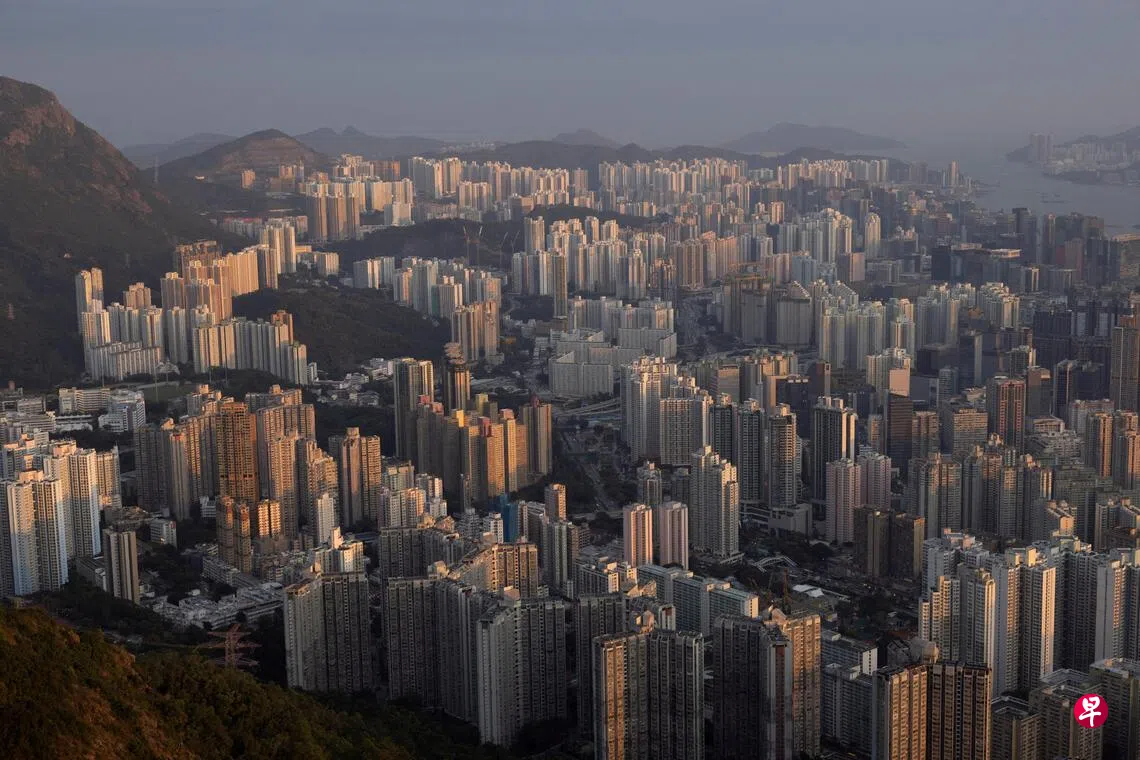
Yet, land is scarce in Hong Kong and campus space is limited. Some long-established universities sit on hillsides or in densely populated urban areas, leaving little room for large-scale expansion. Student accommodation was also previously designed primarily for local students and research postgraduates; the supply of hostel places has not kept pace with the rapid increase in non-local students. Most non-local students, particularly those on master’s programmes, struggle to secure campus accommodation and are forced to rent privately.
The problem is that Hong Kong already has some of the world’s most expensive residential rents. To ease the financial burden, some non-local students share private flats with classmates, with several people sometimes squeezed into a small unit. Others live far from campus and endure lengthy daily commutes. The influx of non-local students into the private rental market has also pushed up rents in some neighbourhoods near universities, affecting existing residents. Hence, this has given rise to a new business in recent years: private student hostels.
Student hostels in Hong Kong were previously run mainly by universities. Over the past two years, however, growing numbers of property developers, funds and businesses have recognised the market opportunity, buying up hotels, serviced apartments and commercial buildings, converting them into student accommodation. Property consultancy Colliers said there were about ten acquisitions of residential or hotel properties for conversion into student hostels in the first five months of this year alone. Accounting for more than 20 such deals in the second half of last year, the total would roughly equal to that for the entire 2021–24 period.
These hostels spare residents the need to buy furniture or negotiate tenancy terms with unfamiliar landlords, it has proven popular with many mainland students since they first entered the market. A report published in June by international property consultancy JLL found that, as of the end of April this year, Hong Kong’s major private student hostels offered about 6,900 beds. Occupancy rates were generally as high as 98% to 100%, while annual rent increases had hiked up to 10% since 2022.
However, even with the private sector actively expanding supply, the huge shortfall will be difficult to close in the near term. JLL estimated in its report that Hong Kong faced a shortage of about 76,300 student beds in the 2025/26 academic year, which will potentially increase to 147,200 in the 2029/30 academic year.
To address this severe imbalance between supply and demand, the Hong Kong government launched the Hostels in the City Scheme last year. It encourages self-financed, privately operated conversions or redevelopments of commercial buildings into student hostels, in a bid to increase supply. The latest figures show that the relevant departments have received 52 applications so far, of which 45, involving about 11,450 beds, have been confirmed as eligible.
That figure looks impressive at first glance. But eligibility does not mean the hostels have been built. So far, only four projects under the scheme have completed construction and begun operating in the current academic year, providing about 700 beds in total. Another five projects, involving about 740 beds, are undergoing conversion and are expected to be completed over the next year or so. In other words, the government is strongly encouraging universities to admit non-local students, but hostel supply is lagging far behind enrolment — an awkward predicament.
Looking at Singapore, the UK, and Australia, efforts to attract international students rely not only on academic reputation, but also on campus life and accommodation facilities. If Hong Kong hopes to secure a foothold in the global higher education market, it must improve its planning for student housing as it takes in more non-local students. Otherwise, it risks disrupting the government’s push to establish the city as a global study hub.
