
(This article was first published on ThinkChina. Edited and refined by Bai Kelei, with the assistance of AI translation.)
“Should you come out to your parents?” More than a decade ago, Taiwanese television host Kevin Tsai addressed this question on the mainland Chinese online debate show U Can U Bibi (《奇葩说》). Rationally, he advised those considering coming out to wait; emotionally, however, he wished more would do so. He wanted people to know that “we are not monsters” and could live perfectly well in society.
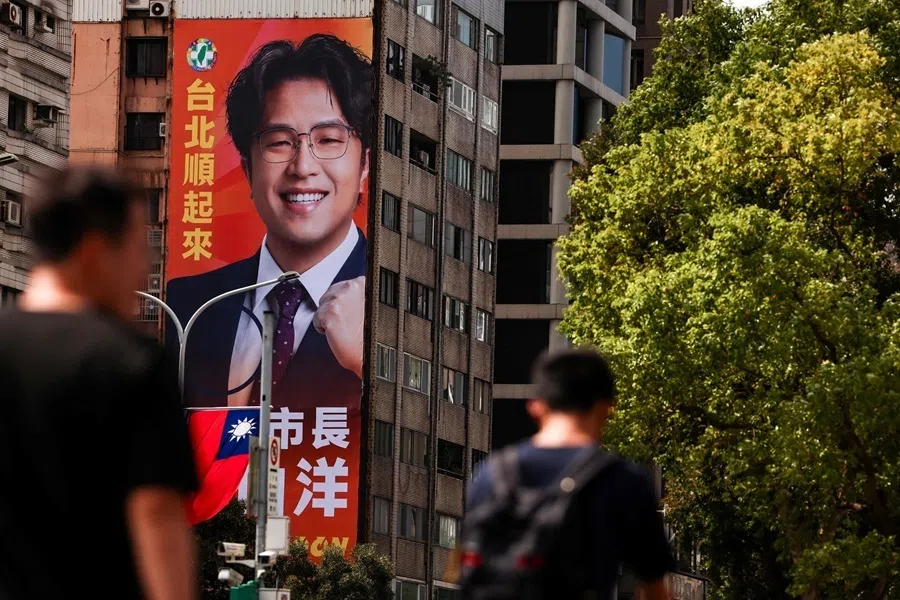
More than a decade later, Tsai is again under pressure to publicly explain his position, this time after attending the opening of the campaign headquarters of the Democratic Progressive Party’s Taipei mayoral candidate, Puma Shen.
In a Weibo post on Sunday (25 October) evening, Tsai stressed that he had always hoped for friendly cross-strait exchanges and had never supported Taiwan independence. He explained that he attended different candidates’ campaigns to gather material for interviews and observe proceedings, not to endorse them. He also apologised for the trouble the incident had caused his business partners and former fans.
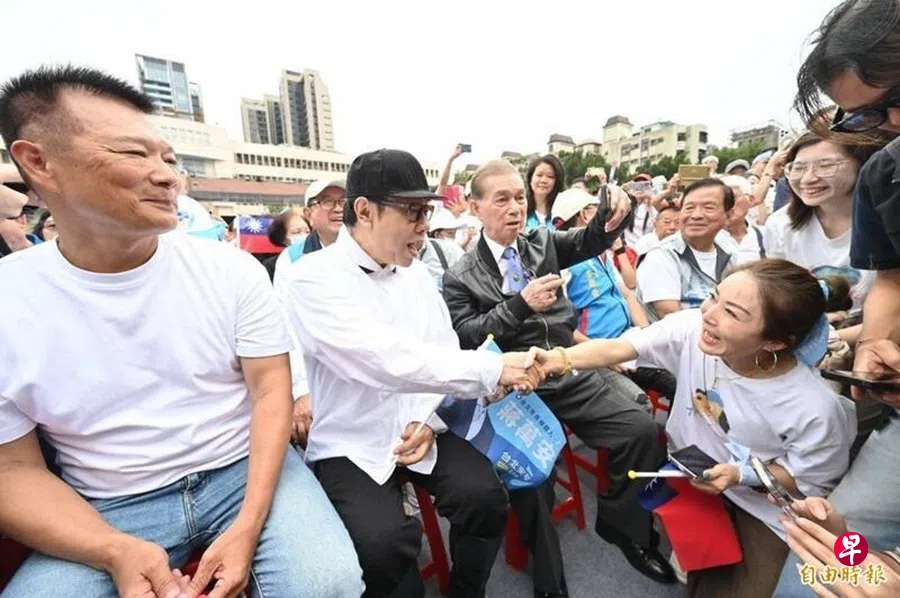
On Monday (26 October), Tsai attended the opening of Kuomintang Taipei mayoral candidate Chiang Wan-an’s campaign headquarters as agreed. Afterwards, he described Chiang’s speech as “very heartfelt and very moving”. He said his Weibo post the previous day contained farewells, thanks and apologies, and was primarily intended to update fans who had supported him on his latest.
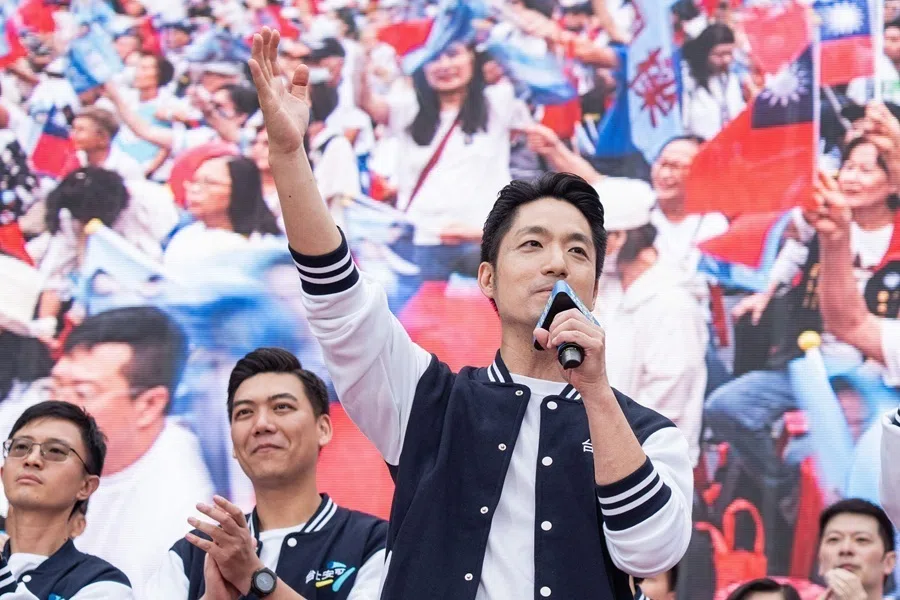
Tsai’s attendance at both candidates’ events was consistent with his explanation, yet the controversy over whether he supports Taiwan independence remains unresolved.
Dilemma of political coming out
Declaring a political position is not the same as coming out about one’s sexual orientation. But when entertainers become embroiled in politics and are required to publicly account for their views, they face a similar dilemma of “political coming out”. Staying silent can also invite suspicion and exact a price.
When Tsai spoke about coming out all those years ago, he mentioned the isolation, prejudice and risks to employment that it could bring. Now, simply appearing at a local election event in Taiwan has put him under pressure to publicly explain his position. The controversy was triggered not by any political declaration he made, but by whose event he attended.
... some mainland netizens saw Tsai’s appearance at Shen’s campaign headquarters as taking a political side. Online criticism soon led to commercial consequences, with partner brands removing content featuring Tsai.
In 2024, mainland China’s Taiwan Affairs Office (TAO) of the State Council placed Shen on its list of “diehard Taiwan separatists”. Last year, Chongqing police opened an investigation into him on suspicion of secession.
As a result, some mainland netizens saw Tsai’s appearance at Shen’s campaign headquarters as taking a political side. Online criticism soon led to commercial consequences, with partner brands removing content featuring Tsai. Official communication from Beijing gave the incident even greater political weight.
When presence becomes political statement
Responding on 14 October to Tsai’s attendance at Shen’s campaign event, TAO spokesman Chen Binhua stressed that there was “no room for ambiguity on matters of fundamental principle”. He said no one could benefit from the mainland’s development while “colluding and entangling themselves” with Taiwan separatist forces and being “two-faced”.
This is not the first time that an appearance alone has been treated as a declaration of political allegiance. In 2016, Taiwanese entertainer Chou Tzuyu, then 16, was accused of supporting Taiwan independence after holding a Republic of China flag on a South Korean programme. She subsequently recorded a video, saying she was Chinese and apologising for the hurt caused by her words and actions.
Beijing’s position is that after the Chinese Civil War ended in 1949, the government of the People’s Republic of China replaced the government of the Republic of China, and the “Republic of China” ceased to exist. Political identities in Taiwan are more complex and diverse. Traditional supporters of the pan-blue camp identify as both “citizens of the Republic of China” and Chinese, while supporters of Taiwan independence maintain that Taiwan is a separate country.
In recent years, Taiwanese entertainers’ appearances on official mainland Chinese programmes or at major gala shows have often been incorporated into narratives of cross-strait cultural exchange and the idea that people on both sides are one family. But just like appearing in a programme does not mean endorsing all its political positions, interviewing or observing a side does not make someone its adherent. But when performance footage is imbued with political meaning, some in Taiwan have also begun asking entertainers to respond to such interpretations.
Navigating pressure from both sides
The clearest examples involve Taiwanese entertainers reposting official mainland content about Taiwan.
During mainland China’s military exercises around Taiwan in 2024, Ouyang Nana, Angela Chang and others reposted China Central Television’s “There is only one China” message. Last year and this year, some Taiwanese entertainers also shared mainland state media social media posts referring to the island as a Chinese province.
Such reposts come closer to a public political declaration than a performance does. Still, a single post is not enough to establish someone’s true views. When Taiwan’s Ministry of Culture investigated these incidents, some entertainers said they had been unaware of the posts or that their agencies had handled them.
When artistes attend political events, the public is entitled to question their motives. Appearances on official programmes and the reposting of political slogans are also open to public scrutiny. But in judging these actions, it remains important to distinguish between the sources of pressure and their consequences.
Making room for cultural dialogue
The mainland Chinese entertainment market, online boycotts and decisions by businesses to cut ties can directly affect Taiwanese entertainers’ job opportunities. Criticism in Taiwan, by contrast, takes place primarily through public debate in a democratic society. Both sides have political expectations, but their power and the consequences they can impose differ.
Only if all sides across the strait give entertainers some room, without requiring them to repeatedly proclaim their political positions, can arts and entertainment continue to serve as a channel for cross-strait dialogue and exchange.
Tsai’s statement sits squarely between these two pressures. He sought to clarify his position to mainland audiences by saying that he had “never supported Taiwan independence”, while explaining his actions by saying that “attending an event does not mean endorsement”. These statements are not contradictory. Yet they still struggle to answer the two questions of whether he crossed a political red line, and why he attended Puma Shen’s campaign event.
In the highly politicised climate of public opinion on both sides of the Taiwan Strait, keeping art and politics separate is no longer realistic. The events artistes attend, the programmes they appear on and the posts they share can all be assigned political meaning, affecting commercial partnerships and market opportunities. If cultural exchanges require entertainers to prove their political allegiance at every turn, they will be reduced to political vetting.
When Tsai spoke about coming out on U Can U Bibi, he hoped people would not have to be forced into dark corners. That hope may also apply to declarations of political allegiance today. Only if all sides across the strait give entertainers some room, without requiring them to repeatedly proclaim their political positions, can arts and entertainment continue to serve as a channel for cross-strait dialogue and exchange.
This article was first published in Lianhe Zaobao as “蔡康永与艺人的“政治出柜””.
Related: Taiwan’s local elections: Can DPP disrupt KMT’s Taipei stronghold? | [Big read] Too ‘cool’ to resist: China’s soft power captivates Taiwan’s youth