

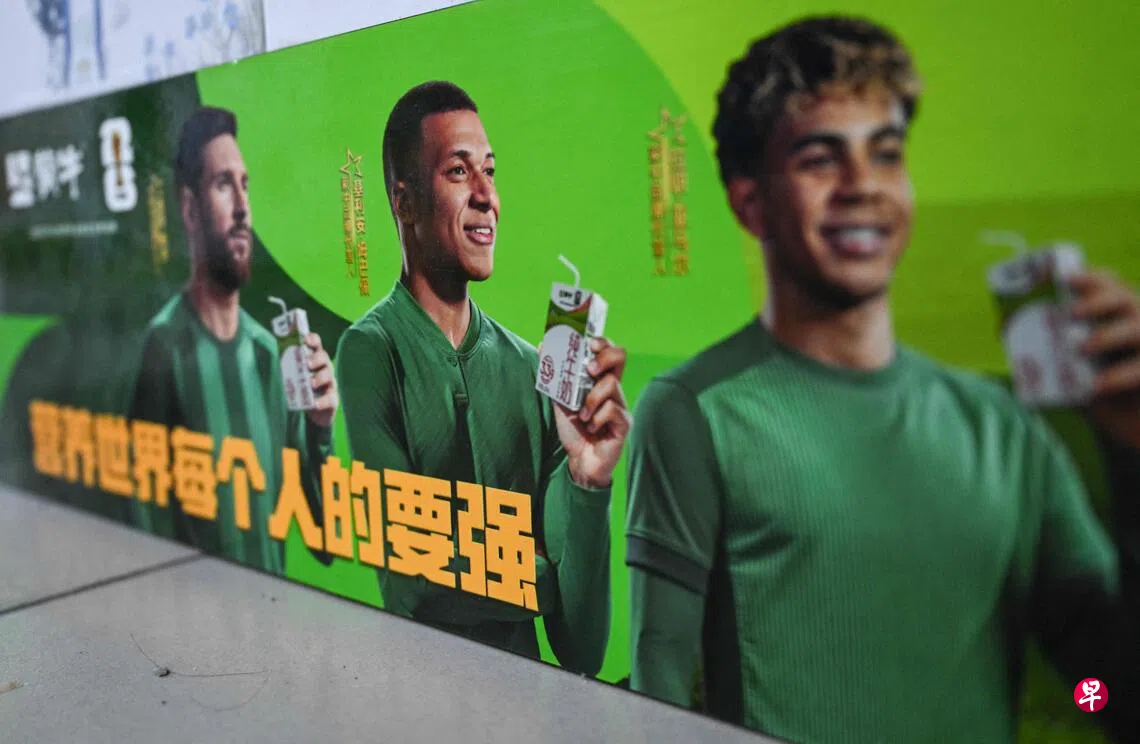
The backlash over French football superstar Kylian Mbappe’s remarks about China continues to intensify. After Mbappe and Spain’s La Liga issued apologies overnight, his club Real Madrid also released an apology on Wednesday (28 October).
Analysts say the controversy highlights the shrinking room for error with the Chinese market and the growing need for international brands operating there to be politically attuned.
In a video circulating online on Monday (26 October), Mbappe said during an interview that the funniest memes were those superimposing his face onto that of a “Chinese dictator”. The video also showed a meme with Mbappe’s face overlaid onto that of Mao Zedong, the late founding leader of the Chinese Communist Party.
The remarks quickly triggered a fierce backlash. Several Chinese companies ended their partnerships with Mbappe on Tuesday (27 October), while Chinese state broadcaster CCTV halted broadcasts of La Liga matches and his games.
Mbappe himself, La Liga and its president issued successive statements of apology that evening. Spanish news outlet OK Diario, meanwhile, cited Real Madrid as saying that Mbappe’s remarks reflected his personal views and were not intended to offend.
A spokesperson for the sports and youth programming centre of China Media Group, CCTV’s parent organisation, stressed on Wednesday that Real Madrid could not evade responsibility as Mbappe was its player. “Until Real Madrid has issued an adequate apology, there is nothing to discuss.”
Real Madrid issued a statement the same day, apologising for “the distress and offence caused to the Chinese people” by Mbappe’s remarks. It said it hoped to maintain and strengthen its friendship with China and the Chinese people. China Media Group subsequently confirmed that it had received Real Madrid’s letter of apology.
La Liga president Javier Tebas said on social media platform X on Wednesday that he had met China’s ambassador to Spain, Yao Jing, to seek a resolution to the controversy. At a press briefing the same day, China’s Ministry of Foreign Affairs spokesperson Guo Jiakun said, “We attach importance to the apologies made by those concerned.”
Renmin Ruiping, the commentary platform of Chinese state newspaper People’s Daily, said in an article on Wednesday that when public figures go too far with their words or actions, their commercial value could quickly turn into a liability for brands. “Once they cross red lines or offend the public, their appeal can quickly fade, and they may even face a public backlash.”
Bloomberg cited comments from risk consultancy executive Dan Wang, a director at Eurasia Group’s China team, that the Mbappe incident illustrates “how little grey area is left for foreign companies operating in China”, she said. “Doing business in China increasingly requires companies to be politically attuned.”
Said Jessica Gleeson, head of retail consultancy BrighterBeauty in Shanghai, “Chinese consumers understand the power and scale of their buying power. ‘I didn’t know’ is no longer a valid excuse in their eyes for cultural missteps. As your largest customer base, they expect you to do your homework.”
