

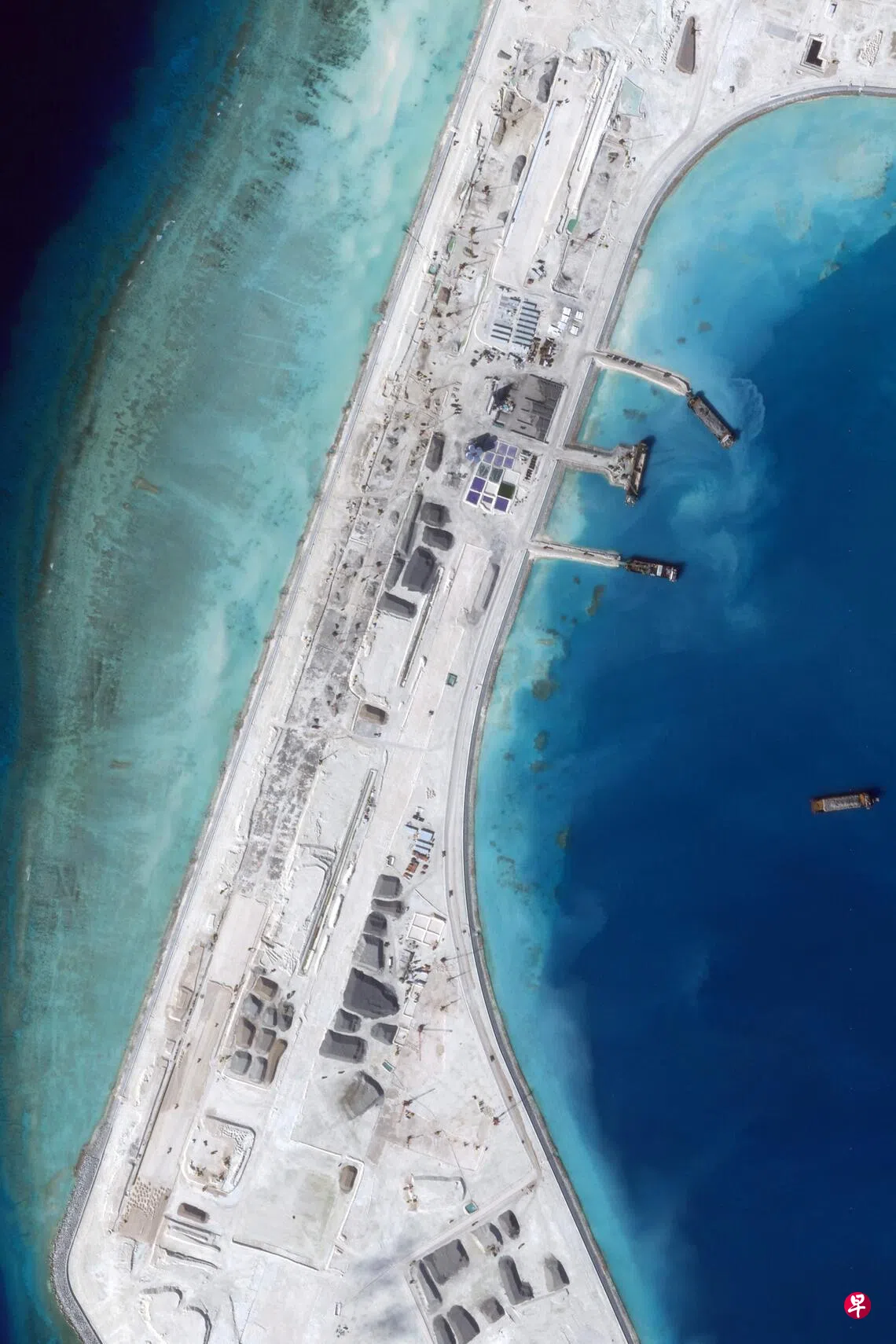
Satellite images show that China is building a runway on Antelope Reef in the disputed Paracel Islands. Analysts say it could significantly strengthen China’s military presence in the South China Sea.
According to AFP, the US-based Center for Strategic and International Studies (CSIS) and Australian think tank the Lowy Institute recently published separate reports with satellite images showing that Beijing began large-scale dredging and land reclamation at Antelope Reef late last year.
A structure resembling a runway is clearly visible in satellite photographs taken by Earth-imaging company Planet Labs in September this year. Japanese intelligence analysis firm Deep Dive examined the images in a recent report. AFP also reviewed the imagery.
Lowell Bautista, author of the Lowy Institute report, said China had transformed Antelope Reef in 10 months from one of its smallest outposts in the Paracels into an island rivalling its largest atolls in size.
Antelope Reef stretches about six kilometres from northwest to southeast. Its nearly three-kilometre runway will be China’s second in the Paracels and is expected to enter service in mid-2027. According to CSIS, it is similar in length to the runway on Woody Island in the Paracels and three others in the Spratly Islands.
Vietnam said in August this year that construction at Antelope Reef was “completely illegal” and demanded an immediate halt to such activities.
Bautista said the new runway would complement infrastructure in the Spratly Islands and on Hainan Island, helping to “establish an integrated network of runways, ports and sensors spanning the South China Sea”.
Deep Dive head Bonji Ohara, a former Japanese defence attaché to China, said in the report that the runway could accommodate not only fighter jets but also larger aircraft, including transport planes, aerial refuelling tankers and bombers. This could bring China closer to its goal of “complete control over the entire South China Sea”.
CSIS said Antelope Reef could extend China’s surveillance coverage closer to Vietnam’s coast and strengthen its military capabilities in the northern South China Sea, near major shipping lanes.
Analysts believe Antelope Reef could become one of China’s most important outposts in the South China Sea, helping Beijing restrict access to these waters for the US Navy and allied navies in the event of conflict.
Some analysts, however, take a more cautious view of the new runway’s impact. Harrison Pretat, deputy director at CSIS's Asia Maritime Transparency Initiative, said the new runway and port would increase the capacity and resilience of facilities supporting China’s military and paramilitary operations in the South China Sea, but “Southeast Asian claimants have still largely maintained access to offshore resources and occupy their own outposts”.
Beijing claims sovereignty over most of the South China Sea and has repeatedly been involved in confrontations with Southeast Asian claimant states over control of the Paracel and Spratly islands. The two island groups consist mainly of coral reefs and rocky outcrops. Analysts believe China’s continued land reclamation and infrastructure construction are aimed at securing military control over these waters.
China and Vietnam fought a brief but bloody clash over the Paracel Islands in 1974, leaving more than 70 Vietnamese military personnel dead. China has exercised effective control over the islands ever since.
Chinese officials say development and construction in the Paracel Islands are for civilian purposes, and that the islands’ small permanent population consists mainly of fishermen. A spokesperson for China’s Ministry of Foreign Affairs said in March this year that reclamation work there was necessary to improve living and working conditions on the islands and develop the local economy.
