

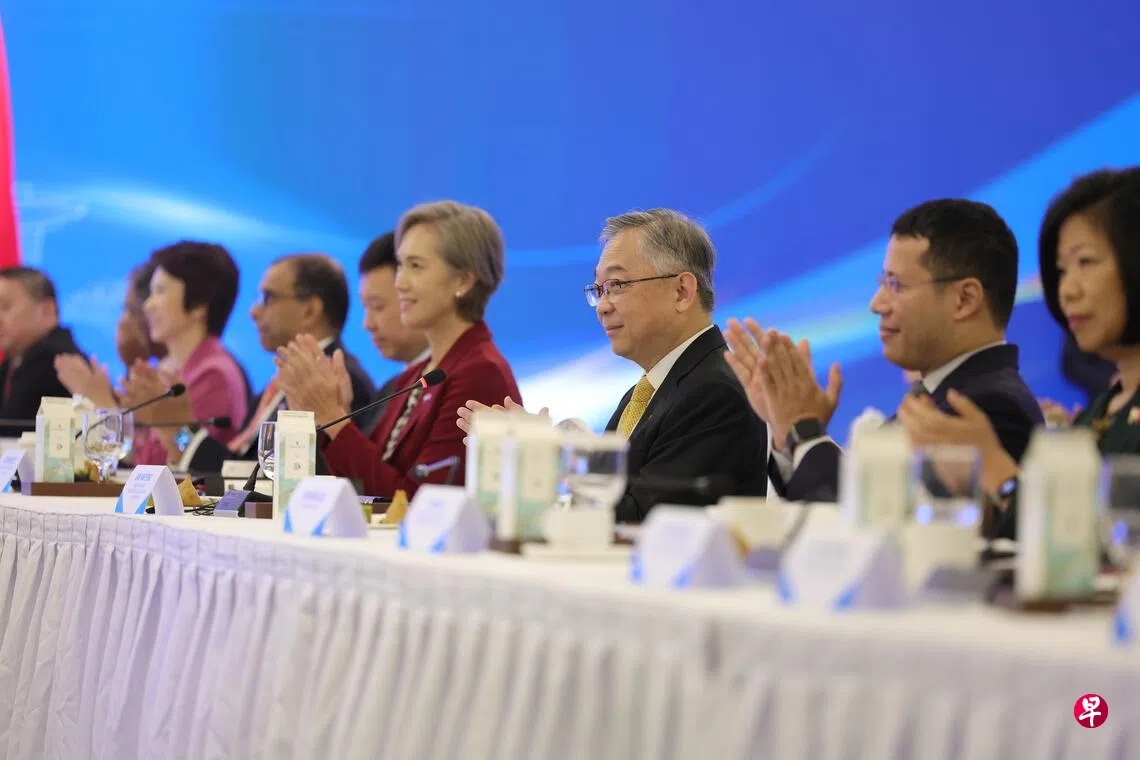
Singapore and China are keeping their three government-to-government projects up to date, including by announcing plans to jointly build an economic corridor linking the Beijing-Tianjin-Hebei region with Southeast Asia. The corridor will support Singapore companies in establishing operations in Hebei’s Xiongan New Area and the Tianjin Eco-City, while encouraging Chinese companies to use these two locations to expand into Singapore and Southeast Asia.
Singapore and China reached 29 cooperation outcomes at the 22nd Joint Council for Bilateral Cooperation (JCBC) meeting on Monday (23 November), four of which relate to the three government-to-government projects. Deputy Prime Minister and Minister for Energy and Trade and Industry (Trade) Gan Kim Yong told a press conference that these projects remain relevant despite their age, making it vital to explore new ways of cooperating at this year’s meeting.
Among the initiatives, Enterprise Singapore, the Hebei Xiongan New Area Administrative Committee and the Sino-Singapore Tianjin Eco-City Administrative Committee will jointly develop a two-way economic corridor connecting Singapore, the Tianjin Eco-City and Xiongan New Area.
The three parties signed a memorandum of understanding (MOU) during Minister for National Development Chee Hong Tat’s visit to China in September this year to help companies expand into the Beijing-Tianjin-Hebei and Southeast Asian markets. Enterprise Singapore said in a statement: Under the MOU, the three parties will establish an international cooperation corridor connecting the Beijing-Tianjin-Hebei region with Southeast Asia. The corridor will tap (i) Xiongan New Area’s development opportunities, (ii) the Tianjin Eco-City’s experience in China-Singapore cooperation and (iii) Singapore’s international networks.
Asked by Lianhe Zaobao at a press conference whether the new economic corridor would duplicate the International Land-Sea Trade Corridor under the China-Singapore (Chongqing) Demonstration Initiative on Strategic Connectivity (CCI), which connects western China with Southeast Asia, Chee Hong Tat said: “I think we look at the different projects. Each one has their unique value proposition and characteristics because they have different parts of China and they offer different value to the stakeholders.”
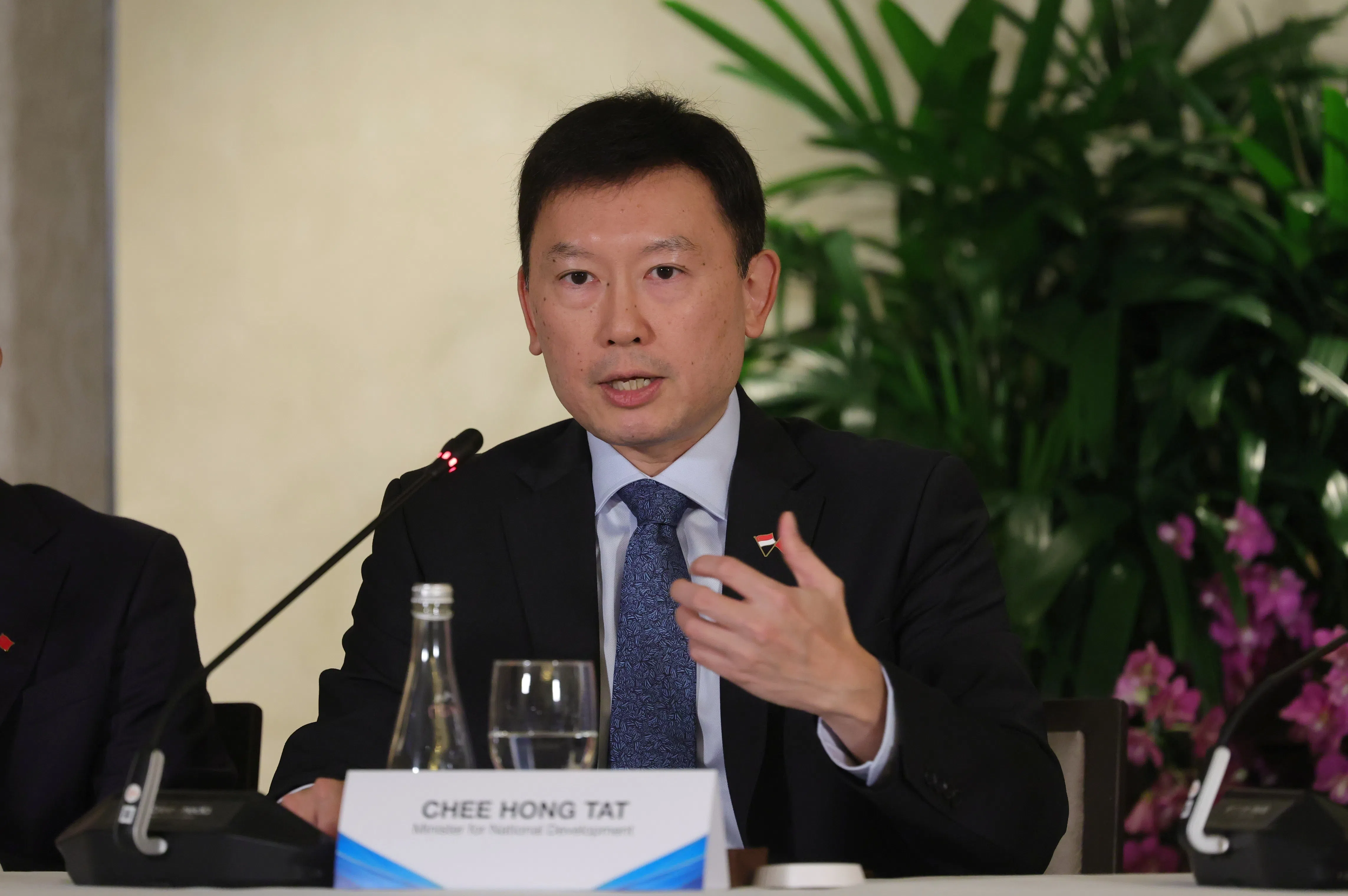
Chee noted that the Beijing-Tianjin-Hebei region is one of the three developmental regions that the Chinese government has identified for further growth. The region offers good opportunities for Singapore and China to explore new opportunities that would benefit companies on both sides. “And I think the creation of more of such economic linkages will be mutually beneficial to both sides.”
He said: “The Chinese are keen to take a look at how they can grow the Jing-Jin-Ji region — both in China, but also to see how the companies from this region can venture out and go out into external markets. And Southeast Asia is one of these markets that they are interested in.” “If we continue to position Singapore as a hub and a launchpad for the region – where companies can come to invest and then venture out into the region, they can come here and raise capital and to support their business plans – then this is something which we can help to play a useful role to what the Chinese want to do to achieve their objectives.”
Besides Xiongan, Chee pointed to Beijing as another very promising city where Singapore could explore expanding cooperation with China. The Chinese capital is home to many highly innovative industry clusters, closely linked to the research and development expertise of its universities, as well as the headquarters of many large companies. “So Beijing itself I think it is a good market for our companies that want to venture in. So there are many, many of these opportunities.”
Separately, Gan Kim Yong said Singapore and China had also discussed how to promote synergies between the International Land-Sea Trade Corridor under the CCI and the Pinglu Canal.
Minister for Digital Development and Information Josephine Teo, who oversees the CCI, told the press conference that in the first 10 months of 2026 alone, international cargo volume along the ILSDC grew by a significant 25%. Meanwhile, the opening of the Pinglu Canal in September shortened the shipping distance for goods moving between western China and the Pearl River Delta by more than 500km. “That is very significant.”
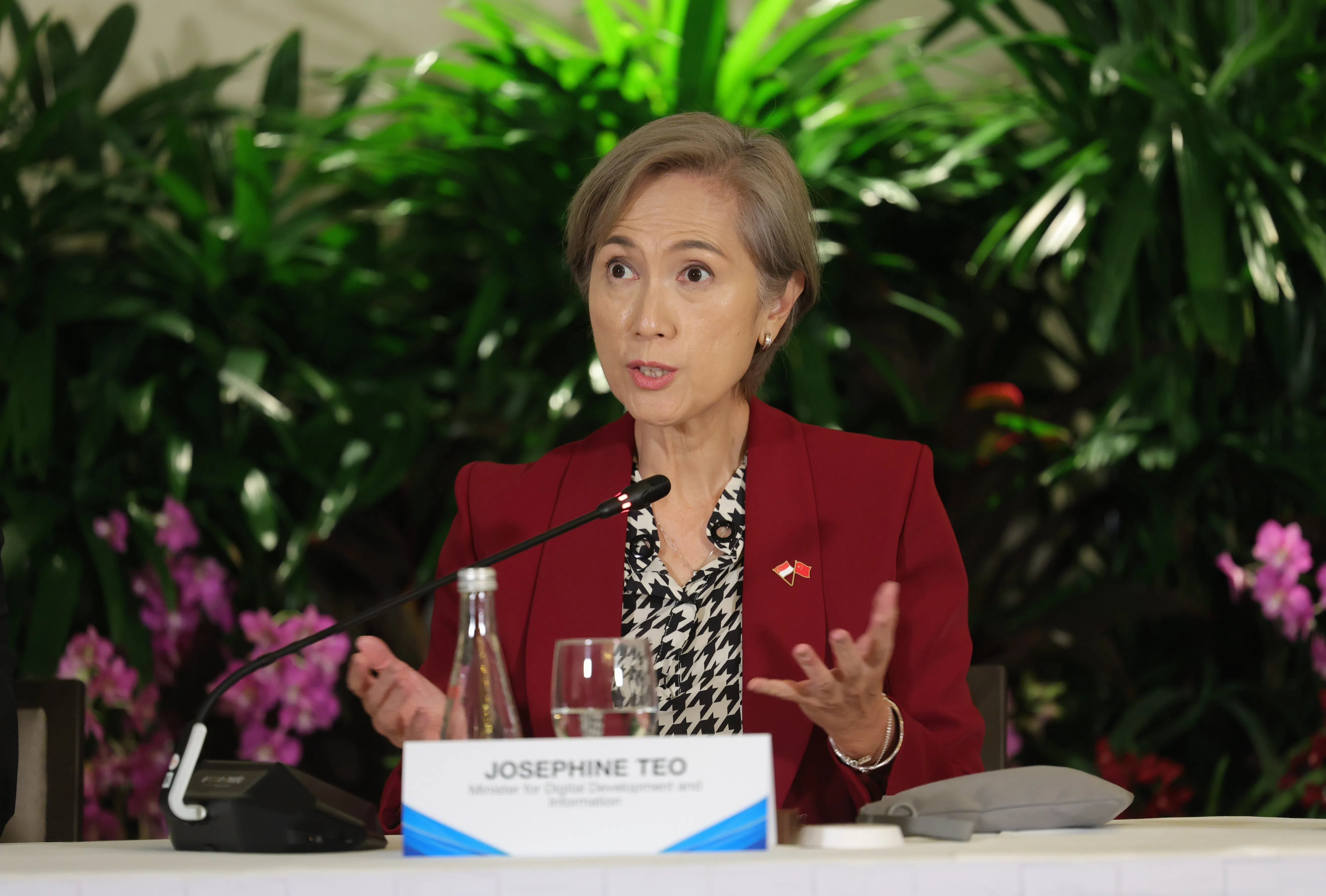
Teo noted that the Pinglu Canal can facilitate greater cargo flows to the Beibu Gulf in Guangxi, while the CCI ILSTC’s rail and logistics networks provide connections deeper into western China. “Together they can support more seamless multimodal routes, improve the supply chain efficiency, and facilitate trade between western China and Southeast Asia.”
She said Qinzhou Port in the Beibu Gulf was PSA’s fastest-growing port in the past 10 years. With the Pinglu Canal bringing more cargo through Qinzhou, “there are important opportunities to draw on Singapore’s strengths in port management, maritime services, and supply chain solutions”.
As the CCI enters its second decade, Teo said: “We will work with our Chinese partners, including Chongqing and Guangxi, at either end of the corridor, to leverage the synergies between the Pinglu Canal and the CCI ILSTC to develop a more integrated, digitalised, and sustainable trade and supply chain corridor, while extending its reach to new markets such as Central Asia.”
