

As the Singapore-Jiangsu Cooperation Council enters its 20th year, government agencies, businesses and universities from both sides have signed 23 cooperation agreements to deepen collaboration in innovation, artificial intelligence (AI) applications, biomedicine and healthcare, and talent development.
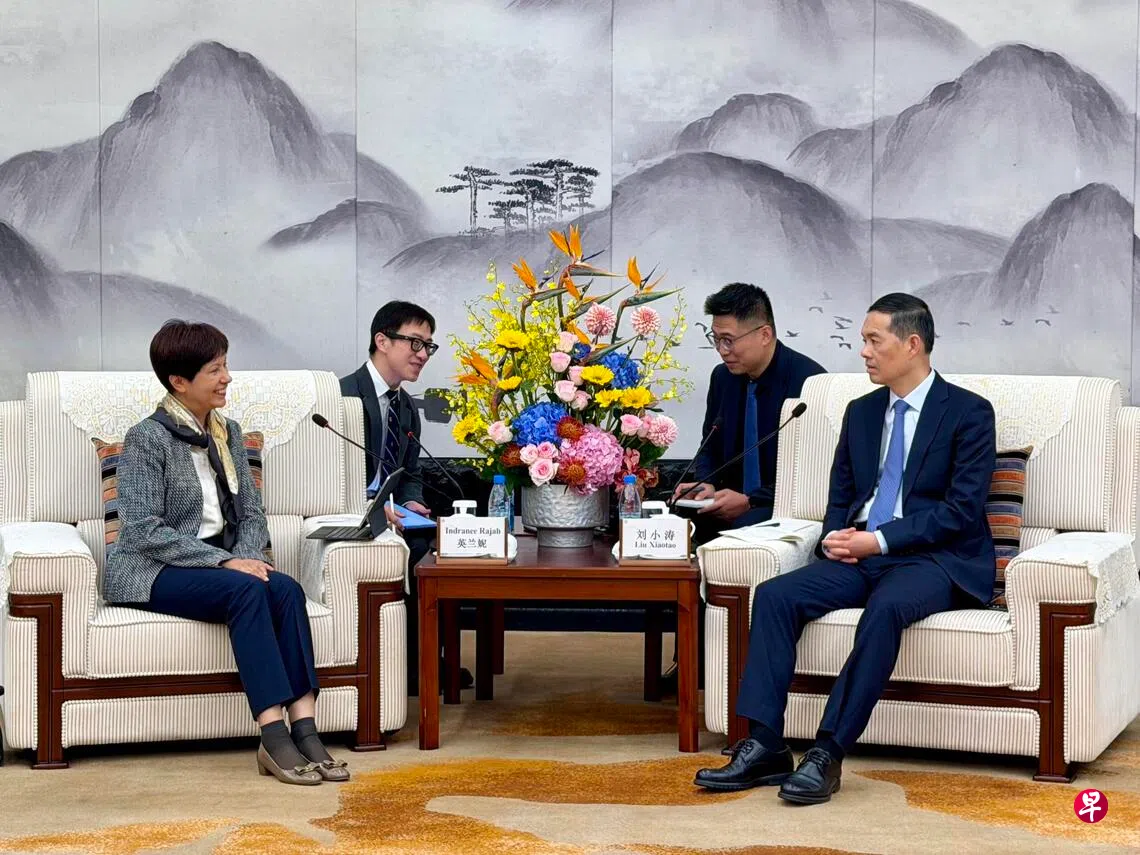
The 20th Singapore-Jiangsu Cooperation Council (SJCC) meeting was held in Suzhou on Tuesday (10 November), co-chaired by Singapore’s Minister in the Prime Minister’s Office and Second Minister for Finance and National Development Indranee Rajah and Jiangsu Governor Liu Xiaotao. The China-Singapore Suzhou Medical Centre was unveiled at the meeting. A Singapore centre of excellence for embodied AI applications will also be established in Suzhou Industrial Park.
In her speech, Indranee, the council’s Singapore co-chair, said, “For two decades, the SJCC has been a key platform for deepening collaboration between Singapore and Jiangsu. Even amid an increasingly complex global environment, our partnership has remained robust, resilient and forward-looking… our collaboration continues to deliver tangible results.”
According to Enterprise Singapore, trade between Singapore and Jiangsu grew by 25% year on year in the first half of this year. As of the end of June, Singapore had invested in more than 4,500 projects in Jiangsu. In his speech, Liu said trade between Jiangsu and Singapore reached US$18.45 billion (S$23.5 billion) in the first nine months of this year, up 20.7% year on year and accounting for 16.1% of total trade between China and Singapore.
Liu called for stronger research and development collaboration between universities and research institutions on both sides, to “plan and implement a series of distinctive projects with strong demonstration value in areas such as AI-enabled biomedicine, new energy, new materials and robotics”. He also proposed supporting venture capital firms, consultancies, trading companies and high-end retailers in establishing a presence in Jiangsu.
Indranee said Singapore companies were actively expanding their businesses in Jiangsu. For example, SATS has increased its stake in Nanjing Weizhou Airline Food from 50% to 90%, further strengthening its position in China’s aviation catering market. CapitaLand will partner with CHCC Capital to develop Jiangsu’s first CapitaMall in Zhenjiang.
Building on this foundation, there is scope for both sides to deepen cooperation in innovation and industrial transformation. Indranee noted that Singapore excels in research and the commercialisation of technology, while Jiangsu has clear strengths in advanced manufacturing and supply chains, offering opportunities to apply new technologies at scale. Both sides can draw on their complementary strengths to jointly develop new technologies and put them into use.
In AI, the Robotics Society of Singapore will work with China-Singapore Suzhou Industrial Park Development Group to establish a centre of excellence for embodied AI applications in the park. The centre will develop talent in robotics and AI, match robotics solutions with industrial applications, and help Singapore companies enter markets in Jiangsu and other parts of the Yangtze River Delta.
Xu Jin, secretary-general of the Robotics Society of Singapore, told Lianhe Zaobao that a major obstacle for Singapore companies adopting robots was a shortage of people who could implement solutions on site. The centre will focus on training forward-deployed engineers (FDEs) who understand both robotics technology and industry needs. It expects to begin work in phases in Singapore next year, offering training courses and conducting local pilot projects, with the aim of training its first batch of local FDEs within the year.
Xu added that Jiangsu has a comprehensive robotics and manufacturing supply chain, while Singapore offers diverse applications and established standards, and can help companies expand into Southeast Asian markets.
Singapore medical teams handle more than 450 patient visits in Suzhou
In healthcare, the China-Singapore Suzhou Medical Centre will conduct joint research with Singapore healthcare institutions and promote two-way training and exchanges for healthcare professionals. Singapore’s Senior Minister of State for Home Affairs and Social and Family Development Goh Pei Ming, who is also the council’s co-vice-chair, attended the meeting. He said the centre had signed three cooperation agreements with Singapore healthcare institutions, with partners including National University Hospital and the Singapore National Eye Centre.
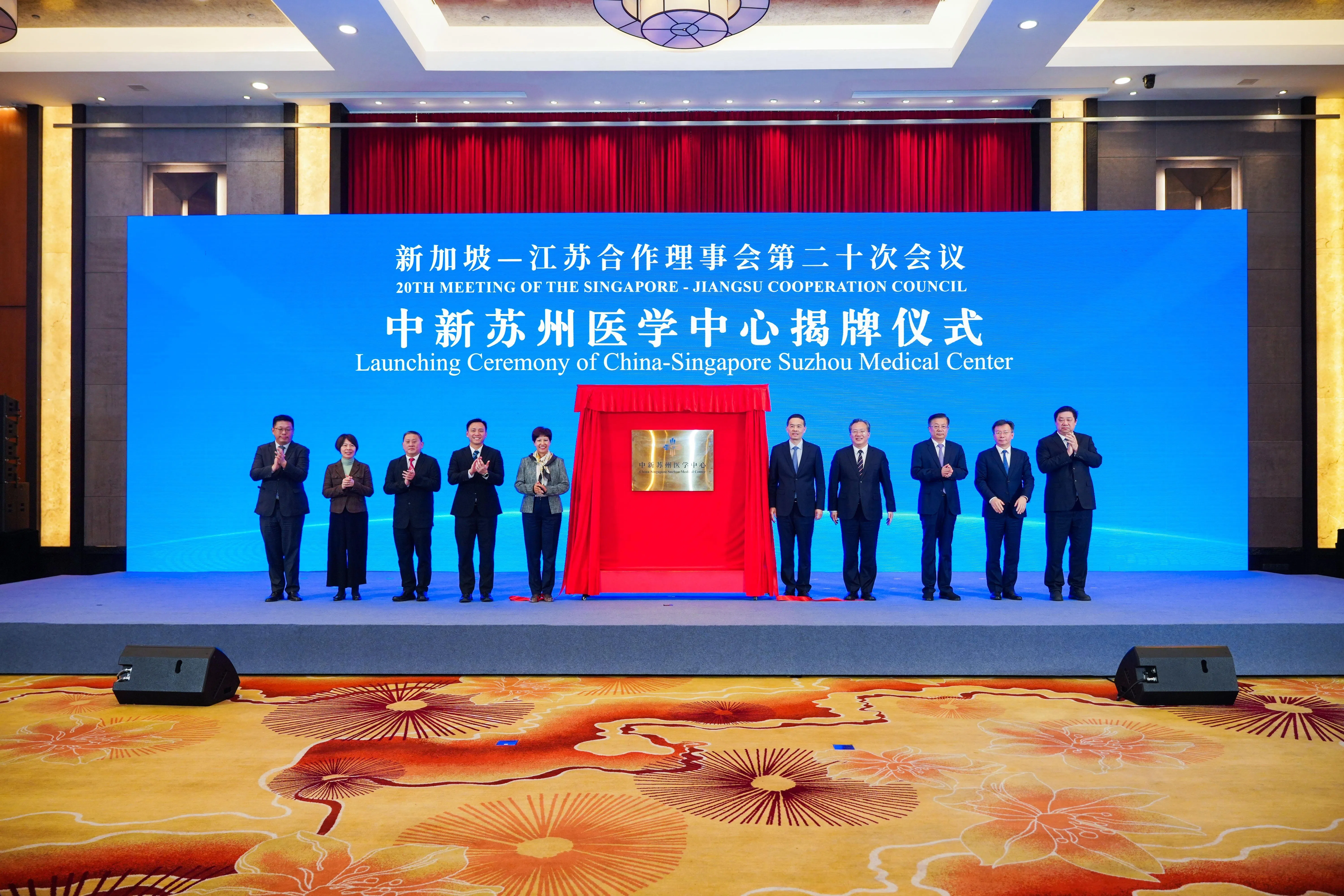
Both sides have also conducted exchanges for healthcare professionals through the centre. Singapore medical teams have handled more than 450 patient visits in Suzhou, while 36 healthcare professionals from Suzhou have travelled to Singapore for training.
As new platforms are introduced, existing ones such as Suzhou Industrial Park and the Singapore Nanjing Eco Hi-tech Island continue to help companies from both countries expand into new markets.
Goh said the park’s International Business Cooperation Centre had helped 23 Chinese companies establish a presence in Singapore this year and facilitated the entry of 10 Singapore companies into the Chinese market. Since its establishment in March this year, the Professional Services Centre on the Singapore Nanjing Eco Hi-tech Island has also helped nearly 10 companies expand overseas.
