

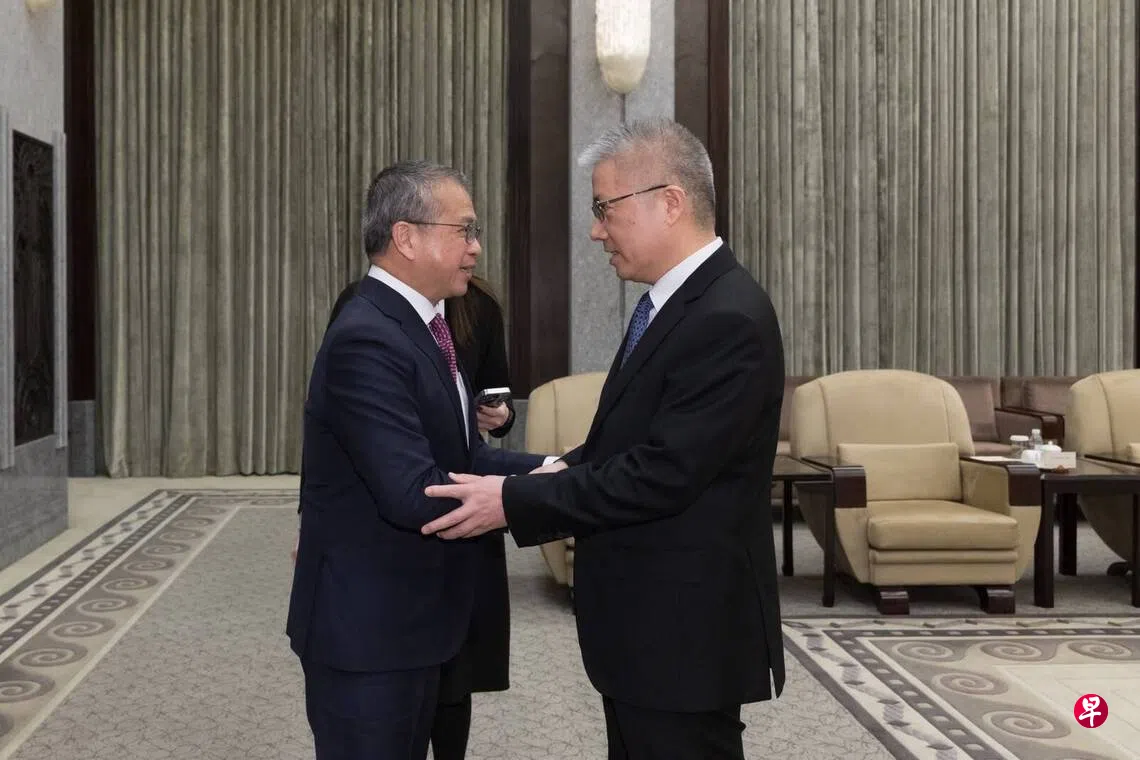
The Singapore-Shanghai Comprehensive Cooperation Council held its seventh meeting in Shanghai on Thursday (19 November). Government agencies, businesses and universities from both cities signed 16 cooperation agreements to expand collaboration in areas including financial services, artificial intelligence (AI) computing capacity and the digital economy.
The meeting was co-chaired by Singapore’s Minister for Law and Second Minister for Home Affairs Edwin Tong and Shanghai Mayor Zhu Zhongming. Zhu, who was formally elected mayor of Shanghai on 30 September this year, attended the meeting for the first time as the council’s Chinese co-chair.
Speaking at the meeting on Thursday, Tong, the council’s Singapore co-chair, said this meeting comes at an important juncture. Amid rapid technological change, disruptions to global trade and supply chains, and heightened geopolitical tensions, both cities are charting their next phase of growth.
Shanghai’s 15th Five-Year Plan (2026–2030) calls for accelerating its development as an international centre for the economy, finance, trade, shipping, and science and technology innovation, while advancing technological innovation and industrial restructuring.
Meanwhile, the report on recommendations for future economic development released by Singapore’s Economic Strategy Review Committee in June this year focuses on how to enhance competitiveness and harness emerging technologies to create new opportunities for businesses and workers.
In the first half of this year, bilateral trade between Singapore and Shanghai grew by more than 20% year on year to exceed 80 billion yuan (S$15.47 billion). As of the end of June this year, Singapore had invested in more than 7,000 projects in Shanghai, with cumulative realised investment reaching US$28 billion (S$36.1 billion).
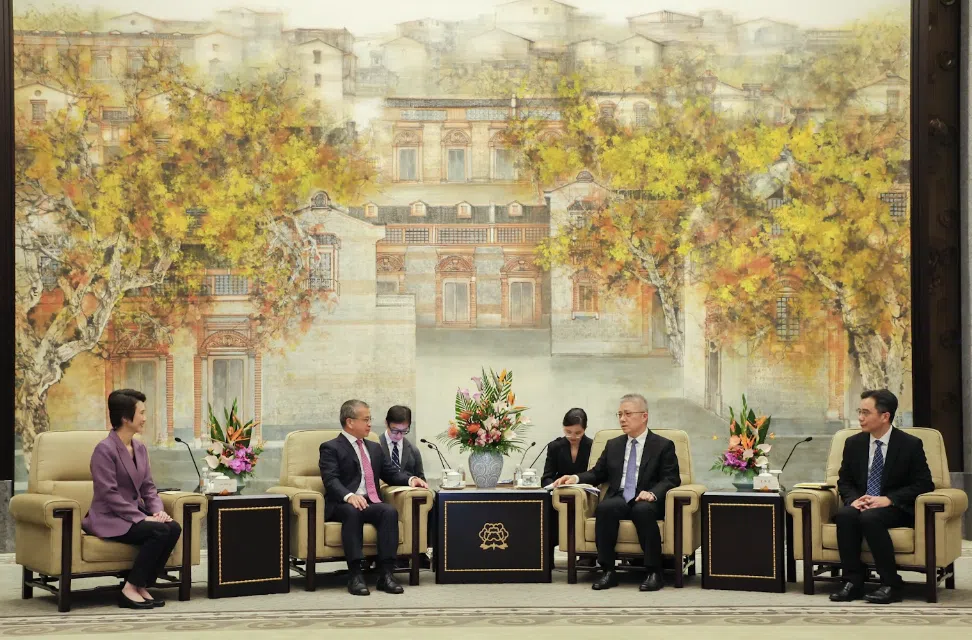
In his speech, Zhu acknowledged the new progress Shanghai and Singapore had made in recent years in cooperation across areas including the Belt and Road Initiative, finance, and science and technology innovation. People-to-people exchanges had also become more frequent.
Looking ahead, he said: “Shanghai is willing to work with Singapore to seize the opportunity presented by this council meeting to better align our development efforts, expand practical cooperation and make every effort to bring our cooperation to a higher level and improve its quality.”
The 16 cooperation agreements signed at the meeting cover collaboration among governments, businesses and universities.
On the industry front, Singapore company KoolLogix is partnering with Shanghai Lingang Xinpianqu Kuajing Shuju Keji Co Ltd to establish a green computing services hub in Singapore. It will support regulatory-compliant cross-border data connectivity, sustainable AI computing services and international business expansion.
In education and research, the Singapore University of Technology and Design (SUTD) and Shanghai’s Tongji University will establish a joint research centre focusing on smart infrastructure, urban connectivity, urban renewal and sustainable development.
Tong met Zhu before the council meeting. In a subsequent social media post, Tong described Zhu as “warm, patient in listening and willing to share his thoughts”. He said he was greatly encouraged by the many areas of agreement between them on future cooperation between Singapore and Shanghai.
Tong noted that Singapore businesses could use Shanghai as a springboard to the wider Yangtze River Delta market, while Shanghai businesses could use Singapore as a base to expand further into ASEAN markets. There were also many opportunities for cooperation in areas such as digital trade, finance and healthcare.
