

South Korea’s plan to borrow a pair of giant pandas from China has been shelved for now, South Korean media reported. Chinese Ambassador to South Korea Dai Bing said the Gwangju Biennale’s inclusion of a “Taiwan Pavilion” violated the one-China principle, and that “neither public sentiment nor public opinion is ready” for a panda loan to Gwangju.
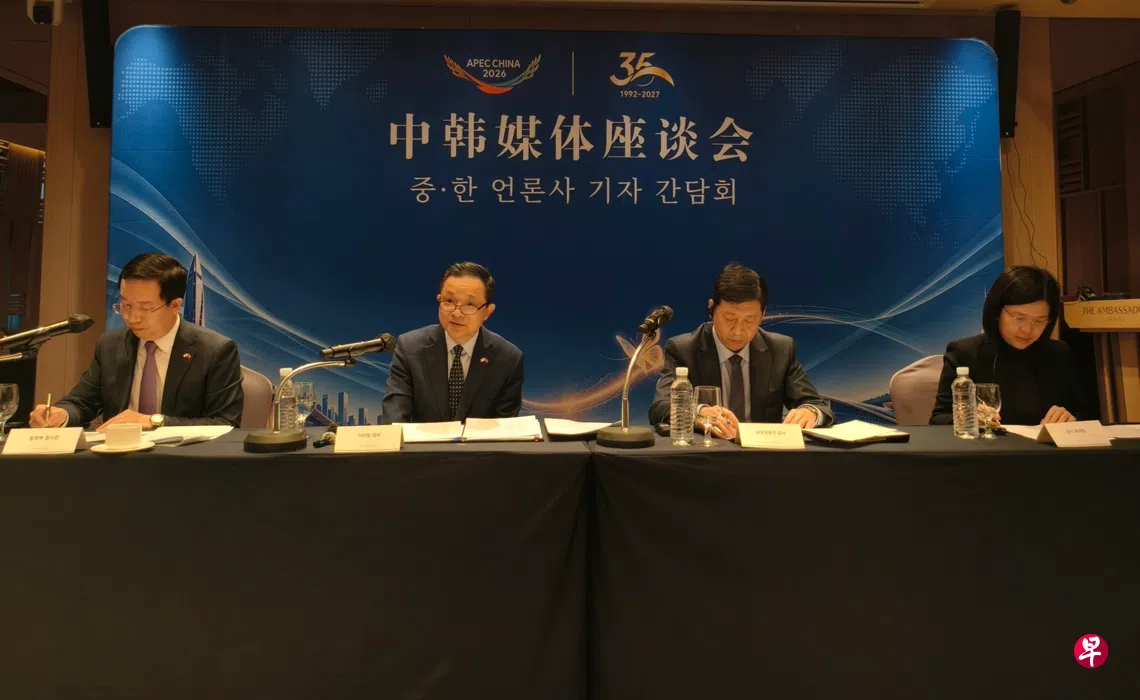
According to reports by KBS World Radio, The Hankyoreh and other South Korean media, Dai told a media discussion in Seoul’s Jung district last Thursday (26 November) that the Taiwan question was “at the very core of China’s core interests, and a red line that must not be crossed”. He said the controversy over the Gwangju Biennale’s “Taiwan Pavilion” had made it difficult to proceed with plans to lend giant pandas to Gwangju.
At a South Korea-China summit in Beijing in January this year, South Korean President Lee Jae Myung proposed to Chinese President Xi Jinping a plan for Uchi Zoo in Jeonnam-Gwangju Integrated Special City to borrow a pair of giant pandas.
In August this year, South Korea’s Gwangju Biennale approved Taiwan’s participation under the name “Taiwan Pavilion”. China’s Ministry of Foreign Affairs lodged solemn representations over the decision, while the mainland Chinese curatorial team announced its withdrawal from the exhibition in strong protest.
Dai said: “We feel that neither public sentiment nor public opinion is ready for giant pandas to be sent to South Korea and housed in Gwangju.” He expressed hope that South Korea would “learn from this incident, fully recognise the highly sensitive nature of Taiwan-related issues and firmly abide by the one-China principle”, and create the conditions for giant pandas to be sent to South Korea in future.
