

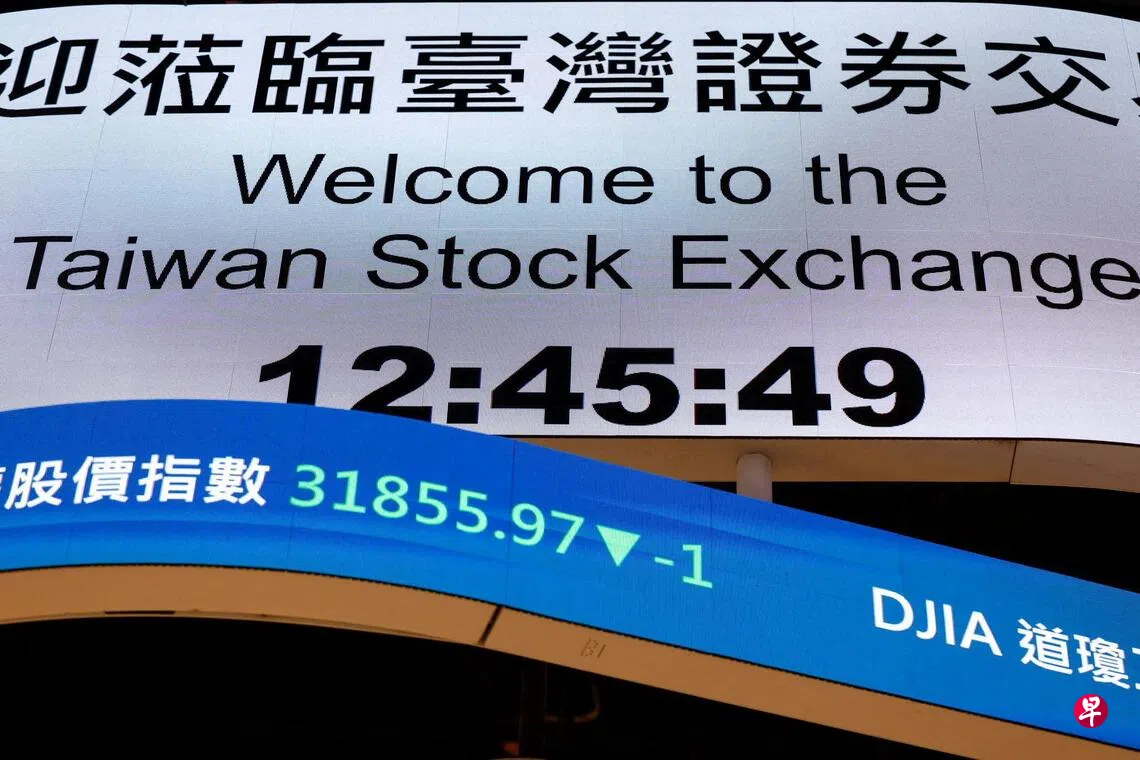
Taiwan’s stock market has been among the hardest hit by a global sell-off in artificial intelligence (AI) stocks. The Taiwan Stock Exchange announced on Monday (23 November) that it would lower the minimum margin maintenance ratio and broaden the range of eligible collateral to ease pressure on investors facing margin calls and reduce selling pressure.
According to Reuters, United Daily News and Liberty Times, Taiwan’s benchmark stock index, in which Taiwan Semiconductor Manufacturing Company (TSMC) is a major constituent, fell 17% last week, its biggest weekly decline in more than 30 years. Forced selling by leveraged investors could deepen the losses.
Global investors are questioning whether companies taking on substantial debt to build data centres, using chips from firms such as TSMC and Samsung to power AI tools, can generate sufficient profits quickly enough to repay their loans.
The Taiwan Stock Exchange said in a statement that brokerages had agreed to lower the minimum margin maintenance ratio from 130% to 120% from Tuesday (24 November). This will give investors a larger buffer when share prices fall, reducing the risk of forced selling if they cannot provide additional cash or other collateral.
The exchange added that, to maintain orderly trading and investor confidence, other collateral could be accepted with brokerages’ approval, provided it is liquid and can be valued objectively and reasonably. It will ask brokerages to cooperate fully to ease pressure on investors to meet margin calls.
A Goldman Sachs report released last week showed that margin leverage among Taiwanese retail investors had fallen substantially, but the risk of forced liquidation remained high. The overall margin maintenance ratio currently stands at 132%, meaning many clients are close to the threshold for margin calls.
Taiwanese stocks recovered some ground on Monday, with the benchmark index rebounding 2.1% and TSMC shares rising 1.5%.
Besides easing margin financing rules, Taiwanese authorities announced a further tightening of short-selling rules last Saturday and said the US$15 billion National Financial Stabilisation Fund had intervened to support the market.
At a meeting he convened with industry and financial sector representatives on Monday, Taiwan Premier Cho Jung-tai said: “These measures are intended to prevent speculative activity from continuing to trigger unnecessary panic.”
He said the economic and financial authorities had taken several necessary measures, and the National Financial Stabilisation Fund still had funds available to deploy. The Executive Yuan was also prepared to actively review the fund’s size to maintain stability in capital markets. He added that the government had a responsibility to support industry and would respond prudently to changes in the international situation, stabilise markets and sustain economic growth momentum.
