

(Taipei) Taiwan has held its fourth referendum on nuclear energy in eight years, approving an opposition Kuomintang (KMT) proposal to scrap the “nuclear-free homeland” policy. Anti-nuclear groups criticised the KMT for using the referendum as a tool for political attacks, undermining public confidence in the policy.
According to reports by Liberty Times (《自由时报》), United Daily News (《联合报》) and Up Media (《上报》), Taiwan’s national referendum No. 22, on scrapping the nuclear-free homeland policy, was held alongside the “nine-in-one” local elections on Saturday (28 November). Proposed by the KMT’s legislative caucus, the referendum asked: “Do you support the government using ‘nuclear power’ to revitalise the economy, thereby scrapping the ‘nuclear-free homeland’ energy policy?”
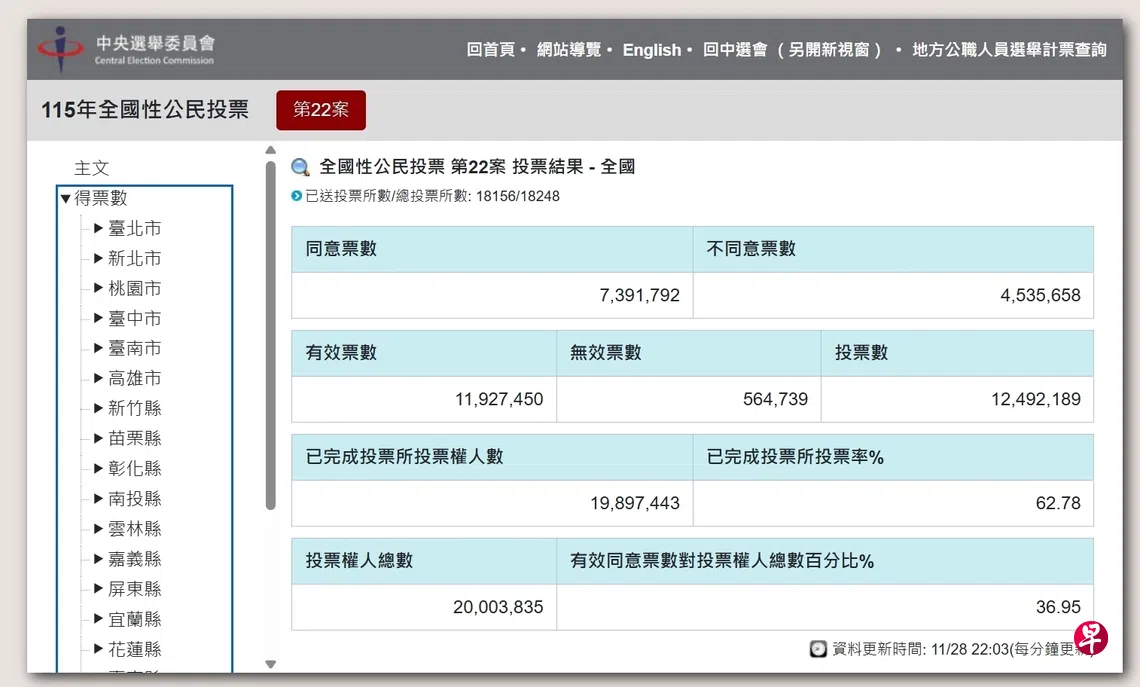
As of around 10pm on Saturday, more than 7.39 million votes had been cast in favour, against 4.53 million opposed. The referendum proposal passed, having met the 25% threshold and secured more votes in favour than against.
Under Taiwan’s Referendum Act, when a referendum proposal concerning a major policy passes, the president or the competent authority must take the necessary steps to implement it. However, Liberty Times noted that the proposal to scrap the nuclear-free homeland policy did not specify what measures the government should take, leaving its precise legal effect open to dispute.
In response to the vote in favour of scrapping the “nuclear-free homeland” energy policy, Taiwan’s National Nuclear Abolition Action Platform said in a statement that the proposal had been rushed, without sufficient public dialogue or disclosure of information. Its wording was also vague and its legal effect unclear, the group said. Approval did not amount to a blank cheque for nuclear power development in Taiwan, much less blanket authorisation to proceed without oversight.
Taiwan’s Executive Yuan spokesperson Li Hui-chih said on Saturday evening that Premier Cho Jung-tai respected the referendum result. On nuclear power generation, the government’s consistent position was for the relevant professional agencies to proceed cautiously under three principles: “assured nuclear safety”, “a solution for nuclear waste” and “social consensus”.
