

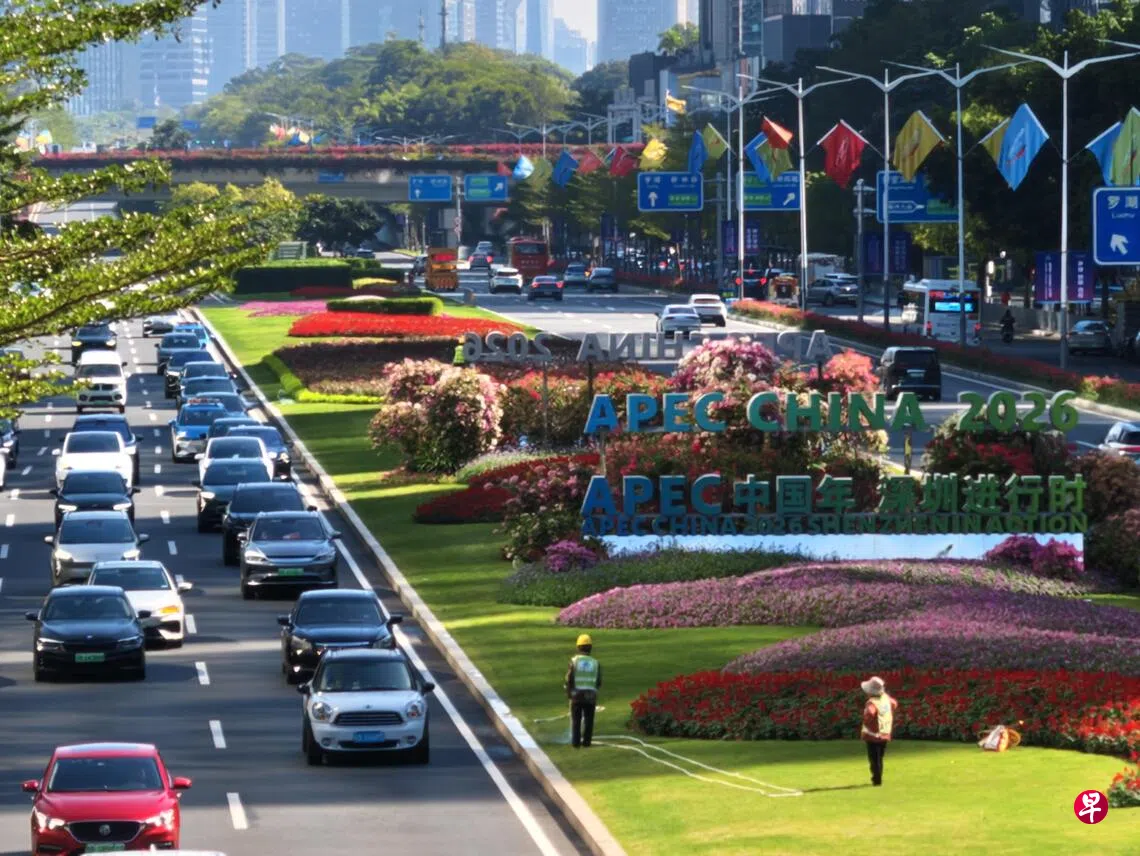
Japanese Prime Minister Sanae Takaichi will travel to Shenzhen, China, next week for the Asia-Pacific Economic Cooperation (APEC) summit, her first visit to China since taking office. But Japanese media reported on Tuesday (10 November) that efforts to arrange formal talks between Takaichi and Chinese President Xi Jinping were not progressing smoothly.
Scholars interviewed said formal talks between Takaichi and Xi were highly unlikely, although they might have a brief, informal exchange. China remains firm in demanding that Takaichi retract her remarks on a “Taiwan contingency”, and a single meeting at APEC would be unlikely to alter the fundamentals of China-Japan relations.
Japan’s Kyodo News cited Chinese sources as saying that Xi would warmly receive leaders from countries including the US and Russia during the APEC summit, while Takaichi could face a cold reception. Japan would be the only major participating country whose leader did not hold talks with Xi.
The sources said the Chinese government remained uncompromising over Takaichi’s remarks on Taiwan in parliament last year and was refusing to hold formal talks with her.
The report said the Japanese government would continue pushing for talks until the last moment, but that seeking an opportunity for a handshake or brief encounter with Xi at the APEC venue was a more realistic option.
The APEC meeting will be held in Shenzhen from Wednesday to Thursday (18 to 19 November) next week. It coincides with the first anniversary of Takaichi’s remarks on a “Taiwan contingency”, which sent China-Japan relations to a low point. Whether she will meet Xi has become one of the summit’s key points of interest.
The Japanese government has been seeking to use APEC to resume high-level dialogue and communication with China, but has received no response. Asked on Wednesday (11 November) whether the Chinese and Japanese leaders would hold talks during the APEC meeting, China’s Ministry of Foreign Affairs did not give a direct answer, saying only that it had “repeatedly made clear its position on China-Japan relations”.
Bloomberg earlier cited people familiar with the matter as saying that Japanese officials had sought assurances from China that Xi would extend Takaichi the same courtesies as other national leaders at the APEC meeting. Japan would lodge a protest if there were any unusual arrangements. Japanese officials believe that, as host, Xi should at least shake hands with Takaichi in keeping with convention.
In an article published on Tuesday, China’s state-run Global Times described Japan’s concerns as typical diplomacy driven by a “guilty conscience”. It said Japan’s real concern should not be opportunities for handshakes or positioning in group photographs at a particular meeting, but how its misguided policies were steadily eroding its neighbours’ trust and ultimately narrowing its diplomatic options.
Chen Yang, a research fellow at China’s Charhar Institute, told Lianhe Zaobao that although this would be Takaichi’s first visit to China since taking office, Beijing did not see it as a reason to soften its principled stance or put the negative impact of her remarks entirely behind it.
He said formal talks between the Chinese and Japanese leaders were highly unlikely, “but courtesy encounters, handshakes or brief exchanges are possible”.
Kei Koga, an associate professor of public policy and global affairs at Singapore’s Nanyang Technological University, and Lian Degui, director of the Centre for Japanese Studies at Shanghai International Studies University, offered similar assessments. They said substantive talks were unlikely, but basic courtesies would be extended.
Lim Tai Wei, a professor at Japan’s Soka University, said Takaichi’s visit to China carried considerable symbolic significance because Northeast Asian cultures were high-context cultures. “Every gesture, every meeting, however brief, can help improve the atmosphere and create conditions for incremental progress in relations.”
Chen said the APEC meeting could offer an important window into China-Japan relations, but expectations should remain realistic. The main obstacle to improving ties at present was not a lack of communication channels, but Takaichi’s statements and stance on Taiwan.
Koga also said Takaichi’s remarks were one of the main obstacles to dialogue between the two countries’ top leaders. China had repeatedly demanded that she retract them, but that was unlikely.
He expected political relations between China and Japan to remain tense, but said economic and trade ties could improve over time as long as relations did not deteriorate further.
Lim said China and Japan were accustomed to a relationship marked by periodic ups and downs. “Whatever happens to relations, engagement between the two sides will continue in some form.”
