

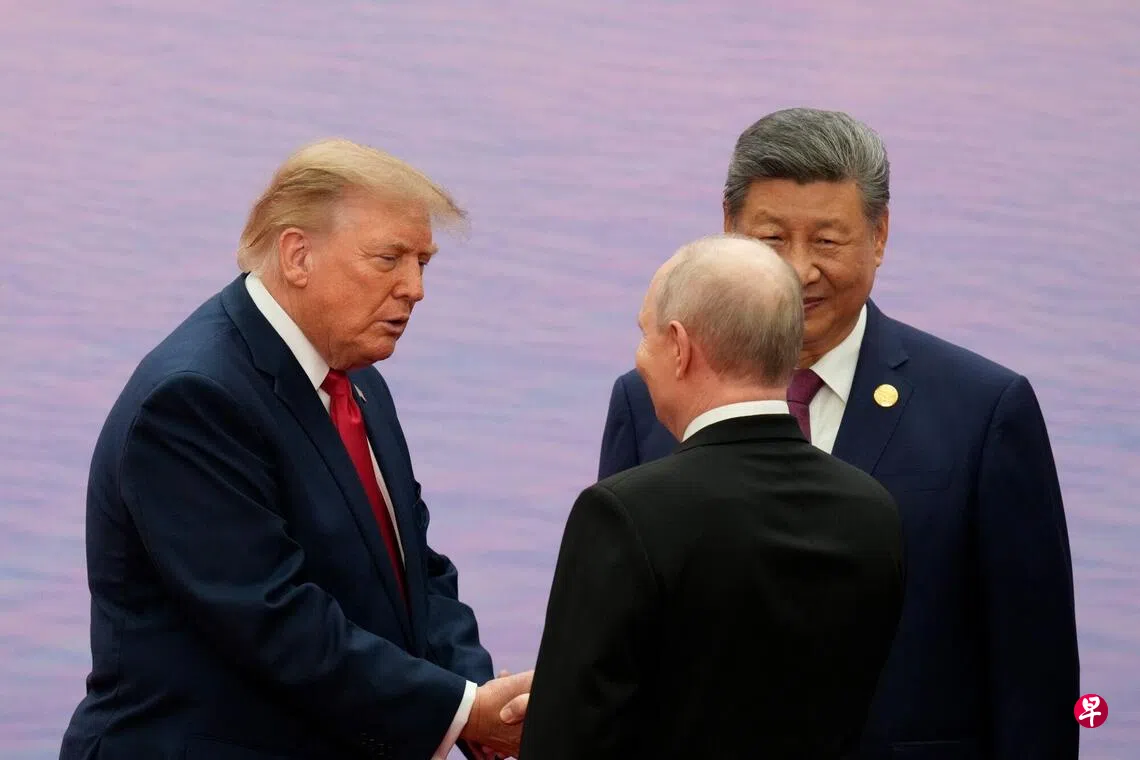
The leaders of the US, mainland China and Russia will hold a historic trilateral summit in Shenzhen on Thursday (19 November). US-based Taiwanese scholar Dennis Weng criticised Taiwan President Lai Ching-te for remaining preoccupied with campaigning for local election candidates despite the prospect of major shifts in the global balance of power. He questioned whether the Taiwanese authorities were strategically prepared for changes in the world order.
According to Taiwan’s United Daily News, Weng, an associate professor of political science at Sam Houston State University in the US, said US President Donald J. Trump, mainland Chinese President Xi Jinping and Russian President Vladimir Putin each had different objectives for their first trilateral talks. Xi was seeking status, Putin wanted greater leverage, and Trump was eager for diplomatic results.
Weng said Trump not only had to deal with the Chinese and Russian leaders, but also with divisions within the US administration over China policy. The Republican Party’s setback in the midterm elections had increased Trump’s need for diplomatic results, but had not necessarily given him more political room to make concessions.
He criticised Taiwan’s response at a time of potentially major international changes: Foreign Minister Lin Chia-lung was promoting educational and technological exchanges in the US, National Security Council Secretary-General Joseph Wu was commenting on mainland China-Russia military cooperation on social media, and the Ministry of National Defence was condemning Russian military aircraft for entering Taiwan’s air defence identification zone. Lai, meanwhile, remained busy campaigning for local election candidates.
Weng asked: “Does our national strategic preparation for global upheaval really amount to the Ministry of Foreign Affairs handling international educational exchanges, the National Security Council posting on social media, the Ministry of National Defence issuing condemnations, and the president bestowing swords?”
Taiwan’s Liberty Times reported that Lai presented a “water droplet sword” symbolising hope to Democratic Progressive Party Taipei mayoral candidate Puma Shen while campaigning for him last Sunday (15 November), expressing the hope that Shen would overcome the obstacles ahead.
On whether the US-China-Russia summit would discuss Taiwan, Weng said this remained uncertain. Beijing might reiterate its sovereignty claim over Taiwan, and Russia might echo it, but that did not mean Trump would necessarily accept Beijing’s position. Taiwan should watch for changes in US policy language, security cooperation and concrete actions after the summit.
He stressed that the world was reassessing the balance of power, and Taiwan could not remain forever preoccupied with counting votes. “Elections will end and politicians will come and go, but changes in the international power structure will not wait for us.” What Taiwan needed most was not more political theatre, but a clear strategic direction.
